Lay Down Your Future: a small-group session


For this session, you’ll need….

  • beanbags, stress balls, or other soft items that can be tossed around—two for every group of four or fivestress ball

Laying Down Your Day (10 minutes)

Have everyone get into subgroups of four to five. (If your group is less than eight people, stay together.) Give each subgroup two beanbags (or whatever items you’re using).

I’m sure everyone’s experienced a certain amount of tension today, so let’s de-stress a bit before going any further. A couple of you are holding beanbags. Take a few moments to squeeze them. Let out some of that stress . . . that’s it!

Now, toss your beanbag to someone else so he or she can squeeze it. But don’t give any clue who you’re going to toss it to next. Keep squeezing and tossing your beanbags around for the next minute, then we’ll move on.

After a minute, have subgroups discuss the following questions:

  1. When have you felt like you’ve had more things thrown at you than you could handle? How do you normally respond when that happens?
  1. Is all stress bad? Why or why not? 

Allow five minutes for discussion, and then bring subgroups back together. Ask for volunteers to share a few of their answers.

There are plenty of poor ways to respond when we’re feeling stressed or anxious—anger, negative talk, withdrawing from others, turning to bad habits or addictions…. The list goes on, and we’re all too familiar with it—and for that matter, so are the people we subject to our responses. So today, we’re going to focus on the kind of perspective God desires us to have as we face the things that come at us—or for that matter, the things that haven’t yet happened that we’re already worried about.

Laying Down the Word (30 minutes)

Read the following passage from “Lay Down Your Anxiety,” and then read Matthew 6:25–34. Discuss the questions that follow.

God intervenes in our lives when he’s supposed to, at our time of deepest need—not when we think he ought to show up, or when it would be easiest for us. Those who constantly take faith-filled risks live in 11:59. The rest of us would do well to remember that 11:59 might, in fact, be the best place to live our lives.

  1. What usually makes you more anxious: things that are currently happening, or things you think are about to happen? Why do you think that is?
  1. Think again about your responses to those situations. What do those responses say to God (maybe even verbally) about your ability to trust that he’ll “clothe” you with whatever you need in that moment?
  1. When have you had an “11:59 moment”—when you’ve said, “OK God, I give up,” and then God addressed those things you were so concerned about (or at least your anxiety over them)? Talk about it a little.

Take turns reading Luke 19:12b–26. Then read the following passage from “Lay Down Your Expectations,” and discuss the questions that follow:

God wants to create new things through us—not just give us control over things (and kingdoms) we already know. We can only prepare to receive them by remaining obedient to the King, and by remaining faithful to his kingdom and the things he’s already entrusted to us. . . .

So stop expecting too much from yourself spiritually, or otherwise. Stop expecting instant regeneration, or instant success. Trust God as you once did. Don’t try to anticipate his moves before he’s made them. Allow him to grow you at his pace, instead of thinking you can run out ahead.

  1. Which servant in our Luke passage do you feel more like right now? Why?
  1. What’s your reaction to the idea that God wants to create new things in your life, and will in fact reward you for your current faithfulness?
  1. Where are you trying to push God for an answer to a “crisis” you’re facing right now, or an area you’re tired of being “stuck” in? How’s that working? Based on your reading and discussion this week, what do you think God’s been trying to tell you?

It’s worth remembering that our ability to trust God with our futures doesn’t just affect us—it also affects our responses to the world around us. The more we try to protect ourselves, the less room we have in our lives for both God and others. Let’s close by spending some time with the “others” piece.

Laying Down Your Life (20 minutes)

Ask for a volunteer to read 1 John 4:18. Then read the following passage from “Lay Down Your Fears,” and discuss the questions afterward:

Whether it’s a preemptive strike or a full-scale retreat, we’ll do just about anything to avoid the hard work of loving others. But the way to God is through loving others. . . . Even the difficult matters in our lives are signs of God’s love for us. When we can place ourselves before those circumstances, neither shrinking back not attacking, the perfect love of God can be fully manifested in us.

  1. In what tangible ways does God’s love removes fear, anxiety, and stress from our lives? When have you experienced this truth?
  1. How does being freed from fear, anxiety and stress, in turn, free you to love others the way God intends? Try to come up with some concrete examples—either past, present, or future.

During our last session together, we paired up with others in the group to whom we’ll stay accountable for the remainder of this study. Get back in those pairs now. Give yourselves enough room that you can talk confidentially and/or not interrupt another pair’s discussion. 

Give everyone time to pair up. If people are absent, help stragglers get with another pair for the rest of this session. Again, it’s OK to have a triad, but have no more than three.

In your pairs, review Paul’s “remedy to fear” from 2 Timothy, from “Lay Down Your Fears.” Spend up to five minutes discussing which of the items in this bullet list are speaking to you the loudest right now, and why. Keep it to your one or two top items each.

When you’re done sharing, spend another few minutes praying for one another over what you’ve shared. Again, set aside a time each week when you can touch base with one another. Once you’re done, remain quiet and give other pairs a chance to wrap up. May God bless each of you this week, as you trust Him with whatever your future brings—this week and beyond.

Posted in Uncategorized | Tagged , , , , , , | Leave a comment

The Church Planting Journey


As a lot of you know, I’ve been involved in my share of church plants—a few successful ones, as well as a couple unsuccessful ones (that shared one foible in particular . . . more on that later). One of those successful ones started in our home, in fact; and later on, as I went through pastoral ministry training, one of the resources I ravenously absorbed was Bob Logan and Steve Ogne’s Church Planter’s Toolkit. Inspirational, but also “had been there,” and thus reassuring (because before things ultimately went right at said plant, everything went wrong; fortunately, God protects his vision).

Fast-forward some years later, as my pastoral ambitions channeled into the world of Christian publishing—and then, in the wake of a blown-up department, I got channeled into the world of freelancing. As it turned out, one of the first books I would work on in my new situation was The Missional Journey by Bob Logan. It was an honor then, and three books later, it’s an honor now.

And that brings us to this book—which revisits, revises, and refreshes many of the ideas from The Church Planter’s Toolkit for a new generation of church planters. As Bob himself puts it:

[W]hile the principles haven’t changed, a lot of other things have. The world around us and the situations in which we are planting have changed. The possible ways the church can look have changed. The way the church is perceived from the outside has changed. We are now planting churches in a world that isn’t looking for churches. It’s not (usually) that people are hostile to churches; they just have no category for them.

For these reasons and more, church planters need this book more than ever.
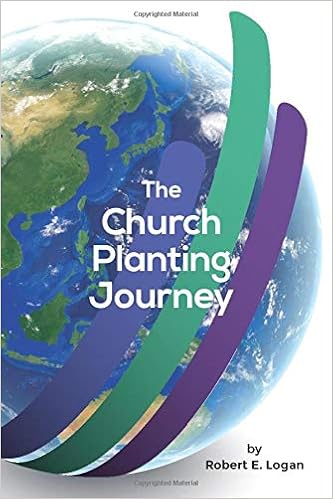
Robert E. Logan. The Church Planting Journey. 328p., $17.99, Logan Leadership.

It’s worth noting up front that two-thirds of the book is devoted to what ought to be happening before a church plant’s first service (whether public or private). But that’s not to say that church planters who have already “gone public” don’t have a lot to learn here. We all have blind spots that need to be addressed, if only in retrospect—and since many church planters don’t stop at planting one church, they’ll be that much more equipped for the next go-round, or more importantly, for imparting needed wisdom to first-time church planters.

The first steps before planting a church, of course, are making sure 1) that’s it’s really a God thing; and 2) that’s you’re (especially spiritually) ready for the task ahead. Thus Part 1, “Get Ready: Personal Commitment and Readiness,” focuses on personal preparation, addressing such issues as developing vision and values, confirming your calling, identifying and maximizing learning opportunities, gaining a better understanding of the church-planting process, and preparing for challenges and discouragement.

Part 2, “Get Set: Preparation and Planning,” gets into the nuts and bolts of actually beginning the church-planting process: building a core team, identifying the people you want to reach, designing ministries that will be effective once things get started (because once things start flying, it’ll be too late), establishing financial support, and developing a proposal to present to your sending church/denomination/organization.

In Part 3, “Get Going: Living Out the Mission,” things turn outward. This is where you’re beginning to make the contacts you need to get established, and to actually starting to create a distinct church body: casting vision, engaging the culture around you, making disciples, creating and multiplying disciplemaking communities (small groups, etc.), and finally (if it’s your church’s/group’s focus/intention), launching public worship services. As noted here, the latter chapter isn’t necessary for cell/house churches or for churches meeting in a restricted country, but most of you will have an interest.

Finally, Part 4, “Keep Growing: Ongoing Development and Multiplication” looks at developing the young church, its leadership, and beyond, including evaluating/developing the organization/church structure, strategic planning, navigating change as the church continues to develop and grow, and finally, successfully creating church multiplication.

Each of the book’s 20 chapters concludes with a Journey Guide that can be used individually, or far better, with your core group. Included are checklists to make sure you’ve covered each area of development thoroughly; a specific discipleship focus; strategies and discussion questions; and guided prayers for yourself, your team, and your intercessors (because trust me, if you haven’t got a group of people praying for this effort, it won’t happen).

Implicit in all of this is the need for accountability—which, not coincidentally, was the element missing in those failed church plants mentioned at the beginning of this review. The mechanisms and strategies here, if used properly and faithfully, will eliminate that problem—or at least give you the means to address it promptly, before it takes the entire church down.

In short, this is an essential book for church planters, at whatever stage of development you’re in. And if you need additional guidance, click on that Logan Leadership link above, because I’m sure Bob can help you with that, too.

Posted in Uncategorized | Tagged , , , | Leave a comment

Lay Down Your Fears


A great deal of the sin in our lives is little more than a lame attempt to protect ourselves from the possibility of being sinned against. Whether it’s a preemptive strike or a full-scale retreat, we’ll do just about anything to avoid the hard work of loving others. But the way to God is through loving others. “There is no fear in love, but perfect love casts out fear. For fear has to do with punishment, and whoever fears has not been perfected in love” (1 John 4:18). We long to be perfect, but God’s perfect work in us cannot be completed without a willingness to expose ourselves fully to the people and situations God has placed before us.

Even the difficult matters in our lives are signs of God’s love for us. When we can place ourselves before those circumstances, neither shrinking back not attacking, the perfect love of God can be fully manifested in us.

Almost all of us struggle with fear, whether we show it or not. No less a man than Timothy—who helped Paul write the books of 2 Corinthians, Philippians, Colossians, 1 and 2 Thessalonians, and Philemon—clearly struggled with fear throughout much of his ministry. Consider the advice from Paul, near the end of his life and while in prison, to the man who by this time had become bishop of Ephesus:

I am reminded of your sincere faith, a faith that dwelt first in your grandmother Lois and your mother Eunice and now, I am sure, dwells in you as well. For this reason I remind you to fan into flame the gift of God, which is in you through the laying on of my hands, for God gave us a spirit not of fear but of power and love and self-control.

Therefore do not be ashamed of the testimony about our Lord, nor of me his prisoner, but share in suffering for the gospel by the power of God, who saved us and called us to a holy calling, not because of our works but because of his own purpose and grace, which he gave us in Christ Jesus before the ages began, and which now has been manifested through the appearing of our Savior Christ Jesus, who abolished death and brought life and immortality to light through the gospel, for which I was appointed a preacher and apostle and teacher, which is why I suffer as I do. But I am not ashamed, for I know whom I have believed, and I am convinced that he is able to guard until that Day what has been entrusted to me.  Follow the pattern of the sound words that you have heard from me, in the faith and love that are in Christ Jesus. By the Holy Spirit who dwells within us, guard the good deposit entrusted to you. (2 Timothy 1:5–14, emphasis mine)

What’s Paul’s remedy to fear, then? Several exhortations come up here:

  • Remember your faith, and who you are in Jesus (v. 5).
  • Take the spark God’s given you, and fan it into a flame (v. 6).
  • Exert the “power of love and self-control” you’ve already received (v. 7).
  • Be willing to take some heat for the gospel you believe (v. 8).
  • Remember that Christ conquered death—what more is there to fear (v. 10)?
  • Accept suffering as part of the package of both sanctification, and of life itself, and realize that even in those times God’s protection remains upon you (v. 12).
  • Do what you know to be true and right. Obey God, faithfully and in love (v. 13).
  • Through the Holy Spirit, guard what God’s already given you (v. 14).

Which of these is at the top of your list right now? In what ways can you step out of fear and into “life and immortality to light through the gospel”? Eternal life begins now. So lay down your fear, and step boldly into the light.

Lay It Down Today

If you can’t do this final activity immediately, do it in the next twenty-four hours: Read Paul’s two letters to Timothy in one sitting. They’re ten fairly modest chapters (less than two hundred verses total), but chock full of fatherly advice and en-courage-ment to a son in the faith. As you read, put yourself in Timothy’s place, reading these personal letters from a spiritual father he might never see again in the flesh. Think of these letters as a mentor writing to you, sharing his life experience while he still has the opportunity. Feel the immediacy.

After reading, ask God to show you how to act upon what you’ve just read. Which of Paul’s words struck you hardest, and why? What does God want to do with that? Spend time praying through that, “pushing” God for an answer. Don’t stop until you’re satisfied you’ve laid all out your fears, anxieties, and concerns before God. Then let him go to work, and watch what happens.

Posted in Uncategorized | Tagged , | Leave a comment

Three Views on Israel and the Church


There’s plenty of opinions on Christian and/or American relations with Israel—but what does the Bible have to say about it—and how do we interpret what the Bible says?

Three Views on Israel and the ChurchJared Compton and Andrew David Naselli, eds. Three Views on Israel and the Church: Perspectives on Romans 9–11. 272p., $21.99, Kregel Academic.
The relationship between Israel and the church is a long-standing debate in Christian theology, and Romans 9–11 are the most important chapters for understanding it. How one interprets these chapters determines how one understands biblical theology, how the New Testament uses the Old Testament, and how the old and new covenants are related.

To help readers draw their own conclusion, four leading scholars on this issue present a case for their viewpoint, followed by a response and critique from the others. Michael Vlach argues for a future mass conversion and a role for ethnic Israel in the church. Fred Zaspel and Jim Hamilton present a case for a future mass conversion that does not include a role for ethnic Israel. And Benjamin Merkle contends that Romans 9–11 promises neither a future mass conversion nor a role for ethnic Israel.

General editor Andrew David Naselli helpfully sets the debate in its larger biblical-theological context in the introduction, while Jared Compton provides a useful summary of the views and interactions at the end of the volume.

Posted in Uncategorized | Tagged , | 1 Comment

Lay Down Your Expectations    


Rather than attacking today’s idea from the front—and last week’s rumination on goals and plans hit on many of the ideas inherent in this next idea already—I’d like to approach today’s meditation from a different angle.

Over the last several years, and from multiple sources, God has reinforced the importance of expectancy in my life. Meaning: When we lay down our time, our possessions, our attitudes, whatever, to actually give God something to work with in our lives, do we truly expect God to show up?

At the same time, I’ve realized how little expectancy bears resemblance to expectation. If I bring my own agenda to the table, even with the best of intentions, about the only thing I can expect is disappointment—and I’m likely to do more damage than good, not least of all to myself. That’s not only true about my relationship with God, but about every part of the life he’s given me.

Conversely, when I turn to God and say, “This is your gig; do what you will” (or the old-fashioned but still effective “not my will, but thine”), things tend to fall into line much more easily—because they’ve been left in the hands of Someone who can draw a line correctly.

Hopefully, it’s obvious that being expectant doesn’t translate to “do nothing.” It means: Go about the business God’s called you to, and let the results take care of themselves. The parable of the talents nicely illustrates this:

“A nobleman went into a far country to receive for himself a kingdom and then return. Calling ten of his servants, he gave them ten minas, and said to them, ‘Engage in business until I come.’ But his citizens hated him and sent a delegation after him, saying, ‘We do not want this man to reign over us.’ When he returned, having received the kingdom, he ordered these servants to whom he had given the money to be called to him, that he might know what they had gained by doing business. The first came before him, saying, ‘Lord, your mina has made ten minas more.’ And he said to him, ‘Well done, good servant! Because you have been faithful in a very little, you shall have authority over ten cities.’ And the second came, saying, ‘Lord, your mina has made five minas.’ And he said to him, ‘And you are to be over five cities.’ Then another came, saying, ‘Lord, here is your mina, which I kept laid away in a handkerchief; for I was afraid of you, because you are a severe man. You take what you did not deposit, and reap what you did not sow.’ He said to him, ‘I will condemn you with your own words, you wicked servant! You knew that I was a severe man, taking what I did not deposit and reaping what I did not sow? Why then did you not put my money in the bank, and at my coming I might have collected it with interest?’ And he said to those who stood by, ‘Take the mina from him, and give it to the one who has the ten minas.’ And they said to him, ‘Lord, he has ten minas!’ ‘I tell you that to everyone who has, more will be given, but from the one who has not, even what he has will be taken away.” (Luke 19:12b–26)

In re-reading this recently, something hit me that I hadn’t previously noticed—there’s definitely some conjecture to this, but it makes sense: The king comes back after receiving his kingdom, and upon seeing the faithfulness of the first two stewards gives each of them authority over several cities. Where do you think those cities came from?

My bet’s on the kingdom that the nobleman just received. Someone’s got to watch over those cities now, after all.

Likewise, God wants to create new things through us, not just give us control over things (and kingdoms) we already know. We can only prepare to receive those things by remaining obedient to the King, and by remaining faithful to his kingdom and the things he’s already entrusted to us. Expecting God’s goodness (or in the third steward’s case, his “badness”) to look a certain way is usually a futile exercise. God will show us what we need when we need it. Sometimes we get a glimpse into what God’s fulfilled vision in our lives will look like, but more often he’ll let us know when it’s time to move forward . . . when it’s time to move forward, and then show us that new kingdom.

So stop expecting too much from yourself spiritually, or otherwise. Stop expecting instant regeneration, or instant success. Trust God as you once did. Don’t try to anticipate his moves before he’s made them. Allow him to grow you at his pace, instead of thinking you can run out ahead.

At the same time, don’t underestimate what God can do. Be faithful with what God has already entrusted to you, and live in the expectancy that the good things he’s already entrusted to you will produce even better things beyond your expectations. 

Lay It Down Today

We’re going to try a little parallel Bible study today, reading both versions of the parable of the talents—Matthew 25:14–30 and Luke 19:11–27. Note the similarities and the differences between each account. More importantly, note what God’s saying to you through each version.

Then, reflect on this: What can you identify as things God has already entrusted to you—things you know God wants you to do? It could be a specific calling or impression of the Spirit, or something as profoundly “mundane” as being a better parent or spouse. Whatever those things are, list them out now. Then, pray over your list. Ask God to help you “[be] faithful in [the] very little” he’s already given you, so that you may be ready to receive the authority you need for the new works he has in store for you—both here and beyond.

Posted in Uncategorized | Tagged , , , | 1 Comment

Maximizing the Midsize Church


Got a decent-sized (but not big) church, and want to keep a handle on where you’re at and where you’re going?

Maximizing the Midsize ChurchDavid J. Peter. Maximizing the Midsize Church: Effective Leadership for Fruitful Mission and Ministry. 176p., $18.99, Kregel Ministry.
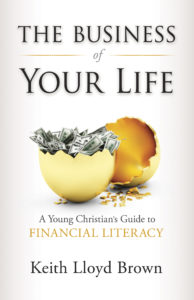
Nearly one in four congregations in the United States is a midsize church (150-400 worshipers per week), and the midsize church has its own distinctive culture, dynamics, and characteristics. Drawing on years of research and pastoral ministry, David J. Peter has written a comprehensive handbook for pastors and staff who direct these churches.

Peter covers the most important issues leaders encounter, including:

  • The important role they play in advancing the kingdom of God
  • Common cultural characteristics
  • Typical problems and productive solutions
  • Advantages over both small and large churches, and how to capitalize on them
  • Practices for developing healthy programs
  • The responsibilities of the pastor
  • Guidance for hiring staff and recruiting volunteers
Posted in Uncategorized | Tagged , , | Leave a comment

Lay Down Your Goals    


Let’s return to the idea of us “taking things out of God’s hands” through our own control issues—specifically, through the plans and goals we lay out for ourselves. There’s nothing wrong with having goals for our lives. They give us focus; they inspire us; they inspire others. And quite often, those goals are things worth aspiring to.

But there’s a down side: Namely, they’re our goals and plans. Thus, they can become a wall that gets between us and God’s plans for us—even when what we have in mind and what God has in mind look very similar on the surface. God is always more concerned with what’s going on under the surface. Let’s look at one of Jesus’ more in-your-face parables, and dig down from there:

And he said to them, “Take care, and be on your guard against all covetousness, for one’s life does not consist in the abundance of his possessions.” And he told them a parable, saying, “The land of a rich man produced plentifully, and he thought to himself, ‘What shall I do, for I have nowhere to store my crops?’ And he said, ‘I will do this: I will tear down my barns and build larger ones, and there I will store all my grain and my goods. And I will say to my soul, “Soul, you have ample goods laid up for many years; relax, eat, drink, be merry.”’ But God said to him, ‘Fool! This night your soul is required of you, and the things you have prepared, whose will they be?’ So is the one who lays up treasure for himself and is not rich toward God” (Luke 12:15–21)

While this parable specifically addresses our possessions, we would be wise to expand our definition of the word “possessions” here. Let me ask a simple question: When you’ve reached a goal, whose accomplishment is it?

If you answered “mine,” congratulations: You have a possession.

It’s no coincidence that Jesus follows up this parable with his command to not be anxious (which we explored a couple weeks ago, via Matthew). When our goals are more our goals than God’s, we feel we’re the ones who need to protect them. “For where your treasure is, there will your heart be also” (Luke 12:34).

The next time you’re feeling stressed, ask yourself, “What am I protecting here that God can’t protect a million times better?” Again, it may not be the goal or the plan that’s wrong, but who’s being glorified by them. If God truly wants us to pursue such things, then we can lay them down at his feet, confident he’ll take care of them.

In my previous book, I’d put forth a series of questions for those considering pursuing a “God-given vision”—specifically, to determine whose vision it really was. I think, with a few minor tweaks, those same questions are a good filter for any goals and plans we have in life. Think about two or three goals you have right now, and then apply the following questions to each of them:

  • As I’m pursuing this, am I sensing God revealing more about the things he truly cares about?
  • Once this goal has been reached, will it reveal more about God to others, or just more about me?
  • Which pieces of the plan were clearly not my idea (even if I’m excited about them now)?
  • Have I tried letting go of my plans, only to find God bringing them up again?
  • Would I still want this to happen even if someone else did it—or even if I did it and someone else got the credit?

How did you do? It’s OK (for now) if you thought, “Well, it’s both, actually—it’s me and God, it’s flesh and spirit.” But it’s critical that we stop to figure out what’s God and what’s just us, because at some point we’re almost certainly going to find ourselves disagreeing with God on some things. And when that happens, guess what? God’s right. At that point, you’ll need to remember what’s truly God’s, so you’ll be able to keep trusting him when you don’t understand what’s going on. Hold your own plans loosely, and hang on for dear life to God’s plans.

Lay It Down Today

Read Luke 12:13–48—or rather read, review, and reflect. This longer passage combines today’s passage, a reiteration of the Matthew passage mentioned/linked above, and two more parables that are tied in more than you might think, so read slowly. When you get to verses 35–48, read them aloud. Put some inflection into your reading; think about how Jesus said these words to his disciples as you read—because, after all, you’re one of them.

Reflect on today’s questions again, in light of what you’ve just read. Allow God’s Word to be “living and active, sharper than any two-edged sword, piercing to the division of soul and of spirit, of joints and of marrow, and discerning the thoughts and intentions of the heart” (Hebrews 4:11). Ask God to help his Word penetrate more deeply into your goals and plans, so that the parts that are “just you” are cut away—if even if that means all of them. Trust that God’s plans are far better than anything you could come up with, and act on his leading as it comes.

Posted in Uncategorized | Tagged , | Leave a comment

The Business of Your Life


For young people ready to take their finances into their own hands. . . .

The Business of Your Life CoverKeith Lloyd Brown. The Business of Your Life: A Young Christian’s Guide to Financial Literacy. 240p., $16.99, Deep River Books.

Former Ameriprise financial planner Keith Lloyd Brown divulges the secrets and strategies teens and young adults need to know to master the world of finance. He presents these alongside biblical principles to provide a solidly biblical approach to money management that extends way beyond the basics.

In this comprehensive guide, teens and young adults will learn:

  • The mysteries of stocks, bonds, taxes, and trouble-free banking
  • How to invest in corporate plans and IRAs like a pro
  • Inside secrets of insurance, sole proprietorships, partnerships, and corporations
  • The intricacies of budgeting and financial statement preparation
  • How to stay out of trouble with the IRS and the Lord
  • . . . and much, much more
Posted in Uncategorized | Tagged , , , | Leave a comment

Lay Down Your Doubt


Our anxiety expresses itself through doubt. And our doubt expresses itself by taking things into our own hands. Whether we say it or even consciously think it, trying to make things happen on our own says, at best, “God’s not giving me what I want when I want it, so I’d better make it happen myself.” And despite what seventy-five percent of Christians believe (Barna, 2005), the phrase “God helps those who help themselves” does not come from the Bible.

In this season of my life, God has been confronting my tendency to live out of my doubt. Ask anyone: I’m good at coming up with a plan, pulling things together, and making them happen. I am, to use a human compliment, resourceful. Heck, I like referring to myself as “tenacious.” And yet, in this season all my efforts have come to nothing. Instead, God says, “Depend on me. Let me handle it.”

I try every idea at my disposal, thinking one of them will work. They don’t. And then something that wasn’t my idea shows up and accomplishes what all my bright ideas and efforts couldn’t. Again, God repeats, “Depend on me. Let me handle it.”

Sometimes we already know things are out of our hands. And yet, we wrestle with the same problem as the anxious and the self-reliant—the failure to acknowledge that things still in God’s hands. We see a great example of this as Jesus encounters a boy with an unclean spirit—and even moreso in the people surrounding Jesus and the boy:

And when they came to the disciples, they saw a great crowd around them, and scribes arguing with them. And immediately all the crowd, when they saw him, were greatly amazed and ran up to him and greeted him. And he asked them, “What are you arguing about with them?” And someone from the crowd answered him, “Teacher, I brought my son to you, for he has a spirit that makes him mute. And whenever it seizes him, it throws him down, and he foams and grinds his teeth and becomes rigid. So I asked your disciples to cast it out, and they were not able.” And he answered them, “O faithless generation, how long am I to be with you? How long am I to bear with you? Bring him to me.” And they brought the boy to him. And when the spirit saw him, immediately it convulsed the boy, and he fell on the ground and rolled about, foaming at the mouth. And Jesus asked his father, “How long has this been happening to him?” And he said, “From childhood. And it has often cast him into fire and into water, to destroy him. But if you can do anything, have compassion on us and help us.” And Jesus said to him, “‘If you can’! All things are possible for one who believes.” Immediately the father of the child cried out and said, “I believe; help my unbelief!” And when Jesus saw that a crowd came running together, he rebuked the unclean spirit, saying to it, “You mute and deaf spirit, I command you, come out of him and never enter him again.” And after crying out and convulsing him terribly, it came out, and the boy was like a corpse, so that most of them said, “He is dead.” But Jesus took him by the hand and lifted him up, and he arose. And when he had entered the house, his disciples asked him privately, “Why could we not cast it out?” And he said to them, “This kind cannot be driven out by anything but prayer.” (Mark 9:14–29)

I love the incredulousness of Jesus’ “If you can!” It not only carries the sense of “Who do you think I am?” but also “Don’t you understand who you are, in God’s sight?” Which is borne out by Jesus’ next sentence, “All things are possible for one who believes.”

While it’s not simply a matter of “God helps those who help themselves,” our inability to “make” God’s will manifest might indeed be a matter of us not being in position for God to use us. Our doubt restrains God’s ability to operate. Not that he couldn’t blow past it any time he liked, as Jesus in fact does here. Nonetheless, God wants us to believe, and is willing to withhold his temporal blessings and deliverance until we do so.

I’m not advocating a “name-it-and-claim-it” theology here, but I am suggesting a principle of “believe it and you’ll receive it”—provided it’s what God wanted to give you all along. Psalm 84:11b affirms this: “No good thing does he withhold from those who walk uprightly.” There is a truth buried within the more positivistic twistings of the gospel, and it’s this: So much of God’s will for our lives remains unclaimed, because we can’t bring ourselves to believe that God would really want to do something good for us.

Thus, I suspect that the prayer and fasting the disciples lacked for this situation wasn’t purely a matter of failing to press the right spiritual buttons—let alone “if you do this spiritual discipline more regularly, you’ll be so much more effective for the kingdom.” There’s truth to that, but there’s a deeper truth here: Like every spiritual discipline, prayer and fasting was a way for the disciples to humble themselves before God so that they too could see the situation properly, become acutely aware of their own fallenness, human inability, and just plain lack of trust—and acknowledge, as the boy’s father did, “I believe; help my unbelief!”

Lay down your doubt, and let Jesus help your unbelief, so that you can receive the good things he has already prepared for you.

Lay It Down Today

Let’s get more creative with today’s passage from Mark. Read it again right now, putting yourself in the disciples’ place. Experience the inability to heal, Jesus’ rebuke, and the curiosity/humility afterward. Then read it once more, from the perspective of the father—the overwhelmedness and desperation for his son to be delivered, and the equally deep desperation to want to believe fully that Jesus could, and would, deliver his son.

Who do you identify with more right now? Spend some time giving up your doubt, and the roadblocks you’ve placed to reinforce that doubt, to Jesus right now. Hand over to him those things that make you anxious or overwhelmed. Let him handle them, and ask him to keep those things out of your hands from this day forward.

Posted in Uncategorized | Tagged , , , | Leave a comment

Between Us Guys


For dads, and for all those conversations they’ve been meaning to have with their sons. . . .

Image result for new growth press Between Us GuysJoel Fitzpatrick. Between Us Guys: Life-Changing Conversations for Dads and Sons. 128p., $17.99, New Growth Press.

This easy-to-use, life-changing book for fathers and sons gives readers the tools to have important conversations with boys about life, faith, and being a man. With a conversational and captivating tone, fathers and other caregivers are guided into having gospel-focused conversations with boys ages six to ten about a wide range of topics from social justice and friendships to money, anger, and more.

Dads are given an incredible opportunity to be one of the primary influences in their children’s lives for the gospel. By inviting conversations in every arena of life, fathers pass down the message of Christ to the next generation. As a youth and family pastor and father to a young boy who’s entered into many of these conversations, Joel Fitzpatrick knows it’s important not to shy away from difficult subjects.

But he also knows dads and other caregivers need help in how to have intentional conversations with boys about God, themselves, and what difference knowing the gospel makes to their everyday life. Fitzpatrick invites fathers to share with their sons how the gospel shapes all aspects of life, including how they treat women, people from other ethnic groups, and much more. Specific, practical help is given to dads through suggested activities, God’s Word, and insightful questions.

In a world where television, the internet, social media, and gaming culture have taken away from quality time spent between fathers and sons, Between Us Guys urges readers to lean in to important conversations with the grace and knowledge of Christ.

Posted in Uncategorized | Tagged , , , | Leave a comment