
Let’s start today by revisiting Jesus’ commissioning of the seventy-two from a few weeks ago. The seventy-two certainly had something to rejoice in when they used the gifts they had received: “Lord, even the demons submit to us in your name” (Luke 10:17). And because of that, we tend to read Jesus’ response—“I saw Satan fall like lightning from heaven” (v. 18)—as something that happened at that very moment. I’m not so sure any more.
What if what Jesus really meant was this?: “I was there when Satan fell. I was there when he became so full of pride over what God had given him that he exalted himself above God. Be careful the same doesn’t happen to you.” It certainly would explain Jesus’ next words, “Nevertheless, do not rejoice that the spirits submit to you”—because after all, you’re not the first, and you’re not always in good company—“but rejoice that your names stand written in heaven” (v. 19).
There may well come a time where we will have to lay down our very giftedness and callings before Jesus—when we will need to say, “This is yours, Lord, and I will walk away from all of it if that’s what you want.” Should that occur, it will likely be because we’ve allowed our identities to become so wrapped up in what we’ve been called to do by Jesus that our identities are really no longer in Jesus.
It’s very easy to fall in love with the idea of “I’m called to do this.” It’s much easier to get excited about something new and unique than it is to get excited about doing what everyone else is doing—or at least, should be doing. Every day, God calls us to many seemingly mundane acts of obedience that are no less important than our seemingly “special” acts—and might well, in fact, be more important.
Doing God’s will and living in God’s will, while certainly related, are not the same thing. One involves obeying a very specific directive from God; the other is God giving us the freedom to live creativity within his broader will. Both please him—if they’re done in a spirit of obedience. As important as it is to use the gifts God’s given us and to follow his calling, it’s more important to develop the fruit of the Spirit—those qualities that grow from our new life within.
Jesus’ ministry was literally crucified. Why should we dare to think that our ministries and good works would be exempt from such testing?
Abide in me, and I in you. As the branch cannot bear fruit by itself, unless it abides in the vine, neither can you, unless you abide in me. I am the vine; you are the branches. Whoever abides in me and I in him, he it is that bears much fruit, for apart from me you can do nothing. . . . If you abide in me, and my words abide in you, ask whatever you wish, and it will be done for you. (John 15:4–5, 7)
Lay down your gifts, and concern yourself with abiding in Jesus. He knows how your gifts should be used—and whether they should be used—better than you. Apart from him you can do nothing. As your desires become his desires, his gifts and calling upon you will be used in ever-greater ways—because they’ll truly be his gifts and his calling.
Lay It Down Today
Let’s take another cue from the Sermon on the Mount for today’s prayer time:
So if you are offering your gift at the altar and there remember that your brother has something against you, leave your gift there before the altar and go. First be reconciled to your brother, and then come and offer your gift. (Matthew 5:23–25)
I want to expand the parameters a bit past this text’s original meaning, but with an intent that I think you’ll agree is thoroughly biblical. We may not bring physical gifts to the altar, but we do have gifts we need to offer up to God. There are ways we need to love those around us more, whether it’s a matter of anger and forgiveness (as stated here) or in other ways.
Therefore, spend some time in prayer today identifying the gifts God has given you and leaving them “there before the altar.” Ask God to help you be obedient, whether it’s something you’re gifted in or comfortable with or not—or no matter how “trivial” your act of obedience may be. Have the faith that God will use your obedience to produce what he wants in others’ lives—and in your own.
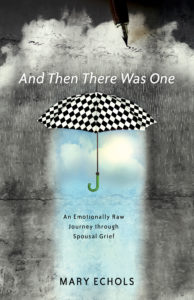 Mary Echols. And Then There Was One: An Emotionally Raw Journey through Spousal Grief. 118p., $13.99,
  Give everyone a chance to settle in before starting your session. Once everyone’s relaxed and comfortable, turn off the lights in your meeting area (and make sure you’ve read question #1 to yourself before you do it!). Discuss the following:
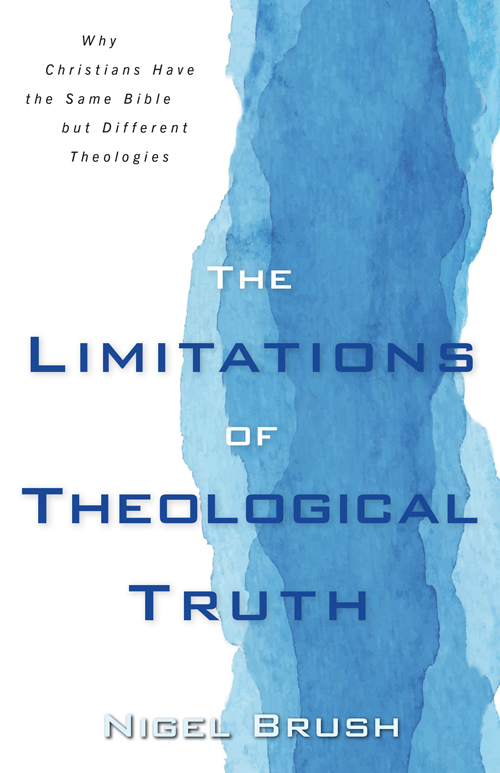 Nigel Brush. The Limitations of Theological Truth: Why Christians Have the Same Bible but Different Theologies. 336p., $19.99,
  Look at the lion, and how he lays down. There’s intent. There’s vigilance. There isn’t hesitation. There’s confidence and boldness, and yet no arrogance—because there’s no fear.
 Jim Muir. Offerings: A Daily Collection of Wit and Wisdom Wrapped in an Attitude of Gratitude. 288p., $14.99,
  Let’s consider that for a few more moments. Take off the table the idea that Jesus was the Son of God—that Jesus is God. Look, for a few moments, purely at the human Jesus of the Gospels. Look at how much he loved God, and how he presented the kingdom of God and defended it—including, very often, from those who claimed to speak for God and clearly did not. Here was someone who actually knew the right answers. How do you think Jesus felt during when he was assaulted verbally—and later physically—by those who didn’t want to hear those answers?
 Tim Hall. Beautiful Interference: Learning to Love God with All Your Heart, Soul, Mind, and Strength. 112p., $13.99,


A Commentary on Romans
Not only that, but an applicational one. . . .