Lay Down Your Life      


Death is not just the end of life—it is the returning of life to its Creator. It is not a loss, but a fulfillment. All the laying down of all the pieces of our lives are but a rehearsal for that moment.

No wonder Paul says, “[W]e would rather be away from the body and at home with the Lord” (2 Corinthians 5:8). Sometimes we just want to jump to the end. Even for a coward like myself, the idea of martyrdom seems noble, even romantic. But if we’re not willing to die to ourselves right now, it’s a fairly safe bet that we wouldn’t lay down our physical lives if we were ever called to do so.

On the other hand, when we lay down every claim we have to our lives—which, after all, has been the thrust of this entire book—we’re free to be used of God in any way he chooses, up to and including martyrdom. No matter what God calls us to actually do at that point, our obedience will not seem spectacular to us but normal.

More than likely, what we’ll be called to—and are already called to—is to die anew every day, to crucify the flesh day by day and moment by moment. Not only that, but to live that death outwardly, so that we can “let [our] light shine before others, so that they may see [our] good works and give glory to [our] Father who is in heaven” (Matthew 5:16). Even here on earth, there is a life beyond all this dying. First John 3:16–18 gives us a glimpse into dying to self, and to what our lives should look like beyond that death:

By this we know love, that he laid down his life for us, and we ought to lay down our lives for the brothers. But if anyone has the world’s goods and sees his brother in need, yet closes his heart against him, how does God’s love abide in him? Little children, let us not love in word or talk but in deed and in truth.

Before we head toward the finish line of these devotionals—and at the same time, see how far we’ve already come—let’s spend one more day in the Sermon on the Mount. Remember that Jesus said, “Do not think that I have come to abolish the Law or the Prophets; I have not come to abolish them but to fulfill them. . . . For I tell you, unless your righteousness exceeds that of the scribes and Pharisees, you will never enter the kingdom of heaven” (Matthew 5:17, 20). He proceeds to break that down for us throughout the rest of that chapter—anger, lust, divorce, oaths, retribution, loving others. “You have heard it said . . . but I say. . . .” All of it is about dying to ourselves, rather than clinging to our lives (especially by outwardly conforming to the law).

Our only hope is in Jesus, and following where he leads. “[T]he gate is narrow and the way is hard that leads to life, and those who find it are few” (Matthew 7:14). The way that leads to life leads through death to ourselves—and by giving our lives for others. Paul puts it even more bluntly:

Do you not know that all of us who have been baptized into Christ Jesus were baptized into his death? We were buried therefore with him by baptism into death, in order that, just as Christ was raised from the dead by the glory of the Father, we too might walk in newness of life…

Let not sin therefore reign in your mortal body, to make you obey its passions. Do not present your members to sin as instruments for unrighteousness, but present yourselves to God as those who have been brought from death to life, and your members to God as instruments for righteousness. For sin will have no dominion over you, since you are not under law but under grace….

For none of us lives to himself, and none of us dies to himself. For if we live, we live to the Lord, and if we die, we die to the Lord. So then, whether we live or whether we die, we are the Lord’s. For to this end Christ died and lived again, that he might be Lord both of the dead and of the living. (Romans 6:3–4, 12–14; 14:7–9)

We lay the entirety of our lives down, as Jesus did, because of the hope of new life—eternal, incorruptible, irreversible, and communal. Even now, he is both Lord of the dead and of the living. Eternal life starts now. So let’s get on with dying, that “we too might walk in newness of life.”

Lay It Down Today

I’m leaving today’s assignment(s) rather open. The first piece is between you and God; the second is a longer-term challenge that I hope you’ll accept.

First, spend some time dwelling on our passages from Romans. How is God calling you to be “instruments for righteousness”? What still needs to die for you to fulfill that calling? Where do you need to trust God and just walk, regardless of the consequences? Where do you need to accept that “you are not under law but under grace” and get on with it?  Spend some time praying about this. Ask God (“and you shall receive”) to give you the clarity and courage to “walk in newness of life.”

By the way, congratulations on spending the week in the Sermon on the Mount. I assume you’ve already been challenged pretty hard by Jesus’ message. Here’s my additional challenge: Commit to memorizing the entire sermon. Give yourself a chance, even if you think you can’t do this. At the very least, take on the Beatitudes. See how God might use it. I’ve done it myself, and it isn’t easy—in fact, it took me three and a half months—but I can tell you that it’s a convicting, difficult, yet steadily transforming experience. You’ll spend time wrestling with Jesus’ words in ways that you wouldn’t have otherwise.

You can spend a lifetime dealing with everything Jesus says here—and if you’re smart, you will. For “[e]veryone then who hears these words of mine and does them will be like a wise man who built his house on the rock. And the rain fell, and the floods came, and the winds blew and beat on that house, but it did not fall, because it had been founded on the rock” (Matthew 7:24–25). Seriously consider this challenge, and then do what you think best. And good luck!

Posted in Uncategorized | Tagged , , , | 1 Comment

Understanding Bible Translation


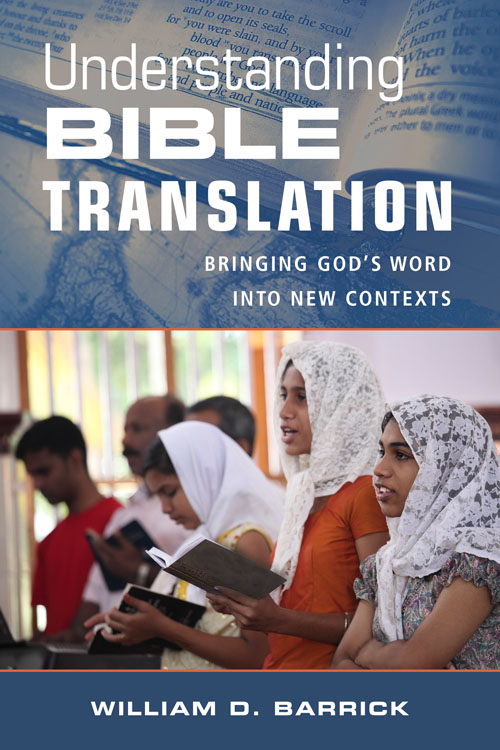
Ever wonder what it takes to get a Bible translated into another language for the first time? Wonder no more . . . or wonder at the amount of work it requires. . . .

Understanding Bible TranslationWilliam D. Barrick. Understanding Bible Translation: Bringing God’s Word into New Contexts. 256p., $21.99, Kregel Academic.
In Understanding Bible Translation, William Barrick surveys the fascinating work of Bible translation worldwide. Drawing on decades of experience translating the Bible, Barrick explains best practices for Bible translation and walks the reader through the translation process. In addition, he provides insight for evaluating English translations and highlights resources for understanding difficult passages of Scripture.


Posted in Uncategorized | Tagged , , | Leave a comment

Lay Down Your Dreams


I am becoming increasingly convinced, as I get older, that God does not demand our obedience simply because it honors him. That is, of course, a true and healthy reason to do it; and I wouldn’t even bothering arguing with someone who insists that it is the primary reason. Still, as I come to more deeply experience God’s love, I’d suggest that God demands our obedience because he wants us to become the people we were truly created to be.

Because only God sees the final picture, he’s therefore the only one capable of making it happen. Without our obedience—our submission to God’s vision of us, which is far bigger than anything we can come up with—the end result is a tragedy that only God can comprehend and experience the full depths of. The suffering we see and experience is but a rough fragment of that. In fact, I think that’s why Jesus became so angry with the Pharisees. They saw a broken law as an excuse to claim superiority. Jesus saw it as a sin so profound that only he could die to remove it.

Yet we insist on pursuing our own ways, our own visions of life. After all, we live in the Land of Opportunity, Where Dreams Come True®. All sarcasm aside, sometimes our dreams are genuinely God-given. Even then, however, they are God’s to dispense with as he pleases.

God has often blessed us by giving us the desires of our hearts. The thing about following Jesus, though, is that he keeps us moving. We’re never going to reach our destination here on earth. If we’re following Jesus, we’re always going to be moving forward, even if it doesn’t feel that way much of the time. And moving forward almost always means leaving things behind—even good things. At the very least, as Jesus changes us, our relationships with whatever or whoever comes along with us will also be changed.

As Jesus changes us, we also begin to let go of whatever keeps us from following him wholeheartedly. As we’ve seen, sometimes that’s sin; sometimes it’s our personal agendas or ambitions; sometimes we need to let go of lifelong dreams because they’ve become our idols. Sometimes, however, we even need to let go of good things, so that God can give us something even better—or transform those good things into something even better. In fact, God often doesn’t show us “the better thing” until we’ve given him what he’s asked us to give him.

As Dietrich Bonhoeffer put it in The Cost of Discipleship, “The first Christ-suffering which every man must experience is the call to abandon the attachments of this world. . . . We must face up to the truth that the call of Christ does set up a barrier between man and his natural life.”

We must be careful not to love our dreams for their own sake. We are to love the One who gives us those dreams and takes joy in fulfilling them, and share in his joy. Our joy and our longing are not always related. The joy produced by longing also delivers the promise of fulfillment, while longing without joy usually devolves into depression, decadence, or both, depending on your moral inclinations. It is the joy of God’s fulfillment, not the longing toward the dream’s fulfillment, which should be desired.

But whatever gain I had, I counted as loss for the sake of Christ. Indeed, I count everything as loss because of the surpassing worth of knowing Christ Jesus my Lord. For his sake I have suffered the loss of all things and count them as rubbish, in order that I may gain Christ and be found in him, not having a righteousness of my own that comes from the law, but that which comes through faith in Christ, the righteousness from God that depends on faith—that I may know him and the power of his resurrection, and may share his sufferings, becoming like him in his death, that by any means possible I may attain the resurrection from the dead. (Philippians 3:7–11)

We have a long way to go. Whatever dreams we have right now, even the ones God has placed in our hearts, are but “see[ing] in a mirror dimly” (1 Corinthians 13:12). They’re an infinitesimally small part of an infinitely larger picture. So lay down your dreams, so God can create what he intends from them.

Lay It Down Today

Reread Philippians 3:7–14. What’s the one thing—no matter how good or bad it is in itself—that you sense God is calling to you to surrender? What better thing(s) do you sense, even now, God may want to give you? And even if your answer to one or both of those questions is “I don’t know,” are you willing to trust God anyway?

If something came to mind in response to that first question, commit that thing to God now. Decide that no matter how many times you might fail—how many times you take that thing back—you’ll trust God more and more to help you to let it go. Then, ask him to help you receive what he wants to give you. If you’re comfortable doing so, turn your palms downward as if you’re releasing that thing. Then, turn your palms upward to receive what God wants to give you—even if you have no idea what it is. It might even be that same thing, only changed. But let God have his way with it.

Posted in Uncategorized | Tagged , , , , , , | 1 Comment

40 Questions About Calvinism


Everything you wanted to have foreknowledge of but was afraid to ask. . . . 🙂

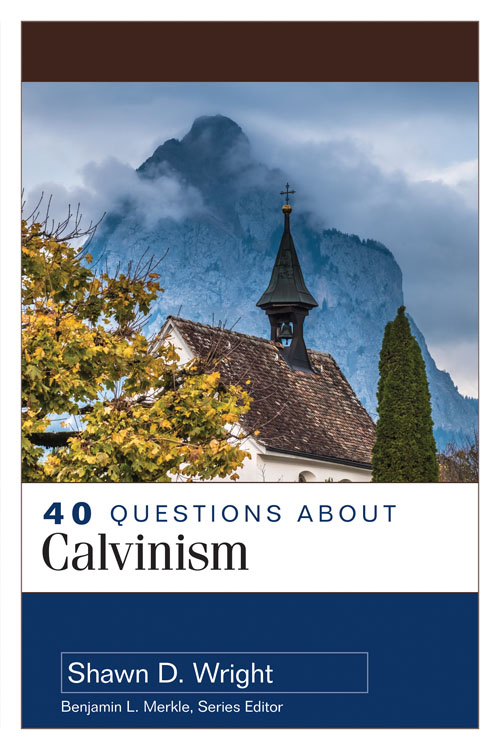
40 Questions About Calvinism

Shawn D. Wright. 40 Questions About Calvinism. $24.99, 320p., Kregel Academic.

In 40 Questions About Calvinism, church historian Shawn Wright tackles many issues about the theological system known as Calvinism. Taking an irenic approach, Wright explains the key doctrines while also contrasting them with Arminianism. The accessible format allows readers to easily look up topics they’re most interested in, including:

What is the difference between Calvinism and the Reformed tradition?
Does God love all people?
What is predestination?
Did Jesus die for the sins of the whole world?
Can people resist the Holy Spirit?|
Do Calvinists practice evangelism and missions?

For Calvinists or those seeking to understand Calvinism better, 40 Questions About Calvinism helps readers understand the key terms, issues, and debates of this highly influential theological viewpoint.

Posted in Uncategorized | Tagged , , , , | Leave a comment

Lay Down Your Crown


Blessed is the man who remains steadfast under trial, for when he has stood the test he will receive the crown of life, which God has promised to those who love him. (James 1:12)

Be faithful unto death, and I will give you the crown of life. (Revelation 2:10)

I am coming soon. Hold fast what you have, so that no one may seize your crown. (Revelation 3:11)

And whenever the living creatures give glory and honor and thanks to him who is seated on the throne, who lives forever and ever, the twenty-four elders fall down before him who is seated on the throne and worship him who lives forever and ever. They cast their crowns before the throne, saying,
“Worthy are you, our Lord and God,
to receive glory and honor and power,
for you created all things,
and by your will they existed and were created.” (Revelation 4:9–11)

Read those passages again; and this time note that the last three come from successive chapters of Revelation. There is a crown reserved for each of us who love God, and who out of that love persevere and remain faithful. And one day, we will certainly have to follow the lead of the twenty-four elders and lay—nay, throw—those crowns down before Jesus. It’s hard to picture, isn’t it? But try, right now, before moving on.

Perhaps the most difficult part of this picture to accept is the idea that the only way to have a crown is if God should give it to us—and that God ever would give it to us. In fact, the knowledge that we deserve far less than a crown makes us want to hang onto the lesser things we do have all the more tightly.

But remember: Everything we have from God, ultimately, is a gift. When we truly accept this, we’re able to “give to God what is God’s” (Luke 20:25). We’re able to trust God with his own gifts.

Read that last sentence again. It sounds ludicrous when put that way—because it is ludicrous. Who else can we trust? Do really have a choice—besides either trusting or not trusting God?

“The earth is the Lord’s and the fullness thereof” (Psalm 24:1). Why then do we live as if this isn’t true—as if we need to have a contingency plan in case this “God thing” doesn’t work out?

For if there was glory in the ministry of condemnation, the ministry of righteousness must far exceed it in glory. Indeed, in this case, what once had glory has come to have no glory at all, because of the glory that surpasses it. For if what was being brought to an end came with glory, much more will what is permanent have glory. . . . Now the Lord is the Spirit, and where the Spirit of the Lord is, there is freedom. And we all, with unveiled face, beholding the glory of the Lord, are being transformed into the same image from one degree of glory to another. For this comes from the Lord who is the Spirit. (2 Corinthians 3:9–11, 17–18)

Whose image are we being transformed into? The image of our King. The one who deserves his crown—and ours. What the Lord has done for us is not contingent upon our own righteousness.

However, our faithfulness does play a role. We will be given crowns; but we will never possess those crowns. Everything, including us, is God’s. As we lay down everything that is us, and remain steadfast and faithful to him and what he has done for us, we shall receive the crown of life. As we remain faithful into eternity, we shall be forever entrusting our crowns back to our King.

Today is the day to begin—and to stay forever beginning.

Lay It Down Today

Matthew 7:7–8 promises, “Ask, and it will be given to you; seek, and you will find; knock, and it will be opened to you. For everyone who asks receives, and the one who seeks finds, and to the one who knocks it will be opened.” Where is your lack of faithfulness showing? What are you still hanging onto? What are you trying to do yourself instead of asking for God’s help? And thus, where are you denying God’s life so that you can live your self life (however miserably)?

Spend time brooding on these questions—then repenting over the answers. Afterward, take the time to ask, seek and knock. Let go of your pride, your shame, your sense of self-sufficiency. Instead, ask God to show you the better things he wants to give—and for the heart to receive them on his terms. This gift, too, can only come from him.

Posted in Uncategorized | Tagged , , , | 2 Comments

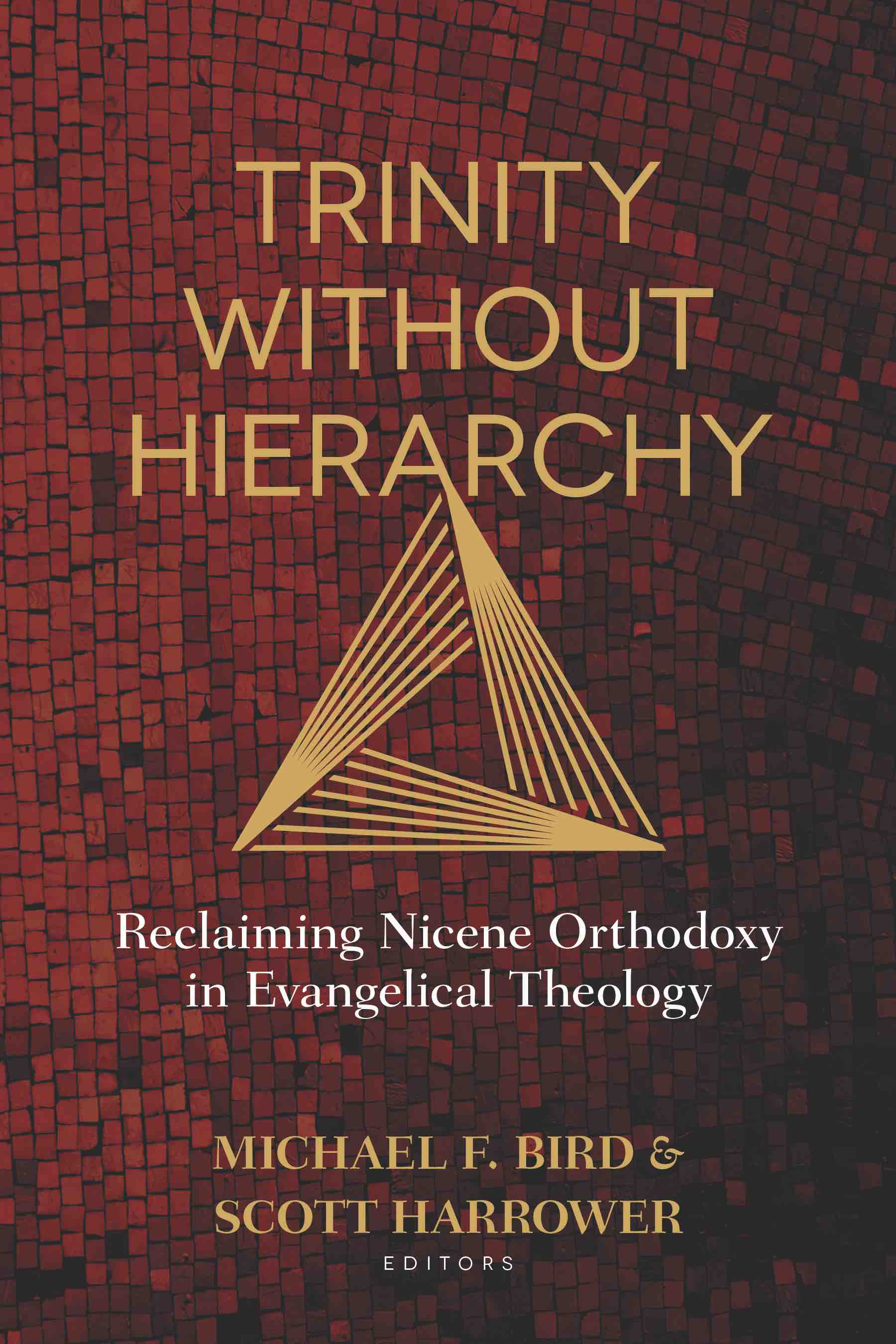
Trinity without Hierarchy


A defense of the equality of the Trinity. . . .

Trinity Without HierarchyMichael F. Bird & Scott Harrower, eds. Trinity without Hierarchy: Reclaiming Nicene Orthodoxy in Evangelical Theology. 352p., $25.99, Kregel Academic.

In response to those complementarian theologians who assert that the Son is eternally subordinate to the Father, the contributors to Trinity without Hierarchy contend that this view misconstrues the orthodox doctrine of the Trinity and reduces the Son to a lower level of glory and majesty than the Father. Surveying Scripture, church history, and theology, sixteen contributors present a defense of the full and equal authority of all three members of the Trinity while critiquing approaches that border on semi-Arianism. In particular, the creedal confessions of Nicaea are upheld as the historical standard by which any proposed Trinitarian doctrine should be judged.

While some contributors hold complementarian and others egalitarian viewpoints, all agree that Trinitarian relations are not a proper basis for understanding gender roles. Trinity without Hierarchy is indispensable reading for anyone interested in the current debate over the relationship between Trinitarian theology and the roles of men and women.

Posted in Uncategorized | Tagged , , | Leave a comment

Lay Down Your Gifts   


Let’s start today by revisiting Jesus’ commissioning of the seventy-two from a few weeks ago. The seventy-two certainly had something to rejoice in when they used the gifts they had received: “Lord, even the demons submit to us in your name” (Luke 10:17). And because of that, we tend to read Jesus’ response—“I saw Satan fall like lightning from heaven” (v. 18)—as something that happened at that very moment. I’m not so sure any more.

What if what Jesus really meant was this?: “I was there when Satan fell. I was there when he became so full of pride over what God had given him that he exalted himself above God. Be careful the same doesn’t happen to you.” It certainly would explain Jesus’ next words, “Nevertheless, do not rejoice that the spirits submit to you”—because after all, you’re not the first, and you’re not always in good company—“but rejoice that your names stand written in heaven” (v. 19).

There may well come a time where we will have to lay down our very giftedness and callings before Jesus—when we will need to say, “This is yours, Lord, and I will walk away from all of it if that’s what you want.” Should that occur, it will likely be because we’ve allowed our identities to become so wrapped up in what we’ve been called to do by Jesus that our identities are really no longer in Jesus.

It’s very easy to fall in love with the idea of “I’m called to do this.” It’s much easier to get excited about something new and unique than it is to get excited about doing what everyone else is doing—or at least, should be doing. Every day, God calls us to many seemingly mundane acts of obedience that are no less important than our seemingly “special” acts—and might well, in fact, be more important.

Doing God’s will and living in God’s will, while certainly related, are not the same thing. One involves obeying a very specific directive from God; the other is God giving us the freedom to live creativity within his broader will. Both please him—if they’re done in a spirit of obedience. As important as it is to use the gifts God’s given us and to follow his calling, it’s more important to develop the fruit of the Spirit—those qualities that grow from our new life within.

Jesus’ ministry was literally crucified. Why should we dare to think that our ministries and good works would be exempt from such testing?

Abide in me, and I in you. As the branch cannot bear fruit by itself, unless it abides in the vine, neither can you, unless you abide in me. I am the vine; you are the branches. Whoever abides in me and I in him, he it is that bears much fruit, for apart from me you can do nothing. . . . If you abide in me, and my words abide in you, ask whatever you wish, and it will be done for you. (John 15:4–5, 7)

Lay down your gifts, and concern yourself with abiding in Jesus. He knows how your gifts should be used—and whether they should be used—better than you. Apart from him you can do nothing. As your desires become his desires, his gifts and calling upon you will be used in ever-greater ways—because they’ll truly be his gifts and his calling.

Lay It Down Today
Let’s take another cue from the Sermon on the Mount for today’s prayer time:

So if you are offering your gift at the altar and there remember that your brother has something against you, leave your gift there before the altar and go. First be reconciled to your brother, and then come and offer your gift. (Matthew 5:23–25)

I want to expand the parameters a bit past this text’s original meaning, but with an intent that I think you’ll agree is thoroughly biblical. We may not bring physical gifts to the altar, but we do have gifts we need to offer up to God. There are ways we need to love those around us more, whether it’s a matter of anger and forgiveness (as stated here) or in other ways.

Therefore, spend some time in prayer today identifying the gifts God has given you and leaving them “there before the altar.” Ask God to help you be obedient, whether it’s something you’re gifted in or comfortable with or not—or no matter how “trivial” your act of obedience may be. Have the faith that God will use your obedience to produce what he wants in others’ lives—and in your own.

Posted in Uncategorized | Tagged , , , | Leave a comment

And Then There Was One


The title (and subtitle) says it all. . . . but more from the author if you’re not convinced. . . .

Echols CoverMary Echols. And Then There Was One: An Emotionally Raw Journey through Spousal Grief. 118p., $13.99, Deep River Books.

“This is my journey, an extremely personal and intimate journey thru the land of grief after the death of my husband. These words and this story were never penned with the intention of being read by others. They were written for me and only me, but here we are. What lies ahead of you in these pages is an unadulterated and emotionally raw view of my life during my time of grieving. I have decided to share this time of my life with you in hopes that it might ease your journey and that you may know that you are not alone in your walk thru the myriad emotions and everyday challenges that come with loss and grief.  Most importantly, I want you to know that at the end of the journey thru the dark land of grief there awaits a new sun shining in the uncharted territory of the life that awaits you.”

—Mary Echols

Posted in Uncategorized | Tagged , , , , | Leave a comment

Lay Down Your Blessings        


Our new lives in Christ are just beginning. We are changed; but we are eternally far from finished. “Not that I have already obtained this or am already perfect, but I press on to make it my own, because Christ Jesus has made me his own” (Philippians 3:12). We will not be finished until even our new lives are fully laid down before Christ; and that cycle of blessing, crucifixion, and resurrection will continue until the day we meet Christ face to face.

More often than not, I value my comfort more than I value obedience to God. I want to hang on to the good things God’s given me, and pester him for more. As I do this, I reject the One who blesses me in favor of his blessings. Romans 1 speaks to the end of this condition, if not halted: “For although they knew God, they did not honor him as God or give thanks to him, but they became futile in their thinking, and their foolish hearts were darkened. Claiming to be wise, they became fools” (Romans 1:21–22a).

I’ve been spending a lot of time in the Sermon on the Mount the past few months. (You will, too—but that’s getting a little ahead of ourselves.) At the time I’m writing this, I’m dwelling on the first half of Matthew 6—and it’s been dwelling on me, too. Specifically, there’s this rhythm Jesus repeats over and over, to the effect of: And when do this good thing, don’t call attention to yourself like the hypocrites do, so that they may be seen by others. Truly, I say to you, they have already received their reward. But when you do this good thing, do it not so that it may be seen by others but so it is seen by your Father who is in secret. And your Father who sees in secret will reward you” (see Matthew 6:1–4, 5–9, and 16–18).

“They have already received their reward.” Sometimes it’s OK to need reassurance or confirmation, but we need to move away from our dependence on it. God has given us many good things—and yes, sometimes as the result of the good things we’ve done in obedience to him—but sometime in the next handful of decades, I’m going to stand before God. How horrific it would be to hear, “You’ve already received your reward. I’ve provided for you, allowed your work to be recognized, even given you the joy of accomplishment. What more were you expecting? After all, you did it all for you.”

Now mind you, I’m putting hypothetical words in God’s mouth here. But the fact remains, many of the things we do for God are done with an eye toward how God will bless us, and how others will recognize it. (Virtual street corners count too, by the way.) Even if I’m doing it solely for the sake of eternal reward, my self-satisfaction about that, too, can become my reward.

God does promise us rewards and blessings as a result of our obedience to him. But we need to take a step further up—to learn to do things purely for God’s glory. That, truly, is its own reward. As we learn to do this, God can trust us to do the right things with the blessings he bestows upon us. Our Father is in secret. We must learn to become God’s spies in this world—as much as, if not more than, becoming “God’s spokespeople” or “God’s personal ambassadors.”

In case we still don’t understand, Jesus punctuates, and clarifies, all of his previous warnings to us with this:

Do not lay up for yourselves treasures on earth, where moth and rust destroy and where thieves break in and steal, but lay up for yourselves treasures in heaven, where neither moth nor rust destroys and where thieves do not break in and steal. For where your treasure is, there your heart will be also. (Matthew 6:19–21)

Teresa of Avila put it this way: “Spiritual maturity and its reward do not consist in spiritual delights, but rather in the increase of love.” This is where we need to head; and God help us, we will.

Lay It Down Today

Before getting to your assignment, I want to note that I’m introducing you to  (or reminding you of) practices you can do well beyond this study. After all, laying down your life doesn’t end once you stop reading this blog. We don’t get days off from the lives God has given us.

This week, we’re focusing on prayer, and providing the context Jesus wants us to have for our prayers. Thus, it’s your turn to spend time in the Sermon on the Mount.

Every day this week, read Matthew 5–7. One hundred eleven verses won’t kill you, but they will convict you. As you read through these chapters each day, be sure to linger on The Lord’s Prayer, located dead-center of this sermon (Matthew 6:9–13).

Also, ask yourself: Where is Jesus’ sermon hitting you right now? Which parts of this prayer do you most need to experience or respond to? Don’t move on to the second half of the sermon until you’ve wrestled with this each day. As the Spirit brings up specific matters—in every part of this sermon—stop and lift each of them up to God. Then act on them, as needed. Forgive your enemies—in person, if possible. Set your eyes aside to deal with your lusts. Repent of your need to have your good works noticed and praised.

You could spend a lifetime dealing with what Jesus brings up here. And you will. Eternal life starts now.

Posted in Uncategorized | Tagged , , , | Leave a comment

A Commentary on Romans


Not only that, but an applicational one. . . .

A Commentary on RomansJohn D. Harvey. A Commentary on Romans. 400p., $29.99, Kregel Academic.

This volume in the Kregel Exegetical Library combines up-to-date scholarship and concrete application to serve as an ideal guide for preaching and teaching the foundational New Testament book of Romans. After an in-depth introduction that surveys the book’s key elements, reception history, literary devices, and current scholarly debates, John D. Harvey provides a thorough explanation of every verse of Romans followed by theological insights and hands-on takeaways.

Readers will benefit from Harvey’s approach, which asks and answers three questions about each verse: (1) What did Paul say? (2) Why did he say it? (3) What should I do with it?

Posted in Uncategorized | Tagged , , | Leave a comment