Re-engaging Men…. starting in the home….


David Murrow is back. Mostly. But perhaps some history is in order….

Even for someone like me, who loves men’s ministry but recoils violently at the thoughts of Promise Keepers and John Eldredge (huzZAH!), Why Men Hate Going to Church was pretty stinking brilliant — not only in its exploration  of the recent “feminization” of the church but why men have felt so shut down by it, in striking detail. If you haven’t read it yet, do it — the points are largely still accurate, and once you worked through them, it’s like, “Well, duh — why wouldn’t men be shut down by this?”

Since that booming shot across the deck seven years ago, though, it’s been progressively diminishing returns. We’ve seen How Women Help Men Find God, which sought to further bridge the church gender gap (which, in many ways, this new book echoes). And then there was The Map: The Way of All Great Menhated it. I’ll say it now so I don’t have to repeat it later: David’s very good when he’s presenting an argument; he’s not a good “creative writer.”

This new one is a bit of all three past books, but fortunately more the first two, and the title should tell you he’s back in his wheelhouse. It’s not the knockout punch that Why Men…. was, but it accomplishes what it sets out to do. And that’s a good thing.
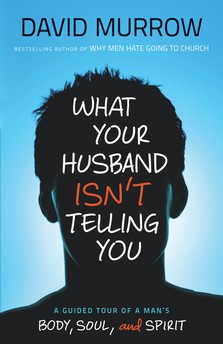
David Murrow. What Your Husband Isn’t Telling You: A Guided Tour of a Man’s Body, Soul, and Spirit. 212p., $13.99, Bethany House.

While the book is geared specifically toward women, Murrow comments than 80 percent of men don’t know what’s going on with themselves either. Thus, men could worse than to try this book on for size as well.

It’s also worth noting that this book gets progressively better as it goes along — not that the opening premise of man’s view of himself as protector and provider (and how that informs later chapters) isn’t on target, but the anthropomorphization of Protector and Provider here had me rolling my eyes, a lot. That’s right, kids, it’s The Map version of Murrow we get in the beginning (and being his last book, maybe should’ve expected).

That said, this opening premise is important. As he notes in the introduction: “I’m convinced that every fear, dysfunction, and insecurity in a man’s life flows from an overdeveloped or underdeveloped need to provide or protect. It’s Adam taking his roles too seriously, or not seriously enough.” So bear with the goofy, “Hi, I’m Provider” stuff. It’ll be over soon.

From there, things ramp up noticeably as the next three sections respectively explore a man’s body, soul, and spirit. The discussions about sex (body) are frank and on target; and the soul chapters explore the provider/protector issues a lot more cogently. And then there’s the spirit chapters. “How Men Relate to God—and Church” is probably my favorite here, as it hearkens back to the arguments of Why Men…. and adds a few more for good measure. But most of the message boils down to this: “The guys ‘get’ mission—but they don’t ‘get’ churchgoing.”

Thus, the final section, “So What’s a Woman to Do?” breaks down how wives can help their husbands to become re-engaged with church, and to heal and grow in body, soul, and spirit. The following maybe captures the essence of this book better than anything else, so here you go:

Here’s the truth about your husband: You probably already have a good man. But he’s trapped in a cage of self-protection…. A man cannot reach out in love when his arms are clutched in a defensive position…. So ladies, here’s the big secret to getting the man you want: Stop trying to improve him. Stop trying to fix him. Start trying to free him.

And in general, when Murrow stops to say, “Here’s the truth about your husband,” it’s time to listen. And there’s plenty here to listen to, if you so choose. So if you’re up for the challenge, get going.

Posted in Uncategorized | Tagged , | Leave a comment

Maybe We Should Just Go Read the Original Words Instead…


As I’ve always said about Shane Claiborne: I may not agree with everything he says, but I’m glad there’s someone out there saying it. And Tony Campolo’s been eminently quotable for decades now. Plus, Claiborne was Campolo’s student at Eastern University. So, all of this points to a really good book, right?

It should. To be sure, it has plenty of moments; and it’s worth it just to see Claiborne being his radically winsome self. The problem seems to be more in the “dialogue” structure of the book itself, and the underlying premises for creating the book. In the end, I walked away feeling like this book doesn’t quite know what it wants to be when it grows up.

Shane Claiborne and Tony Campolo. Red Letter Revolution: What If Jesus Really Meant What He Said? 288p., $22.99 (hardcover), Thomas Nelson.

In many ways, this is meant to be a follow-up to Campolo’s (and friends’) movement/blog/book Red Letter Christians—so named after Jesus’ words in the Bible—and intended to be a meeting-place between the evangelical and social-justice fronts. Again, a worthy endeavor. And as Campolo puts it in the intro (and in response to a Christianity Today article criticizing their focus), “Exactly! Not only do we say that the red letters are superior to the black letters of the Bible, but Jesus said they were!”

From there, the authors present their “red-letter”—or rather, their Red Letter—stances on 26 theological, lifestyle, and global issues, dedicating roughly 10 pages of “dialogue” to each. This is where it gets dicey. Sometimes the “dialogue” device works; a lot of times it doesn’t, and it’s almost always Campolo on the short end of the stick. A lot of it reads like Campolo interviewing Claiborne, then inserting his two cents after the fact. And as such, it often reads very clunky.

And depending on your current stances on the issues discussed, you’ll either be pumping a fist or throwing one. For what it’s worth, I’m already on board with most of what’s here, and interestingly (and again) the two chapters I’d have the biggest problems with are the only two where Campolo takes the lead, on homosexuality and the Middle East (read: Israel). In the former, Claiborne’s largely content on citing Andrew Marin’s Love Is an Orientation, which works for me by and large; while Campolo goes decidedly to the left. The latter is a mix: Campolo harps almost obsessively about “Evangelical Zionists,” but his more reasoned suggestions at the end are well worth considering, even if not they’re not yet in the mainstream of American evangelical thought.

Other chapters here will just make you think. The one on missions is quite helpful, as Claiborne talks about the welcome change in focus from “fixing the problem”—and thus disempowering indigenous peoples in the process—to equipping and empowering those we’re called to serve. And in a typically Claibornian spurt of imagination/creativity (or pipe-dreaming, if you’re that way inclined), he even suggests that his old economic professors reach out to local drug dealers, to help them put their spirit of enterprise to a much better use.

And the chapter on racism will likely blow you away. You can discover that one on your own, and again if you’re willing to work through the other issues here. But really, go read The Irresistible Revolution first (or even Jesus for President), because most of the thoughts in this book can be found there, and they’re so much more readable there.

In the end, this book doesn’t make me want to sign up to be a Red Letter Christian, again, even while I already agree with a lot of it. But it does remind me to take Jesus’ words more seriously—and to ask, in the words of this book’s subtitle, “What if Jesus really meant what He said?” And I think the authors would agree that’s a good thing.

Posted in Uncategorized | Tagged , , , | Leave a comment

Living as Though God Mattered


I had to adjust my sights a bit, but after doing so was able to enjoy this book. Because really, there aren’t any secrets here, or even that much in the way of new insight. What this is, really, is “Stuff We Already Know But Far Too Often Choose Not to Live Out.”

Kyle Searcy. Secrets of Biblical Wisdom: Unleashing the Power of Heavenly Insight in Your Life. 192p., $13.99, Chosen Books.

There are some things here worth chewing on, though. Consider the following:

• Wisdom is not the same as revelation. It’s not wisdom until it’s actually applied.

• Likewise, God’s revelation doesn’t mean that something will happen right away. It’s wisdom that actually provides the timeline for its fulfillment.

• Wisdom is seldom original. It is learned from others, so seek the advice of others regularly.

Really though, what this comes down to—and Kyle Searcy says it himself—is loving God with all your heart, and loving your neighbor as yourself; as well as coming to God with a pure heart, so that we might be trustworthy of the wisdom and insight He grants us. And that’s certainly not a bad message.

The chapter on purity is probably my favorite of the book, particularly the second half, which breaks down the different virtues of wisdom (gentleness, mercy, yieldedness to God, etc.). In fact, it really should’ve been its own chapter, as it’s not all that well-connected to the purity angle that starts the chapter.

Each chapter ends with questions for meditation and practical tips to apply what’s just been learned, which is, well, wise. I also appreciate the fact that Searcy’s chapters are regularly interspersed with prayer, as if to say, “I’ve said my part; now it’s time for you seek it from God.”

For someone who’s been in ministry awhile, again a lot of this will seem very familiar. But for the person just getting started in his or her Christian walk—especially if he or she’s coming out of a particularly unwise lifestyle—this book could be just the thing to give them some needed groundwork.

Posted in Uncategorized | Tagged , , | Leave a comment

Love, Obedience, and Purity of Heart


I’ve been spending a lot of time in the “upper room discourse” lately, in John 13-14 in particular so far. It’s an interesting section, since it’s one of the few where you really see Jesus interacting with His disciples collectively, instead of just one or two at a time. Heck, we even get a line out of Jude/Thaddeus (aka Judas Not Iscariot) here.

It’s also a hard section to wrap your head around, and simultaneously kind of annoying because it sounds like Jesus is constantly repeating Himself—like He’s constantly rephrasing the same comments over and over because His listeners just don’t get it. Then again, He’s talking to His disciples, and we know they’re kinda thick.

Or at least we should—because after all, we’re His disciples, too.

Anyway, what seems inescapable here is the connection Jesus draws between love and obedience. “If you love me, you will keep my commandments” (John 14:15). “Whoever has my commandments and keeps them, he it is who loves me” (John 14:21)

In fact, He connects our obedience with our ability to see Him work in our lives. “And he who loves me will be loved by my Father, and I will love him and manifest myself to him. . . . If anyone loves me, he will keep my word, and my Father will love him, and we will come to him and make our home with him” (John 14:21, 23).

This isn’t the first time Jesus makes this connection, though.  “Blessed are the pure in heart, for they shall see God” (Matthew 5:8). This word also helps constrain our obedience, so that it’s not blind—at best misguided, at worst satanic—obedience. Purity of heart is to want what God wants, in the way God wants it. It necessitates the right kind of obedience, and promises that God will manifest Himself as we do it.

Jesus illustrated this principle Himself later in John 14: “I will no longer talk much with you, for the ruler of this world is coming. He has no claim on me, but I do as the Father has commanded me, so that the world may know that I love the Father” (John 14:30-31, emphasis mine).

Especially to the world, our obedience can look wrong, misguided, and overly submissive—and sometimes it is. There is a time to stand up. But as He prepares to enter the garden of Gethsemane and take up His cross, Jesus shows us what standing up should look like. It’s not “in your face,” but in His name. It is doing what God demands, and letting the chips—and our desires—fall where they may.

So, along with Jesus, “Rise, let us go from here” (John 14:31).

Posted in Uncategorized | Tagged , , , | Leave a comment

Who We Are, Where We’re Going, and How We Get There


(or: How I Spent My Extended Summer Vacation, 2011 version)

Buckle up, friends—this’un’s gonna be almost as autobiographical as informative. But the back story does inform the official one. So bear with me….

For the final 4 1/2 years I was with my last major employer, a group of us guys from work got together every Friday morning, and got our “Bible fix” via a study called Gospel Transformation, put out by World Harvest Mission. Great content, all about our identity in Christ and how to live out of that. Rock-solid theology, but also very useful in terms of “the rubber hitting the road.” (For that matter, WHM founder Jack Miller’s Outgrowing the Ingrown Church has been a regular “re-read” of mine for 10 years now.)

One issue, though: The content was so substantial (both depthwise and pagewise) that it took us three years to work through it. By the time we finished, it was an entirely different group (aside from Brent [our leader] and me). Thus, after trying a more “small-group friendly” WHM study in vain, Brent suggested, “Hey, WHM has a new edition of Gospel Transformation; let’s go through that again.” So we ordered our new editions and got re-started. And then, in January 2011, the axe fell. We tried keeping the group going at my house (since half of us were now unemployed), but it fizzled out after a couple months.

During this same time, however, I received an e-mail from WHM (as re-purchasing GT got me on their mailing list), announcing that all their products would now be handled by a certain New Growth Press. Never heard of them, so I checked them out. What struck me off the bat was a) they had a healthy small-group section, and b) one of their resources was a study that went with the very book I was re-reading at that moment (Instruments in the Redeemer’s Hands, by Paul David Tripp).

So, being the enterprising soul I am, I shot out an e-mail, asking if they could use some editorial/small-group help. I was pleasantly surprised to receive an e-mail back from NGP editorial director Barbara Miller Juliani (who, I discovered months later, is Jack Miller’s daughter), saying that, yeah, she might have something for me in the future.

About four months later, Barbara e-mails me, indicating that World Harvest Mission wants to turn Gospel Transformation into a small-group series, and would I like to take on the project? And need you guess my answer?

So that’s the back story. Now, on to the real story—the series itself, and why you oughta run to your nearest Internet and buy it:

World Harvest Mission. The Gospel Series (follow hyperlinks below for more info/sample sessions):


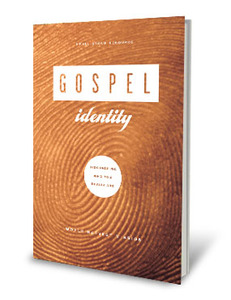
Gospel Identity: Discovering Who You Really Are.
Gospel Growth: Becoming a Faith-Filled Person.
Gospel Love: Grace, Relationships, and Everything That Gets in the Way. Each 128p., $12.99. New Growth Press.

Each study can be worked through separately, but there is a sequence going on here, and we tend to skip over the focus of the first study (and ultimately, the entire series): Everything we do emanates out of our identity in Christ—or our obliviousness to that. And the fact that we so often ignore that we’re new creations in Christ trips us up further down the road.

Gospel Identity directly addresses this issue, starting with how we tend to justify ourselves apart from Jesus—which only serves to illustrate how thoroughly we do need Jesus. From there, this first study examines the blessings we’ve been given through our new identity and new life in Jesus—justification, adoption, unity with Christ—how that helps us overcome our self-centeredness and idolatry, and how it pushes us outward so others can also see and experience new life in Jesus.

The second study, Gospel Growth, helps us better see how the gospel transforms us more into Jesus’ likeness. And as you grow deeper in your relationship with Jesus, you’ll discover how the Spirit desires to extend that growth far beyond you. Over the course of this study you’ll look at such topics as living by faith; spiritual disciplines; the hand-in-hand roles of faith and repentance in transformation; the meaning and importance of living in power of the Spirit; the goal of sanctification in our lives; and our increasing identification with the suffering, death, and resurrection life of Christ.

Which brings us to the most overtly “missional” of the three, Gospel Love—although again, without first knowing and growing in Christ, it’s mostly just “doing” instead of truly living out of our life in Christ. Thus, you’ll learn how the gospel frees you to actively love and accept everyone God puts in your path—because those people are your path. You’ll learn that you’re part of a new family—the Body of Christ. You’ll discover what living incarnationally looks like, exploring the importance of love in community; loving and forgiving those who are difficult to love; extending grace in our relationships; loving honestly, even in conflict; the role of the Spirit in growing the Body of Christ, and finally, exploring opportunities to extend your new family by bringing the gospel to others.

So, what’s changed from the original Gospel Transformation, aside from the more deliberate grouping of themes into more manageable-size studies? Quite a bit, actually. Again, the beating heart has been successfully transplanted here, but into a quicker, more agile body. As opposed to the 15-20 questions and several long reading passages of each of the original GT sessions, the small-group sessions are built to run 75 minutes a pop. Thus, each session sticks to 8-12 questions; and shorter leader transitions have replaced the longer narratives. There’s also a lot more group interaction built in, so subgroups can better interact with the material—and with each other.

Each session concludes with a series of optional weekly challenges that group members are encouraged to take on (and discuss with one another during the week), so that the lesson is something actually put into practice, not just discussed then dismissed.

In addition, a) there’s been a lot of resequencing of the original material, and b) several of the sessions are either brand new or complete overhauls of the originals. It’s far more than just a condensation of the original GT. Honestly, I’d say close to half of the material here is brand new. (You’re welcome. :))

But again, this didn’t come about ex nihilo. The message and intent of the original Gospel Transformation (from Jack and Paul Miller, through Neil Williams) is very much intact here. Likewise, there’s still plenty of scriptural and theological meat to chew on here—it’s just significantly easier to digest in one sitting. Think of it as a series of filet mignons, rather than a 32-ounce porterhouse. (But if you’ve got that kind of appetite, looks like the original GT is still available here; I believe WHM/NGP are planning on making it available electronically as well, in due time.)

I’ve said it a number of times before, but now I’ll say it “officially”: This is the proudest I’ve been of my work on a product not called Growing Out. Again, I had great material to work with—as well as great people, particularly Barbara at NGP and Patric Knaak at WHM. And at the end of the day, we all felt that I was able to take all that great material and make it a lot more manageable for a small-group audience, without compromising the integrity of the message itself—and make it a lot more applicational in the process.

But you be the judge. Follow those links above, and prepare to have your life changed.

Posted in Uncategorized | Tagged , , , , | 2 Comments

Gospel Identity: The Reviews Start Coming in….


Someone else’s words today, but that’s OK…

“You have to make a choice between material that is Christ centered and material that is easy enough for lay-leaders to use. You have to choose between material that is well packaged and material that is banal. Rarely can you find something firing on all cylinders.”

Needless to say, I SO agree. 🙂 My own longer review will be forthcoming (when my own review copies are in hand), but in the meantime this captures everything good about the Gospel series, that I was shooting for when I worked on it last year…. enjoy….

futonreformer's avatarConfessions of a Futon Reformer

At this year’s General Assembly of the PCA, I received a preview copy of New Growth Press’s small group materials. I was excited because I am a big fan of New Growth Press and their partnering organization, World Harvest Missions. As a pastor, finding small group material is often the rough equivalent of getting a root canal. Trust me, I hate the dentist; this is the most horrifying analogy I can come up with. You are constantly being torn between material. You have to make a choice between material that is Christ centered and material that is easy enough for lay-leaders to use. You have to choose between material that is well packaged and material that is banal. Rarely can you find something firing on all cylinders.

When I received the copy of Gospel Identity, I immediately tore into it. It is an excellent booklet for small groups. I…

View original post 575 more words

Posted in Uncategorized | Tagged , , | 1 Comment

A Remedy for Burnout


“Life doesn’t start when you’re twenty, or when you’re forty. Life starts at Calvary. And that’s where fruitful service begins as well.”

I’m still bothered trying to figure out exactly how much of this really happened and how much is fiction (or at least heavily embellished), especially as it’s presented/marketed in the form of a factual account. But you don’t need to obsess nearly as much about it. Just enjoy the story, accept the more fantastic/literary effects for what they are, and soak in the wisdom offered throughout.

Jose Luis Navajo. Mondays with My Old Pastor. 240p., $15.99, Thomas Nelson.

I don’t want to give away the story line here, so suffice to say for now: A quickly burning-out middle-aged pastor realizes he needs help, and quickly. He seeks out the advice of his former pastor, and they ultimately decide to meet each Monday over the course of a few months. Each meeting between the two pastors, then, becomes a self-contained lesson/chapter, addressing such matters as family, forgiveness, and the importance of placing ourselves fully before God. Ultimately, it all (literally) spells out the message: Everything is by grace.

Each Monday is peppered with at least one story illustrating the older pastor’s teachings for that week, and they’re well chosen. Most appear to be (at least recent) Spanish folk tales, but we’re also treated to Shel Silverstein’s The Giving Tree at one point as well.

If all this sounds a bit contrived, well, it kind of is. But again, it only trips up overly analytical people like myself. Those who just like a good story will roll with all this just fine, because it is told well. The interaction between the two pastors is pretty believable—and the struggles of the “younger” pastor certainly are. The advice offered by the older pastor is stuff we can all use, especially if we’re not in a good place in our ministry right now:

“Are you really thinking of abandoning the seed you planted with excitement and hope? Will you leave the plow to which you fastened your life to be stuck in the middle of an abandoned field? Plant your feet solidly on the ground… your ground. Grab onto the plow firmly… your plow. Look straight ahead and continue planting because spring is drawing near.”

All in all, Mondays with My Old Pastor is an encouragement to all of us to keep walking out our calling. So before summer’s completely over, give the left side of your brain a break and receive the gentle wisdom being offered here.

Posted in Uncategorized | Tagged , | Leave a comment

Lay It Down: A Re-Introduction


(As many of you already know, I’m in a[nother] period of transition here. So, as I restructure—and as I rework the first draft of the next book—thought I’d reintroduce said book here. And if you’re new to all this and like where it’s going, feel free to wander back through the archives. So enjoy, as I regain my bearings in a variety of ways….)

**********

“Greater love has no one than this, that someone lay down his life for his friends. You are my friends if you do what I command you” (John 15:13-14).

We read the words in John 15, and take great comfort in the fact that Jesus laid down His life for us, His friends. But if we truly belong to Jesus, guess what? Then He’s our friend, too. If we belong to Jesus, we too are to take up our crosses and follow Him (Matthew 16:24). Re-read the passage above with that in mind, and follow the implications.

“…And you know the way to where I am going” (John 14:4).

The idea of laying down our lives for Christ’s sake may seem impossible, but it’s not just an idea—it’s our calling. In fact, it’s our life-long calling—and beyond. It’s not only foundational; it’s eternal. It’s how we first came to Jesus, and it’s how Jesus continues to shape our will in union with His. It is salvation; it is sanctification; and it is the totality of eternal life in Jesus. Our lives have to move from being of Christ or for Christ to being “in Christ” (Romans 8:1, et al.) to the point where finally our life “is Christ” (Philippians 1:21, et al.).

Therefore, within these pages you’ll find some pretty heavy ideas being… well, laid down here. And why not? This is your life we’re talking about, and about laying down every piece of it for the glory of God. There’s nothing more important than that. It’s not easy. Quite the contrary: It’s the hardest thing you’ll even have to do. And if you do it right, you’ll get to do it every day for the rest of your life.

In some ways, this is meant to be a very practical book. But it’s not all about doing. Before that, and along with that, each of us is called to “be transformed by the renewing of your mind” (Romans 12:2). We are called to become the new person Christ intends each of us to be, and to understand that each of us is a new person.

The challenge for me, as writer—and for you, as reader—is to avoid compartmentalizing these things into stages, steps, 10 easy ways, etc. And because this is a book with a beginning, middle, and end, I’m presenting a certain structure and sequence to make it easier to understand. But the fact is, God doesn’t compartmentalize—because He doesn’t change. Repentance and grace go hand-in-hand. Obedience and freedom go hand-in-hand. Inner discipline and outward service go hand-in-hand. Walking in the Spirit and loving our fellow human beings go hand-in-hand. And we stumble away from God’s will for us when we try to separate these things.

Furthermore: Laying it down is not just about releasing our bad stuff, but offering up everything “good” we have to God. Jesus, the ultimate good, offered Himself up for us. Who are we to do less—and why do we think the ultimate results would not be as glorious?  “Truly, truly, I say to you, whoever believes in me will also do the works that I do; and greater works than these will he do, because I am going to the Father” (John 14:12).

Many equate laying down with giving up—specifically, with being a quitter. In some ways that’s true—for example, as when God calls us to quit the sins and/or idols in our lives. But as we venture further with Jesus, laying down becomes less about ceasing some activity we’re doing, sinful or otherwise, and more about a different kind of giving up—the surrendering of everything we do to Christ. It doesn’t mean we’ll stop doing the good things we surrender to Him, but it does mean that we give up control of those things to Jesus, so He can direct them, so that His will can be done.

Therefore, we don’t stop working, but we “work… for the Lord” (Colossians 3:23). We’re still parents and children and spouses, but our priority becomes glorifying God in those relationships rather than pleasing ourselves, or even that spouse or parent or child. We still use our gifts and talents, but we do it to serve God fully and not just for ego fulfillment—even, or maybe especially, in the context of “doing God’s work.” We still receive amazing blessings from God, but we learn to immediately place them back in God’s hands, knowing that even the people and things we love most were given to us for His purposes, and that our joy must rest in that rather than in His gifts.

So let’s get ready to Lay It Down.

Posted in Uncategorized | Tagged , , , , | Leave a comment

Being the Church by Being There for Others


“What does it take to influence someone to commit his or her life for Christ? How much effort must be put forth to impact a life for eternity?” asks church consultant Michael Wiles early on in these pages. His answer (my version): A lot. But the good news is: Anyone can do it.

Michael  Wiles. The Influence of Community. $12.00, 120p., ChurchSmart Resources.

(Full disclosure alert: I was editor for this book. Then again, who better to tell you what’s in here? :))

Although the focus of this book is squarely evangelistic, the emphasis is on letting our lives and our actions do the talking. Every person who’s met Christ has a story, he exhorts, and when it’s actually shared, other lives change as well.

Throughout these pages, Michael emphasizes the importance of simply investing into others — and faithfully keeping the commitments we make to them. The backdrop, and tangible illustration, for much of this is his brother Bishop Terry Wiles’ church in East Hartford, Connecticut, Crossroads Community Cathedral (Assemblies of God). Over and over, Michael emphasizes the church living up to its “middle name.” As he points out (after surveying more than 1,000 believers at Crossroads), 95 percent of those who gave their lives to Christ were first impacted by a lay person — an invitation to church, one-on-one relationship, or simply the love and acceptance by a person or group there.

All the while, however, strong biblical teaching was a huge factor. This is about seeker-friendliness, not seeker sensitivity. People visiting Crossroads, and other hurches Michael has counseled, were confronted with the real Jesus, not a watered-down version. It’s about community and commitment.

My favorite chapter, then, is the penultimate one, “The Impact of Presence.” I’ll let it speak for itself here (after which it’ll be no surprise why it’s my favorite). After walking us through the Model of Change — potentially either a cycle or a progression from pre-conversion to salvation, and then to discipleship or to relapse (in which case, back around again), Michael observes:

To get to the Relapse portion of the wheel you have to go through—or rather, skip over—Discipleship. If you ignore Discipleship, then Salvation will lead straight to Relapse.

It is my belief that many churches place at least some level of intentional effort on getting people saved, but almost no intentional effort on Discipleship. Without discipleship, many new converts will fall by the wayside. Many who get saved at our altars have no clue how to live a Christian life. They don’t know the power of spiritual disciplines such as prayer and Bible study. They don’t automatically realize that they need to be fed the Word of God by attending church. If someone doesn’t take the responsibility to nurture these new Christians along, they’ll go back to their former ways of living.

Discipleship is a necessity. And the person who helped someone see the need to become a Christian is, in many cases, the person best suited to help disciple that person, since he or she already have a relationship with with person.

I’ve often said that the unwillingness of mature Christians to go back and help newer Christians walk through the same things they have is the missing link in the church today; and it was nice to see someone else say it, too (especially in a book I had the privilege to work on).

The book closes with a more expanded “secret” of church growth, which Michael refers to as TINDER — Teach the Word of God; Instill a burden for the lost; Never settle for status quo; Develop Leaders; Empower the Congregation; Remain faithful. I think this speaks for itself — and if not, you can always go read the fuller version.

Each of the book’s 13 chapters contains a series of reflection and discussion questions, which are great for helping either groups or individuals turn their thoughts into action. A small group or Sunday school class could do far worse than to work their way through this book over a semester.

The Influence of Community has a simple message, but if it’s heeded — and acted upon — that influence has the potential to go way beyond church leadership.

Posted in Uncategorized | Tagged , , , | 1 Comment

So, Now What? (or, help a Christian brother OUT!)


This post’s for me. But you can help. A lot.

First, thank you for following along. With the last few entries earlier this week, I’ve completed the first draft of Lay It Down: The Life Jesus Has Always Wanted. It’s already begun doing its rounds with publishers and we’ll see where God takes it from here. (BTW, I’m considering dropping the more provocative/ornery subtitle and going with the perhaps more accurate A Journey Into Trust. But I’ll go with whatever the marketing department deems best.)

Which bring us to our question above: Now what?

Certainly I’ll still be writing more reviews, as well as more random entries. But “Now what?” is really a much bigger question than what happens on this blog. Let me elaborate….

This weekend, I went on a men’s retreat at Ravenscrest Chalet (Torchbearers International) in Estes Park, and I needed it in the worst way. I didn’t know anyone else there going in, and I was OK with that. I got to hear stories of what God’s doing in people’s lives, and the struggles they’re facing; and either just listen and be humbled and/or help them talk/pray it through, respectively.

In short, I got to be with a group of men who were earnestly seeking God. And I realized how much I missed that.

A little more than 18 months ago, I was creating adult resources/small-group materials at a Christian publishing company — theoretically, my dream job (or at least to close it — I’m still keeping an eye on my dream company). And let’s be entirely fair here: Through any number of serendipitous events, I got the opportunity to create something I never would have gotten the opportunity to create otherwise. And that’s not nothing.

However, a number of bad decisions — both businesswise and (I’d argue) theologically — led to the dismissal of myself and many of the people I cared most about there, close to 30 in all. (Interestingly, Lay It Down was first conceived about 24 hours before that all went down. I guess God knew I’d need something to hang onto.)

Mind you, even 5 1/2 years earlier, it was clear fairly early on that in this professed “open door”/”egalitarian” company, there were sectors where I would never really be welcome. Still, others equally “outside the camp” were many of the finest people I’ve ever known (and again, most of them were victims of the same layoffs).

I am at least working steadily again, and am thankful that I at least have a job (and especially with God’s timing, as unemployment was abruptly and inexplicably cut off just days after I accepted the position). Still, more often than not I feel like an exile. I’ve lost something — a lot — by being cut off from people pursuing God earnestly, and interacting with them on a daily basis. Even if, as speaker/Torchbearers director Chris Thomas put it this weekend, “the back of the [ministry] loom isn’t pretty,” it’s still taking part in weaving a tapestry.

And thus, once I had some alone time Saturday night, I found myself saying — pretty much choking out — the following prayer: “Lord, is it too much to ask to have that kind of community and a job with a purpose?”

So thus, I put that question out to you. I know you guys have connections, and a few of you may even have openings. And I figure putting out an APB here is as good a place as any to start. Not that I haven’t been looking for 18+ months now — and trust me, I’ve interviewed with and been turned down (sometimes repeatedly) by the best 🙂 — but this weekend just reinforced where my heart really is at, and that’s it’s not just “the thrill of the chase” or even the need for validation. Not that those aren’t present — I am what I am — but now I know in my hearts of hearts that I truly want this, and that it’s right to want it. So I’m asking, with the hope that I shall receive.

So thank you in advance for your help. And again, thank you for tuning in.

Posted in Uncategorized | Tagged , , , , | 1 Comment