Lay Down Your Reputation, part 2


In the first part of this meditation/devotional (found here), we looked at the reputations we try to keep, and how we tend to use them as a way to rely on the love of others rather than the love of God.

Here’s the other half of that: We not only play this game with others, but we try to play this game with God, too. We not only want to be remembered by God, but have the audacity to think we deserve being rewarded for the good things we’ve done. To be sure, Scripture says that God rewards the faithful. The problem comes when we put the focus on doing good—and making very sure others, including God, know it (as if He didn’t)—rather than seeking our joy in what is good. When we seek to be recognized for our good behavior, Jesus says, we already have our reward (see Matthew 6:1-16), and shouldn’t expect anything more than the massaged egos we already have. The Apostle Paul got this:

“In my zeal for God I persecuted the church. According to the righteousness stipulated in the law I was blameless. But these assets I have come to regard as liabilities because of Christ. More than that, I now regard all things as liabilities compared to the far greater value of knowing Christ Jesus my Lord, for whom I have suffered the loss of all things—indeed, I regard them as dung!—that I may gain Christ, and be found in him, not because I have my own righteousness derived from the law, but because I have the righteousness that comes by way of Christ’s faithfulness—a righteousness from God that is in factbased on Christ’s faithfulness.My aim is to know him,to experience the power of his resurrection, to share in his sufferings, and to be like him in his death, and so, somehow to attain to the resurrection from the dead” (Philippians 3:6-11).

Again, anything we’ve done apart from God is… apart from God. To lay down your reputation is to experience the life of Christ (turn one chapter earlier to Philippians 2 for a fuller illustration). So lay it down, and let Christ be the one to raise you back up.

Lay It Down Today

What are the “plaques” in your life, whether they’re physical or not? What do you point to as evidence of your own goodness or righteousness? Put another way, what do you find yourself defending other than God—or even perhaps in the midst of “defending God”?

A.W. Tozer, in his “Five Vows for Spiritual Power,” put it this way: “We’re all born with a desire to defend ourselves. And if you insist upon defending yourself, God will let you do it. But if you turn the defense of yourself over to God He will defend you.… For 30 years now it has been a source of untold blessing to my life. I don’t have to fight. The Lord does the fighting for me. And He’ll do the same for you. He will be an enemy to your enemy and an adversary to your adversary, and you’ll never need to defend yourself.”

So where do you need to lay down your reputation? Spend some time submitting that part of you to God in prayer right now. Resolve not to defend yourself, but to allow God to be your defender. And then, get up from prayer and start walking it out.

Posted in Uncategorized | Tagged , | Leave a comment

It’s the Song, Not the Singer


Let me put my personal prejudice on the table, and then we can all feel free to ignore it: I’m not a fan of Leonard Sweet’s style of writing. Nonetheless, because of the focus of this book, I took a chance on Len’s latest. Sure enough, the first 20 pages (and the last 30, for that matter) had me thinking, “Here we go again.” But the 200+ pages in between are a message that needs to be heard. And it boils down to this: It’s time to stop creating and following “Christian leadership” as it’s become, and start becoming people who follow Jesus.

Leonard Sweet. I Am a Follower: The Way, Truth, and Life of Following Jesus. 288p, $15.99, Thomas Nelson.

As he puts it (right at the point the book ramps up), “You and I are never leaders, only followers. The best we can aspire to is to become first followers, not followers who then go on to be leaders…. Even when we are summoned to the front of the line, we are still behind our Leader.”

From there launching point, the writings break down into three different aspects of followership: Via (The Way), Verita (The Truth) and Vita (The Life). Really, each section is a collection of short essays that can be read independently of one another. Nonetheless, they hold together well. And he drops some great lines as he goes along. The samples here should give a good indication of where he’s coming from:

“What are many of the most popular Christian leadership conferences but celebrity worship orgies?”

“For the most part, the Father’s business has been replaced by the corporate business of church, patterned after the business world itself. We have lost our passion for the winds of the Spirit and have become mesmerized by the machinery of success and the propellers of prosperity.”

“[W]e don’t think we are the bride of Christ anymore. Instead, we are in the ‘get my needs met’ business or the program business or the feel-good business or the franchise business or the social-justice business.”

And for me, the most poignant, “For the church today to fail in discipling followers is the ultimate failure.”

At the end of each section is a series of “interactives”—questions and/or activities that readers can work through to deepen their understanding of the message of each section. I wish I could say these did more for me, but there clearly was thought put into them so they might work better for you.

So again, no matter how you feel about the writing, work through the message here. Learn to follow Jesus. It’s worth it.

Posted in Uncategorized | Tagged , , , | Leave a comment

Lay Down Your Strength: the fuller version


Our strength—or rather, our reliance upon it—is still pride. And because of that, it must be broken. Watchman Nee, in his book Changed Into His Likeness, put it this way, “The characteristic of those who truly know God is that they have no faith in their own competence, no reliance upon themselves.” When we reach that point, then we’re truly useful to God.

Even much of the strength we think we have comes from our need to compare ourselves to others. We may be correct in thinking we’re much more gifted in a certain area or areas in comparison to others. But what is that in comparison to God? Before Him, even our strength is weakness. Until we’re willing to acknowledge that, even what little strength we have is useless to God.

On a personal level, studying the life of Abraham may have been the most rewarding thing I’ve ever done in terms of understanding God’s work in our lives. Over and over, you see this cycle:

a) God calls Abraham.
b) Abraham tries to do things his own way, and fails miserably.
c) Abraham finally “gets it,” relents and allows God to accomplish His will in His way, and with His timing.
d) Abraham himself begins to truly reflect God’s will.
e) God brings Abraham to a new level—and a new test.
f.) Repeat b.-e.

In the end, Abraham gets where God wants him, but in God’s way and God’s way only. Abraham was an ordinary man with an extraordinary God. So let’s take the cycle and use it to break down what’s probably the best-known example:

a) God promises Abraham a son (Genesis 15).
b) God doesn’t appear to be doing anything, so Sarah pushes Abraham to take matters into his own hands. “Here, sleep with my servant Hagar; we’ll have a son that way.” The result: A ton of family contentiousness (Genesis 16)—as well as millennia of religious contentiousness, via the birth of Ishmael, the forefather of Islam.
c) God waits 13 more years, until Ishmael’s has reached adulthood and neither Abraham nor Sarah have the human ability to bear any more children, and repeats his promise to Abraham (Genesis 17-18).
d) Oh, and Abraham also has to pray for an entire kingdom’s worth of barren women first, because he hadn’t managed to break that nasty habit of calling Sarah his sister whenever another king was around—yet another trust issue for Abraham. Imagine for a moment how it must have felt to pray for the barrenness of those women, in light of the years of waiting Abraham’s already had. But once he does, then at last God delivers on His promise (Genesis 20:17–21:1).
e) Years later, God commands Abraham to sacrifice Isaac—the very same son God had promised, and given. But now, Abraham doesn’t flinch. As a result, God spares Isaac, and makes a great nation of him and his offspring (Genesis 22).

Likewise, we often want to do God’s work, but nearly as often we don’t want to do it God’s way. We rationalize why we shouldn’t wait, or why some other way would be so much more “efficient.” But unless what we do starts with God, it’s worth nothing. We must not will to do, but will to receive, and then share what God gives us.

When we lay down our strength, we give God permission to exercise His strength through our lives. We give birth to Isaacs instead of Ishmaels. We grow fruit that lasts, not dead branches to be burned. We witness God doing something so much greater than we ever could have imagined that we have to choice but to praise Him—and rejoice in our weakness that gave Him the opportunity to work in our lives.

And when it comes right down to it—when you look at the results instead of the circumstances—what’s really the easier and more rewarding route, to give birth to an Ishmael or to an Isaac? Think about it.


Lay It Down Today

If you’re a reader—and since you’re reading this, I’m guessing you are—take the time to read through Genesis 15-22 (or at least Genesis 15:1-6, 16:1-6, 20:1-7, and 20:14–21:3). Don’t try to analyze it; just read the story of this part of Abraham’s life and let God speak. To help you process (and even if you don’t read through the Genesis passages), take the time today to think and pray through these questions:

• What right now has got you wondering, “Why hasn’t this happened yet?”  If your impatience were to get the better of you, what would you try to do on your own strength? In other words: What would your Ishmael look like?
• What small successes and evidences of God’s presence in your life could you focus on, while you wait for “this” to happen?

Posted in Uncategorized | Tagged , | 4 Comments

It’s a New Day… because it HAS to be.


I’ll try to keep this one short but personal.

Well, first of all: If you’re reading this, thanks. I hope you’ve found these postings useful, inspirational, or something positive. ‘Cause now, things are gonna change up a bit.

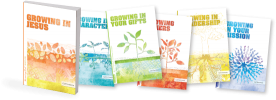
Over the last 10 months — particularly on Mondays and Wednesdays — you’ve been enjoying devotional reiterations of lessons from my small-group series Growing Out: From Disciples to Disciplers. And again, if you’ve enjoyed them, click that link I just posted and show Growing Out some love (or get some free review copies and tell yr friends — details, again, here).

But now I’ve exhausted that significant motherlode of content. So from here, it’s all new, baby. You’ll either find reviews of brand-new releases here, or excerpts from the work-in-progress, Lay It Down. You’ve already been seeing pieces from the latter on Fridays, and thanks for the positive feedback so far; it tells me I’m on the right track. But now it’s time to stop coasting and get serious, for any number of reasons. In short, you’ll be encouraged to lay down a whoooole lot more in the days to come.

So here we go. Stay tuned, and thanks again for all yr support. — Carl

Posted in Uncategorized | Tagged , | Leave a comment

The Meaning of Success


For those of you who’ve been following along: Congratulations! We’re spent an entire season of Wednesdays exploring what it means—and what it takes—to pursue a God-given vision. And I hope that, in the process, you’ve gained a deeper understanding of how God’s working in your life to accomplish that vision.

But this isn’t the end of our journey. It’s really only the beginning. So let’s begin to dream even beyond where God’s already taken us. And so we can truly be ready for that dream to become real, let’s get grounded, too. Let’s start this dream session by considering the kind of people God dreams about us becoming, even now on earth. Reflect on this:

• Who’s the finest person you know? What makes him or her so special?
• Think about that second question again. Why do his or her qualities resonate so deeply with you? What does God say to you through that person’s life?

We’ve spent a lot of time over the last few months exploring how to “do” the vision God’s placed before each of us. But it started with us being people God was willing to take a chance on, by being available for God to work through us. Anything good God accomplishes through us starts and ends with God, and therefore any glory that comes from it is His, too.

Dallas Willard, in Renovation of the Heart, puts it this way: “To ‘grow in grace’ means to utilize more and more grace to live by, until everything we do is assisted by grace…. The greatest saints are not those who need less grace, but those who consume the most grace, who indeed are most in need of grace—those who are saturated by grace in every dimension of their being. Grace to them is like breath.”

So let’s spend one last round being in God’s Word and discovering more about Him, so we can hand all the glory over to God—where it belongs.  Read the following passages slowly. Pause between readings. Take the time to hear what God’s saying through these passages to you. Then , go on to the questions that follow:

• Psalm 92:1-5, 12-15
• 2 Corinthians 3:7-13, 16-18
• Ephesians 1:9-11
• Philippians 2:12-13
• Philippians 3:10-14
• Hebrews 13:6-7, 14-16
• 1 John 2:28–3:3
• Revelation 4:1-11

• Which of these passages speaks the loudest to you right now? Why?
• How easy is it for you to accept the idea that you’re created for God’s pleasure—and that God delights in growing you even further?
• Think again about these passages, and the people in your lives you shared about earlier. How can we experience God’s pleasure more and more?

“Life in concert with God—ultimately that is what we are practicing for,” says pastor Robert Gelinas in Finding the Groove. So let’s begin to envision that, and get practicing.

There’s a scene in the movie Field of Dreams that just kills me, and which speaks to how big, yet how personal, God’s vision for us is. Let’s watch it now (it’s a long one).  Then think about this:

• As you finish this season—and prepare for the next season God has in store for you—who in this scene do you most feel like right now? Why?
• Think about Shoeless Joe’s comment, “No, Ray, it was you.” How has God already touched you through this vision in ways you couldn’t have imagined a few months earlier?
• There’s really only one question left: What do you think might be next?

Right now, just open your mouth and glorify God for everything He’s done, and for everything He has yet to do but will. And here’s my benediction to you, as you do so:

May you fully realize who God has created you to be, and become those people.
May you reveal God’s Spirit to everyone who sees your life.
May the love of Jesus spread from you to everyone you know—and beyond.
May God use you to transform and renew your world, as he has transformed and renewed you.
May your joy in Jesus be so great that nothing can contain it, and so it flows over everyone God puts in your path.
And to God be all the glory. Amen.

Posted in Uncategorized | Tagged , , | 1 Comment

Where Do We Go From Here?


“Here’s a test to see if your mission in life is finished—if you’re still alive, it’s not.”
—A.W. Tozer

Over the last few months of Mondays, we’ve explored gifts, talents, and passions—the hands and hearts God has given each of us. Today addresses the big question, “Now what?” So let’s reflect on how God got us to this point, and what we’ll need to go any further.

Last Monday we closed with a picture of the early church in Acts 2—one which often seems more like a dream than a reality. So this week, let’s look at a different snapshot of a very similar scene—one that might give us a better idea of how God could actually use us to achieve to change the world around us, no matter how impossible that looks to us right now. As you read, put yourself in this scene. Don’t worry about hostile religious leaders or the fact that you’re not Peter. Let’s not forget that Peter wasn’t always the person we find in this passage either.

Whatever’s stopping you from putting yourself in this scene, block it out of your head. Again, we’ve spent an entire quarter focusing on the gifts, the passions, and the heart God’s given each of you, so let’s have a little fun envisioning this. Where would you be in this scene? How could God have changed you from an observer to a participant here?

And when they had set them in the midst, they inquired, “By what power or by what name did you do this?” Then Peter, filled with the Holy Spirit, said to them, “Rulers of the people and elders, if we are being examined today concerning a good deed done to a crippled man, by what means this man has been healed, let it be known to all of you and to all the people of Israel that by the name of Jesus Christ of Nazareth, whom you crucified, whom God raised from the dead—by him this man is standing before you well. This Jesus is the stone that was rejected by you, the builders, which has become the cornerstone. And there is salvation in no one else, for there is no other name under heaven given among menby which we must be saved.”

Now when they saw the boldness of Peter and John, and perceived that they were uneducated, common men, they were astonished. And they recognized that they had been with Jesus. But seeing the man who was healed standing beside them, they had nothing to say in opposition….

When they were released, they went to their friends and reported what the chief priests and the elders had said to them. And when they heard it, they lifted their voices together to God and said, “Sovereign Lord, who made the heaven and the earth and the sea and everything in them, who through the mouth of our father David, your servant, said by the Holy Spirit,

   “‘Why did the Gentiles rage,
   and the peoples plot in vain?
   The kings of the earth set themselves,
   and the rulers were gathered together,
   against the Lord and against his Anointed’—

for truly in this city there were gathered together against your holy servant Jesus, whom you anointed, both Herod and Pontius Pilate, along with the Gentiles and the peoples of Israel, to do whatever your hand and your plan had predestined to take place. And now, Lord, look upon their threats and grant to your servants to continue to speak your word with all boldness, while you stretch out your hand to heal, and signs and wonders are performed through the name of your holy servant Jesus.” And when they had prayed, the place in which they were gathered together was shaken, and they were all filled with the Holy Spirit and continued to speak the word of God with boldness.

Now the full number of those who believed were of one heart and soul, and no one said that any of the things that belonged to him was his own, but they had everything in common. And with great power the apostles were giving their testimony to the resurrection of the Lord Jesus, and great grace was upon them all. There was not a needy person among them, for as many as were owners of lands or houses sold them and brought the proceeds of what was sold and laid it at the apostles’ feet, and it was distributed to each as any had need. Thus Joseph, who was also called by the apostles Barnabas (which means son of encouragement), a Levite, a native of Cyprus, sold a field that belonged to him and brought the money and laid it at the apostles’ feet (Acts 4:7-14, 23-37, ESV).

So let’s think about what God created in this scene, and about God might want to create with each of us:

• Sticking to what’s actually in God’s Word here, what gifts and passions did you see play out during this scene? Name as many things as you can.
• Now let’s shift back to our reflection time. How did you see God using the gifts and passions he’s given you in this scene?
• Read the first paragraph again. How does Peter’s reply answer your own doubts about being able to do what God might want you to do?

Take some real time to reflect on the questions that follow. As you do, don’t approach this as if you need to have it all worked out. God doesn’t expect that—and besides, even if you think you’ve got it worked out, God knows His plans better than you do. Simply capture as best as you can where you sense God’s leading right now, and what you think the next steps could look like.

• How might my gifts and passions might work together to serve God?
• What’s the most important thing God’s been showing you recently?
• Based on your last answer, what’s the next step God you believe God’s leading you to take?
• Are you willing to prayerfully wait for God to lead you into those next steps, rather than run out ahead on your own strength (even if all your answers above were “I don’t know”)? If not, what’s holding you back?
• Do you really believe this is what God wants you to do? Are you willing to see it through even if things don’t go the way you want them to? If not, again, what’s holding you back?
• What skills or gifts do you know you lack but know you’ll need for this thing God’s put on your heart to work? Who can use their gifts to help you? Who can you learn from?
• Whose gifts complement yours? How might you also be able to help them accomplish what God’s put on their hearts?

Good work! So before moving to the end, let’s take a moment to recollect ourselves. Watch this scene from the movie The Lord of the Rings: The Two Towers; you can start it at the 1:47 mark, if you like. Then, move on…

The end of all things is at hand; therefore be self-controlled and sober-minded for the sake of your prayers. Above all, keep loving one another earnestly, since love covers a multitude of sins. Show hospitality to one another without grumbling. As each has received a gift, use it to serve one another, as good stewards of God’s varied grace: whoever speaks, as one who speaks oracles of God; whoever serves, as one who serves by the strength that God supplies—in order that in everything God may be glorified through Jesus Christ. To him belong glory and dominion forever and ever. Amen (1 Peter 4:7-11. ESV).

Where are you thinking, “I can’t do this”? Where have you gotten so wrapped up in “I have to do this” that you can’t see the people right alongside you who want to help? Where can’t see you see far enough to the end to believe God will finish the job he’s started in you? What’s the good that’s worth fighting for that you need God to renew in your own heart, so you can keep fighting for it? Take all of it to prayer now. I’ll even get you started…

Lord, we thank you for giving us your life—for breaking through the darkness in our lives with Your light. There’s nothing more important than that. And because of what You’ve done in our lives, please use our lives to bring glory to you, and to reveal Your power and goodness to a world that desperately needs to see it.

Help each of us to see how unique we are to You, and to see what You want to accomplish through each of us. Show us the gifts and passions that truly have come from You, and what You want to do with them. Show us the people we need to work with to glorify You. Give us what we lack so we can look back and see the incredible things You’ve done through us—and maybe even despite us. Open our eyes to see those who need to hear of Your love, and those who need to see it in our actions, and prepare us for that work. Give us all the hearts to allow You to work, and show us how to put our hearts together to accomplish Your will. In Jesus’ name, amen.

Posted in Uncategorized | Tagged , , , | Leave a comment

An Offer You Could Refuse… But Why WOULD You?


This week’s Other Voice… is you.

Well, that’s actually up to you, but that’s the offer I’m putting on the table.

Here’s my dilemma: For the past year, my 6-study series Growing Out has been wandering the earth without a marketing team behind it (and given that it’s only been out 15-19 months, depending on the book, that ain’t good). So I’m taking one more shot at helping it to be heard.

My solution: Again, that’d be you. Here’s how it works:

1) Read over the series description, here.
2) Write me at carl.simmons@comcast.net. Tell me which one study y’r most interested in, and give me an address to send it to, and I’ll send it (a $14.99 value!).
3) Write a review of 200 words or better, then post it to yr blog and at least one other commercial site (Amazon, Barnes & Noble, christianbook.com, etc.).
4) Then, let me know you did, and I’ll push your review out to FB, Twitter, etc. Cross-promotion helps all of us. 🙂
5) If you want to review more books in the series, I’ll be happy to send more later on, but funds are at a premium right now. So get the first review done first, then we’ll talk.

The reality is, the most likely way any word will travel from this point forward is word-of-mouth. Therefore, I’m asking you to open your virtual mouths.  If this blog, this series, or the passion for discipleship itself, has moved you at all, help me out.

I know God can do anything, and that the creation of this series was not for nothing. Too many things happened along the way that only could’ve been God’s hand at work. But I also know that God moves the hearts of people to see His work accomplished. So I’m putting this request out there. This is too important. I wouldn’t’ve written 1,100 pages if I didn’t feel it was that important.

And to be honest, I have yet to see another small-group study on the market that addresses this question: How do you take what God’s already revealed to you, turn around, and help someone else walk through those same issues, rather than stamping them with a “saved” sticker and leaving them to drown?

Put simply, this is where the American church has failed miserably. People get plateaued or stuck, and leave, because a critical point has been overlooked: Do you see those people coming in the door and/or just coming to Christ? THEY NEED YOU. And guess what? You need them, too—more than you know.

So in my own small way, I’d like to help address this gaping problem in the church. And in your own small way, I’d like you to help. So drop me a line and tell me which study you’d like to check out. Thanks in advance.

Posted in Uncategorized | Tagged , , , | 1 Comment

So, How Are YOU Doing?


We’ve spent the last few Wednesdays looking at various challenges we’ll face in walking out the vision God’s given us for ministry, and our reactions to those challenges. But even when we don’t run into major issues, we can still find ourselves running on empty just from the work itself. And that’s going to affect how well we live out God’s call on our lives—and God’s call is on every area of our lives.

As J. Oswald Sanders observes in Spiritual Leadership, “If a Christian is not willing to rise early and work later, to expend greater effort in diligent study and faithful work, that person will not change a generation. Fatigue is the price of leadership. Mediocrity is the result of never getting tired.” Therefore, if we’re truly engaged in God’s work, we constantly need God’s strength and wisdom in order to fulfill that work. So today, we’re going to work on becoming more proactive in pursuing God, so we’re relying on Him when new challenges hit.

So let’s tab up, and read read 1 Kings 18:36–19:18. Then think about this:

• How would you explain the dramatic shift(s) in Elijah’s behavior here?
• What things does God provide Elijah throughout the course of this passage? Name as many as you can.
• When have you “hit the wall” like Elijah did here? If God had asked you at that time “Why are you here?” (1 Kings 19:9), how would you have answered?
• How did God restore you? What did God teach you from that experience?

We may feel, like Elijah, that we’ve done everything God’s asked. We might have even seen great victories like Elijah had. Nonetheless, getting those things done takes something out of us, and suddenly we find ourselves incapable of dealing with the next challenge. Even if others might be able to look at us and say, “What’s your problem? Look at how well you’re doing!” we may still feel like Elijah did—alone, abandoned, like no one else understands what we’re dealing with. Even when God’s clearly with us. And God always is with us.

“[T]hose who are looking to us for spiritual sustenance need us first and foremost to be spiritual seekers ourselves,” says Ruth Haley Barton in Strengthening the Soul of Your Leadership. “They need us to keep searching for the bread of life that feeds our own souls so that we can guide them to places of sustenance for their own souls.” So let’s step back and explore how we can remain, rediscover, reconnect, and be renewed by God’s presence and power, and where we might need that most right now.

“I appeal to you therefore, brothers, by the mercies of God, to present your bodies as a living sacrifice, holy and acceptable to God, which is your spiritual worship.Do not be conformed to this world, but be transformed by the renewal of your mind, that by testing you may discern what is the will of God, what is good and acceptable and perfect” (Romans 12:1-2, ESV).

• When do you find it easier to try harder, or “be conformed to this world,” to get things done, than to be “a living sacrifice”?
• What would God’s “good and acceptable and perfect” will look like in those situations? (And if your answer’s “I don’t know,” what do you need to change in your thinking to find out?)
• Where do you find yourself overextended (or in danger) in either your ministry or your personal life right now? How can that situation be transformed so it’s fully in God’s hands, rather than yours?
• How can you invite God to continue to transform and renew the way you think in those areas, so this isn’t a “quick fix” but a new way you’ll do things from now on?

So go forth and do… or don’t do. But “do” it with a sense of pursuing God’s “good and acceptable and perfect” will. And may you, and your ministry, be transformed as you “do” so.

Posted in Uncategorized | Tagged , , | 2 Comments

The Importance of Being You


Since we’re only a little removed from Christmastime, let’s open with a scene from the movie It’s a Wonderful Life. Cue it up to 1:32:18, where George Bailey says, “I’m in trouble, Mr. Potter. I need help,” and play it until 1:35:11, when Potter’s on the phone saying, “Bill? This is Potter.” Got that? (BTW, keep the tab open when you’re done; you’ll come back to this later.)

Now, I’d like you to close your eyes, and think about a time you went through a crisis or an emergency. For some of you, that might right now. Some of you may need to reach back further, but get that situation in your head. Remember the details of it, the emotions you experienced, the conflicting thoughts you had—or maybe just the same thought you had over and over. Let that roll around in your head before reading any further….

Now, let’s bring that situation into the present (for those of us not already there):

• Think about this question: Who would you call right now, if you were going through that situation?
• Who did you think of, and why?
• If you didn’t mention someone in your church or small group, why not?

No matter how gifted we might be, no matter how strong we think we are (or how strong we think we have to be), we all hit places in our life where we can’t do it alone.

And the fact of the matter is: God never intended us to do it alone.

Of course, God is always with us, and sometimes God is the only one we can turn to. And He’ll use those times to bring us deeper into relationship with Him. Nonetheless, from the very beginning, God said, “It is not good for the man to be alone” (Genesis 2:18). God created us not only to find our fulfillment in Him, but to share the life He’s given us with others—to develop spiritual friendships with those we can love and trust, where everything’s on the table, and together we can bring those things to God.

If you already have friendships like that, you know how precious and rare they truly are. And as we find those people who shine Jesus’ grace into our lives, and learn how to become those people to them, God helps us discover how to become those people to others as well. As we develop real spiritual friendships—as walk alongside other true disciples of Jesus—God turns us into disciplers. There are very few experiences you’ll ever have on this earth that equal that.

So tab up, read the following passages, then reflect on the questions afterward:

• Proverbs 27:5-6, 9-10, 17
• 1 Corinthians 16:13-18
• Hebrews 3:12-14
• James 5:16
• 1 John 1:6-7

• What differences do you see between how the Bible defines friendship and how we often define it? Where does God’s definition of friendship look like ours?
• Think of a relationship where you wish God played a bigger role, even (or especially) if you’re already close to that person. How can  you invite God deeper into that relationship?

So far, we’ve looked at spiritual friendships mostly from a one-on-one or smaller-group perspective so far today, but we shouldn’t stop there. Let’s dream a little about what God might want to do. Watch another scene from It’s a Wonderful Life. Start at 2:04:59, when Mary says, “Come on, George, come on downstairs,” and play it through to 2:08:51, when George says, “That’s a Christmas present from a very dear friend of mine.” (By all means, play all the stuff in between our two scenes for another illustration of friendship.) Then, when you’ve wiped the tears away yet again, read the following and reflect:

And all who believed were together and had all things in common. And they were selling their possessions and belongings and distributing the proceeds to all, as any had need. And day by day, attending the temple together and breaking bread in their homes, they received their food with glad and generous hearts, praising God and having favor with all the people. And the Lord added to their number day by day those who were being saved (Acts 2:44-47, ESV).

• What are some things we can accomplish as a larger group of friends, brothers, and sisters in Jesus that we can’t do with only one or two other friends?
• If you knew you had the support, what things would you attempt for Jesus—or help someone else attempt—that you know you can’t do on your own?
• Be honest: What stands in the way of your trying? And what’s your first step toward doing something about it?

Thank God for the friends he’s given you both inside and outside of church, and ask for God’s help in seeing how you can put Jesus at the center of each of those relationships.

Posted in Uncategorized | Tagged , , , | Leave a comment

Lay Down Your Baggage: a small-group session


For our purposes today, I’ve edited this so you won’t need to read through the devotionals that go with this study. Should you want to read them anyway, they’ll be in bits and pieces under the following names:

Lay Down What’s Done
Lay Down Your Hurt
Lay Down Your Bitterness
Lay Down Your Addiction
Lay Down Your Idols

So have at it. 🙂

**********

For this session, you’ll need….
• a large suitcase
• a variety of items—at least one per person. Include a Bible, as well as several of the following:

  • work-related items, such as a stapler or even a laptop computer
  • family-related items, such as a photo album
  • items representing personal interests, such as a football, book, backpack, musical instrument or baking pan. The heavier the item, the better—but make sure it fits in your suitcase.

Find an area where you can spread out all your items (and your group members, once this activity starts). Put all your items all out before your group arrives.

Laying Down Your Day (20 minutes)

Take your group member to the area where you’ve placed all the items from your supply list above.

The items here are meant to represent different interests and priorities each of you have—God, work, family, hobbies. So let’s take turns here. Grab an item that represents an interest or priority of yours, and place it inside the suitcase.

Let everyone take a turn loading items into the suitcase. If you have more than one item per person, let everyone have another turn. Load your suitcase up, but be sure you can close it. Once your suitcase is fully packed, say something like, Let’s see how easy it is to carry all this stuff from our lives around.

Take about 10 seconds to pick up and hold your suitcase, and then pass it on to the next person to hold. Let everyone have a turn—and don’t let your suitcase hit the floor until everyone’s had a turn. Afterward, sit back down and discuss these questions:

1. We’ve spent a lot of time this week looking at our need to “lay down our baggage.” Even though we loaded it with mostly good things, how is our suitcase like the baggage you’re carrying in your life right now?

2. How relieved were you to hand your baggage to someone else? What does that tell you about the need to let go—and the importance of helping others to let go?

3. What does it also tell you about the dangers of putting all our baggage on others?

We all have our “stuff.” Some of it—like the items in our suitcase—isn’t all bad, but has taken too much priority in our lives. But as we’ve read this week, we still carry around a lot of baggage from our past, and while we may have moved on from it we’ve never really let go of it. We still carry it around, and it still holds us back from fully becoming who we were meant to be in Christ. So let’s dig deeper into this.

Laying Down the Word (25 minutes)

Have someone read the following excerpt from Day 1. Then, discuss the question that follows.

“Our experiences, to a large degree, have made us who we are. But we are more than our experiences, let alone our negative ones. There’s a life in Christ waiting for us that goes beyond what we would limit ourselves to. ‘Laying down what’s done’ doesn’t mean we forget the things in our past. And it certainly doesn’t mean we stop feeling anything when they come to mind, although hopefully we learn to move on more quickly. It does mean that we no longer allow ourselves to own those things, and that we no longer allow them to own us.”

4. In what ways do you still find yourself defined by the negative experiences in your past? What positive things have nonetheless come out of those experiences?

Have someone read the following excerpt from Day 3. Then, discuss the questions that follow.

“When we refuse to forgive, we keep others in bondage. Jesus says it: ‘Truly I tell you, whatever you bind on earth will be bound in heaven, and whatever you loose on earth will be loosed in heaven’ (Matthew 18:18). Forgiveness, or the lack thereof, has that kind of power. By believing ourselves someone who needs—deserves—to be repaid for the wrongs done to us, we become, in a very real sense, spiritual slave owners. We accuse others of evil, then, instead of freeing them from it, leave them trapped in it. Are those the kind of people we want to be?…

“In short: You don’t get to hold onto your hurt. You don’t get to allow it to fester into bitterness. You don’t get to hold it over their heads. Let Me handle it. You, lay it down.”

5. How does our unforgiveness reveal a lack of trust in God?

6. How does giving your hurts and bitterness over to God release both you and those who’ve wronged you from the bondage of unforgiveness? Share a personal example, if you can.

Have a volunteer read the following excerpt from Day 4, and then have another volunteer read Hebrews 2:14-15, 18. Discuss the questions that follow.

“[A]ll of our addictions—all of our sin, really—is a response to the gnawing sense we have, deep down, that God doesn’t really want what best for us. That God’s will comes at His whim, and at our expense. That we, the created ones, somehow don’t owe everything we have to the Creator in the first place.

7. Whether it’s unforgiveness, caving into an addiction, or any other baggage we carry—what power do you think sin gives you, at the time you’re indulging it? Share as much as you’re comfortable.

8. How does (or should) the fact that Jesus has “been there” help free us from those sins—and to release others as well?

Laying Down Your Life (15 minutes)

Discuss:

9. What idols did you identify in your life as you read Day 5? (Review now, if necessary.) How do they connect with the baggage you’ve identified this week? In other words, how do your past hurts and your current idols feed one another?

Have a volunteer read John 5:2-15, then discuss:

10. What are some reasons that we choose not to get well? How would (or did) Jesus respond to those excuses?

11. Where are you not allowing Jesus to heal you right now—or where do you wish He would but instead you just feel stuck? In what ways might you still be resisting His healing?

Close by praying for your group—or, if you’re familiar enough with one another, pair off. Spend some time praying about your answers to question 11 (and 9 as well, if you have time). Ask God to overwhelm your lack of trust with His love, and to give you a heart that’s willing to lay down your baggage, so you’re willing to receive whatever God wants to give you in return.

Posted in Uncategorized | Tagged , , , , , | Leave a comment