A Groundwork for the Gospel


And speaking of 1-on-1 discipleship…. Here’s a resource all you disciplers can utilize to help new Christians begin to more fully understand the Gospel, and to help them begin to more deeply pursue a relationship with Jesus….

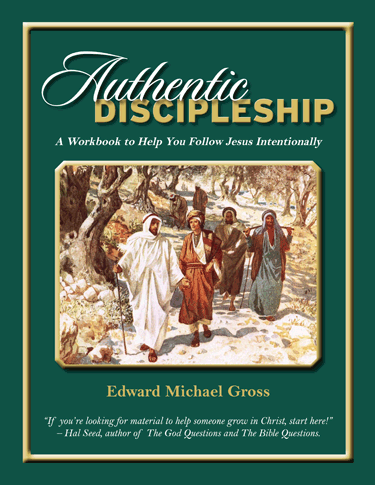
Authentic-Discipleship-FC-375Edward Michael Gross. Authentic Discipleship: A Workbook to Help You Follow Jesus Intentionally. 128p., $12.99, New Book Publishing/Reliance Media.

As its subtitle suggests, this is a workbook, but one meant to be worked through together as both disciple and discipler. Ed Gross’ intent here is to provide a groundwork both for discussion and for a deepening faith and understanding of Christ’s work in our lives. The 19 sessions here address both theological and personal issues, and while there’s a decent amount of work to each session, it’s not as overwhelming/”boot-campish” as I’ve seen with a lot of other disciplemaking resources. This workbook covers a lot of ground, but it’s doable rather than discouraging.

The first two units, “A Good Beginning” and “Christ in You,” provide the theological groundwork here, addressing such subjects as grace, the attributes of God, Christ’s work on our behalf, and the Holy Spirit. The final section, “A New Level of Certainty,” deals with the subject of our assurance of salvation, both based on external proofs and on the internal witness of the Holy Spirit.

The third and longest unit—and my favorite, as it’s the rubber-meets-the-road section—helps new disciples understand the importance of personal devotional time and spiritual disciplines, as well as how to confront both the sin and the suffering in their lives. A couple examples from there:

“In [Jesus’] name” isn’t just a signoff, like “Sincerely” or “Yours truly.” It means that you’re asking the Father for what Jesus would ask for if He were in your shoes.

Have you ever seen a knife sharpener…? It works because the grinding wheel is spinning one way, and the knife is facing the other direction…. It’s exactly that way with Christians in this world…. There are sparks that will fly when we come in contact with them. Result: you will become “sharpened,” but it will hurt. And there is suffering…. And this is exactly how Christianity won over the Roman Empire in less than 300 years! They wouldn’t out-fight them, or take up arms against them, but they could out-suffer them. They could out-love them. They could out-forgive them. Then, at the right time, they could out-witness them, and God would win their oppressors. That’s still how God works throughout the world today, and how His loving grace conquers hard hearts.

One subjective quibble: I personally would’ve liked to have seen fewer close-ended questions. However, since this is a workbook for new Christians, a lot of the information here will be brand-new, and thus this issue isn’t as problematic as it would be in a standard small-group resource—i.e., more black-and-white answers can be considered to be more warranted in this context. And the “Disciple-Questions and Assignments” at the end of each session go a long way toward meeting each person where they’re at, and provide a great starting-point for truly experiencing the Christian life.

Got a new believer and don’t know where to go next? Now you’ve got a resource to get you there.

Posted in Uncategorized | Tagged , , , , , , | Leave a comment

In Defense of 1-on-1 Discipleship


A couple very different conversations this week got me thinking about this issue even more than I usually do…. In fact, this might be equally titled “In Self-Defense of Being a 1-on-1 Discipler”… 🙂

First, the backdrop: It seems like 1-on-1 discipleship has been getting a lot of abuse lately, and from people who really ought to know better. The arguments inevitably go on to advocate small-group ministry and/or more missional/outward-focused ministry. Now, I’ve been a small-group leader for most of the past 25 years, and have no problems with missional/outward-focused ministry (aside from its current faddishness, but I’ve already complained here about what a “duh, salt and light, people” thing that is, so I’ll leave it at that). So on to our present context….

The first conversation was an online discussion with a publisher I do a decent chunk of work for, regarding yet another recent post making the “we need to move away from 1-on-1 discipleship” argument. My counterargument was this: I think it’s more like G.K. Chesterton’s famous “Christian ideal” quote — i.e., 1-on-1 discipleship has not been tried and found wanting; it has been found difficult and left untried. It requires a long-term commitment, the willingness to listen, and the willingness to shut up until it’s time to speak—and then, the willingness to “speak the truth in love.” As Americans, we’re not very good at any of these things as a rule.

And there’s that other American obsession that’s completely antithetical to 1-on-1 discipleship: the numbers game. Even earnest pastors and would-be mentors can fall into the trap of “the church is falling behind and we need to make up for lost time.” Thus, small groups and more group-oriented missional activities outside the church seem to fit the bill. And they do—just not all the time.

The thing is, when faced with the choice between 1-on-1 or group, the correct answer is “yes.” It all depends on the context, and on the people involved, rather than on one approach being inherently better than the other.

One-on-one discipleship seems inefficient to us (or at least to its critics), because it’s “only” one person. (Think about that before moving on….) But to change one person deeply ultimately results in changing many others significantly, in those other contexts of ministry, small groups, etc. We need both the deeply personal/intensive (1-on-1/triads) and to be engaged publicly in missionality and/or character-building in the form of small groups. The personal is tested and developed in the communal, and the communal is prepared for (and debriefed) in the personal. There’s no conflict here—or at least, there shouldn’t be. Move along, people.

Which brings us to the self-defense part. During my pastoral days in Jersey (hey, Living Word), I did a ton of 1-on-1 discipleship—sometimes with developing leaders, sometimes with people struggling with their faith or obedience. At the time, it really was just me doing what I knew I needed to do. But the stories I heard as we prepared to move to Colorado or even years after showed the outward fruits of that more intensive private discipleship. One guy cried when he found out we were leaving, because our time together was the first time he’d felt like someone had actually listened to him; another who I’d spent a lot time with walking through his personal struggles emerged a couple years later, wanting to do the same thing with others that I’d done with him, and to become more involved with small-group development; another emerging leader whom I’d had myriad theological headbuttings with (and who I usually “lost” against, in fact) later experienced the downside of such airtight theology—and as a result, the grace he really needed in order to keep growing. And so on.

Out here in Colorado, it’s been a different story, much of which is best left untold (or at least unretold) at this point. In reflecting now, I’m not sure I ever properly expressed my appreciation for Pastor Tim Barnes and the atmosphere of grace he created, which in turn made the stuff I did far more useful (not to mention the 1-on-1 discipling he had to do with me the first two years he was there, as I recovered from the abject failure and frustration that was the first year of LWAC, during which time both original pastors and the entire rest of original church-plant team had bolted….). And that issue of atmosphere brings me to the second conversation, which also contains a pretty good analogy for my main argument….

Again, a bit of background: In this current season of my life, there’s really only one “I know God’s called me to do this” thing I’m engaged in, and have been for more than four years now—and it’s not inside a church. Twice a week, I go to the Center for Adult Learning in Loveland to help pre-GED students ages 17 to 70 with their math. Like discipleship, math is very individualized, and thus can’t really be done in a group setting like English/history/science can. Each person is working anywhere between multiplication and Algebra (and as many have learning disabilities, might well have troubling remembering the one while doing the other). Therefore, my role/forte is to meet them each where they’re at, help them understand what they’re learning/”wrestling with” right now, connect it to what they already know/”obey” (because math is very interrelated, even if you don’t think of it that way)… in short, show them how they can do it, and that they can do it—and most critically, help them to believe that, too. And they all know that I’m a Christian/former pastor/Christian writer, not least of all because said teacher regularly “outs” me (and with turnabout being fair play—hi Julie! :D), so there’s that more overtly “missional” aspect to it, too.

Now, for that conversation: Astute readers know that I’ve been searching for full-time employment for close to 2 1/2 years now—and that 11:59 is almost upon us. Thus, it was suggested that in light of our experience of the past four years, maybe I should consider getting back into teaching. joe clarkYes, I did teach back in the late ’80s—remember the movie Lean on Me? You know, Joe Clark, baseball bat, chaining the doors so students couldn’t get out? Yeah, well, the kids he didn’t want at Paterson Eastside he sent up the hill to Passaic County Tech—where I taught. Four years of that beat the desire to be a classroom teacher out of me better than Joe’s bat ever could. Still, Colorado isn’t Jersey, let alone Paterson.

Thus, when posed with this idea that naturally seemed perfectly sensible to her, I hemmed and hawed and in general tried not to act like the jerk I was totally feeling like as I tried not to reject the idea out of hand. And then—as longtime friends will also guess—I went home and processed (obsessed?), ’cause that’s what I do (far better than I react on the spot).

And a couple days later, all the conversations/thoughts you’ve just read coalesced. And again I realized, just as with Pastor Tim, I’m doing the right thing and in the right context—and it works because someone else had used her gifts to already create that right context. Because an atmosphere of mercy and acceptance and encouragement already exists for the entire class, I’m free to get in there and do the 1-on-1 stuff—push not to give up/be lazy when needed; swallow hard, be patient and re-explain when that’s needed; or my personal favorite: bust their chops until they see it’s not as difficult as they’ve made it in their own heads, and they now see that.

If I were the guy up front, it wouldn’t be like that—and it wouldn’t be easily the most rewarding thing I do every week. Choosing between doing what I do for free and being a teacher for pay—it’s beyond a no-brainer for me, even as crunch time approaches.

So, you see, it’s not just that the world needs more disciplers—it’s that some of us need to be that 1-on-1 guy. It’s our lifeblood. So, ministry “experts,” don’t take that away from us—or from the people who need us to be there, too.

Posted in Uncategorized | Tagged , , , , , | Leave a comment

You Can Have More of God… If You Want Him


It was this time last year that I first discovered R.T. Kendall, and I’ve dove in since. This book, pulled from Kendall’s final sermons at Westminster Chapel more than a decade ago, isn’t as immediately compelling as last year’s Unashamed to Bear His Name or his wonderful (and comprehensive) commentary on The Sermon on the Mount, but it’s meeting me right where I’m at right now. And it might just do the same for you.

days of elijahR.T. Kendall. These Are the Days of Elijah: How God Uses Ordinary People to Do Extraordinary Things. 192p., $14.99, Chosen Books.

Throughout this book, Kendall depicts a very human Elijah (who just happens to also be somewhat of a biblical superhero as well). We see a man who’s sometimes fearful, sometimes self-pitying, and often very concerned with his own reputation — sometimes to the point of trying to throw it in God’s face (referred to here as “the Elijah complex”) — but who nonetheless truly loves and wants to draw closer to God. Kind of like us, hopefully.

Thus, Kendall approaches Elijah from a variety of angles, and again it’s very likely you’ll identify with one or more of them.

In this season of my life, one of those was “the unsurprising disappointment” — i.e., when you see God withholding the rain in Israel for three years because of their sin, it shouldn’t come as too much of a surprise if you become starving and thirsty as well. Nonetheless, he adds, “When the brook dries up, we know it is time to move. God has something better in mind. Count on it.” For related reasons, the following chapter on risk and depending on God’s provision day by day also resonated quite a bit.

Elsewhere, Kendall deals with such issues as being misunderstood, especially in the context of doing God’s work; how to deal when God seems unfair; depression in ministry; and learning to follow the Spirit, and thus realize that God won’t always do the same things in the same way.

Ultimately, the message here is: You can have as much of God and of the Spirit as you want. So, how much do you want, and what are you willing to face in order to see Him face to face?

Posted in Uncategorized | Tagged , , , , , , | Leave a comment

The Past, the Present, and the Future of Laying It Down…


(or, Who IS this guy?)

Now, for the full version (and again, apologies to subscribers for having published the last version prematurely)….

Hopefully, it’s no big secret that I’ve recently put out a new book, Lay It Down: A Journey into Trust. Lord knows I haven’t been trying to keep it a secret. There may be other good news to report about this soon as well, so stay tuned. (But by all means, go ahead now and click that link I just gave you—and don’t stop following/clicking links until you finally hit that button that says “Confirm Purchase.”)

In the meantime, now that I’ve put a little distance between me and the actual writing of the book, I’ve gone back and started working through it myself as a reader—and I have to admit, it’s been kicking my butt. Yeah, the author’s a bit of a jerk, but wow, he’s on the money a lot. 🙂 I’m pretty close to halfway through, and so I thought this’d be a good time to check in, and to share somewhat more personally than I normally do.

So next week I’ll be into the final section/second half of the book, appropriately called “Eternal Life Starts Now.” I’ve felt for awhile that this current season was when God would bring Marion & I into the next phase of our lives, and as such I’ve been trying to prepare myself for that. And the fact is, our circumstances dictate that something needs to change in our lives, soon. It’s no coincidence whatsoever that this is the first devotional in that final section—and while we’re not at 11:59 yet, we can see it from here.

And thus, I’ve spent the last few weeks working through Sections 1 and 2, “Lay Down Your Past” and “Lay Down Your Present.” One thing I’ve been dealing with, naturally, is the disparity between the guy writing this book and the guy reading it, and asking myself “Who is this guy?” And for that matter, how come I don’t see him more often? Again—butt: kicked.

Still, God’s working through me to get to… me. I’ve actually been working through the daily “Lay It Down Today” activities, and some of them are pretty powerful. (Again, I gotta give the jerk some props here. 🙂 ) Take today, for example—which is why I’m just going ahead and finishing this post now….

I did the doorway activity in Week 4 (and again, for those who don’t know what I’m talking about, go fetch). I actually stood in the doorway of my garage for a few minutes and looked out at my future, and all the fears I have about it, which of course have just ramped up that much more as I anticipate those changes coming: I don’t want to leave Loveland/Colorado (if that’s what it requires); I don’t want to be as bitterly disappointed with Christian “examples” of assorted shapes and sizes as I’ve repeatedly been over the past eight years (and for that matter, feel so utterly tossed-aside from the get-go, after arriving in Colorado with the kind of optimism you never see out of me); I don’t want to feel like a failure there, too (wherever the next “there” is); etc. You get the idea, so I’ll stop.

But I just stood there and prayed about all of it—because I need to leave it all behind, in order to be of any use to God or myself. And then, I stepped through the doorway.

Lord, bring it, whatever it is—and bring it soon. Let this not be another false start, but a new beginning. Let’s see where You lead me next on this “journey into trust”….

And so, there you have it. Talk to you soon. New R.T. Kendall book I should have a review on within the week, and maybe even that other update I talked about in the beginning of this post. God will do what God will do—and I’ll keep you posted when He does….

Posted in Uncategorized | Tagged , , | 1 Comment

The Brutality of Salvation


A friend sent me this one, and I get why. The most obvious being: She’d grown accustomed to kicking my butt in the five-plus years we’d worked together — and now being 1,000 miles apart, she sent this book to stand in for her. Her own words summarize this as well as I could: “It was a good reminder to keep it all in perspective and to be sure I don’t swing the Gospel too far one way or the other.” Now, for what that specifically means…

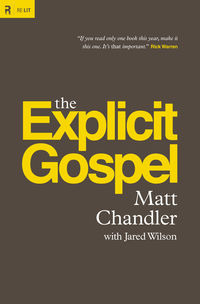
explicit gospelMatt Chandler, with Jared Wilson. The Explicit Gospel. 240p., $14.99, Crossway.

The bottom line here is: We’ve assumed people “get” the Gospel without ever spelling it out. Even if that was ever true, it certainly isn’t today. No watering-down or “fun” will ever make the true Gospel palatable; nor will all our good works, in themselves, attract people to Jesus. We actually have to believe the Gospel, share it, and truly believe that it has the power to change lives.

Now, for that “one way or the other”—Matt Chandler separates this book, and the Gospel, into two different aspects that all too often become imbalanced in the church:

• “the gospel on the ground”—the “micro” good news of personal transformation, where we nonetheless are in danger of becoming too inwardly, “me and Jesus”-focused

• “the gospel in the air”—the “macro” good news of the restoration of the entire universe, wherein we can wind up focusing primarily on social-justice issues and “adapting the Gospel to the world” rather than truly following Jesus

No matter which side of the fence you’re on—or even if you’re earnestly trying to hold both sides in tension—there’s plenty of spiritual butt-kicking to go around. As with any good Reformed-based book, Chandler brings some attitude to the table, although thankfully does it with enough self-awareness that it doesn’t cross into being obnoxious and/or know-it-allish. This section, in fact, made me laugh out loud, even as it assaulted the me-centered teaching that usually passes for the Gospel these days:

Most of us have been told that God… employed the depth of his omnipotence and omniscience to create this because he desire fellowship with man…. It’s a very sweet idea… if it weren’t for what the Bible actually teaches, which is that this idea is almost blasphemous…. [O]ut of self-regard, we like to picture that a holy, splendid God—perfectly solely within his Trinitarian awesomeness—wanted to be able to stand within a warm-hued living room, romantic music swelling, and look across at us to say, “You complete me.”

Other observations hit even closer to home: “[T]hose who fall into syncretism almost always started out with a pure motive to see people know, love, and follow Jesus. They fall off track, however, if they become dominated by frustration at others’ failures or at the state of the world.”

After being brought to the question, “So how do you keep the two sides in check, and (therefore) the focus on the Gospel?” the book culminates with the almost misleadingly titled chapter “Moralism and the Cross”—except that when we’re not focused on Jesus, we are focused on moralism, trying to please God. Chandler proposes a “grace-driven” approach, using “the weapons of grace”—and I’ll leave it to you to discover what exactly those are.

If you’re looking for a book to help you feel better about your faith, this isn’t it. But if you’re looking for a book that’ll help bring you to a deeper, better-placed faith, this is a pretty good recent one to go to.

Posted in Uncategorized | Tagged , , | Leave a comment

Lay It Down: The Book — It’s ALIVE!


You can get the full information here, but for now, here’s the back story:

createspace coverAfter close-but-no-cigar rounds with a couple publishers I respect (and that you’d recognize) – and a few more just plain frustrating rounds with agents – I’ve decided (for now) to take the self-publish route with my latest book, the “interactive devotional” Lay It Down: A Journey into Trust.

I’ve shot out e-mails/PMs to all the influencers I know to get this rolling. However, many of you receiving/reading this are influencers I don’t know (but I appreciate your subscriptions/visits). Therefore, here’s what I’d ask of you:

1) Either buy the paperback or download it (hit the respective link of your choice). Or, for you Kindle Prime members who are more gun-shy, you can borrow it for FREE, here.

2)  Then: Read it. Afterward, give me your feedback and/or a blurb I can use promotionally in the future.

3)  Finally: Spread the word. Like the Lay It Down Facebook page here — then Share it. Post a review on yr blog, Amazon, etc. Use Kindle Share and pass it on to a friend. Many of you know the drill, and how hard it is to get the ball rolling. Therefore, and again, I’m asking for your help.

No matter how you got here or why you’re reading this now, thank you in advance for your support. More details as warranted.

— Carl

Posted in Uncategorized | Tagged , , , , , , , , | 2 Comments

Dem Bones Gonna Rise Again


As it was with our last entry (and for much the same reasons), I’ve been a fan of Paul Ford’s approach to ministry for nigh on a decade now. In fact, I’ll go one further and mention that his resource Unleash Your Church was a huge influence upon my own Season 3 in the Growing Out series, Growing in Your Gifts.

And here’s why: While other spiritual-gift resources were equally or at least comparably good in assessing spiritual gifts, they seemed far more concerned with plugging holes in existing church ministry than in exercising those gifts where the rest of the world could actually see them—let alone as a catalyst for new ministry. Unleash Your Church, as its title suggests, was outwardly (and yes, missionally) focused from the get-go, and that made all the difference—to me, and undoubtedly to others as well.

This new book, in comparison, is more of a manifesto than a ministry tool—although it’s plenty of the latter as well.

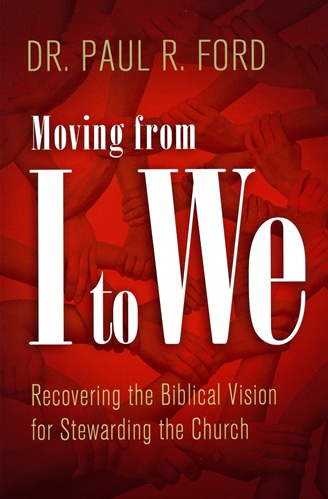
i to weDr. Paul Ford. Moving from I to We: Recovering the Biblical Vision for Stewarding the Church. 320p., $16.99, NavPress/ChurchSmart Resources.

The problem is stated outright in the introduction: “Today more than ever, young and midcareer leaders want to become ‘great Kingdom leaders’ rather than focus on equipping and releasing the body for the ministry of multiplication.” And thus the opening section, “Ezekiel’s Vision of We,” takes on the current paradigms of church leadership and ministry through the lens of Ezekiel 34—37 (during which, you might recall, God rebukes the “false shepherds” of Ezekiel’s time, as well as revives the dry bones via the Spirit). The problem becomes vividly clear during the author’s visit to Uganda:

I experienced a vision from the Lord unlike anything before in my life…. I looked to the back of the long sanctuary. I could see the legs of the body of Jesus, stretched out at the back of this jammed worship center. The people were His legs. I could see the arms of His body reaching out. The people were His arms. Then I realized that I was standing in front of the people. I looked as if I was the head of Jesus’ body….

It was difficult at first to grasp God’s intent. Then it became clear: Because of where I was standing, the people were confused about who was—and is—the head of the Church. In this vision, I wanted to yell out, “People, I am not the head of Jesus’ body. I am not the leader of His Church. He is!” Then, very quietly as I continued speaking to the body gathered, the Lord said ever so clearly to me, “Now you understand the problem.”

Throughout the book, Ford exhorts us—especially leaders—to truly act like a body of believers. In Part 2, “Royally Getting Off Track,” he explores three “cults” especially prominent today—rightness, a craving for the spotlight, and strategies and tactics—that we tend to substitute for allowing Christ Himself to be the head of the Church. Put another way here: “The impact of individualism and the related sense of entitlement and dissatisfaction of Christians in the West is disturbingly real.”

The third and final section, “Body-Life Leadership Applied,” moves toward solutions, and is built around a different set of  spiritual roles than we’re used to seeing: active listener, team builder, equipping releaser, values keeper, and vision sharer.  That said, these tie in very strongly to the traditional classifications of spiritual gifts found in the Bible and elsewhere; you’ll just have to read the book to discover how. One quote in that section about releasing people into ministry—and the spiritual promises pregnant within that—captures the goal and the process well:

When I see someone who can powerfully do what I do at a 65 to 70 percent level, I prepare to let go part or all of those functions to free that person to use his or her gifts. Whenever I release in this way, God always—I repeat, always—opens up another relationship or context where I can steward anew my gifts. God will keep building His ‘building’ as long as we equip and release, equip and release, equip…. He is the ultimate body-builder and body-extender.

Likewise, the application steps and discussion questions at the end of each chapter are thoroughly useful in helping groups and ministries become more relational and interdependent, both within ministry and outside the church walls.

In short, Moving from I to We is a great tool for putting the life of the body of Christ—and its headship—back where it belongs.

Posted in Uncategorized | Tagged , , , , , , , | Leave a comment

Going OUT and Making Disciples


Confession time: I’ve always—OK, for the past eight years, anyway—had a decided aversion to the term “missional.” I’ve never objected to what it actually means (or should mean), but I’ve also never quite understood why living out the Great Commission needed to be turned into a fashionable buzzword among publishers. All big-name marketing to the contrary, it’s not new, or cool; it’s doing what Jesus has asked us to do for 2,000 years—to be “in the world but not of it” and actually get involved outside the church walls.

Fortunately, despite its obvious usage here, Bob Logan gets all this, and has for a long time. It’s one of the reasons I’ve already been a reader of his work for the past decade or so. And it’s no doubt the reason that this is the first explicitly “missional” book that I’ve enjoyed reading from end to end.

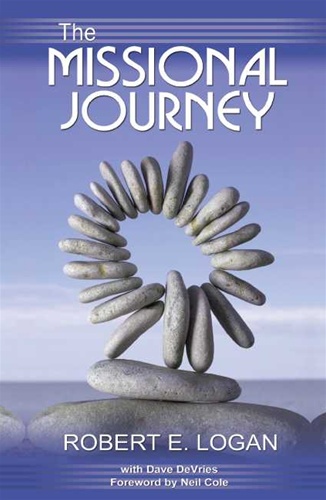
missional journeyRobert E. Logan, with Tara Miller. The Missional Journey: Multiplying Disciples and Churches That Transform the World. Commentary by Dave DeVries. Introduction by Neil Cole. 200p., $12.00, ChurchSmart Resources.

The tone here is decidedly instructional and hands-on, and yet thoroughly winsome. You want to go out and make things happen after reading this—and you’re given a healthy amount of tools to make it happen in the process.

The first section, “Discovering the Missional Journey,” provides the basic theology that drives truly incarnational ministry to the world. I particularly loved one comment, which tosses how most churches approach both relationship and ministry on its ear:

“Often we look for authentic relationships with other believers before engaging in sacrificial service with them. That approach is seldom successful, since it’s based on our own needs and desires rather than a willingness to give and pour out of our lives into the lives of others. But if we turn it around—if we engage in sacrificial service alongside other believers—it’s almost impossible to avoid authentic relationships. They just happen.”

With the groundwork now established, the second section, “Moving Forward on the Missional Journey,” provides us with both principles and ideas for engaging the culture, forming communities, as well as developing and multiplying leaders and networks. This is stuff written with the assurance that it works. Thus, also there’s a sensitivity (and a sensibility) in how to develop new believers organically, so that they too are “missionally focused” from day one:

“Whatever we do, if we want to make holistic disciples we’ll want to include authentic relationships, sacrificial service, and spiritual transformation…. They don’t need connection to the whole body at once—in some cases that will serve to cut them off from their own natural community. A good starting point is a relationship with just a few individuals who are further along the journey of faith.”


Each chapter includes a “Journey Guide” of questions, prayers, and suggested action points that can be worked through with your team, your coach, or preferably both. All of this is great material for a church-planting team or house church network—or an established church that realizes it needs to get out more.

In addition, the call-out sections provided by fellow church planter and trainer Dave DeVries throughout the book provide numerous practical touches, as well as gentle (or not-so-gentle) reminders to readers, “Wake up—this point is important!”

Whatever your church setting—institutional church, house church, or anything in between—The Missional Journey will help you discover how to shift your focus outward, build relationships and bridges naturally—and most importantly, make disciples.

(And disclosure time again: Yeah, I was editor for this one, too. In fact, I finally got a mention on an Acknowledgements page for the first time. [Which is especially amusing, because my discipleship pastor was just asking me whether that’d ever happened during this odyssey of the last two-plus years and I had to grumble a bit ’cause it hadn’t.] And again, it comes from a guy whose work I’ve followed since doing my ministerial studies with the C&MA. Ergo: How cool is that?)

Posted in Uncategorized | Tagged , , , | 6 Comments

Of Obedience, “Hidden Tendencies,” and the Grace in Between


I’m currently in the process of my half-dozenth or so go-round with Watchman Nee’s The Spiritual Man. If y’r familiar with the book (and even if you’re not), it may not be Summa Theologica or Institutes of the Christian Religion but it’s still a pretty hefty read. And I never fail to get something new out of it each time through. This time around, one of those things looks like this (additional emphasis mine):

“God’s intent is not merely to curtail the movement of our will but also to smash its inner tendency so that its very quality seems to be transformed. Strictly speaking, an obedient will and a harmonious one are very different: obedience is related to activity whereas harmony is related to life, nature and tendency. The obedient will of a servant is seen in his executing every order of his master, but the son who knows the father’s heart and whose will is one with the father’s not only fulfils his duty but fulfils it with delight as well. An obedient will put a stop to one’s own activity, yes, but a harmonious will is in addition one heart with God. Only those who are in harmony with Him can actually appreciate his heart….

“When the moment of temptation and trial comes they will discover that an obedient will is not the same as a harmonious one, that non-resistance does not necessarily mean no will of their own self. Who is there who does not care for a little gain, who does not withhold a little something for himself? Who really desires no gold or silver, honor, freedom, joy, advantage, position or whatever? One may think he cares nothing for these items; while he has them he may not be conscious of their bold upon him; but let him be on the verge of losing them, and he shall soon discover how tenaciously he wants to hold on to them. An obedient will may agree with God’s will on many occasions, but at some time or other there is bound to be a mighty struggle between the life of the believer’s will and the will of God. Unless His grace realises its fullest work, the saint can hardly overcome….

“[O]rdinarily we say that an obedient will is already dead in itself. Yet strictly speaking it still possesses a thread of life which is unbroken. There continues to be a hidden tendency, a secret admiring of the former way of life. That is why on certain occasions it finds itself less joyful, less ardent and less diligent in obeying the Lord than at other times. While the will of God is in fact obeyed, there nevertheless remains a difference in personal like and dislike. Had the life of self genuinely and completely been consigned to death, the attitude of the believer towards every part of the will of God would be exactly the same. Any disparity in speed, feeling and effort shows a lack of concord in one’s will towards God’s will.”

I could stop right there and I think you’d get it. But the thing is, I somehow found a great comfort—and simultaneously, a great deal of mental hand-wringing—in all this, and found myself wondering why. Here’s what I’ve come up with so far:

• The restlessness—or dis-ease—we may feel as we are obedient to God may not be OK, but it is to be expected. It is not to be misinterprested as disobedience, or even necessarily as a spiritual attack (although it could be either, or both). It simply means that there is more to this than our obedience. We are to remain obedient to what we know, and let God show us the rest when He’s ready—and for that matter, when we’re ready to be shown it. And then, of course, be obedient to that as well.

• It’s easy, especially as Americans, to mistake a lack of obvious influence for a lack of obedience. However, the idea “I’m not reaching these numbers of people; therefore, I’m not doing enough” doesn’t come from God. At best, it comes from me—and very likely, from somewhere worse.

• By definition here, I won’t be perfect. In fact, I can’t be. However, God does ask me to be obedient, and thus to keep my conscience clear. Doing that is the only legitimate response I can make in response to my dis-ease.

• I can always come up higher. I can never be proud of being obedient; it is only my “reasonable service,” as Romans 12:1 puts it. Nonetheless, it is the means by which God takes me higher, and closer to Him. My dis-ease is a reminder that I have further to go, and that any peace along the way is God’s gift—and not my reward for “being a good boy.”

• Even when I’m obedient, to the best of my knowledge and abilities, I’m not truly “in the center of God’s will.” It can certainly be said that I’m within God’s will—which is far from nothing—but again, it’s nothing to become self-satisfied over. What I can hopefully rejoice in, even as I keep walking and following, is that I’m being led deeper into God’s will.

• All in all: Restlessness can be holy (“divine discontent”). Restlessness can be evil (rebellion). And sometime, restlessness is just… restlessness. Our emotions, in themselves, mean nothing. What’s truly driving them, however, means a great deal. Only as we resolve to continue on with God do we discover what lies behind our restlessness.

And that’s just what I’ve got. Comment away if you have more….

Posted in Uncategorized | Tagged , , , | 2 Comments

Living Out of Death


Let me eat when I’m hungry
let me drink when I’m dry
two dollars when I’m hard up
religion when I die…
—”Moonshiner,” traditional
(via Dylan and esp. Uncle Tupelo, in my case)

Religion, in its truest form, is for when we die. But much of what passes for religion—and what’s often perceived as “religion” from the outside—has gotten away from one huge fact, and it’s this: That dying takes place the moment we receive Christ, and we are to spend the rest of our lives living out of that death.

Do you not know that all of us who have been baptized into Christ Jesus were baptized into his death? We were buried therefore with him by baptism into death, in order that, just as Christ was raised from the dead by the glory of the Father, we too might walk in newness of life….

Let not sin therefore reign in your mortal body, to make you obey its passions. Do not present your members to sin as instruments for unrighteousness, but present yourselves to God as those who have been brought from death to life, and your members to God as instruments for righteousness. For sin will have no dominion over you, since you are not under law but under grace (Romans 6:3–4, 12-14)

We are to walk out in the newness of life, and walk away from the deadness of the old life. To grow closer to Christ is to grow away from the things we used to hold onto—and may still hold onto, even as Christians.

Our spiritual progress is not measured by our feelings—even legitimate feelings of joy in doing God’s will—but in the degree of obedience we have toward God’s will. Are we willing to follow, no matter what the circumstanecs, no matter how fulfilled or empty or or peaceful or overwhelmed we’re feeling? Are we really willing to put ourselves aside for Christ’s sake? That’s when we know we’re getting somewhere in God’s kingdom.

“And this is eternal life, that they know you the only true God, and Jesus Christ whom you have sent” (John 17:3), Everything else is incidental.

Posted in Uncategorized | Tagged , , , | Leave a comment