Lay Down Your Reputation


I was recently walking around a wildlife area of Colorado where informative plaques abounded. One plaque in particular caught my eye, highlighting the families who’d formerly owned ranches in this area in the late nineteenth/early twentieth centuries. It got me thinking about all the different ways we come up with to “historically” immortalize ordinary people after they’re gone (and by “ordinary,” I mean people we wouldn’t give a second thought to if they were standing in front of us, because they’d be roughly as accomplished or smart or likable as us). But because they’re no longer with us, we’ve found ways to keep them alive—resurrect the memory of them, if you will.

I think, at least on some unconscious level, we do it because we inwardly recognize our own desire to keep ourselves alive a little longer, beyond our own time on earth. We believe, or at least hope, that people will remember us after we’re gone. We want our lives to have mattered to someone, to have been significant in some way. Far too many of us among the living don’t feel that. You might be feeling that right now.

This is also apparent in the reputations we try to keep—whether it’s a good name, or at least in a name bad enough that people will remember it. We want to be loved or respected or at least feared, even if it’s only really a persona with our name on it rather something that represents who we really are. Eventually, if we’re not careful, those reputations will own us, rather than the reverse.

I think that’s one of the biggest reasons that God calls us to lay down our reputations. Not because we need to grovel before God and make sure he’s higher than us, but because manufacturing a false reputation—or even an accurate one—is a way of securing and encasing ourselves in a human love that, even when genuine, is less than God’s love for us. Thomas Merton once described this as “winding experiences around myself . . . like bandages in order to make myself perceptible to myself and to the world, as if I were an invisible body that could only become visible when something visible covered its surface.”

As soon as we begin to rest in our own accomplishments and others’ perceptions of them, we drift away from the Spirit. Spend some time with almost any long-established church or denomination if you need further proof of this.

We try to play this game with God, too. We not only want to be remembered by God, but have the audacity to think we deserve to be rewarded for the good things we’ve done. Yes, Scripture says that God rewards the faithful. The problem comes when we put the focus on doing good—and making very sure others, including God, know it (as if he didn’t)—rather than seeking our joy in what is good. When we seek to be recognized for our good behavior, Jesus says, we already have our reward (see Matthew 6:1–16), and shouldn’t expect anything more than the massaged egos we already have. The apostle Paul got this, too:

In my zeal for God I persecuted the church. According to the righteousness stipulated in the law I was blameless. But these assets I have come to regard as liabilities because of Christ. More than that, I now regard all things as liabilities compared to the far greater value of knowing Christ Jesus my Lord, for whom I have suffered the loss of all things—indeed, I regard them as dung!—that I may gain Christ, and be found in him, not because I have my own righteousness derived from the law, but because I have the righteousness that comes by way of Christ’s faithfulness—a righteousness from God that is in fact based on Christ’s faithfulness. My aim is to know him, to experience the power of his resurrection, to share in his sufferings, and to be like him in his death, and so, somehow to attain to the resurrection from the dead. (Philippians 3:6–11)

Anything we’ve done apart from God is . . . apart from God. To lay down your reputation is to experience the life of Christ (turn one chapter earlier to Philippians 2 for a fuller illustration). So lay it down, and let Christ be the one to raise you back up.

Lay It Down Today

What are the “plaques” in your life, whether they’re physical or not? What do you point to as evidence of your own goodness or righteousness? Put another way, what do you find yourself defending other than God—perhaps even in the midst of “defending God”?

A. W. Tozer, in his “Five Vows for Spiritual Power,” said, “We’re all born with a desire to defend ourselves. And if you insist upon defending yourself, God will let you do it. But if you turn the defense of yourself over to God He will defend you. . . . For 30 years now it has been a source of untold blessing to my life. I don’t have to fight. The Lord does the fighting for me. And He’ll do the same for you. He will be an enemy to your enemy and an adversary to your adversary, and you’ll never need to defend yourself.”

Where do you need to lay down your reputation? Submit that to God in prayer right now. Resolve not to defend yourself, but to allow God to be your defender. Then, get up from your prayer and start walking it out.

Posted in Uncategorized | Tagged , , , | Leave a comment

Lay Down Your Strength


Our strength—or rather, our reliance upon it—is still pride. Therefore, it must be broken. Watchman Nee, in his book Changed into His Likeness, put it this way, “The characteristic of those who truly know God is that they have no faith in their own competence, no reliance upon themselves.” It’s when we reach this point that we’re finally and truly useful to God.

Even much of the strength we think we have comes from our need to compare ourselves to others. We may be correct in thinking we’re much more gifted than others in a certain area or areas. But what’s that in comparison to God? Before him, even our strength is weakness. Until we’re willing to acknowledge this, even what little strength we have is useless to him.

Studying the life of Abraham may be the most rewarding thing I’ve ever done in terms of understanding God’s work in our lives. Over and over, you see this cycle:

a) God calls Abraham.
b) Abraham tries to do things his own way, and fails miserably.
c) Abraham finally “gets it,” relents, and allows God to accomplish his will in his way, and with his timing.
d) Abraham himself begins to truly reflect God’s will.
e) God brings Abraham to a new level—and a new test. Repeat steps b.–e.

In the end, Abraham gets where God wants him, but in God’s way and God’s way only. Abraham was an ordinary man with an extraordinary God. Let’s break down this cycle even further, using the best-known example from Abraham’s life:

a) God promises Abraham a son (Genesis 15).
b) God doesn’t appear to be doing anything, so Sarah pushes Abraham to take matters into his own hands. “Here, sleep with my servant Hagar; we’ll have a son that way.” The result: A ton of family contentiousness (Genesis 16)—as well as millennia of religious contentiousness, via the birth of Ishmael, the forefather of Islam.
c) God waits thirteen years—until Ishmael’s reached adulthood and neither Abraham nor Sarah have the human ability to bear any more children—and repeats his promise to Abraham (Genesis 17–18).
d) Oh, and first Abraham also has to pray for an entire kingdom’s worth of barren women, because he hadn’t managed to break that nasty habit of calling Sarah his sister whenever another king was around—yet another trust issue for Abraham. Imagine how it must have felt to pray for the barrenness of those women, in light of the years of waiting Abraham’s already had. But he does. And then, God delivers on his promise (Genesis 20:17–21:1).
e) Years later, God commands Abraham to sacrifice Isaac—the very same son God had promised, and given. But now, Abraham doesn’t flinch. God spares Isaac, and makes a great nation of him and his offspring (Genesis 22).

We often want to do God’s work, but nearly as often we don’t want to do it God’s way. We rationalize why we shouldn’t wait, or why some other way would be so much more “sensible” or “efficient.” But unless what we do starts with God, it’s worth nothing. We must not will to do, but will to receive—and then share what God gives us.

When we lay down our strength, we give God permission to exercise his strength. We give birth to Isaacs instead of Ishmaels. We grow fruit that lasts, not dead branches to be burned. God does something so much greater than we ever could have imagined that we have no choice but to praise him—and rejoice in our weakness that gave him the opportunity to work.

When you look at the results instead of the circumstances, what’s really the easier and more rewarding route—to give birth to an Ishmael or to an Isaac? Think about it.

Lay It Down Today

If you’re a reader—and since you’re reading this, I’m guessing you are—spend some time in Genesis 15–22 (or at least Genesis 15:1–6, 16:1–6, 20:1–7, and 20:14–21:3). Don’t try to analyze it; just read about this part of Abraham’s life, and let God do the talking. Even if you don’t read through the Genesis passages, think and pray through these questions:

  • What right now has you wondering, “Why hasn’t this happened yet?” If your impatience were to get the better of you, what would you try to do on your own strength? What would your Ishmael look like?
  • What small successes and evidences of God’s presence in your life can you focus on instead, as you wait for “this” to happen?
Posted in Uncategorized | Tagged , , , | Leave a comment

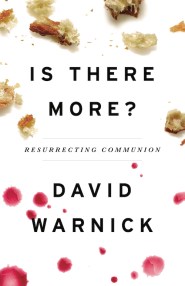
Is There More? Resurrecting Communion


Just in time for the Easter season . . . and any season where you desire to bring more meaning into the Lord’s Supper . . .

Is-There-More-ƒ-copyDavid Warnick. Is There More? Resurrecting Communion. 160p., $13.99, Deep River Books.

The Bible speaks of the first believers breaking bread with “gladness,” and we often speak of “celebrating communion.” Yet does this reflect our actual experience?

David Warnick . . . observes, “As I saw what the Bible actually says happens in communion, and what we do, I came to the conviction that we all need to look at these same questions and change our approach.”

Is There More? takes the reader on a discovery to remove superficiality from the way we engage in the Lord’s Supper and recover the elements that make it a vital faith encounter. Warnick’s book examines various aspects of communion, how we practice it, and how we could practice it in order to make it a truly meaningful aspect of worship. . . .

Is there more to communion than what we currently observe? Indeed, there is, and this fresh approach to the Lord’s Supper can ignite hearts with passion and transform the act of communion. David Warnick’s biblically sound exposition takes us to a deeper level of understanding and fellowship with our Lord Jesus.

Posted in Uncategorized | Tagged , , | Leave a comment

Lay Down Your Independence


We’ve spent a lot of time in past entries addressing our feelings toward those who’ve opposed and hurt us. Therefore we’re going start this week, and this section, by widening our net ever-so-slightly to include one more enemy—you.

All of us have been God’s enemies, and I’m not just talking in a positional, “before we were born again” sense. I’m talking experientially. Like earlier today. Like maybe even right now.

We habitually assert our “in-dependence from” God. Every time we take matters into our own hands, we very deliberately—and however unwittingly—separate ourselves from God and set up our own little kingdoms. For all practical purposes, we’re declaring ourselves his enemies in those matters. Our very actions declare, “God, I just don’t trust you.” We might well come slinking back in repentance later, with spiritual hat in hand . . . but that’s later. I don’t say this with the intention of beating anyone up; nonetheless, we operate in this manner a whole lot more than we’re willing to admit.

And yet Jesus continues to love us even when we oppose him, directly or indirectly. This is why he can so authoritatively command us, “Love your enemies, and pray for them who persecute you.” He not only lived this out during his time on earth, but has been confronting our opposition since the garden of Eden—and since his resurrection as well.

Think about how you feel when a loved one is hurt or threatened. Jesus feels that way about each of us, especially those within his church. And he’s just as offended, if not more so, when those who seek to hurt his people are those within the church.

Our offenses might not be as egregious as the ones committed by those people—you know, the ones you just thought of instead of yourself—but we’re not innocent here either. We too oppose Jesus far too often. We assert our own identity apart from him because, well again, we just don’t trust him. And by the same token, we withhold love from others because we don’t trust them either—because we believe our offerings will be rejected or discarded.

Jesus says: That’s not the point. The point is: Do you trust me enough to lay down your independence and follow me—and therefore, obey me?

We need to love the enemy known as us, just as Jesus does. After all, who needs love more than someone who clearly doesn’t have any love?

One more thing: Laying down our independence isn’t only about letting Jesus in, but about letting others in—to run the risk of incurring enemies, to run the risk of even good people opposing your good plans. And then, love them anyway. The people in front of Jesus weren’t obstacles in his path—they were his path. We’re called to follow that path.

You were never in this alone. You never will be, no matter how much you choose to live as if you were. So lay down your independence, let go of your own little kingdom, and become the person Jesus calls you to be.

Lay It Down Today

Who are your “enemies” right now? Broaden your definition as far as you need to—or, point the finger back at yourself. Don’t only focus on those who’ve hurt you—hopefully, you’ve already dealt with a lot of that—or those who obviously oppose the gospel. Who’s “in your way” right now? Who’s standing between you and what you want? How is Jesus calling you to respond to them in love, instead of responding to how they’re opposing you?

Confess your insistence on your own way—the way you’ve treated God like an enemy—and ask him to help you release it. Ask to receive his love and for the ability to extend it to others, particularly those you’ve just named. Then, take the steps you need to express that love tangibly—again, possibly to yourself as well. And trust God to be there when you do.

Posted in Uncategorized | Tagged , , , , , | Leave a comment

Truth Matters: Knowing God and Yourself


Honestly, I enjoyed working on this one quite a bit. It breaks down the basics of the Christian faith, even as it draws from the deeper well of church tradition. In short, it’s simple but rich….

Truth MattersAndrew Petiprin. Truth Matters: Knowing God and Yourself. 160p., $17.99, New Growth Press.

 In a world that’s increasingly relative, author Andrew Petiprin helps readers discover unchanging truth based on God’s Word . . .  [and] helps readers flourish in their faith by discovering the true answers to age-old questions like, “Who is God?” and “Who am I?”

Walking readers through many important doctrines of the Christian faith, Truth Matters supports those doctrines with Scripture and shows how they were developed carefully over the centuries by those who studied the Bible. As he engages with great thinkers of Christian tradition, including C. S. Lewis, T. S. Eliot, and others, Petiprin guides readers to put on the mind of Christ, leaning in to challenging questions. . . .

Truth Matters helps readers better understand truths about themselves by understanding the truth about God and his desire for a relationship with us. As readers learn more about how doctrine was debated and decided, they will also see that Truth never changes, and that the purpose of doctrine is to make Truth clearer than before . . . as a way to discover not just the truth about God, but to find God himself.

Posted in Uncategorized | Tagged , , , | Leave a comment

Lay Down Your Baggage: a small-group session


For this session, you’ll need….

  • a large suitcaseoverstuffed-suitcase1
  • a variety of items—at least one per person. Include a Bible, as well as several of the following:
    • work-related items, such as a stapler or even a laptop computer
    • family-related items, such as a photo album
    • items representing personal interests, such as a football, book, backpack, musical instrument or baking pan. The heavier the item, the better—but make sure it fits in your suitcase.

Find an area where you can spread out all your items (and your group members, once this activity starts). Put out all your items before your group arrives.

 Laying Down Your Day (20 minutes)

Have group members get into subgroups of three or four.

Take a few minutes to talk about your “Lay It Down Today” assignments (see previous entries). Which did you find most useful or interesting? Which ones were more difficult or hard to connect with? In each case, why? Talk about it, and we’ll come back together in about five minutes.

After five minutes, bring everyone back together. Take them to the area where you’ve placed all the items from your supply list.

The items here are meant to represent different interests and priorities each of you have—God, work, family, hobbies. So let’s take turns here. Grab an item that represents an interest or priority of yours, and place it inside the suitcase.

Let everyone take a turn loading items into the suitcase. If you have more than one item per person, let everyone have another turn. Load your suitcase up, but be sure you can close it. Once your suitcase is fully packed, say something like, Let’s see how easy it is to carry all this stuff from our lives around.

Take about 10 seconds to pick up and hold your suitcase, and then pass it on to the next person to hold. Let everyone have a turn—and don’t let your suitcase hit the floor until everyone’s had a turn. Afterward, sit back down and discuss these questions:

  1. We’ve spent a lot of time looking at our need to “lay down our baggage.” Even though we loaded it with mostly good things, how is our suitcase like the baggage you’re carrying in your life right now?
  2. How relieved were you to hand your baggage to someone else? What does that tell you about the need to let go—and the importance of helping others to let go?
  3. What does it also tell you about the dangers of putting all our baggage on others?

We all have our “stuff.” Some of it—like the items in our suitcase—isn’t all bad, but has taken too much priority in our lives. But as we’ve read this week, we still carry around a lot of baggage from our past, and while we may have moved on from it we’ve never really let go of it. We still carry it around, and it still holds us back from fully becoming who we were meant to be in Christ. So let’s dig deeper into this. 

Laying Down the Word (25 minutes)

Have someone read the following excerpt from “Lay Down What’s Done.” Then, discuss the question that follows.

“Our experiences, to a large degree, have made us who we are. But we are more than our experiences, let alone our negative ones. There’s a life in Christ waiting for us that goes beyond what we would limit ourselves to. ‘Laying down what’s done’ doesn’t mean we forget the things in our past. And it certainly doesn’t mean we stop feeling anything when they come to mind, although hopefully we learn to move on more quickly. It does mean that we no longer allow ourselves to own those things, and that we no longer allow them to own us.”

  1. In what ways do you still find yourself defined by the negative experiences in your past? What positive things have nonetheless come out of those experiences?

Ask for another volunteer to read the following excerpt from Day 3. Then, discuss the questions that follow.

“When we refuse to forgive, we keep others in bondage. Jesus says it: ‘Truly, I say to you, whatever you bind on earth shall be bound in heaven, and whatever you loose on earth shall be loosed in heaven’ (Matthew 18:18). Forgiveness, or the lack thereof, has that kind of power. By believing that we need—deserve—to be repaid for the wrongs done to us, we become, in a very real sense, spiritual slave owners. We accuse others of evil—then, instead of freeing them from it, leave them trapped in it. Are those the kind of people we want to be?…

“In short: You don’t get to hold onto your hurt. You don’t get to allow it to fester into bitterness. You don’t get to hold it over their heads. Let me handle it. You, lay it down.”

5. How does our unforgiveness reveal a lack of trust in God?

6. How does giving your hurts and bitterness over to God release both you and those who’ve wronged you from the bondage of unforgiveness? Share a personal example, if you can.

Have a volunteer read the following excerpt from “Lay Down Your Addiction,” and then have another volunteer read Hebrews 2:14–15, 18. Discuss the questions that follow.

“[A]ll of our addictions—all of our sin, really—is a response to the gnawing sense we have, deep down, that God doesn’t really want what best for us. That God’s will comes at his whim, and at our expense. That we, the created ones, somehow don’t owe everything we have to the Creator in the first place.”

7. Whether it’s unforgiveness, caving into an addiction, or any other baggage we carry—what power do you think sin gives you, at the time you’re indulging it? Share as much as you’re comfortable.

8. How does (or should) the fact that Jesus has “been there” help free us from those sins—and to release others as well?

 Laying Down Your Life (15 minutes)

Discuss:

9. What idols did you identify in your life, as you read “Lay Down Your Idols“? (Review now, if necessary.) How do they connect with the other baggage you’ve identified this week? In other words, how do your past hurts and your current idols feed one another?

Have a volunteer read John 5:2–15, then discuss:

10. What are some reasons that we choose not to get well? How would (or did) Jesus respond to those excuses?

11. Where are you not allowing Jesus to heal you right now—or where do you wish he would but instead you just feel stuck? In what ways might you still be resisting his healing?

Close by praying for your group—or, if you’re familiar enough with one another, pair off. Spend some time praying about your answers to question 11 (and 9 as well, if you have time). Ask God to overwhelm your lack of trust with his love, and to give you a heart that’s willing to lay down your baggage, so you’re willing to receive whatever God wants to give you in return.

Posted in Uncategorized | Tagged , , , , , | Leave a comment

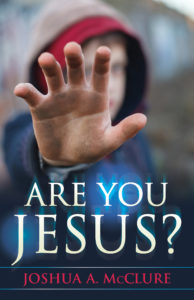
Are You Jesus?


Are you revealing Jesus to those you meet? Every day, we’re given that opportunity. . . .

Are-You-Jesus-2b-approved-194x300Joshua McClure. Are You Jesus? 184p., $14.99, Deep River Books.

We all need to ask ourselves this and answer in a personal way. In a world where people need to see Jesus, so often the only Jesus they will see is through those of us who walk with him. Since Jesus calls us to follow after him, his character and actions should become our character and actions.

In Are You Jesus?, award-winning author Joshua A. McClure presents an insightful, powerful portrayal of the effect of Jesus’ life upon those who respond to his call to be “set apart” to him. He demonstrates not only why, but how we should merit to be recipients of his commendation in Matthew 25:40, “when you did it to one of the least of these my brothers and sisters, you were doing it to me!”

Posted in Uncategorized | Tagged , , , | Leave a comment

Lay Down Your Idols


Today we finish our section on the past, and begin moving into the present. But there are still some things in our way we need to push aside. Let’s spend today identifying and dealing with them.

We have been created for worship. Therefore, we will ultimately worship something, and very often it’s something less than God. Peter Kreeft, in Christianity for Modern Pagans, aptly points out, “The alternative to theism is not atheism but idolatry.” Even as Christians, the temptation to worship something in God’s creation—or of our own “creation,” for that matter—remains, and we often fall victim to it without even realizing.

If we’re willing to look closer, what we worship—read: what we place above us—is the person or thing we believe will give us the most pleasure or benefit. We may subjugate ourselves to it, but ultimately it’s still about us. So let’s frame the question this way: What do you let serve you, other than God? That’s your idol, or at least your potential idol.

Let me make this even easier, albeit in ascending order of emotional difficulty. By the time we’re done, this may feel more like a pile-on than simply moving from one category to the next, but that only means we’ve uncovered a big idol. So let’s. . . .

Follow the money. Well, where does it go? For that matter, how much of your “essential” spending is essential? As you observe where your money goes, think about the feelings you have in relation to those “purchases.” What are you really trying to buy? Security, pleasure, reputation?

Follow your time. Same idea. Where’s your time going? And again, yes, some blocks of time are immovable or at least difficult to change. But where does your “down time” go? And do you need to spend that much time at work, or is it a choice? Either way, what’s motivating those choices?

Follow your tongue. Now it gets harder—first of all, because you actually have to listen to what comes out of your mouth. “For out of the abundance of the heart the mouth speaketh” (Matthew 12:34, KJV). So, what does your abundance look like? Or to put it more bluntly: What are you full of? And why?

Follow your fear. What causes you anxiety? What makes you defensive? What do you find yourself unnaturally worried about? Don’t stop and justify it with, “Well, I have to, because….” Just answer the question. Then answer this one: What’s that fear telling you about what you truly value? What idol is lurking behind that fear, pulling the strings?

Follow this sentence to its ultimate conclusion: “My life is wasted unless I . . . .As you do this, take special note of that last little word. Because ultimately, all of this idol talk is about the I. We turn to our I-dols because we don’t believe that what God has for I is good enough. And yet, our own efforts leave us feeling even emptier—as if our lives have been wasted.

Here’s the thing: God doesn’t feel your life is a waste. Ever. You don’t have to fix it. Anything in your life that does need fixing is God’s responsibility—but we have to let him do the fixing, and cooperate with him as he does.

What’s more—and we’ll delve more into this in future weeks: Your life is a small speck in the face of eternity. Any “waste” that’s happened, or is happening now, is not only redeemable but nothing in the face of God’s glory. As you lay down the idols you’ve identified, God will take that “waste” and transform it into something that reflects his glory.

As we close this section on laying down your past, there’s probably no better way to do so than with Romans 8:1–2: “There is therefore now no condemnation for those who are in Christ Jesus. For the law of the Spirit of life has set you free in Christ Jesus from the law of sin and death.” The past is as done as you want it to be. God will use it as he sees fit—not to condemn you, but to transform you back into his image. So let’s lay down the things we worship aside from God, and let’s move into the present.

Lay It Down Today

Where did all that “following” lead you today? Now’s the time to lay those things down—literally, if possible.

For every idol you identified, try to find a physical item that represents it. Is it a home or car? Get out your keys. Money? Get out your wallet or purse. Reputation? Find an award or some other item.

Then, get on your knees before God. No, seriously, do it. Lay down each of these items before him. Confess how, and why, they’ve become idols in your life. Ask God to help you trust him, and to use these items for his glory instead of yours. Thank God that he is the one who’s truly worthy of your worship, and begin living into that reality.

Posted in Uncategorized | Tagged , , | 1 Comment

Israel, the Church, and the Middle East


So, what should the Christian’s attitudes toward Israel be—historically, politically, and especially spiritually?

Darrell L. Bock & Mitch Glaser. Israel, the Church, and the Middle East: A Biblical Response to the Current Conflict. 304p., $24.99, Kregel Academic.

The relationship between the church and Israel has been the source of passionate debate among Christians throughout much of church history. In recent years the traditional pro-Israel stance of evangelicals has come under fire by those who support the Palestinian cause, calling for a new perspective and more nuanced approach by Christians who believe that the land of Israel belongs to the Jewish people by virtue of God’s covenants and promises. . . .

The book is directed toward pastors, global Christian leaders, theological students, and well-read lay Christians who are actively seeking guidance and resources regarding the Middle East conflict. The contributors represent a broad evangelical spectrum.

Posted in Uncategorized | Tagged , , | Leave a comment

Lay Down Your Addiction


Now that we’ve addressed the need to lay down the things we hold against others, let’s spend the rest of this week addressing the other side of our baggage—namely, the logs in our own eyes. Let’s begin today with the things we know we struggle with, and then drill down deeper tomorrow.

For today, I’m going to use a word we’ve come to compartmentalize—addiction—and show how pervasive this mindset really is in our lives. Let’s define addiction here as anything you need to get through the day that isn’t God. All of our addictions—all of our sin, really—is a response to the gnawing sense we have, deep down, that God doesn’t really want what’s best for us. That God’s will comes at his whim, and at our expense. That we, the created ones, somehow don’t owe everything we have to the Creator in the first place. There’s a reason that the acknowledgment of a higher power is part of any good recovery program, after all.

There’s another old-fashioned and equally overcompartmentalized word for what we’re talking about: lust. It doesn’t have to be the sexual kind (although it might well be). What lust in any form means, is: We want what we want and we want it now. And we keep on wanting it—because it wants us, too. That’s the power of lust, or addiction. We believe it will satisfy a need God can’t, or won’t.

But here’s the thing we forget: If God won’t satisfy it, it’s not really a need. We’re the ones who have elevated our desires to that status.

“God’s been duping you; God’s been duping you.” Satan has been using this trick from the very beginning, and it’s still probably his most effective. When we cease to trust God, we welcome the lusts of our own hearts. Yet, once we’ve regained our senses afterward, there’s a sense of heaviness, sadness, not totally unlike the feeling of a Sunday-morning hangover after a particularly long Saturday night. (And for some of you, it might be exactly like that.) Our overindulgence—our giving way to our compulsions—always has consequences, both physical and spiritual.

Jesus didn’t fall for Satan’s trick. He not only endured temptation, but he overcame temptations we were too weak to have Satan even bother to throw at us. Jesus knows the way out, because he’s been there.

Since therefore the children share in flesh and blood, he himself likewise partook of the same things, that through death he might destroy the one who has the power of death, that is, the devil, and deliver all those who through fear of death were subject to lifelong slavery…. For because he himself has suffered when tempted, he is able to help those who are being tempted. (Hebrews 2:14–15, 18)

Because Jesus went through temptation for us, came out the other side, and then paid the price for our own failure anyway, he is able to deliver us. “No temptation has overtaken you that is not common to man. God is faithful, and he will not let you be tempted beyond your ability, but with the temptation he will also provide the way of escape, that you may be able to endure it” (1 Corinthians 10:13).

It may not seem that way at first glance, but one of the most practical responses we can make to our addiction is to engage in spiritual disciplines such as prayer, Bible study, solitude, and worship. Here’s why: Instead of letting ourselves be carried away by every impulse that strikes us, such practices help us say to God, “I’m staying right here. I’m focusing on you. Help me to follow what you want.” To be clear, the disciplines aren’t a catch-all solution. In fact, they can become an addiction in themselves if we make them only about how holy we are or become anxious over “doing our duty.” Nonetheless, they are a declaration of intent, with the actions to back it up. They’re opportunities to take our misguided passions and guide them somewhere more useful.

As our focus becomes more and more about God, our compulsions melt away. Not that we’re never tempted again—or for that matter, might not stumble again—but we have a practical way to get up and dust ourselves off. Don’t overlook the importance of that. With that, let’s get to today’s assignment.

Lay It Down Today

We’re going to practice one spiritual discipline right now: Silence. Pulling ourselves away from the world helps us to hear God more clearly. It’s a way to remove ourselves from the constant compulsive flow of the world that draws us so easily into temptation and addiction. And, it’s a way of telling God (silently, of course) that he takes priority.

Psalm 46:10a is a pretty popular phrase we throw around for this: “Be still, and know that I am God.” (I’ve always liked rephrasing it, “Shut up—I’m God.”) I want you to start your time of silence by reading all of Psalm 46—because it’s all about trust, and the fact that God is worthy of our trust. Afterward, take at least ten minutes to close your eyes and be totally silent before God. Your mind will probably keep buzzing for at least the first few minutes. That’s OK. Give the buzzing time to die down. Let God speak, and quiet yourself down enough so that you can hear him. When you’re done, write down your thoughts.

Posted in Uncategorized | Tagged , , , | 1 Comment