
Everything you wanted to know about Paul but was afraid to ask (or maybe not). . . .
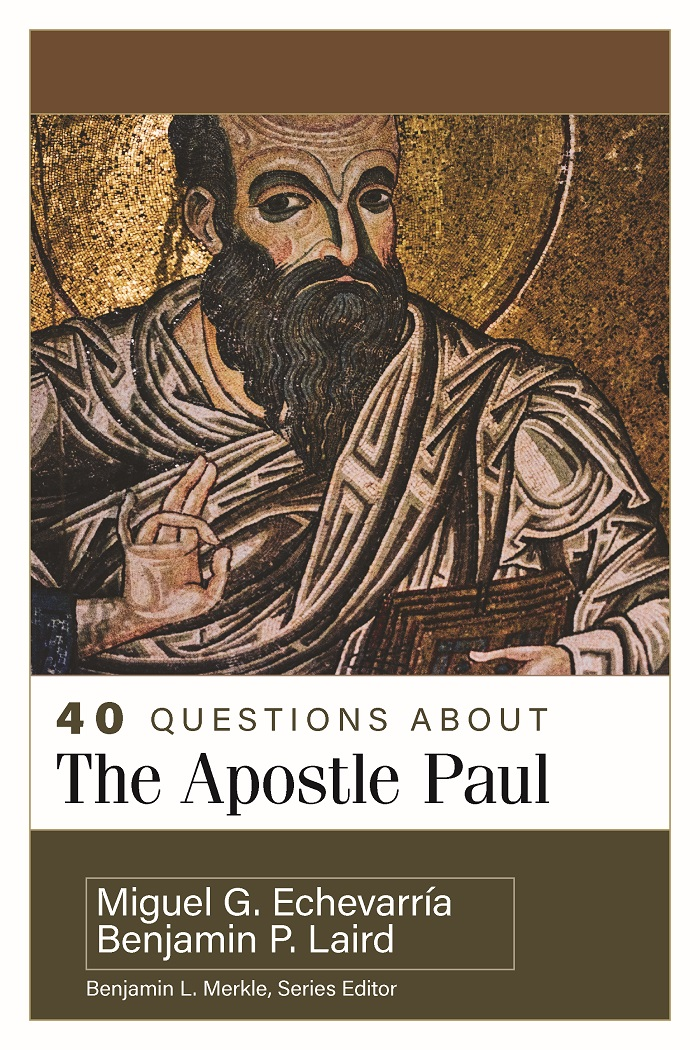
Miguel G. Echevarría and Benjamin P. Laird. 40 Questions about the Apostle Paul. 374p., $24.99, Kregel Academic.
Paul of Tarsus was an undeniably forceful presence in the early Christian church, instructing fledgling congregations of believers throughout the Mediterranean in person and by letter and authoring about half of the New Testament in the process. But who was this powerful personality? And how can students most benefit from the extensive studies on Paul available today?
New Testament scholars Miguel Echevarria and Benjamin Laird provide an invaluable foundation for students beginning their investigations into the apostle Paul, Paul’s theology, and Pauline studies, addressing orienting questions such as these:
- What do we know about Paul’s family?
- How did Paul’s companions assist in the composition and distribution of his letters?
- Did Paul think his letters were authoritative Scripture?
- Is there a center to Paul’s theology?
- What is Paul’s Christology?
- What are the strengths and weaknesses of the New Perspective on Paul?
- Does Paul address slavery and racial division?
Through its question-and-answer format, 40 Questions about the Apostle Paul provides a succinct introduction and entryway to more advanced study of Paul and the Pauline letter corpus.






Numbers
At the beginning of Numbers, the people of Israel are weeks away from the Promised Land. At the end of Numbers—40 years later—the people of Israel are weeks away from the Promised Land. What happened?
Joel Barker and Steven D. West. Numbers: A Commentary for Biblical Preaching and Teaching. Kerux Commentaries. 480p., $37.99, Kregel Ministry.
These two authors work together to explain the essential message for the original listeners or readers, unpack its timeless truth, and then provide a contemporary restatement and communication of insights for the key biblical concept. Every book is a resource designed and written with the real needs of the pastor and teacher always in sight, providing many ways to creatively express the principal thought in a biblical passage.
Based on the Big Idea preaching model, Kerux enhances the reader’s ability to deliver a message that is biblical, cohesive, and dynamic.
In Numbers, Joel Barker and Steven D. West illuminate the enduring importance of this notoriously difficult text for preachers. God’s commitment to both his people and his promises claims center stage in understanding this Old Testament record of the covenant people. Through the lens of an ancient time and faraway culture, Numbers emphasizes God’s overwhelming holiness and the proper human responses of worship and trust. Barker and West guide expositors in shepherding their congregations through the book of Numbers and its themes of worship; disobedience and grumbling; judgment and restoration; anticipating of promises; and even leadership, all of which relate to God’s people today.