Put on Your New Self      


Whatever we truly do for God, it is Christ in us. Whatever holiness we have is not ours to take credit for, but Christ’s to be glorified with. Even then, it is not what Christ does, but who Christ is—and how he is being formed in us.

Slowly, we are becoming the people God created us to be. Slowly, the new life Christ has in us is growing outward. However, it’s not all about waiting for things to happen. We can begin, even now, to put on our new identities in Christ, even as we wait to mature enough to “fill out the suit.”

In my Father’s house are many rooms. If it were not so, would I have told you that I go to prepare a place for you? And if I go and prepare a place for you, I will come again and will take you to myself, that where I am you may be also. And you know the way to where I am going. (John 14:2–4)

When we look to Jesus, we “know the way to where [he] is going,” and consciously turn ourselves in that direction. As we look to Jesus, we see One who “emptied himself, by taking the form of a servant, being born in the likeness of men” (Philippians 2:7), but who nonetheless was in constant communion with God. It is simultaneously putting the flesh to death and living entirely for the Father. This can become our increasing reality—not perfectly, but intentionally, and progressively better. We position ourselves, we put on the new self that’s already ours—and as we do, the Spirit empowers us.

Because he is the New Man, Jesus looks at even the most common things in godly terms, and by doing so transforms them into lessons, parables, teaching instruments . . . temporal things capable of conveying eternal life. In doing so—and because we remain connected with him—he continually shows us how to follow him as human beings. We become people capable of conveying eternal life.

We are no longer—check that: never were—self-appointed experts, no matter what the world tells us. We are God’s children, whom God increasingly entrusts with the fullness of his life so that the other kids can see it. In the words of Thomas Merton, “We do not want to be beginners. But let us be convinced of the fact that we will never be anything else but beginners, all our life!”

There is so much God has for us next, and our perspective and our actions need to change to reflect that. We must take those steps of faith that allow the Spirit to change our perceptions and our actions—so that we can faithfully and intentionally put ourselves in places where only God can work.

We have not been left alone to figure out how to follow him. “But when the Helper comes, whom I will send to you from the Father, the Spirit of truth, who proceeds from the Father, he will bear witness about me. And you also will bear witness, because you have been with me from the beginning” (John 15:26–27).

It’s a common misconception that walking in the Spirit invites abuse. The fact is: It’s the counterfeits of walking in the Spirit that invite the abuse, not the real thing. If we are truly in Christ, it will be impossible to go out into left field. Christ takes care of us, and the Spirit “will guide you into all the truth” (John 16:13). When in doubt, give yourself this test: Is what I’m experiencing helping me love God more, and love others more—or just helping me to love myself and my experiences more?

One more thing: our new lives in Christ bear fruit by abiding, not merely by doing (John 15:4–10). We are to pass along the life God’s given us, in the ways he’s given it to us, not manufacture something “to please God”—which doesn’t. It’s possible that God will honor our intent, and yet the works themselves will be “wood, hay, straw . . . and the fire will test what sort of work each one has done” (1 Corinthians 3:12–13). Isn’t it better to pass on the things you know God’s given you?

Receive the new identity you’ve been given in Christ, and cover yourself in it like it’s armor (because it is; Ephesians 6:11). Then, get ready to walk forward.

Lay It Down Today

Take as long as you need for this one—it could be a minute; it could be an hour. But get somewhere quiet and repeat the following to yourself: “I am in Christ, and Christ is in me.” Allow some silence between each repetition, but keep repeating this truth until it sinks in.

Then, once you’re “there,” ask yourself: “If Christ is in me, what does Christ want to do through me?” This is not asking, “What would Jesus do?” This is discovering how we are “created in Christ Jesus for good works, which God prepared beforehand, that we should walk in them” (Ephesians 2:10). If you settled on an answer during your activity in Day 1, dwell and pray more on it now. If not, dwell and pray anyway; earnestly seek an answer from God, and discover your first steps in making that answer a reality.

Posted in Uncategorized | Tagged , , | Leave a comment

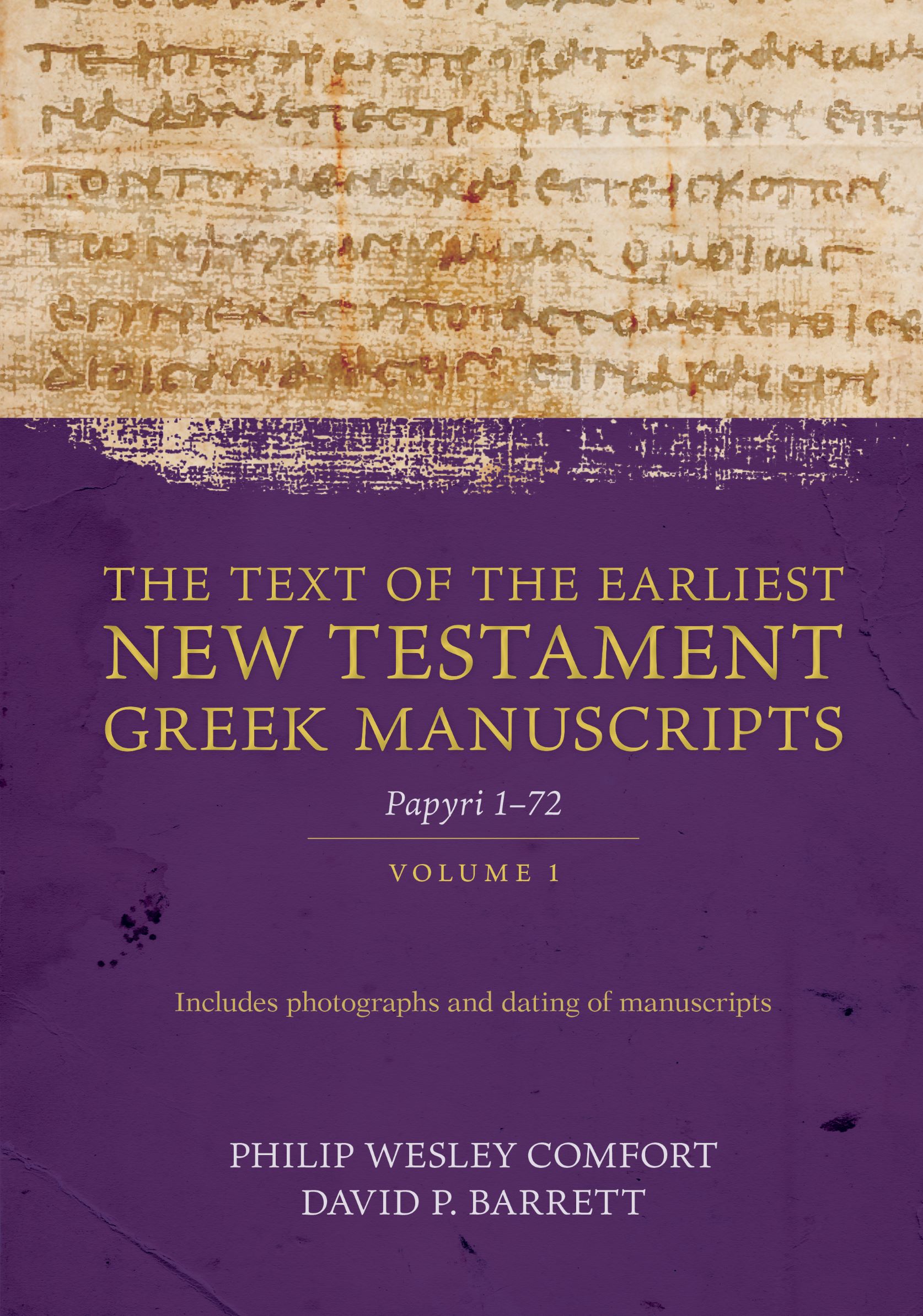
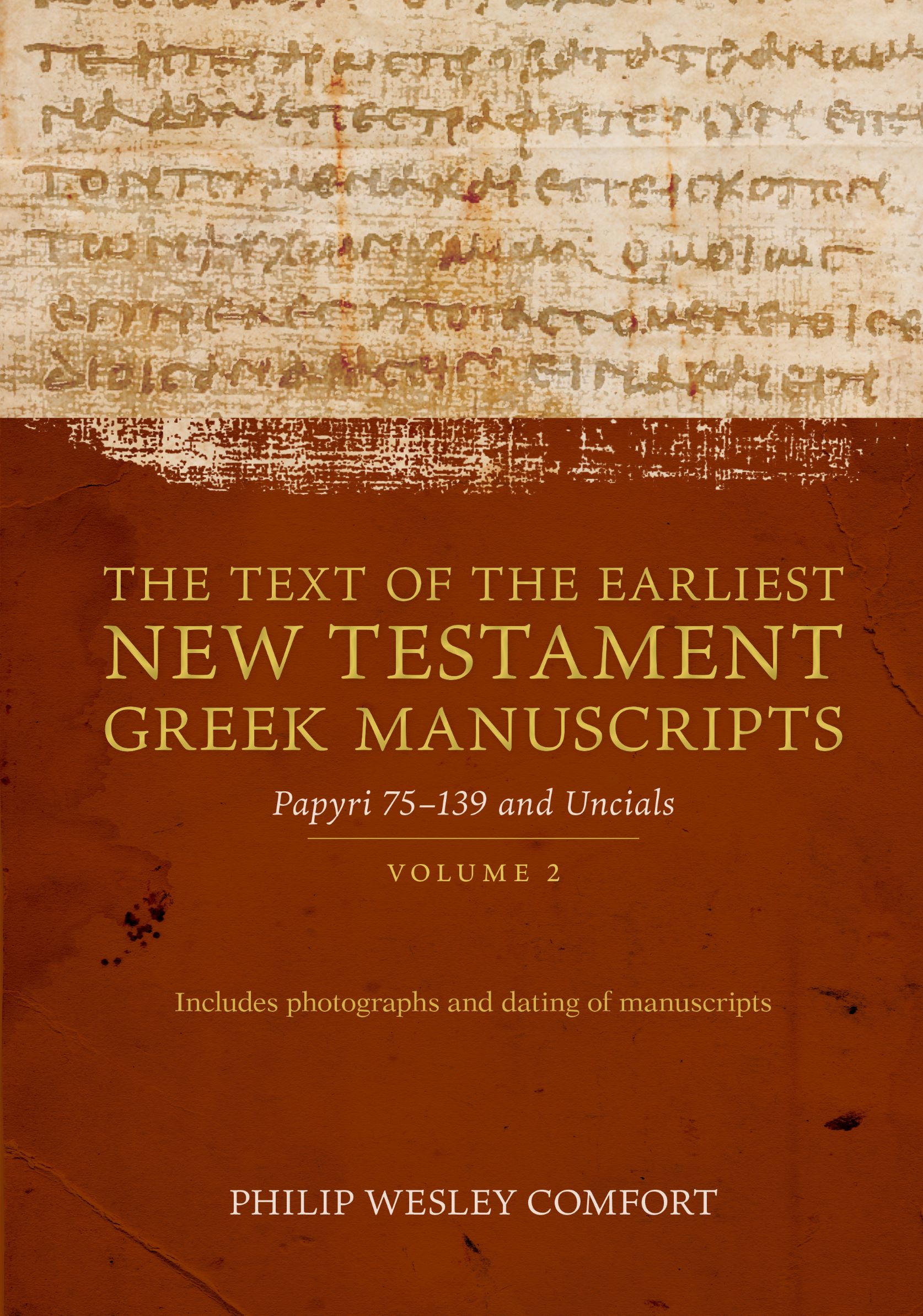
Text of the Earliest New Testament Greek Manuscripts


And for those of you who have the Greek (and financial) wherewithal to go to the original sources. . . .

The Text of the Earliest New Testament Greek Manuscripts, Volume 1Philip Wesley Comfort and David P. Barrett, eds. The Text of the Earliest New Testament Greek Manuscripts. Volume 1: Papyri 1–72, Volume 2, Papyri 75–139 & Uncials,; each 528p., $39.99. Kregel Academic.

The Text of the Earliest New Testament Greek Manuscripts, Volume 2The manuscripts that form the Greek New Testament are scattered throughout the world and are usually only accessible to scholars and professionals. These were the manuscripts read by the earliest Christians, which comprised their “New Testament.” In his volumes, Philip Wesley Comfort bridges the gap between these extant copies and today’s critical text by providing accurate transcriptions of the earliest New Testament manuscripts, with photographs on the facing pages so readers can see the works for themselves.

Comfort also provides an introduction to each manuscript that summarizes the contents, date, current location, provenance, and other essential information, including the latest findings. This allows students and scholars to make well-informed decisions about the translation and interpretation of the New Testament.  . . . In addition, Volume 2 features a special section on determining the date of a manuscript.

Posted in Uncategorized | Tagged , | Leave a comment

Pick Up Your New Life   


I have been crucified with Christ. It is no longer I who live, but Christ who lives in me. And the life I now live in the flesh I live by faith in the Son of God, who loved me and gave himself for me. I do not nullify the grace of God, for if righteousness were through the law, then Christ died for no purpose. (Galatians 2:20–21)

Transformation comes by taking Jesus’ yoke—by saying, and believing, “I am yours.” We can hear it, and say, “Yeah, that sounds right,” but we need to learn to see it—really see it—as the reality of our lives.

Some of this can sound pretty abstract. But we need it to become as real to us as our salvation has become to us . . . just as God himself has become real to us, and continues to become more real to us. It’s OK to nod your head in agreement right now, but pursue it with God, and don’t stop. Be able to say with Paul, “I count everything as loss because of the surpassing worth of knowing Christ Jesus my Lord. For his sake I have suffered the loss of all things and count them as rubbish, in order that I may gain Christ” (Philippians 3:8), and mean it.

There is no question as to whether God wants to see revival. Every word here backs that up—God wants us to draw closer to him, and more often than not that’s going to require our hard hearts to be re-broken so that they might also be reopened to him.

The question is: Are we committed to seeing the Spirit bring this? Are we willing to be obedient to what God has called us to, and to who God has called us to be? Are we willing set aside our own self-image, good or bad, and believe that God has something better for us, no matter what package it might initially come in? Most of all, are we willing to obey this command of Jesus, given to us as new creations in him, “that you love one another: just as I have loved you, you also are to love one another. By this all people will know that you are my disciples, if you have love for one another” (John 13:34–35)?

I believe Jesus is talking directly to the church here. Literally, he’s talking to the first apostles, but with the knowledge of what the Spirit would create in their midst only weeks later. Of course this commandment also applies outside the walls of the church, but I fear many of us treat the church (at least in its current state) as a bad idea to be given up on. I get that. Boy, do I get that. But Jesus has not given us that option. We not only have been given new life, but are part of a bigger new life—the body of Christ.

Given how we’ve done with this commandment inside the church, it’s painfully apparent that we’ll never get it right outside the church until we take off the polite faces and begin truly relating to our fellow Christians in love. Besides: Who’d want to come inside the church until we do?

Those within the church have the same problems as those outside the church. We have the same temptations, and the same sins—a fact the world has no trouble pointing out to us. You’ve read this, probably as a believer, and I’ll bet you’ve identified with a lot of what I’ve talked about here. Well, guess what? Nonbelievers struggle with (or, go on blissfully unaware of) all the same things we do.

The only difference between “us” and “them” . . . is Jesus. That’s it, but that’s everything. Jesus is the only reason we have a new life to talk about. It’s literally all the difference in the world, and beyond.

One way other people will begin seeing that difference is when we actually love those other annoying, flawed—and yes, sinful—Christians. In other words: those people who are like us. If we can pull that one off, how will we fail to love someone with the same problems who doesn’t know Jesus? We want those people to know Jesus, after all. But without love, they’ll never see Jesus in us or through us, let alone beyond us.

Just as we’re here because we’ve recognized Christ as our eternal Savior, we need to recognize him as our Savior, and our life, from moment to moment. Paul David Tripp, in Instruments in the Redeemer’s Hands, observes, “[I]t is impossible to celebrate God’s work of transformation without confessing your need for more. No one is more ready to communicate God’s grace that someone who has faced his own desperate need for it.”

Let God’s work of transformation begin here. And let it spread to the ends of the earth. We have a job to finish. Let’s begin living our new lives in full and get it done.

Lay It Down Today

Look inside your church today—or at least at the Christians you’re still in relation with. How can you serve them in love today, or in the coming week? I’m not asking for a long-term commitment here (although that’d be great); just come up with one thing that breaks your routine, gets you outside your own life, and gets your sharing your new life in Jesus with someone else who has that new life—especially if it’s someone you don’t normally do it with. And watch what the Spirit does with it.

Posted in Uncategorized | Tagged , , | Leave a comment

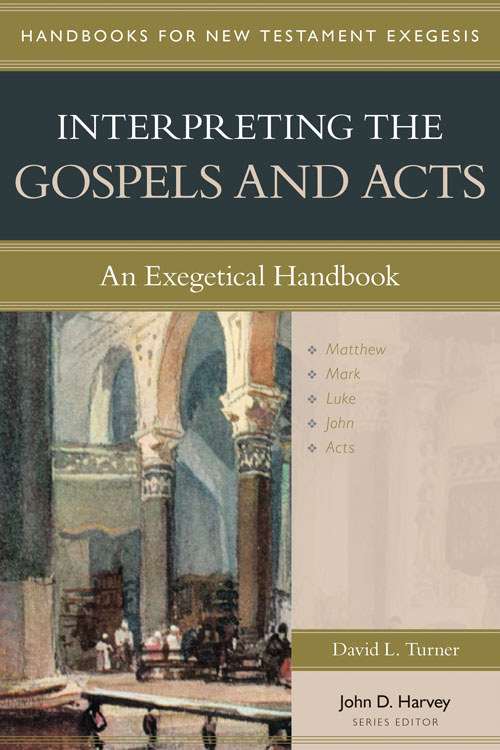
Interpreting the Gospels and Acts


Another one for all you exegetes in the audience. . . .

Interpreting the Gospels and ActsDavid. L. Turner. Interpreting the Gospels and Acts. Handbooks for New Testament Exegesis. 368p., $36.99, Kregel Academic.

In this final volume of the Handbooks for New Testament Exegesis series, David Turner provides a comprehensive guide for interpreting and conveying the lives of Jesus and his early followers. Key background information such as literary genres, historical setting, and theological themes lay the groundwork for properly reading these five books. This is followed by practical guidance on textual issues and original-language exegesis passages from the Gospels and Acts. The final chapter offers an extensive bibliography of books and digital resources useful for instructors, students, and church leaders alike. Interpreting the Gospels and Acts is an essential resource for anyone teaching and preaching these foundational books.


Posted in Uncategorized | Tagged , , , | Leave a comment

Pick Up Your Cross          


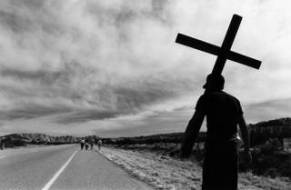
Then Jesus told his disciples, “If anyone would come after me, let him deny himself and take up his cross and follow me. For whoever would save his life will lose it, but whoever loses his life for my sake will find it. . . . For the Son of Man is going to come with his angels in the glory of his Father, and then he will repay each person according to what he has done.” (Matthew 16:24–25, 27)

We’ve spent a lot of time in this study laying our lives down, and rightfully so. Our hearts need to be prepared to receive what God has for us, and that means loosening up the soil of our hearts so that we can bear good fruit. After all, as you read repeatedly last week, “A healthy tree cannot bear bad fruit, nor can a diseased tree bear good fruit” (Matthew 7:18).

So finally, we move on to the “what he has done” (Matthew 16:27) part—the good fruitPick_up_your_Cross our lives have always been meant to bear in Christ. This isn’t about being “missional”—as if that idea were some breakthrough unique to the twenty-first-century church. This is about walking in the realization that “we are his workmanship, created in Christ Jesus for good works, which God prepared beforehand, that we should walk in them” (Ephesians 2:10).

There’s a prayer I’ve started putting before the Lord recently, and it while it sounds a bit odd to our modern ears, I’m betting something like it was a lot more popular even 150 years ago: “Lord, help me to take joy in your commandments.” Because let’s face it: We don’t. We don’t really believe Jesus when he says, “Take my yoke upon you, and learn from me, for I am gentle and lowly in heart, and you will find rest for your souls.” (Matthew 11:29). Instead, we scramble to find ways to serve visibly; without any sense of rest whatsoever. I’m no exception.

If we could just believe that God truly wants our best, then all the fear, all the striving, all the shame—everything we’ve dealt with in these first seven weeks’ worth of devotionals—would be a moot point.

Let’s circle back to where we left off in Romans 6—only this time let’s focus on the section we skipped over:

Now if we have died with Christ, we believe that we will also live with him. We know that Christ, being raised from the dead, will never die again; death no longer has dominion over him. For the death he died he died to sin, once for all, but the life he lives he lives to God. So you also must consider yourselves dead to sin and alive to God in Christ Jesus. (Romans 6:8–11)

We—are—dead in Christ. Dead to sin. Dead to ambition. Dead to our past. Dead to anxiety.

And yet, we are alive to God in Christ Jesus. Alive to obey. Alive to rejoice in his good work through us. Alive to walk wherever he calls us to, because his calling is sure.

By submitting every piece of our lives to Christ—and at the same time realizing who we truly are in Christ—we’re being prepared to live in the way Jesus has always wanted. Thus, we don’t do works for ourselves, or to show the world how great Christianity is, but solely to give glory to God. If no-one sees our good works but “[our] Father who sees in secret” (Matthew 6:4, 6, 18), that is enough. And should “[our] light shine before others, so that [others see our] good works and give glory to [our] Father who is in heaven” (Matthew 5:16) it is God’s glory, and it is our joy to see it.

Your life is no longer yours. Stop behaving as if it is. You cannot force God to lead you into the next phase of your life. You can renounce all you have and entrust it to him, move when he tells you to move, and rejoice that he considered you worthy to be trusted with anything. Pick up your cross. Consider yourself dead to sin and alive in Jesus. And truly begin to follow the One who carried your cross before you were even born.

Lay It Down Today

Another way we’ve been preparing to bear good fruit throughout this study has been these daily assignments. Other assignments this week will be smaller, but because this one’s long-term—again, there is life beyond this study—I want you to start thinking about it today.

I’ve asked some form of this question repeatedly. Now I’m going to ask it again: What has God been impressing on your heart—and you’ve been doing nothing about—for way too long? This week, it’s time to start doing something about it.

Get out a piece of paper, and begin writing down ideas. Who do you need to talk to, or what other actions do you need to take, to begin making this happen? You don’t have to know everything—or maybe even anything—except that God’s given you this burden and that it’s time to start dealing with it. Do expect that as you move forward, God will honor your steps of faith and guide you in the ways you need to go.

If this isn’t where you’re at—or you know you’re already where God wants you—spend your time today thanking God for that. Give him the glory for what he’s already doing, and ask him to keep your heart open so that you can continue to respond as he wants, when he wants.

Posted in Uncategorized | Tagged , , , , | Leave a comment

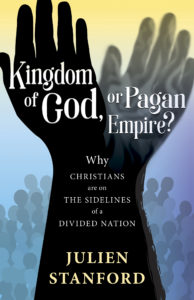
Kingdom of God or Pagan Empire?


Looking at the divide between worldviews, and how to reach across it. . . .

Kingdom of God or Pagan Empire CoverJulien Stanford. Kingdom of God or Pagan Empire?: Why Christians Are on the Sidelines of a Divided Nation. 356p., $18.99, Deep River Books.

A great political divide exists today, but can we truly grasp the significance of that divide?

It is very complex and carries such deep implications that explaining the nature of the divide is not possible without reaching far back into history to trace its development. . . .

Kingdom of God or Pagan Empire demonstrates that the Christian position is the only one that can squarely address the phenomena of the whole human experience without violating the principle of non-contradiction. More importantly, Christianity continues to be the sole hope for individual and cultural redemption.

In order to truly appreciate—or even begin to understand—something as complex as Christianity, one must first be acquainted with the backdrop against which it emerged. . . .  [T]he reader will be acquainted with this nuanced, contextual understanding among other tools to guide them in engaging with the current cultural divide.

Posted in Uncategorized | Tagged , , , , | Leave a comment

Lay Down Your New Life: a small-group session


For this session, you’ll need . . .

regift

  • A small (or at least cheap), wrapped “re-gift” from/for everyone in your group.

Note: If you have time, turn your opening experience into a full-blown “white elephant party.” Or do it as prescribed below. The follow-up questions will work either way.

Laying Down Your Day (20 minutes)

As your group members enter, have them place their gifts on a nearby table or on the floor—somewhere they’re easily accessible.

Have everyone grab a gift to start off your session. Once everyone’s taken a gift, open them simultaneously. Have a good laugh, and then discuss:

  1. When have you given a “re-gift”—or been the obvious recipient of one? Either way, how did you feel about giving/receiving it?

Ask for a volunteer to read Matthew 7:7–11. Then, discuss this question:

  1. How do we sometimes treat God’s good gifts like our “re-gifts” here? Be specific, if possible.

Ask for another volunteer to read the following excerpt from “Lay Down Your Crown.” Then, discuss the question that follows:

Everything we have from God, ultimately, is a gift. .  . . “The earth is the Lord’s and the fullness thereof” (Psalm 24:1). Why then do we live as if this isn’t true—as if we need to have a contingency plan in case this “God thing” doesn’t work out?

  1. What’s your response to this question? And again, what does it say about how you regard God’s good gifts?

God has given us many good gifts—not the least of which is new life in him. But he doesn’t give his gifts just for our sakes. They’re meant to be “re-gifted”—to others, and sometimes even back to God himself. This is how gifts become fruits—and as you’ve read this week, that’s what we want to be known by. So let’s dig further into this.


Laying Down the Word (20 minutes)

Ask for a volunteer to read the following excerpt from “Lay Down Your Dreams.” Then, discuss the questions that follow:

God has often blessed us by giving us the desires of our hearts. The thing about following Jesus, though, is that he keeps us moving. . . . Moving forward almost always means leaving things behind—even good things . . . so God can give us something even better—or transform it into something better. However, God often doesn’t show us “the better thing” until we’ve given him what he’s asked us to give him.

  1. When have you experienced this truth?
  2. Tell about a time God prepared you for something, but it meant letting go of something else. Why do you think God wanted you to let that thing go? What were the results?
  1. Why do you think God often doesn’t show us “the better thing” until we’ve given our good gifts back to him?

Ask for a volunteer to read 1 John 3:16–18, and then discuss:

  1. We’ll explore this more next week, but let’s start today: How does laying down our lives—even the good things in our lives—enable us to love others better? Provide an example, if you can.


Laying Down Your Life (20 minutes)

Have everyone get into their pairs. If anyone’s missing, help group members find another pair for the rest of this session. Again, have no more than three people together.

Laying down our lives isn’t easy. But as Jesus did, we do it for the sake of others, that they too can have new life in Jesus. And as we do, God raises us up higher—and closer to him.

You’ve had a lot of stuff to process on your own this week. Therefore, the rest of this session will be devoted to processing it in your pairs (or trios). Take the time to share your answers—and the questions you’re still struggling with—with one another. When you’re done sharing, take the time to pray for one another. Invite God deeper into the process he’s already started in each of you.

Also, set aside a time during the week to touch base with one another, whether that’s phone, e-mail, texting, whatever. Once you’re done, stay quiet until everyone’s had a chance to finish sharing and praying for one another; then, you’re free to leave—or to keep hanging out and sharing together.

  1. How have you responded to your readings from the Sermon on the Mount this week? What’s hit you the hardest, and why?
  1. Reflect also on your “Lay It Down Today” assignment in “Lay Down Your Life.” (Reread Romans 6:3–4, 12–14; 14:7–9, if you need to.) Discuss your answers to the following questions from that assignment:

How is God calling you to be “instruments for righteousness”? What still needs to die for you to fulfill that calling? Where do you need to trust God and just walk, regardless of the consequences? Where do you need to accept that “you are not under law but under grace” and get on with it?

 Again, close your time together in prayer for one another. And may God continue to bless you—and those he puts in your path—as you lay down your lives even further!

Posted in Uncategorized | Tagged , , , , | Leave a comment

Interpreting the Gospels and Acts


Dig deeper into the formative narratives of the church. . . .

Interpreting the Gospels and ActsDavid L. Turner. Interpreting the Gospels and Acts: An Exegetical Handbook. 368p., $36.99, Kregel Academic.

In this final volume of the Handbooks for New Testament Exegesis series, David Turner provides a comprehensive guide for interpreting and conveying the lives of Jesus and his early followers. Key background information such as literary genres, historical setting, and theological themes lay the groundwork for properly reading these five books. This is followed by practical guidance on textual issues and original-language exegesis passages from the Gospels and Acts. The final chapter offers an extensive bibliography of books and digital resources useful for instructors, students, and church leaders alike. Interpreting the Gospels and Acts is an essential resource for anyone teaching and preaching these foundational books.

Posted in Uncategorized | Tagged , , , | Leave a comment

Lay Down Your Life      


Death is not just the end of life—it is the returning of life to its Creator. It is not a loss, but a fulfillment. All the laying down of all the pieces of our lives are but a rehearsal for that moment.

No wonder Paul says, “[W]e would rather be away from the body and at home with the Lord” (2 Corinthians 5:8). Sometimes we just want to jump to the end. Even for a coward like myself, the idea of martyrdom seems noble, even romantic. But if we’re not willing to die to ourselves right now, it’s a fairly safe bet that we wouldn’t lay down our physical lives if we were ever called to do so.

On the other hand, when we lay down every claim we have to our lives—which, after all, has been the thrust of this entire book—we’re free to be used of God in any way he chooses, up to and including martyrdom. No matter what God calls us to actually do at that point, our obedience will not seem spectacular to us but normal.

More than likely, what we’ll be called to—and are already called to—is to die anew every day, to crucify the flesh day by day and moment by moment. Not only that, but to live that death outwardly, so that we can “let [our] light shine before others, so that they may see [our] good works and give glory to [our] Father who is in heaven” (Matthew 5:16). Even here on earth, there is a life beyond all this dying. First John 3:16–18 gives us a glimpse into dying to self, and to what our lives should look like beyond that death:

By this we know love, that he laid down his life for us, and we ought to lay down our lives for the brothers. But if anyone has the world’s goods and sees his brother in need, yet closes his heart against him, how does God’s love abide in him? Little children, let us not love in word or talk but in deed and in truth.

Before we head toward the finish line of these devotionals—and at the same time, see how far we’ve already come—let’s spend one more day in the Sermon on the Mount. Remember that Jesus said, “Do not think that I have come to abolish the Law or the Prophets; I have not come to abolish them but to fulfill them. . . . For I tell you, unless your righteousness exceeds that of the scribes and Pharisees, you will never enter the kingdom of heaven” (Matthew 5:17, 20). He proceeds to break that down for us throughout the rest of that chapter—anger, lust, divorce, oaths, retribution, loving others. “You have heard it said . . . but I say. . . .” All of it is about dying to ourselves, rather than clinging to our lives (especially by outwardly conforming to the law).

Our only hope is in Jesus, and following where he leads. “[T]he gate is narrow and the way is hard that leads to life, and those who find it are few” (Matthew 7:14). The way that leads to life leads through death to ourselves—and by giving our lives for others. Paul puts it even more bluntly:

Do you not know that all of us who have been baptized into Christ Jesus were baptized into his death? We were buried therefore with him by baptism into death, in order that, just as Christ was raised from the dead by the glory of the Father, we too might walk in newness of life…

Let not sin therefore reign in your mortal body, to make you obey its passions. Do not present your members to sin as instruments for unrighteousness, but present yourselves to God as those who have been brought from death to life, and your members to God as instruments for righteousness. For sin will have no dominion over you, since you are not under law but under grace….

For none of us lives to himself, and none of us dies to himself. For if we live, we live to the Lord, and if we die, we die to the Lord. So then, whether we live or whether we die, we are the Lord’s. For to this end Christ died and lived again, that he might be Lord both of the dead and of the living. (Romans 6:3–4, 12–14; 14:7–9)

We lay the entirety of our lives down, as Jesus did, because of the hope of new life—eternal, incorruptible, irreversible, and communal. Even now, he is both Lord of the dead and of the living. Eternal life starts now. So let’s get on with dying, that “we too might walk in newness of life.”

Lay It Down Today

I’m leaving today’s assignment(s) rather open. The first piece is between you and God; the second is a longer-term challenge that I hope you’ll accept.

First, spend some time dwelling on our passages from Romans. How is God calling you to be “instruments for righteousness”? What still needs to die for you to fulfill that calling? Where do you need to trust God and just walk, regardless of the consequences? Where do you need to accept that “you are not under law but under grace” and get on with it?  Spend some time praying about this. Ask God (“and you shall receive”) to give you the clarity and courage to “walk in newness of life.”

By the way, congratulations on spending the week in the Sermon on the Mount. I assume you’ve already been challenged pretty hard by Jesus’ message. Here’s my additional challenge: Commit to memorizing the entire sermon. Give yourself a chance, even if you think you can’t do this. At the very least, take on the Beatitudes. See how God might use it. I’ve done it myself, and it isn’t easy—in fact, it took me three and a half months—but I can tell you that it’s a convicting, difficult, yet steadily transforming experience. You’ll spend time wrestling with Jesus’ words in ways that you wouldn’t have otherwise.

You can spend a lifetime dealing with everything Jesus says here—and if you’re smart, you will. For “[e]veryone then who hears these words of mine and does them will be like a wise man who built his house on the rock. And the rain fell, and the floods came, and the winds blew and beat on that house, but it did not fall, because it had been founded on the rock” (Matthew 7:24–25). Seriously consider this challenge, and then do what you think best. And good luck!

Posted in Uncategorized | Tagged , , , | 1 Comment

Understanding Bible Translation


Ever wonder what it takes to get a Bible translated into another language for the first time? Wonder no more . . . or wonder at the amount of work it requires. . . .

Understanding Bible TranslationWilliam D. Barrick. Understanding Bible Translation: Bringing God’s Word into New Contexts. 256p., $21.99, Kregel Academic.

In Understanding Bible Translation, William Barrick surveys the fascinating work of Bible translation worldwide. Drawing on decades of experience translating the Bible, Barrick explains best practices for Bible translation and walks the reader through the translation process. In addition, he provides insight for evaluating English translations and highlights resources for understanding difficult passages of Scripture.


Posted in Uncategorized | Tagged , , | Leave a comment