A piece from Laying Down in Peace


We tend to get worked up whenever someone criticizes God or Christians. We want to run to God’s defense—or honestly, much of the time, our own—and say just the right thing that will shut that other person up. But God can defend Himself far better than we can. We are called to stand and deliver, then take what comes, just as Jesus did.

And consider that for a moment. For just a few moments, take off the table the idea that Jesus was the Son of God—that Jesus is God. Look, for a few moments, purely at the human Jesus of the gospels. Look at how much He loved God, and had to present the Kingdom of God and defend it—including very often against those who claimed to speak for God and clearly did not. And even how He spoke to those who truly desired to know God but got it wrong—a lot. Here was someone who actually knew the right answers. How do you think Jesus felt during when he was assaulted verbally—and later physically and beyond—by those who didn’t want to hear those answers?

But how did He respond? Certainly there are examples of anger—pretty much reserved for those who insisted they could represent God better than Jesus could—but there is also patience. Love. A desire that the people He responds to do somehow hear it.

And if that’s the model of a Christian response, who are we—who are still a hopeless jumble of spirit and flesh being sorted out through this process called sanctification—to respond any more pridefully?

Posted in Uncategorized | Tagged , , , | 1 Comment

Dallas Willard for Dummies… in the very best sense


I thought that might get your attention. 🙂

But let’s face it, as wonderful a spiritual writer as Dallas Willard is — and The Divine Conspiracy is deservedly recognized by many as the best Christian book of the past quarter-century — he can be a tough read. Renovation of the Heart is still close to impenetrable for me. The Great Omission or Hearing God are better starting points if you’re a newcomer, but there’s some deep thinking going on no matter where you turn.

But back to Conspiracy: The throwdown Dallas gave in that one was the creation of a “curriculum for Christlikeness” — a way to take all these deep thoughts about Jesus and turn them into spiritually transformative, real-life experience. In fact, that was pretty much the direct commission Dallas gave to James Bryan Smith for his Good and Beautiful series. I published a review of the final and best entry here a month ago, but bottom line: I don’t think it came close.

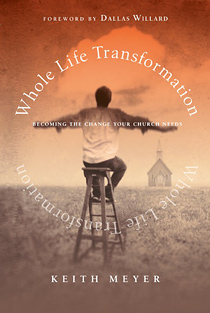
Enter another Willard disciple and more recent IVP publishee, Keith Meyer — who already had “spiritual street cred” with me going in, due to his pastorship at Church of the Open Door in Minneapolis (go C&MA alumni!) and its decided emphasis on discipleship. In his first book, Whole Life Transformation, Keith shares how that emphasis changed both him and his church — and more importantly, how to reproduce that transformation in your life and church (in the way God chooses, of course). And by presenting it in the hands-on way he does — especially the book’s second half — I believe this is the closest we’ve come so far on that “curriculum for Christlikeness” front. (Well, maybe also… but let’s not go there right now. :))

Keith Meyer. Whole Life Transformation: Becoming the Change Your Church Needs. Foreword by Dallas Willard. Hardcover, 224p., $20.00. IVP Books.

A Willard quote is both the launching point for Keith and this book: “In the end Keith, what God gets from your ministry for him is you.” And another, from Keith himself: “Without a strong sense of being loved by Christ, ministry sets us up to feed off each others’ egos in attempts to get what only God can give.”

It’s this latter quote that embodies the first half of the book — Keith’s story, one of a pastor approaching burnout because he’s doing “God’s work” without God’s help or presence. And it’s a question from his son while sitting watching TV — “Dad, are you home yet?” — that stops him in his tracks and turns him around. Keith discovers how to let Jesus be his teacher; and ultimately, his personal turnaround spread to an entire church.

The second half addresses how to begin “being the change” in our own lives, and again Keith starts with family, and friends — the people who can see our blind spots and point them out so we can take them to God. From there, he shares what that spiritual transformation can look like in a church context, and where it needs to start:

“One person finally got was I was trying to say, and asked, ‘If we get .01 percent of our people into this the next year, we would be doing good, right?’ I said, ‘You got it! And the .01 percent would be you… living it out together in your homes, neighborhoods and work.”

So, your turn: Are you fried? Restless? Wondering where God is in all this ministry you’re doing for God? So was Keith. As you walk along with him through Whole Life Transformation, you’ll realize God DOES have a “better life now” for you — the real kind — and that it is something worth attempting. And you’ll probably start doing something with it before you’re done reading this book.

Posted in Uncategorized | Tagged , , , , , | 8 Comments

What’s Your Compass?


Are you alone? Good. Then you won’t feel silly trying this:

Shut your eyes… well, I’ll tell you when actually … and point straight ahead in the direction you think is north. (If you have an actual compass, keep it handy but don’t look at it yet. A town map would get it done.) Now, keeping your eyes closed, spin around three times and try to be pointing north again when you’re done. Ready? Go!

OK, check your compass or map. How close were you to being north when you were done?

Here, then, are a few more things to reflect on:

• What landmarks did you use to decide which way north was? How accurate were they?
• When’s a time you’ve felt like you’d been spinning for so long that you didn’t know which way was up (or north, for that matter)?
• What do you use as your “compass” when you have to make a tough decision?

God has given us a number of compasses to help us figure out what direction we should take, such as the guidance of the Holy Spirit and the advice of other mature Christians we trust. But sometimes we can mistake our own thoughts or feelings what the Spirit’s really trying to say to us — we’ve certainly seen evidence of that earlier this week. And even with the best of intentions, other Christians can give us advice that isn’t what God wants for us.

We have a compass that always points to God and can give us the guidance we need—the Bible. But many of us don’t know how to use that compass to its best effect. Sometimes we don’t believe it’s really pointing north and don’t follow it. Even more often, we don’t pull it out to find out where God is trying to point us.

And sometimes, we have a hard time reading that compass. But when we do use, understand, and follow God’s Word, God changes us and takes us where he really wants us. So let’s see how we can make God’s Word more a part of our lives, and why it’s important for us to do it.

You might already do something like this on your own, but try it now and see what happens: Find Joshua 1:1-9 in your Bibles, and read the passage quietly to yourself. Don’t move on until you’ve read the whole passage first. Then, answer these questions:

• What’s the context of this passage? In other words: What’s happening here? When and where is this taking place? What are the people in the passage thinking and feeling at this moment?
• What words or phrases stand out to you here?
• What’s the main thing God wanted the people in this passage to know?
• What’s God saying to you through this passage? What’s one way can you take that and put it into practice?

Here’s a couple more broader questions:

• Look again at verses 8-9. What’s the difference between meditating on God’s Word and just reading it?
• When (or how) has spending time in God’s Word helped you have strength or success you wouldn’t have had otherwise? Talk about it.

OK, here’s one more activity: Take out your wallet, purse or cell phone, and put it in front of you. What’s so important about carrying this thing with you everywhere you go? What are some different ways you use it?

We just looked at a passage in Scripture where God commands us to meditate upon his Word day and night. So let’s take that idea a step further: What do you think would happen if your Bible was as “joined to your hip” as the item you have in front of you?  How would giving God’s Word time and priority in your life change how you live? Be specific.

With that, I want you to try an experiment this week. Let’s make this idea more than just a nice activity. Try actually taking your Bible everywhere you take your wallet, purse or cell phone this week. Yes, everywhere.

It’s likely you’ll get some interesting looks from people; you’ll almost certainly get a few questions. But who knows? You just might get the opportunity to share your faith with someone whose curiosity you’ve piqued. And as an added bonus, whenever you have the urge to read your Bible, it’ll be right there. And because it is right there, you’ll probably have that urge more often than you would have. So take a chance this week, and give God an extra opportunity to use you and speak through his Word. OK?

See you tomorrow, with another review from another voice.

Posted in Uncategorized | Tagged , , , , | Leave a comment

(Actively) Listen!


Let’s start today’s entry  in prayer… but let’s do it a little differently. Close your eyes, breathe out slowly, and pause for a moment when your lungs are empty. As you breathe out, talk silently to God. Tell him what’s really on your heart right now. Then, breathe back in slowly. When your lungs are full, stop and listen for God’s answer.

Take about three minutes to do this. Just relax, focus on God, and silently share about your life and your cares with him. I’ll be here when you’re done, OK?

Finished? Good. Now, let’s reflect on what you’ve just done:

• What was different for you about praying this way?
• How does taking the time to listen to God affect how you talk to God?

Hopefully during this brief prayer time, God shared something that you needed to hear—and you were able to hear because you stopped and listened.

Now, let’s consider how we can bring that same sense of expectancy into our discussions and relationships with others. Colossians 1:27 tells us that “Christ lives in you. This gives you assurance of sharing his glory.” But how often do we stop and recognize that in other Christians—to listen for how God is already working in each of them?

To become a true spiritual friend to someone—and not just a friend who also happens to be a Christian—we need to listen, to hear how God’s working in those people we care about. And not only that, but we need to point it out to them when we see it, because often the last person to see God working in us… is us.

Dietrich Bonhoeffer puts it this way in Life Together, “Christians… forget that listening can be a greater service than speaking…. [H]e who can no longer listen to his brother will soon be no longer listening to God either; he will be doing nothing but prattle in the presence of God too.”

Think about it: When has the Spirit told you, in essence, to “just shut up and listen” to someone else? Why do you think the Spirit held you back in that situation? What did both you and that other person discover through that time?

Is there someone you get together with now (or should)? Hopefully there’s someone in your life you’re trying to develop a deeper spiritual friendship with. And if not, you both need it. Think about that person, then think about this:

• What question would you want God to answer for that person right now?
• How might God use you to help him or her discover that answer?

Pray for that person right now, then find time to pray with that person.  And watch God work.

Posted in Uncategorized | Tagged , , | Leave a comment

Lay Down Your Old Identity: a handful of fragments


You will not become the person God intended you to be until you’ve laid down the things He has not intended. But you can start now. This laying-down thing takes a lifetime—and God will guide us into next things that requires laying down as we’re ready—but it starts with the things we know are not from our identity as God’s children. As you trust that God has a better life for you, it will become more natural—I won’t say “easier,” necessarily—to lay down the things that aren’t of Him, and to receive those things that are.

We want to justify ourselves before God, to make ourselves worthy. It will never happen. It can never happen. So let go of it. The good news is: God has chosen us because He has chosen us. And because of Jesus, that is enough.

**********

We have not died with Christ because we think we have, because we agree that we have. We have died with Christ, and need to truly realize it. “For the death that He died, He died to sin once for all; but the life that He lives, He lives to God. Likewise you also, reckon yourselves to be dead indeed to sin, but alive to God in Christ Jesus our Lord.” (Romans 6:10-11, NKJV)

**********

One thing about sharing your story with others: If it required God’s intervention, then it must have been important. And that is enough. There’s no need to embellish. The importance of what God has done takes care of itself.

Posted in Uncategorized | Tagged , , , , | Leave a comment

Living… nay, setting up basecamp… in the Tension


On to the final catch-up book from that fated 2009 NPC experience. I won’t lie; this is by far the hardest of the three to write. I even half-suspect, like its author, I’ll catch it from both sides. A book with the stated goal of reaching out to the LGBT community will do that.

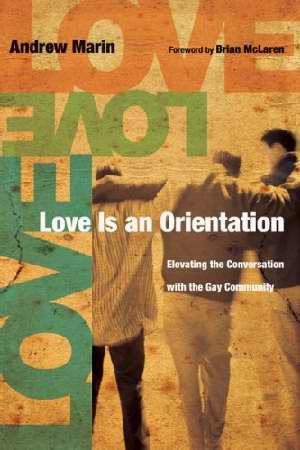
And yet, if learning how to live out Jesus’ love even when it goes against our grain isn’t part of discipleship, then not much else is either. And in the end, that’s why Andrew Marin’s book works for me, and big-time. Because all topicality and theology aside, that’s the gist of his book (and blog, for that matter). “Living in the tension” is what he calls it here and elsewhere. So let’s set aside all other scriptural pronouncements for the time being, save one — “love one another” — and see what happens.

Andrew Marin. Love Is an Orientation: Elevating the Conversation With the Gay Community. Softcover, 208p., $15.00. IVP Books.

It would be just as wrong of me to say “ignore the context of this book” as it would be to say “make it all about the context.” To be sure, the behavior-equals-identity issue is a problem on both sides, and one that’s addressed thoroughly here. There’s plenty of room to express one’s reservations here — and a lot have. But here’s what I got out of the book, and what you can, too:

First, a brief synopsis of Andrew’s testimony: Self-proclaimed “Bible-banging homophobe” gets mind blown when his three best friends come out to him in three consecutive months. After a lot of soul-searching, our hero decides to sincerely try to figure out what makes his friends tick, and as a result becomes “the gayest straight dude in America.” He follows a call from God to move into Boystown in Chicago, the first officially recognized gay village in the United States, and just by being there — and being willing to take the brunt of the suspicion and pent-up hostility toward Christians and nonetheless proving his love by coming back for more — opens up a dialogue that continues today through the work of The Marin Foundation. The points of the book and of his ministry, I’ll try to sum up here:

• “Right from the gate, you can’t relate.” All Johnny Cochranisms aside, he’s right. Thus, a lot of the book is devoted to bridge-building — from detailing the conflict between between gay and Christian (or the inner turmoil from being both) to outlining “gay theology” in order to understand where members of the LGBT community are coming from. Marin’s purpose here isn’t to settle a debate but to create room for interaction. Because if there’s no interaction, there’s little hope for change. Which brings us to….

• “[T]he intentional boldness that I am talking about is the same countercultural boldness that Jesus reflected throughout his time on earth—one rooted in discipleship. It’s easy to stand with a sign; it’s difficult and bold to intentionally live with another human to make a significant impact for the kingdom.” Which in turn brings us to: “Eternity doesn’t concern when [someone turns to Jesus], it concerns if.” I hope that speaks for itself.

• But, but, but, what about the Bible? There is a part of me that wishes Andrew had pinpointed where exactly he comes down on what he calls “the Big 5” Bible passages regarding homosexuality (Genesis 19 aka Sodom and Gomorrah, Lev. 18:22 & 20:13, Rom. 1:26-27, 1 Cor. 6:9-11 and 1 Tim. 1:9-11), although a) he makes the fair point that all of the citations in these passages are part of a bigger picture (i.e, we’re all sinners) and again, b)….

• Overriding even this is the attitude maintained throughout the book, summed up in the Billy Graham quote Andrew has adopted as his own mission statement: “It’s God’s job to judge, the Holy Spirit’s job to convict, and it’s my job to love.”

In first seeing him talk more than 2 years ago now, I couldn’t help but be impressed. This is a guy who’s lived out loving those scorned by a large portion of Christian society, and taken no small amount of scorn himself from people on both sides in the process. And in doing so and showing us what that looks like — no matter what your position on the behavior itself — Love Is an Orientation shows what a truly Christian response should look like. And that’s something we all need to learn more about.

Posted in Uncategorized | Tagged , , , | 1 Comment

A Conversation With the Creator


“Every time I try to talk to someone it’s ‘Sorry’ this and ‘Forgive me’ that and ‘I’m not worrrrrrrrrrrrrrrrrthy.’ ”—”God,” Monty Python and the Holy Grail

We all know it’s important to communicate with God in prayer. We know how important it is to engage our minds in prayer, to focus entirely on God, to be persistent and honest in our prayer, and to put everything we have on the table before God. But even with the best intentions, our prayers can sometimes feel mechanical, stupid, difficult, or as if we’re just babbling.

And yet, as Oswald Chambers once said, “Prayer does not fit us for the greater works; prayer is the greater work.”

You might be in a really good place in your prayer life right now. Maybe not. But we can always have a stronger, more intimate time with God in prayer. Let’s look at some ways we can honestly, full-mindedly, and full-heartedly approach the Creator of the universe, who loves us and wants to answer our prayers.

Let’s look at James 5:13-18: “Is anyone among you suffering? He should pray. Is anyone in good spirits? He should sing praises. Is anyone among you ill? He should summon the elders of the church, and they should pray for him and anoint  him with oil in the name of the Lord. And the prayer of faith will save the one who is sick and the Lord will raise him up – and if he has committed sins, he will be forgiven. So confess your sins to one another and pray for one another so that you may be healed. The prayer of a righteous person has great effectiveness. Elijah was a human beinglike us, and he prayed earnestly  that it would not rain and there was no rain on the land for three years and six months! Then  he prayed again, and the sky gave rain and the land sprouted with a harvest.”

Now, let’s dig into what that means for us:

• When have you seen a direct answer to prayer, in your life or someone else’s? How were you changed by witnessing that?
• Now, think about a time of personal drought in your life — material, spiritual or emotional. What was it like? What ended that drought? How did you see God’s faithfulness during (or despite) that time?
• What prayer or prayers have you been praying for a long time now? Have you ever felt like giving up on those prayers? What keeps you going?

You could have a whole night’s conversation on those three questions alone. I know; I’ve seen it happen more than once.

So here’s your assignment: Work through those questions in your small group, or find at least 1 or 2 more people you can make time to talk this out with. When you’re done talking, take some time to pray for one another. Don’t rush it. Start with a time of praise and thanksgiving. Thank God for who He is and how He’s been there for you and the others you’re with. Then join together in lifting up those long-time prayers you’ve been bringing to God. Share the burdens that each of you have been carrying. Pray for encouragement for these people who have been faithfully taking these requests to God.

Then watch what God does.

Posted in Uncategorized | Tagged , , , | Leave a comment

Gladly Accept Imitations


Who we are and what we think comes through in a variety of ways—our words, our actions, even our facial expression or tone of voice. So it’s important that the message we communicate is consistent—not only in the sense that we don’t send mixed messages, but more importantly, that what we communicate is consistent with what God wants to communicate through us.

God will use us to bring change to other people’s lives. But it comes at a cost: Us. We have to be willing to get out of God’s way and let Him use us the way He wants to. Sometimes that will mean opening our mouths and spelling things out to the people we’re with. Other times God might very well want us to keep our mouths shut, and let others watch Him working through us. We need to be ready to do both.

Neil Cole puts it this way in Search & Rescue: “If we can’t see our own lives changed by the power of the gospel, we have no right to expect to see the world changed by our message. If the gospel is no more important to us than life itself, the world will not be attracted to it. If they can’t see that we value the gospel, why would we expect them to?”

As we make the gospel the center of our lives and our lives reflect it, God will bring change into our lives, even as he’s using us to bring change into others’ lives. Let’s look at one example, in 1 Thessalonians 1:6-10 (NET):

“And you became imitators of us and of the Lord, when you received the message with joy that comes from the Holy Spirit, despite great affliction. As a result you became an example  to all the believers in Macedonia and in Achaia.  For from you the message of the Lord has echoed forth not just in Macedonia and Achaia, but in every place reports of your faith in God have spread, so that we do not need to say anything. For people everywhere report how you welcomed us and how you turned to God from idols to serve the living and true God  and to wait for his Son from heaven, whom he raised from the dead, Jesus our deliverer from the coming wrath.”

That’s the kind of story we want to be able to share. But let’s be honest: How would you react if someone told you were imitating the Lord? Why?

And yet, it’s what we’re called to do. Look again at that passage, and how different people are affected by that imitation—the Thessalonian church, people outside Thessalonica, Paul himself.

It matters what we do, and who we imitate. But how we reflect the working of the gospel in our lives is going to manifest differently for each of us. And that’s OK. So let’s reflect again on the different ways we can communicate what Jesus has shown us, and what that might look like for you personally:

• What’s easier for you: Telling someone what Jesus has done in your life, or walking out what Jesus is showing you and waiting for someone to ask you about it? Why?
• When are you most teachable? One-on-one, in a big group, off by yourself? Reading, listening, observing, doing? Why do you think that is?
• Think again about your responses. Now that you’ve articulated what works for you, how might that affect your approach toward the people you’re invested in right now?

We’re told to imitate God, and furthermore, God’s Word tells us that even in our own limited way that’s possible (see also Ephesians 5:1). Nobody’s ever going to mistake us for God, but God wants us to be able to reflect His life so that others can see it. Even when we fail, God can use it. Think again about that wonderful Robert Gelinas quote from last Thursday: “We’ve looked at the bad decisions in our lives and then asserted to God, ‘You could really use this stuff!’ That’s the hope in the tragedy of confession. That we serve a God who can—and does—redeem everything, including our sin.”

Think about a time you wish you could have a do-over with—a time when you definitely weren’t imitating God—and then think again about those people you’re invested in. What could you teach them from that, so they don’t repeat your mistakes? What has God shown you through those times that you’d want others to imitate? In both cases, how could you make it known to them?

God can use everything in our lives. Let’s let Him.

Posted in Uncategorized | Tagged , , , , , | Leave a comment

Lay It Down: an introduction to the introduction


As previously mentioned, Fridays are a time to put the new writing out there. In most cases it’s still unrefined. In other words, don’t mistake this for a finished product, but accept the germinating ideas for what they are and pray for their growth. With that, here’s what I’ve got so far in the way of the introduction. Enjoy, advise, or otherwise….

In some ways, this is meant to be a very practical book. In other ways, though, there are some pretty heavy ideas being… well, laid down. And why not? This is your life we’re talking about. And we’re talking about laying down every piece of it for the glory of God. There’s nothing more important than that. And it’s not easy. In fact, it’s the hardest thing you’ll even have to do. And what’s more, if you do it right, you’ll be doing it every day for the rest of your life.

The idea of laying down our lives for Christ’s sake is both foundational and eternal. It’s how we first come to Jesus, and it’s how Jesus continues to shape our wills in union with His. It is salvation; it is sanctification; and it is the totality of our eternal life in Jesus. Each of our lives move from being of Christ to being “in Christ” (Eph. 4) to where finally our life “is Christ” (Gal. 2:20, Phil. 1:21, 2:12-15, Col. 3:4, 2 Cor. 4:10)

Many equate the idea of laying down with giving up—specifically, with simply ceasing to do something, with being a quitter. In some ways that is accurate, as when God calls us to give up our sins and/or the idols in our lives. But as we venture further with Jesus, laying down becomes less about stopping some activity we’re doing, sinful or otherwise, and more about a different kind of giving-up—the surrendering of everything we do to Christ.

It doesn’t mean we’ll stop doing the things we surrender to Him, but rather that we give up control of the things we do to Jesus, so that He can direct them, so that His will can be done. We don’t stop working, but we make it about “working for the Lord.” We’re still parents and children and spouses, but our priority becomes glorifying God in those relationships rather than pleasing ourselves—or even that spouse or parent or child. We still use our gifts and talents, but to serve God fully and not just for ego fulfilment—even, or maybe especially, in the context of “doing God’s work.” We still receive amazing blessings from God, but we learn to immediately place them back in God’s hands, knowing that even the people and things we love most were given to us for His purposes, and that our joy must rest in that rather than in His gifts.

I realize, even going into this, that by addressing these issues I’m also needing to clear out much of the undergrowth in my own life. It’s my prayer that by doing so, I not only help you clear a path for you as well to begin moving forward more deliberately, but that  you might also gain the courage to clear out some of your own undergrowth—and that you in turn might clear the way for and inspire others.

Posted in Uncategorized | Tagged , , , | 1 Comment

View (Your Faith) Like Jazz


“Life in concert with God—ultimately that is what we are practicing for.”

Time for another overlooked inspiration of the past couple years, and the 2nd of 3 to come out of that fated 2009 National Pastors Convention. This book has not only been a big influence on me personally but directly upon Growing Out, especially Season 4: Growing Others. Heck, it even inspired me to rent the entirety of Ken Burns’ Jazz series.

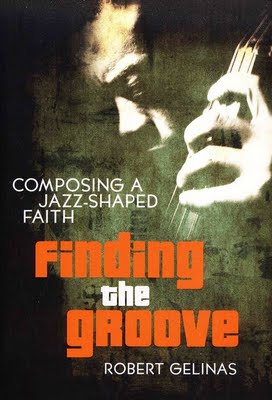
Robert Gelinas. Finding the Groove: Composing a Jazz-Shaped Faith.  Softcover, 224p., $14.99. Zondervan.

One could hardly be blamed for looking at the above title and thinking “yeah, huh?” But it’s an accurate description; it’s far more biblically grounded than you might suspect; and it works. And because it works, it’s a great book for unlocking the creative expression of one’s faith. And again, I know that’s been true for me.

In the words of “jazz theologian” Robert Gelinas, pastor of Colorado Community Church in Denver, “If Christ’s redemptive work was, in part, intended to restore the image of God in us and if creativity is central is central to God’s being, then creativity should become more and more a part of who we are.”

You don’t have to be a jazz fan to appreciate this, although I’m pretty sure being a general music-head helps. When I started this book, my appreciation for jazz pretty much started and ended with Coltrane. It’s expanded a ways since then. I also pushed this book on a friend who got kind of hung up on the “jazz” thing. She pushed the book back to me after maybe 30 pages; I pushed it back and told her to push through; she did; and she got it. And I have a book marked up in pink to prove it. I love those kind of moments. 🙂

Anyway, the building blocks for a jazz-shaped faith,  as presented quite illuminatingly here, are:

• syncopation—”accenting the offbeat,” as Gelinas puts it. Jesus accented the offbeats he came across a lot, and challenges us to do the same. And to discover the unique importance of our own “off beat” giftedness in the process.

• improvisation—”Improvisation is about adventure, play, and experimentation. It is about being so familiar with one’s instrument of choice, the song, and the essentials that we can trust ourselves to search for the unseen—for what the moment is presenting.” If we know our “instruments”—our faith, our Bible, our identity in Jesus—we’re freed to create the brand-new works God has created us for. We can be totally in the teachable moments God presents to us and others.

• call-and-response—wherein the instruments converse with one another. If you’ve heard a good improvisational piece of any kind, you know what he’s talking about here. This idea particularly blew me away, since I’ve been defining my own doctrine, if you will, as “call-and-response theology” for years. Read the story of Abraham for a fresh and particular vivid example of what that looks like.

Still, Gelinas nails it even further: “All too often we think it is our job to get people in a place where they can call on God, but what if God has already called them? Then our role in someone’s life is to help them respond to the overtures of God.” That is the intent of his book—and this blog, for that matter—in a nutshell.

Something even more scarily empowering is this: “Every person we encounter is someone who is also on the verge of encountering Christ incognito.” The response and reassurance that goes hand-in-hand with that is this: “We’ve looked at the bad decisions in our lives and then asserted to God, ‘You could really use this stuff!’ That’s the hope in the tragedy of confession. That we serve a God who can—and does—redeem everything, including our sin.”

So let’s get out there and be used. And take along a copy of Finding the Groove for inspiration.

Posted in Uncategorized | Tagged , , , | 6 Comments