Permission to Dream Big


Over the next few months of Wednesdays, we’re going to explore what it take to pursue a God-given vision—what it looks like, how to help others see it, and what it takes to stay on the course God’s set before us.

And since you’re here reading this, I’m going to assume a couple things up front. One is that you’re already sensing God calling you to something bigger. Whether you’re the person in front or following someone else’s lead, God’s calling you (and others) into something brand new—or to tackle an existing ministry in a brand-new way.

But first, here’s the other assumption: You’re trusting God’s vision because God’s already done something big in your lives. So before we move into what God has for each of us next, let’s reflect on some of the things God’s already done in our lives:

• When has your understanding of who God is been radically changed? In other words, when did God reveal himself, his love, or his will to you in a brand-new way?
• Looking back now, how had God been preparing you even before that time?

The particular things that God has put on  your heart—or at least the idea that it could really happen—may be brand-new, but hopefully through your story above you’ve seeing that God not only gives vision, but also gives the means to fulfill it. God is still deeply involved in our lives, and he wants us to be deeply involved in his life—and the lives of those around us.

Let’s look at a “case study” from the Bible, discover how others before us have handled walking out the vision God’s given them, and then examine how their examples might help us understand what God wants to do with the vision and mission he’s given each of us.

Open a new tab, read Acts 10:9-35, then think about this:

• How would you describe Peter at the beginning of this passage?
• How were the things Peter wanted for God similar to what God actually wanted? How were they different?
• How was Peter—and Peter’s mission—changed by this encounter?

Now, I’d like you to think of a more hands-on experience in your own life—something similar to what Peter experienced. In other words, think about a time when God simultaneously fulfilled your expectations and blew those expectations out of the water.

• What did God accomplish that wasn’t just what you wanted to accomplish, but what God wanted to accomplish?
• What limitations had you placed on the situation that God hadn’t?
• How did that experience change you? How did it affect others around you?

Let’s pull all this together now. There are no doubt some obvious answers to this next question, but let’s also push past the obvious as we consider it: Why do we hold back when we’re doing what we believe God wants us to do—since, after all, we believe it’s God’s idea?

Again, you’re still reading because you feel God is compelling you to take the next step in some way. Call it whatever you’re comfortable calling it—conviction, a vision, a burden, a calling—but God’s pushing you somehow, right now, to be someone more than who you’ve been so far. So let’s tackle this head-on—and again, we’ll break this down further in the weeks to come:

• As best as you can describe it right now, what’s God leading you to do, or be a part of, right now? What do you think your role is?
• Put your own expectations or ambitions to the side for a moment. What could God do with this vision? Whether you believe it yet or not, say it out loud.

Here’s a word of encouragement, courtesy of Robert Gelinas’ book Finding the Groove: Composing a Jazz-Shaped Faith: “If Christ’s redemptive work was, in part, intended to restore the image of God in us and if creativity is central to God’s being, then creativity should become more and more a part of who we are.” And here’s another:

“Whenever I pray, I make my requests for all of you with joy, for you have been my partners in spreading the Good News about Christ from the time you first heard it until now. And I am certain that God, who began the good work within you, will continue his work until it is finally finished on the day when Christ Jesus returns”  (Philippians 1:4-6, NIV).

Just as we only have a glimpse of the vision God has for each of us, likewise we can only guess at what He might want to accomplish through us. I pray God gives each of you a deeper understanding of how He wants to use you to make His presence more real to everyone He put in front of us.

Posted in Uncategorized | Tagged , | Leave a comment

Let My Love Open the Door


What’s the last great meal you’ve had? How did each course prepare you for the next one? How did the care expressed by the people who prepared and served your meal enhance experience?

Now: What “course” do you feel like you’re on in your own life and ministry right now? Why? And how do you think Jesus is “preparing and serving” you right now to get you ready for that?

Over the last few months of Mondays, we’ve spent a lot of time lately examining where we’re at with God right now and how he wants to work in us. Today we’re going to take one more step outward, and consider how God might next want to work through us. What’s God preparing us for? What’s God put on our minds and hearts, and how have our experiences—both good and bad—prepared us to start living those next steps out?

In his book Growing True Disciples, George Barna, Jr. said this, “An old leadership adage is relevant to our dilemma: The things that got us to where we are today will not get us to where we need to be tomorrow.” So let’s dream a little today, and perhaps begin to discover the bigger dreams God might have in store for us, by looking at a “case study” from God’s Word.

Open up a new tab, and read John 21:1-22. Here, Jesus is preparing to leave this earth, but there’s still so much the disciples—especially Peter, in this case—need to understand. And Jesus is about to help them do that. Pay attention to what Jesus says and does, and why. Try to imagine Jesus’ “tone” each time. Then reflect:

• What does Jesus do and say to help the disciples understand what’s in store for them? How does he reassure them that they’ll be able to do it?
• Which of these sayings would most apply to what Jesus is showing you right now? Or is Jesus telling you something else (and if so, what)?
• Look again at verse 22. Where do you need to stop paying so much attention to everyone and everything else and just follow Jesus?
• How much do you love Jesus right now—really? Why do you say that?

And we know that in all things God works for the good of those who love him, who have been called according to his purpose. For those God foreknew he also predestined to be conformed to the image of his Son, that he might be the firstborn among many brothers and sisters. And those he predestined, he also called; those he called, he also justified; those he justified, he also glorified.

What, then, shall we say in response to these things? If God is for us, who can be against us? He who did not spare his own Son, but gave him up for us all—how will he not also, along with him, graciously give us all things? Who will bring any charge against those whom God has chosen? It is God who justifies. Who then is the one who condemns? No one. Christ Jesus who died—more than that, who was raised to life—is at the right hand of God and is also interceding for us. Who shall separate us from the love of Christ? Shall trouble or hardship or persecution or famine or nakedness or danger or sword? As it is written:

   “For your sake we face death all day long;
   we are considered as sheep to be slaughtered.”

No, in all these things we are more than conquerors through him who loved us. For I am convinced that neither death nor life, neither angels nor demons, neither the present nor the future, nor any powers, neither height nor depth, nor anything else in all creation, will be able to separate us from the love of God that is in Christ Jesus our Lord (Romans 8:28-39, NIV).

• One more time: How much do you love Jesus right now—really? What would it take for you to realize how “unseparated” you truly are from Jesus’ love?
• How will Jesus’ love help you move on to the next course of your life and ministry?

I pray that Jesus’ love would become more real to you—and become visible through you. May God help each of us overcome anything that stands in the way of our experiencing Jesus’ love more deeply.

Posted in Uncategorized | Tagged , , , , | Leave a comment

Lay Down Your Old Life: a small-group session


Told you today would be different. You shouldn’t need to read through the devotionals that go with this study—I’ve tried to make this pretty self-contained—but should you want to anyway, they’ll be in bits and pieces under the following names:

Lay Down Your Old Identity
Lay Down Your “Head”
Lay Down Your Pride
Lay Down Your Sin
Lay Down Your Shame

Either way: Enjoy.

**********

Laying Down Your Day (15 minutes)

Leader: Note that the italicized sections of text below are for you to read aloud. Feel free to use your own wording, or just use what’s here (that’s why it’s here, after all).

Have everyone take their shoes off before entering your meeting area. If this is your first time together, ask group members to introduce themselves and share what they’re each hoping to get out of this study. (You can ask this second part even if you’ve been together for years.) Then dive into your discussion time:

We all bring a lot to this group, so let’s begin our time together by recognizing that—by sharing a little about where God has already taken each of us. As you came in today, you took off your shoes. In Day 1 of Lay It Down, we read that every place we encounter God is holy. We want our time together to reflect that—because we too are gathering before God. Turn to a partner and take about five minutes to discuss this question:

1. What’s your holy ground—in other words, the places where you know you’ve encountered God? How have you been changed by those encounters?

After five minutes, regain everyone’s attention. Ask for a few volunteers to share their experiences.

What you’ve just shared is one of the most significant things you’ll ever share in this life. We’re preparing for an eternity with Christ, and our encounters with God give us a small taste of what’s to come—and help others see and taste it, too. What’s more, those encounters change us and prepare us for that eternal life. We have a new identity in Christ, right now. This week has been about laying down our old identity so we can put our new one on. Let’s begin exploring that together.

Laying Down the Word (25 minutes)

Ask for a volunteer to read Romans 12:1-2.

2. Practically speaking, what does it mean to be a “living sacrifice”?

3. How does that transform us so we can know God’s “good and pleasing and perfect” will—and actually do it?

Have someone read the following excerpt from Day 4. Then discuss the question that follows.

 “[W]hen we talk about laying down your sin, it’s not just, “Hey you—stop doing things God says are wrong.”… It’s also laying down the sin you want to openly express but don’t. It’s laying down the sin that has been expressed upon you, by others—even the sin that hasn’t been expressed but you know is there. It’s saying Jesus died for all of it, and beginning to live in that truth.”

4. Which sins are harder for you to lay down: the ones you commit outwardly, the ones you want to commit outwardly but don’t, the ones committed upon you, or the sins you know are out there waiting to manifest themselves (i.e., “the elephant in the room”)? Why?

Ask someone to read Galatians 2:20-21, then discuss:

5. What holds us back from living like this is really true?

6. What things or actions do we tend to substitute for living by faith? How do those things reveal how we’re depending on ourselves instead of Christ?

Thanks for your willingness to share so far today. These are tough questions, especially for a first session.  But no-one ever said dying to self would be easy. The fact is, it’s a process. It’s something we have to do each day. And as we lay down the “obvious” stuff in our lives, God will bring up even deeper things to us—and we’ll need to lay those down, too. So don’t feel bad if the answers come too easily—and don’t feel superior if they haven’t, because your time’s coming.

So let’s move forward, by re-opening a “case study” from Day 5.


Laying Down Your Life (15 minutes)

Have a couple volunteers read Luke 5:1-11 and John 21:4-7. Then discuss:

7. Which version of Peter do you identify with more right now—one who’s overwhelmed by sin or the one who’s overwhelmed by Jesus despite his sin? Why?

Ask everyone to find a partner, and to try to put some space between them and the other pairs. If you have an odd number of group members, putting three people together is OK. Allow a minute for group members to partner up and make space, and then continue.

[NOTE: The following leader-speak is unique to the overall study, but I left it in for your use, just in case. Use or discard as needed.] Earlier this week, you reflected on your “life passage,” as well as a few questions including, “What’s the one thing that most needs transforming in my life—that God wants me to lay down right now?” We’re going to take that a step further today.

The person(s) you’re sitting with will be your partner(s) throughout this study. Of course, the rest of the group is here for you as well, but the people you’re with right now will be helping you lay down that one thing—or more. You’ll partner up at the end of each session, so use your time well. Try also to find ways to connect with each other during the week as well. Then, watch what God does with it.

In your new groups, read the following excerpt from Day 1, and Romans 6:8-14. Then discuss question 8 together. Make your answers your prayer for one another throughout the week; try to pray for each other today, if you have time. We’ll come back together in 10 minutes.


“We have not died with Christ because we think we have, or because we agree that we have. We have died with Christ. Our old life is done. We need to truly realize that, and live in that new reality. The tough part is living this out on a daily basis—or rather, dying it out.”

7. What’s one area of your life Jesus is calling you to “count… dead” (Rom. 6:11)—and leave dead—right now? Share as much as you’re willing.

Bring everyone back together. Then, pray for your group members. Ask God to help them to lay down the “one thing” they shared about today, and to be open to what God is trying to do in each of them—and in their partners. Pray also for these new relationships, and what God wants to do through them.

Posted in Uncategorized | Tagged , , , , , , , | Leave a comment

Sometimes, Staying in the Race IS the Victory


This week’s Other Voice actually is a voice, as I’m reviewing a CD rather than a book. I’m going long with this one, but hopefully it’ll be worth it. To save space, I’ll be adding more links than a sausage factory, including several to some of my subject’s 50+ releases over the past 20+ years (yes, he’s very prolific). You could skip my lengthy preamble and jump down to the album cover, but I wouldn’t recommend it. 🙂 So let’s begin with some personal, unvarnished praise, then work my way into critic mode….

Over the past decade and a half, the music and moreso the words of Bill Mallonee and Vigilantes of Love have had a huge impact on me, especially at the some of the lowest points in my life. There’s not a lot of songwriters capable of walking alongside you during those low times and revealing how God is even there as well, let alone for an extended period. Bill’s rather a master at it, though—which simultaneously explains why he gets quite a bit of critical praise and why it’s never really translated into sales. But for those same reasons, I consider VOL’s Blister Soul and Audible Sigh and Bill’s last studio solo release Permafrost essential listening, and VOL’s Slow Dark Train to be one of the five best releases by anyone, ever.

And via my promotion of a couple “house concerts” in the past year at what my buddy (and Bill’s personally requested warm-up act) Tim Byrnes refers to as “the lovely and talented Mandolin Cafe,” Bill has gone from being a musician I admire to a genuine friend and even somewhat of a long-distance mentor. In a year where depending on God has once again gone from a truism to a palpable reality, I could hardly ask for someone better to walk alongside yet again.

And this new album is all about making it through the desert times, both figuratively and literally. In the 6 years since Permafrost, Bill’s released 11 half-hour-plus demo releases collectively called the Works (in) Progress Administration (or WPA). Most of the songs on this new album are culled from these, and benefit greatly from the full-band treatment. Stories of unlikely heroes and anti-heroes abound—Jack Kerouac, the victims of last year’s Massey Mine disaster, legendary hijacker D.B. Cooper—and there’s also plenty of songs alluding to Bill & wife/keyboardist/backup singer Muriah Rose’s own repeated relocations of the past half-decade (they’re now in Santa Fe) with lots of sold guitars to make the rent in their wake.

Thus, there’s an honesty, a stubborn dignity, and a deepening sense of grace that you just don’t find… well, much of anywhere anymore. While I might not put this new one quite on the level of “the big 4” above, I am enjoying and absorbing the heck out of it. So let’s get to it:
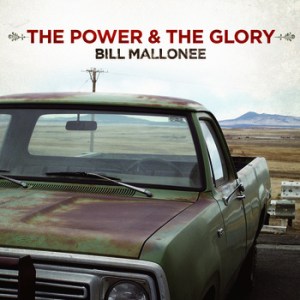
Bill Mallonee. The Power and the Glory. $14 download here, or $20 CD here.

One more thing: If somehow I don’t utterly convince you to go for it, you can stream the entire album via the download link above. Then tell me I’m wrong. Or better yet, tell me I’m right and buy it—not necessarily in that order.

If you’re not familiar with Bill’s music, let’s put it this way: I’ve been known to compare him (especially on Slow Dark Train) to Bruce Cockburn fronting the Rolling Stones… and there was that early 21st-century psych-pop period where he references Robyn Hitchcock… but more often, and especially in the last 6-7 years, you’ll want to use Neil Young as your reference point.

I’m going to start with a relatively minor kvetch, which has to do with what’s not on this album***: There are songs from the WPA releases that didn’t make the cut, and some I miss more than others—particularly “Act of Courage” (from WPA8), “Straight, No Chaser” (WPA9), and where o where is “From Day One” (WPA3—”and the sky, was your friend/and the sky will take you back again” (sniff, sob… OK, I’m done)?

It’s also interesting to note what has and hasn’t changed from the original WPA versions (visit the links to them for further proof). For example, the wonderful opener “Carolina, Carolina” has morphed from a Neil Young pastiche to one of those Summershine-y psych-pop tunes, but with even more electric guitar (BTW, you can download a pseudonymous Summershine for free, right NOW). On the other hand, the highlight D.B. Cooper tune “The Ghosts That I Run With” (previously available on the WPA1-4 compilation CD Renderings) has been rendered even more Southern-Manic than the original.

So now, song-by-song: Again, “Carolina, Carolina” is wonderful, providing a great opening couplet for both song and album: “Time, she’s such an elusive girl / She makes such bad eye contact…” And for an opener for an album all about fresh starts, there’s still a wryness to the lines, “right back to that place of new beginnings / just like where all the old ones went.” The real message, though, comes later on:

and winter takes you by the hand just to make you a little older
but that’s not such a bad thing…
If you’re caught out there on life’s wasteland borders

with all your immigrant deficits in tow
you swim the river to a deeper truth
and the searchlight shines through your ghost.

“Shakers and Movers,” from WPA10, really benefits from the full-band treatment. You can hear the vitriol in this version much more clearly (slight language alert, but it certainly gets the message across):

Once my conscience was my sweetheart—hell, it was all over town
I’d’a married her in a heartbeat, if she’d just put the weapon down
But there are ladders to climb; there are soft hearts to resist
There are souls to be traded; there are asses to kiss

There’s a phrase the shakers and movers like to throw around
“Yer either on the way up… or on the way down….”

The upbeat-despite-its-lyrics “Just to Feel the Heat” is retains its original mid-tempo Americana mode, and I’m glad of it. I could speculate on the subject matter but won’t—aside from observing that the lyrics are clearly as much self-directed as anywhere else:

So basically, when push comes to shove
nobody knows what they’re made of
and there ain’t no foolin’ yourself this time
you’re the cruel joke and the bad punch line

You never told me your house was haunted
and it’s cold in the places you sleep
And I dunno if I’m just what you wanted
I burned it down, just to feel the heat.

The low-key epic “From the Beats Down to the Buddha” depicts the lifelong spiritual search of one Jack Kerouac, which ultimately circled him back to his childhood Catholicism—”and the mystery that pursued ya’ / from the Beats down to the Buddha  / and the things you never could quite let go of.” “Go to Sleep With the Angels” addresses Bill & Muriah’s migration to the high desert, and throws in some nice Byrdsisms on the bridge.

“The Ghosts That I Run With” is, again, a Neil Youngish stomper that’ll even make you cheer on a hijacker. Go figure. And “Stop Breakin’ Down” continues the amped-up toughmindedness. I’d say more about both, but the ghosts that I run with, baby, they got other plans. So go find out for yourself. 🙂

“Bring You Around” brings back the Byrdsiness along with some self-pep-talk:

Somewhere the sky’s always bright
Somewhere the sky’s always blue
and that Love that you found — you know, the one where you drown?
It’s now living in you
If all hell should break loose
if it should thunder and storm
You know these vagabond hearts, they were lost from the start
they will find their way home

If “Spring in Your Spirit” sounded anything like a hair-metal band, I’d call it a power ballad. Fortunately, it doesn’t. Still, it’s a sweet song with a big solo, and all about rebirth in the midst of difficult circumstances: “Maybe God’s face has smiled upon us / look at that morning, filling up with promise / And this dark night of the soul / trade your grieving for some rock n’ roll / there’s Spring in your spirit / and everyone can hear it.”

“Keep the Home Fires Burning,” the Massey Mine song, cranks the amps back up even as it spells out the disaster within, replete with some righteous anger at the powers that made it possible: “I’ve gotten pretty good, as you’d expect / in this sarcophagus of Russian roulette…. / It’s a world with no air / and it’s a world with no sun / It’s a tomb for the living to plunder.”

The two brand-new songs close this out, they’re both good’uns. Interesting also (especially given my own recent wrestling with this) that they both delve into orphan imagery—come to think of it at this very moment, it hearkens very much back to one of Bill’s own early mentors, the late Mark Heard (get High Noon, thank me later). Anyway, “Ever Born Into This World” recalls Audible Sigh-era VOL, and returns to the idea of rebirth in the midst of difficulty:

You can lose yourself in the high desert
Of New Mexico
You can shed every skin you once lived in
It’s the loneliest sound I know…

You may come back like a prodigal son
To your Father’s home
Or you may steer clear for a thousand years
The Good Shepherd finds His own.

There’s a place within the cleft of rock
There’s a whisper with no words
That’s the one that she saves for all the castaways
Ever born into this world.

The closer, “Wide Awake With Orphan Eyes,” has all the Rickenbackers you can eat, and I for one wouldn’t have it any other way. In some ways, it sounds like an answer to the sense of loss that was all over Permafrost‘s “Pour, Kid” (and the rest of the album, for that matter). That eventually, things do start over. Thus, it also sounds (says/hopes the guy who now lives 6 hours up I-25 from him) that despite some of the transitional issues I know he’s faced, Santa Fe’s agreeing with Bill nicely:

Poor kid’s wound opening up
under a big sky town
air to breathe
space to fall down…

It was nearing Christmas
when you bade it all goodbye
I know those loneliness songs
are gonna need a bigger sky…

wide awake with your orphan eyes
blinking wondrous in the Autumn light
that passes right through you
standing by a barbed wire fence
at the scene of the accident
and your skies are cobalt blue
And your skies are cobalt blue.

Hah. Hope that was as much fun for you as it was for me—and that The Power and the Glory (and the rest of Bill’s catalogue—again, hit some links and GO FETCH) will be as rewarding.

Tomorrow: We lay it down a little differently than usual….

***P.S. After reading this, Bill informed me that there will in fact be a follow-up CD next year, comprised of other more “country-alt-ish” tracks recorded during the TP&TG sessions. Well, at least I’ve already submitted my choices. Throw “Neon Passes Through” on there, too, while y’r at it. 🙂

Posted in Uncategorized | Tagged , | 3 Comments

Merge With Care


Over the last few months, in what ways have you seen your faith and everyday life become more “mixed”? How has that changed you? How has it challenged you?

Here’s one more question: How have others in your life—both Christian and non-Christian—been affected by those changes?

“Your life is not something from which you can stand aside and consider what it would have been like had you had a different one,” Dallas Willard says in The Divine Conspiracy. “You are not separate from your life, and in that life you must find the goodness of God.”

Jesus wants our faith to be woven more deeply into every part of our lives. In this way we can grow deeper in our faith. We can encourage other Christians by sharing how God has been faithful as we’ve obeyed him. And those who see our faith lived out might desire to have a relationship with Jesus as well. If anyone doubts that Jesus wants our faith to intersect with every part of our lives, let’s put those doubts to rest right now. We’re going to explore a prayer that Jesus himself prayed—and prayed specifically for us:

“I pray for them. I am not praying for the world, but for those you have given me, for they are yours. All I have is yours, and all you have is mine. And glory has come to me through them. I will remain in the world no longer, but they are still in the world, and I am coming to you. Holy Father, protect them by the power of your name, the name you gave me, so that they may be one as we are one. While I was with them, I protected them and kept them safe by that name you gave me. None has been lost except the one doomed to destruction so that Scripture would be fulfilled.

“I am coming to you now, but I say these things while I am still in the world, so that they may have the full measure of my joy within them. I have given them your word and the world has hated them, for they are not of the world any more than I am of the world. My prayer is not that you take them out of the world but that you protect them from the evil one. They are not of the world, even as I am not of it. Sanctify them by the truth; your word is truth. As you sent me into the world, I have sent them into the world. For them I sanctify myself, that they too may be truly sanctified.

“My prayer is not for them alone. I pray also for those who will believe in me through their message, that all of them may be one, Father, just as you are in me and I am in you. May they also be in us so that the world may believe that you have sent me. I have given them the glory that you gave me, that they may be one as we are one—I in them and you in me—so that they may be brought to complete unity. Then the world will know that you sent me and have loved them even as you have loved me.

“Father, I want those you have given me to be with me where I am, and to see my glory, the glory you have given me because you loved me before the creation of the world.

“Righteous Father, though the world does not know you, I know you, and they know that you have sent me. I have made you known to them, and will continue to make you known in order that the love you have for me may be in them and that I myself may be in them” (John 17:9-26, NIV).

• What does Jesus pray for in this passage? How have you seen this prayer play out in your own life? Give examples.
• What examples have you seen in the lives of others that have prompted you to think, “I wish I could live out my faith out that way”?
• What do you think God might want to do with that desire?

The phrase “you’re so heavenly minded that you’re no earthly good” has become popular, because there is some truth to it. We’ve probably met people who embody it. But I think a bigger truth, and the remedy to our “no earthly good”-ness, is expressed by N.T. Wright: “The way to be truly of use on this earth is to be genuinely heavenly minded—and to live as one of the places where, and the means by which, heaven and earth overlap.” So let’s consider further how we can be both heavenly minded and of some earthly good, while we’re still here to do both:

• What are some ways you’ve discovered you can let your faith shine that you weren’t aware of, or didn’t realize you’ve already been doing?
• Who do you see as your “mission field” right now (whether that’s one person or a specific group)? Put another way: Who has God given you a heart for right now?
• What are you doing about it—or what can you do? Who can help you take the next steps?

If you’ve just thought of someone God’s truly given you a heart for, you already have your assignment. If you really don’t know where God wants to take you next, that’s OK. Talk with God about it. God wants our honesty, but He also wants us to move forward. And allow me to pray for you from here as well:

Lord, we ask that you don’t take us out of this world, but we do ask that You protect us from the evil one as we go out into the world. You call us Yours, and because of that, we don’t belong to this world anymore. Thank You again for that truth. Make us holy by Your truth, and teach it to us more and more so we too can become holy. Just as You sent Jesus into the world, You send us. Help us to appreciate the awesome privilege—and responsibility—that truly is.

And just as Jesus gave himself as a sacrifice for us, help us to sacrifice what we want for the sake of what others need—You. Help us, as your church, to be one in you, so that the world will see and believe You came for them, too, and that they will come to believe that You love them as much as You love us. Help us to remember how much You love each person you’ve created, and form us more and more into the people You want us to be. In Jesus’ name, amen.

Posted in Uncategorized | Tagged , , , , | Leave a comment

Leader, Equip Thyself


Last Monday we looked at the idea of developing a spiritual health plan and how it can help us to “stay lit” when our circumstances threaten to “blow us out.”  Let’s build on that today — by continuing to develop our plan, and by better understanding why we need to.

“You are already clean because of the word I have spoken to you. Remain in me, as I also remain in you. No branch can bear fruit by itself; it must remain in the vine. Neither can you bear fruit unless you remain in me.

“I am the vine; you are the branches. If you remain in me and I in you, you will bear much fruit; apart from me you can do nothing. If you do not remain in me, you are like a branch that is thrown away and withers; such branches are picked up, thrown into the fire and burned. If you remain in me and my words remain in you, ask whatever you wish, and it will be done for you. This is to my Father’s glory, that you bear much fruit, showing yourselves to be my disciples.

“As the Father has loved me, so have I loved you. Now remain in my love. If you keep my commands, you will remain in my love, just as I have kept my Father’s commands and remain in his love. I have told you this so that my joy may be in you and that your joy may be complete” (John 15:3-11, NIV).

Do you not know that in a race all the runners run, but only one gets the prize? Run in such a way as to get the prize. Everyone who competes in the games goes into strict training. They do it to get a crown that will not last, but we do it to get a crown that will last forever. Therefore I do not run like someone running aimlessly; I do not fight like a boxer beating the air. No, I strike a blow to my body and make it my slave so that after I have preached to others, I myself will not be disqualified for the prize (1 Corinthians 9:24-27, NIV).

• Why is staying connected, rather than being connected in stops and starts, so critical to bearing fruit?
• What regularly interferes with your connection—and your joy in Jesus?
• Think of someone who “disqualified” himself or herself in some way, or simply gave out, before his or her “race” was over.” Chances are, sadly, it won’t take you long. Looking back now, what were some warning signs that person—or you, on his or her behalf—could have caught earlier?
• Even though this is a negative example, what positive lessons can you take from it? What do you watch out for now, for yourself or others?

No Bible study can teach you everything—no, it’s true. Really. Still, I’d like to help give you enough equipment so you have what you need to continue walking out the next steps God’s placed before you—even the ones you don’t know about yet. Everyone has the opportunity to “finish well,” no matter how they’ve stumbled during the race.

Last week, we looked at the struggles we’re already facing, and how to face them even better with God’s help. Today, we’re going to look at how to become more proactive in our own spiritual preparation and growth—how to be ready before we’re overtaken by circumstances, or simply reacting to whatever comes our way.

Our lives aren’t made up of a series of separate compartments; every part affects every other part. When our weaknesses are shored up, we can focus more on our strengths. And even when our strengths give out—because we all have our limits—we’re able to draw from where God has strengthened us in other parts of our lives.

Whether you worked through it or not, I’d like you to check out last week’s “Spiritual Health Plan.” Focus especially on the answers to your last two questions.  I’ll repeat and rephrase them here:

• Where do you most need to “get healthy” right now—whether it’s spiritually, personally or leadership-wise? What would you say are your top three priorities?
• Who specifically can help keep you accountable, connected to Jesus, and growing?

Hopefully this time of reflection has lifted you up. Still, you might be reflecting on what God’s shown you and thinking, “How am I going to do all that?”

Here’s how: You’re not. If there’s one thing you take away from today, let it be this: When God provides the vision, God also provides the means. We simply need to prepare ourselves to receive it. We need to trust God.

Finally, brothers and sisters, whatever is true, whatever is noble, whatever is right, whatever is pure, whatever is lovely, whatever is admirable—if anything is excellent or praiseworthy—think about such things. Whatever you have learned or received or heard from me, or seen in me—put it into practice. And the God of peace will be with you (Philippians 4:8-9, NIV).

But seek first his kingdom and his righteousness, and all these things will be given to you as well (Matthew 6:33, NIV).

• How does Paul’s guidance in Philippians help us live out Jesus’ command in Matthew?

Right now, take a couple minutes to ask God to show you at least one thing about himself that’s true, honorable, right, pure, lovely, admirable, excellent and worthy of praise. Thank God for it, and ask God to continue revealing more of himself to you. And may God give you the strength, wisdom and friendships to help you walk it out together.

Posted in Uncategorized | Tagged , , , , | Leave a comment

fragments of Lay Down Your Addiction


For our purposes, let’s define addiction as anything you need to “get through the day” that isn’t God. Because all of our addictions—all of our sin, really—is a response to the gnawing sense we have, deep down, that God doesn’t really want what best for us. That God’s will comes at His whim, and at our expense. That we, the created ones, somehow don’t owe everything we have to the Creator in the first place. There’s a reason that the acknowledgment of a higher power is part of any good 12-step recovery program, after all.

**********

“God’s been duping you; God’s been duping you.” Satan has been using this trick from the very beginning, and it’s still probably his most effective.

**********

Jesus not only endured temptation, but He overcame temptations we were too weak to have Satan even bother to throw at us.

**********

Once we’ve regained our senses afterward there’s a sense of heaviness, sadness, not totally unlike the feeling of a Sunday-morning hangover after a particularly long Saturday night. And when you think of it that way, it helps put things in perspective. Our overindulgence—our giving way to our compulsions—always has consequences, both physical and spiritual.

**********

One of the most practical responses we can make is to engage in spiritual disciplines such as prayer, Bible study, solitude and worship. Instead of letting ourselves be carried away by every impulse that strikes us, such practices help us say to God, “I’m staying right here. I’m focusing on You. Help me to follow what You want.” The disciplines aren’t a catch-all solution. In fact, they can become an addiction in themselves if we make it only about how holy we’re acting or make ourselves anxious over “doing our duty.” But they are a declaration of intent, and actions to back it up.

And as our focus becomes more and more about God, our compulsions melt away. Not that we’re never tempted again—or for that matter, might not stumble again—but we have a practical way to get up and dust ourselves off. Don’t overlook the importance of that. “So I say, walk by the Spirit, and you will not gratify the desires of the flesh” (Gal. 5:16).

Posted in Uncategorized | Tagged , , , , | 1 Comment

Moving From Why? to What Next?


Let’s make this easy: If you love the title, you’ll like the book. If not… well, there are still a few things you could learn from it.

Ramon Presson. When Will My Life Not Suck?: Authentic Hope for the Disillusioned. Softcover, 150p., $15.99. New Growth Press.

The central point of this book by author and family therapist Ramon Presson is found, appropriately, in the center of the book: “It’s not wrong to ask why, but don’t stake your happiness or your faithfulness on getting a satisfactory answer. Throughout the Gospels Jesus shifts the question from why to what next.” Throughout this book Presson does the same. He doesn’t give any easy answers here. Instead, he attempts to move his readers past pain and disappointment to acceptance and contentment (which, he hastens to point out, is the polar opposite of complacency).

And to do that, he pushes us away from ourselves and toward God. A great observation early on: “How strange is it that when we ask God to bless us, what we want is simply more of what the world can give?”

To illustrate his points, Presson weaves the book of Philippians and its message of joy amidst suffering throughout his pages. As just one example: Paul certainly wanted to visit Rome, but certainly not as a prisoner. From our perspective, Paul would have had every reason to be despondent, and yet he “rejoices in his chains” and encourages the Philippians to rejoice as well.

Likewise, Presson pushes us to let go of our own expectations, and allow God to show us what He wants to do in our situations. By doing so, he argues, God can transform us no matter what we’re facing—not by denying or belittling our pain, but by finding joy and contentment despite and possibly even in the midst of it. In his own words, “It’s vital that we not waste our pain but recycle and redeem it.”

When Will My Life Not Suck? isn’t meant to solve your problems. It is, however, meant to help you discover a life beyond them.

Posted in Uncategorized | Tagged , , , | Leave a comment

Standing in the Truth


When has God seemed far away? What helped you—or would have helped you—be faithful during that time? How did you get through that time, and looking back, how did you grow?

If you haven’t faced a time when it’s been tough to stand firm for Jesus, you will. But as the passages we’ve just read and the stories we’ve shared remind us, God uses those times of testing, trial, and temptation to make us stronger—to give us more character—to deepen our hope—to make us more like Jesus.

The letter of 2 Timothy was written by Paul to his disciple and friend Timothy near the end of his life. In it, Paul tried to pass on as much as he could to his son in the faith. Let’s see what he focused on. Open a new tab, read the last two chapters (3 & 4), then think about this:

• What examples of faithfulness—or unfaithfulness—do you see in this passage?
• How was Paul affected by others’ faithfulness, or their lack thereof? How was Paul faithful, regardless of what other people were doing?
• Likewise, in our walks with Jesus, when is it easier to take a stand for him? When isn’t it so easy?
• Ultimately, how much do you let your feelings dictate how willing you are to take a stand for Jesus—and how you actually do it? Do you “obediently suffer through it,” talk yourself out of what you think God is telling you to do, or ignore what you’re feeling and take a stand?

But we have this treasure in jars of clay to show that this all-surpassing power is from God and not from us. We are hard pressed on every side, but not crushed; perplexed, but not in despair; persecuted, but not abandoned; struck down, but not destroyed.  We always carry around in our body the death of Jesus, so that the life of Jesus may also be revealed in our body. For we who are alive are always being given over to death for Jesus’ sake, so that his life may also be revealed in our mortal body. So then, death is at work in us, but life is at work in you….

Therefore we do not lose heart. Though outwardly we are wasting away, yet inwardly we are being renewed day by day. For our light and momentary troubles are achieving for us an eternal glory that far outweighs them all. So we fix our eyes not on what is seen, but on what is unseen, since what is seen is temporary, but what is unseen is eternal (2 Corinthians 4:7-12, 16-18, NIV).

• In what ways does the idea that we’re already dying bother you? Why?
• Where is it costing you—or where do you sense it will cost you—to follow Jesus? Who’s your Timothy—someone who can help you carry that load?

Go with what God’s already impressing on you. But go. And be blessed.

Posted in Uncategorized | Tagged , , , , | Leave a comment

Keeping the Fire Lit


What do you do to keep your life in Jesus from getting “blown out”?

As leaders—or as Christians in general—we need to stay lit in Jesus, and by Jesus. As we’re doing His work, we often encounter more and more things that can cause us to burn out, or drive us into making choices that are less than God’s best. As Dallas Willard so pointedly remarked, “The greatest enemy of intimacy with God is service for God.”

So let’s start by thinking about what we need most right now, in order to stay fully alive in Jesus even as we lead/serve:

• On a scale from 1 to 10—10 being “fully lit” and 1 being “snuffed out”—how lit up are you right now… really?
• How might your current condition be affecting others? How’s their condition affecting you?

The thing is, when burnout approaches, we often try to fill the void ourselves rather than turning to God. With that in mind, let’s go scriptural and look at Luke 4 through a different lens. We tend to look at these temptations as belonging only to Jesus, at the beginning of His earthly ministry. But let’s read it over and break it down further:

Jesus, full of the Holy Spirit, left the Jordan and was led by the Spirit into the wilderness, where for forty days he was tempted by the devil. He ate nothing during those days, and at the end of them he was hungry.

The devil said to him, “If you are the Son of God, tell this stone to become bread.”

Jesus answered, “It is written: ‘Man shall not live on bread alone.’”

The devil led him up to a high place and showed him in an instant all the kingdoms of the world. And he said to him, “I will give you all their authority and splendor; it has been given to me, and I can give it to anyone I want to. If you worship me, it will all be yours.”

Jesus answered, “It is written: ‘Worship the Lord your God and serve him only.’”

The devil led him to Jerusalem and had him stand on the highest point of the temple. “If you are the Son of God,” he said, “throw yourself down from here. For it is written:

   “‘He will command his angels concerning you
   to guard you carefully;
      they will lift you up in their hands,
   so that you will not strike your foot against a stone.’”

Jesus answered, “It is said: ‘Do not put the Lord your God to the test.’”

When the devil had finished all this tempting, he left him until an opportune time (Luke 4:1-13, NIV).

• So: What human needs does Satan appeal to with each of these temptations? Put another way: What’s he suggesting he can deliver that God won’t?
• What are some ways we try to “get around God” and meet each these needs on our own?
• Take another look at Jesus, and where he’s at in the beginning of this passage. Forty days is a long time to be hungry and tempted non-stop, after all. How can our own ability to follow Jesus—and lead others—get compromised or taken off course when our resources are running low?

This is a tough subject—and if you’ve been in this kind of situation before, you know how tough. The good news is, God doesn’t leave us here.

The temptations and struggles we face as leaders may look different than those we faced when we weren’t leading, but they’re usually the same basic issues. Only the circumstances—and often, the number of others affected or involved—have changed. So let’s look back on how God has already carried each of us through our past struggles, and maybe get some idea of how God’s going to grow us further now. Think about each of these questions, and if possible write down your answers:

• What mountaintop experiences have you’ve encountered, when everything went right?
• Valleys, where nothing seemed to go right?
• Roller-coasters, where “it was the best of times and the worst of times”?
• Or wilderness times, where you just felt dry and empty and maybe couldn’t even understand why?

So, if you think you are standing firm, be careful that you don’t fall! No temptation has overtaken you except what is common to mankind. And God is faithful; he will not let you be tempted beyond what you can bear. But when you are tempted, he will also provide a way out so that you can endure it (1 Corinthians 10:12-13, NIV).

• What have you learned from your previous times in each of these places you wrote down? How did God teach you to “be careful,” or show you a “way out,” in those times?
• Which of these places are you closest to being in right now? What may God be trying to remind you about, based on how he’s guided you through other times like this?

At the end of this entry is a section called “My Spiritual Health Plan.” You’ll notice that many of the questions aren’t what we normally consider “spiritual.” But God does. The Spirit needs to be involved in every aspect of our lives. The idea here is to work through a broader and longer-term plan to get more spiritually healthy, so when tough times hit you’ve got the reserves you need to stay lit.

Set aside time this week—you’ll probably need an hour, if you do this right—for you and God to work through these questions together. There isn’t a single area in our lives where we can’t grow, and keep growing, closer to God. Use this time to let God have all of them. May God amply reveal how He wants you to respond to His love and guidance.

**********

My Spiritual Health Plan

As you read each of these questions, think in terms of where you’re generally at right now—not simply where you’d like to be or how you are in your best or worst moments. Answer each question as specifically and concisely as possible.

Once you’ve written your answer, stop and pray. Invite God into every response you’ve put down. Ask God how to address each issue right now. Who or what could God provide to help you grow? If there’s a specific person, write his or her name. If there’s a class you could take, a new way of serving others, or books you could read, name them. If there’s a specific word you need to hear from God, spell it out—God knows already, but maybe you just need to come out and say it. If there’s something you need to let go of, put that down, too. Whatever you believe God’s telling you, put it down on paper. And then, pray some more.

If any (or even most) of your answers are “I don’t know,” write that down. And then talk to God about that, too. Good luck, and may God bless your time with him beyond what you hope for!

My checkup list: My diagnosis—and God’s prescription
Spiritual Health
When do I experience God’s love and presence the most? What’s God trying to tell me through that?
What am I doing right now because I know God wants me to?
What’s one thing about God I’d like to know more about?
What’s one thing I know about God, but wish I could truly experience?
What distracts me from God’s presence most?
What’s one new thing I’d like God to do in my life?
General Personal Health
What’s the most rewarding part of my day? How aware am I of God during that time?
What takes up more of my time, energy, and resources than it’s worth?
What parts of my personal life aren’t getting enough attention?
Who or what do I most neglect at home?
What gives me joy that I really should do more often? (This doesn’t have to be a “spiritual” answer.)
What areas of my life are overloaded? What can I hand off, or just let go of?
How can I communicate more openly or directly? Why don’t I, and how can I address it?
In what areas of my life do I need to become more disciplined?
In what areas do I need to most “lighten up” and give myself a break?
Leadership Health
What do I enjoy most about leadership? Does God “enjoy” it, too?
What’s the hardest thing about leadership for me?
What area(s) of leadership would I like to learn more about?
What area(s) of leadership do I find myself thinking, “I could care less”—but I know I need to care more?
What’s the one thing people ask me for that I have trouble giving?

Done? Good. Except you’re not quite done. Here are two more questions to consider. Look back over what you’ve written, and then answer the following:

• Out of all the things you’ve written, what would be your top three priorities?
• Who specifically can help keep you accountable, connected to Jesus, and growing? (If you think of different people in different areas, write each of their names down.)

Posted in Uncategorized | Tagged , , , , , , , | 1 Comment