Truth Is More Useful Than Fiction


I have to admit: Unless your name’s John Bunyan, fictional accounts of God’s hypothetical real-life work in the church has never really done it for me. (I have to wonder how I’d feel if I were to read In His Steps again, for that matter, being now 25+ years removed from being a brand-new Christian.) Thus, while the intentions here are good, the results…. well, not so much.

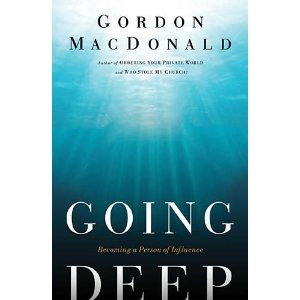
Gordon MacDonald. Going Deep: Becoming a Person of Influence. Softcover, 384p., $15.99. Thomas Nelson.

Plus, you’d read that title and buy it, never suspecting it was actually a work of fiction. Boo.

But again, let’s be fair: The intentions here are good. Gordon MacDonald wants to give us a picture of a church that’s embraced the importance of discipleship—of becoming “deep people,” to borrow his quote from Richard Foster’s Celebration of Discipline—and is willing to face the changes and challenges that come with that. So it’s coming from a good place.

The problem, for me, comes with the fact that it’s a fictional work, and a fairly predictable one at that. People throughout the church get the idea, challenges and speed bumps arrive and are of course ultimately overcome. Plus, there are two real-life characters here—MacDonald and his wife Gail. I didn’t read his last book, Who Stole My Church?, but I understand he uses the same device there. But again, the church itself is fictional. My gut cries out, why?

Not that it’s impossible that this book might inspire anyone to “go deeper,” but there are enough books out there based on real-life experience, with far less tidy plots—and, I hasten to add, more of that desired depth—that would ultimately prove more useful for anyone who really wants to see their church embrace a life of discipleship. At least a couple of them have been reviewed here, in fact. Thus, as I like to say: Gofetch.

Posted in Uncategorized | Tagged , , | Leave a comment

That Was You, God… Right?


When have you done something believing it’s what God wanted, then later realized it wasn’t? What happened? (Ignore the embarrassment you’re feeling right now—just process it.) Looking back now, what really motivated you?

It’s pretty easy to get caught up in our own dreams. For that reason, it can be  tough to know when, and how, God wants us to step out in faith. Sometimes we want something so badly that we can talk ourselves into believing it’s what God wants, too. And maybe it is what God wants. But maybe it isn’t. And maybe our desire isn’t in synch with God’s timing, even if it is what God wants.

“We naively think that the more we grow as Christians, the easier… to discern the will of God. But the opposite is often the case,” J. Oswald Sanders rightly observes in his book Spiritual Leadership. “God treats the mature leader as a mature adult, leaving more and more to… spiritual discernment…. The resulting perplexity adds to a leader’s pressure.”

This is all about that kind of discernment—of knowing whether this vision we have is really God’s as well. It’s tricky stuff. So let’s do our best to check our own desires at the door and discover what God wants.

Last Wednesday, we looked at a “case study” from the Bible, to understand how others before us have walked out the vision God’s given them. Let’s go ahead and look at two examples this week. Get that new tab open, look at Judges 6:34-40 and 1 Samuel 3:1-19, then think about this:

• How did Gideon and Samuel (and Eli, for that matter) figure out whether it was really God who was speaking?
• Would you say any of them showed a lack of faith—or, were making wrong demands of God? Why or why not?
• Think again about your missteps from earlier. What’s different between the approaches taken in these passages, and what you did?
• Look once more at Gideon’s example. When is it OK to “put out a fleece,” and when are we just trying to “fleece” ourselves into doing something that’s not really God’s idea (or get out of doing something that is)?

It’s important to figure out early whether this thing we’re praying about and talking about really is from God—or, for that matter and entirely likely, whether it’s both you and God, flesh and spirit, mixed together right now. It’s critical that we stop to figure out what’s God and what’s us, because once things get real, we’re almost certainly going to find ourselves disagreeing with God on some things.

And guess what? God’s right.

So when that happens, you’ll need to remember which parts of this vision are truly God’s, so you’re able to keep on trusting Him when you don’t understand what’s going on. “This one clear command would redefine you…. On those days when things were dark or difficult, you would at least know you were doing what you were called to do. That clarity… while a great burden, would be a great gift to us,” Brian Sanders (no relation to Oswald) puts it in Life After Church: God’s Call to Disillusioned Christians.

So right now, think through these questions. Take as long as you need. Ask yourself:

• As I’m pursuing this vision, am I sensing God revealing more about the things he truly cares about?
• Will this vision, once it’s realized, reveal more about God to others, or just more about me?
• Which parts of this vision were clearly not my idea (even if I’m excited about the idea now)?
• Have I tried letting go of this idea, only to find God bringing it up again?
• Would I still want this to happen even if someone else did it—or even if I did it and someone else got the credit?

One more question: What do you need right now, if anything, to be really certain that this vision you’re pursuing is really God’s idea? If you’re certain, why are you certain?

You might believe it with all your strength. You might still have doubts, too, and that’s OK—sometimes being obedient to God means staying put until you’re sure it’s what God wants. Thank God right now for wherever it is you’re at. Ask Him to help you discover what His will truly is for you in the weeks to come, and that your certainty and confidence is in Him, no matter where He leads them. May you move forward, in the path and at the pace God’s chosen for you.

Posted in Uncategorized | Tagged , , | 1 Comment

Who Are You… Really?


I’d like you answer our title question right now. Who are you and what are you about?

There’s one catch, though: You can’t mention what you do. No mention of jobs, hobbies, volunteer work—any kind of accomplishment or activity. Go!

So, how’d you do?

How does telling people what you do help them understand who you really are? How doesn’t it?Let’s have a re-do: If you wanted people to know just one thing about you right now—with no restrictions on what you could say—what would it be?

We’re going to spend much of the next several Mondays discovering how God’s made each of us, and what He’s made each of us for. That’s right; we’re gonna get into the spiritual-gifts thang. Before we go there, however, we’re going to spend some time  realizing who we already are in Jesus. As we come to understand who we are in Jesus more and more, His life can flow more easily from us into everything else we do—even when we’re not consciously trying to serve Him.

So let’s discover more about who we really are in Jesus. And let’s start with what the Bible says about us. Note what the following passages say about who you are in Jesus. Then reflect on the questions that follow:

• John 15:15-16
• Romans 8:14-17
• Romans 8:31-39
• 2 Corinthians 5:16–6:2
• Ephesians 1:5-14
• Ephesians 2:4-10
• 1 Peter 2:9-10
• 2 Peter 1:3-4

• What encourages you about these verses?
• Truthfully: What things that God is telling you here do you still have a hard time believing? Why?
• How does—or could—knowing who you are in Jesus affect every other part of your life? Try to come up with some practical examples.

If you haven’t seen the movie Chariots of Fire, you’ve at least heard the Vangelis theme song (and/or the scene to the right) parodied endless number of times. Eric Liddell was a celebrated Scottish runner and missionary. In this clip, he’s trying to decide whether he should participate in the 1928 Olympics or go back into the missions field in China (where he would ultimately die in an internment camp near the end of World War II). Watch it up to the 1:37 mark, then think about this:

• Do you normally look at “God’s work” Jennie’s way or Eric’s? How so?
• Be honest: How much do you “feel [God’s] pleasure” in your everyday life? Why do think that is (or isn’t)?

You have searched me, LORD,
   and you know me.
You know when I sit and when I rise;
   you perceive my thoughts from afar.
You discern my going out and my lying down;
   you are familiar with all my ways.
Before a word is on my tongue
   you, LORD, know it completely.
You hem me in behind and before,
   and you lay your hand upon me.
Such knowledge is too wonderful for me,
   too lofty for me to attain.

Where can I go from your Spirit?
   Where can I flee from your presence?
If I go up to the heavens, you are there;
   if I make my bed in the depths, you are there.
If I rise on the wings of the dawn,
   if I settle on the far side of the sea,
even there your hand will guide me,
   your right hand will hold me fast.
If I say, “Surely the darkness will hide me
   and the light become night around me,”
even the darkness will not be dark to you;
   the night will shine like the day,
   for darkness is as light to you.

 For you created my inmost being;
   you knit me together in my mother’s womb.
I praise you because I am fearfully and wonderfully made;
   your works are wonderful,
   I know that full well.
My frame was not hidden from you
   when I was made in the secret place,
   when I was woven together in the depths of the earth.
Your eyes saw my unformed body;
   all the days ordained for me were written in your book
   before one of them came to be.
How precious to me are your thoughts,God!
   How vast is the sum of them!
Were I to count them,
   they would outnumber the grains of sand—
   when I awake, I am still with you (Psalm 139, NIV).

• How would believing that God really is everywhere you are help you live out your faith?
• What—or who—could help you to remember who you are in Jesus, and help you stretch your circle of influence wider?

If there’s anything in life that we should be passionate about, it’s the gospel… passionate in thinking about it, dwelling about it, rejoicing in it, allowing it to color the way we look at the world,” C.J. Mahaney says in the The Cross Centered Life. May that become our passion as well. 

Posted in Uncategorized | Tagged , , | Leave a comment

Lay Down Your Hurt


I’ve been thinking a lot lately about the following passage: “He (Christ) was numbered with the transgressors” (Isa. 53:12, Mark 15:28). I believe that in our own way we too are called to this, and that it’s a key to moving past our old life and into the life Christ intends for us.

Because… well, let’s start by facing a simple truth here: We are among the transgressors.

This isn’t to dismiss or excuse some of the truly horrific sins that others perpetrate upon us or others. But for the majority of us, most of our lives aren’t about those kind of transgressions. They’re about responding to everyday hurts—insults, gossip, other inconsiderate acts—or even “bigger” but not necessarily deeper sins committed against us—deliberate acts where we’re deemed inferior or just not good enough, slanderous words against our reputation, things being “taken” from us….

Even in more extreme cases, I think this idea of being numbered with the transgressors applies. Every so often, we’re surprised by a news story about an act of extreme forgiveness. Many of us think it can’t possibly be legitimate—that they’re just saying it but that they really still harbor anger or resentment. Or maybe we just resign ourselves to the idea that we’re incapable of that degree of forgiveness in the face of that kind of abuse or injustice.

But when we allow ourselves to “be numbered with the transgressors”—and I don’t just mean sheepishly shrugging “yeah, I’m a sinner just like everyone else,” but looking straight at the people around you who carry sins that do offend and maybe even repulse you, and admitting “These are my people, too; I really am like them except for Christ, and He chose to be numbered with them”—that’s a place where God can work. That requires us to check our pride and self-righteousness at the door. And it opens us to the opportunity to overlook the sins of others—not excusing or denying them, but understanding they’re part of the same mess we’re in and truly forgiving them and finding compassion in its place.

Jesus lived a perfect life and died for every one of those sins—yes, even the ones people commit against us. And He calls us to follow Him and “be perfect,” by learning how to die to those sins, and the hurt we’ve suffered from them, as well.

Now there is in Jerusalem near the Sheep Gate a pool, which in Aramaic is called Bethesda and which is surrounded by five covered colonnades. Here a great number of disabled people used to lie—the blind, the lame, the paralyzed. One who was there had been an invalid for thirty-eight years. When Jesus saw him lying there and learned that he had been in this condition for a long time, he asked him, “Do you want to get well?”

“Sir,” the invalid replied, “I have no one to help me into the pool when the water is stirred. While I am trying to get in, someone else goes down ahead of me.”

Then Jesus said to him, “Get up! Pick up your mat and walk.” At once the man was cured; he picked up his mat and walked.

The day on which this took place was a Sabbath, and so the Jewish leaders said to the man who had been healed, “It is the Sabbath; the law forbids you to carry your mat.”

But he replied, “The man who made me well said to me, ‘Pick up your mat and walk.’ ”

So they asked him, “Who is this fellow who told you to pick it up and walk?”

The man who was healed had no idea who it was, for Jesus had slipped away into the crowd that was there.

Later Jesus found him at the temple and said to him, “See, you are well again. Stop sinning or something worse may happen to you.” The man went away and told the Jewish leaders that it was Jesus who had made him well (John 5:2-15, NIV).

You might be wondering “What’s the connection between this passage and what you were saying before?” But do you notice something in this story? No-one’s terribly motivated for this guy to get well—including the man himself. But Jesus is.

This scenario seems to run counter to the conventional wisdom propagated around us, but the fact is, this is how we really are—both in terms of ourselves and those around us. We’d rather read a self-help book and feel healed, than actually be healed. We’d rather stick with the status quo, no matter how much it actually hurts, than encounter the fear of the unknown that comes with truly being healed—or in seeing other “invalids” in our lives healed. We’re a lot more like the nitpicky Pharisees here than we’d like to admit.

Jesus asks the invalid at the pool, “What do you want me to do? Do you want me to heal you?” Think about this in terms of your own “internal injuries.” Would you rather identify yourself by your hurt, your blindness—say it: your willfulness in withholding forgiveness—or would you rather get on with your undiscovered future, by growing into your new life and identity in Christ?

The beginning of healing is admitting that you’re broken. That’s true of your internal state, and it’s just as true about all the broken relationships around you. So lay down your hurt. Take Jesus’ yoke. Be numbered with the transgressors. You’ll start to see them differently. And more importantly, you’ll let Jesus bring healing and grace to you—and them.

Lay It Down Today

I’ll keep this simple: Where do you need to be “numbered with the transgressors” today? Is it an act of forgiveness? Is it treating some “weird” person you avoid with the same dignity you’d want? Is it reaching out somehow to the more marginalized of society—not just by being charitable but by being present and available?

You know what you felt as you read today’s entry, so I won’t get in the way of what God wants to do with it. But start making it happen today. Respond to what God’s trying to tell you.

Posted in Uncategorized | Tagged , , | 2 Comments

The Learned Desperation of Prayer


“There is nothing secret about communion with God. If we live a holy life before God, broken of our pride and self-will, crying out for grace, then we will be in communion with God. It really is that simple.”

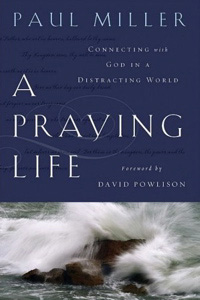
Paul E. Miller. A Praying Life: Connecting With God in a Distracting World. Softcover, 288p., $14.99.

Courtney Miller Sneed and Cyndi Anderson. Paul E. Miller’s A Praying Life Discussion Guide. Softcover (spiral-bound), 136p. , $9.99. Both NavPress.

This isn’t a tough read—except, of course, it’ll change you. And change is tough. I slowed my pace down quite a bit, to make sure I’d taken it all in before moving on.

Paul Miller’s message in A Praying Life is simply: Learn to depend on Jesus… for everything. Or as he puts it,
“[P]rayer is not the center of this book. Getting to know a person, God, is the center.” Doing that requires us to do quite a bit of unlearning as well. It wouldn’t be entirely out of line to call this book the story of one man’s unlearning and relearning.

Thus, this book is refreshingly free of “expert commentary.” In fact, after reading this, it could be argued that the best human teacher Paul has had on the subject of prayer has been his autistic adult daughter Kim. I’ll let you discover the story woven throughout the book for yourself, but suffice to say nothing fosters a dependence on God like…. well, having to depend on God. “Learned desperation is at the heart of a praying life,” he says at one point.

The bulk of the book is an exercise in, if you will, spiritual disarmament—in other words, laying aside what we think God can and can’t or should and shouldn’t do and just coming to Him as a child, letting Him lead the way out of our cynicism and trusting Him for everything. “Bending your heart to the Father” is one way he puts it. It should be such an obvious piece of what prayer is, but we have a tendency to let this basic truth get away from us.

Part 4, “Living in Your Father’s Story,” expands our level of trust, from giving it all to God to training our eyes to see how God is answering those prayers—especially when they’re not our answers. There’s a section about “living in the desert” that I especially appreciated: “The desert becomes a window to the heart of God. He finally gets your attention because he’s the only game in town.” But because of that, “The fresh, clear water of God’s presence that you discover in the desert becomes a well inside your own heart.”

There are some solid and creative practical tips about prayer here, mostly in the final section of the book “Praying in Real Life,” but they come long after the reader’s trust has been established—by which point you’ve already opened yourself up what God’s telling you to do about your prayer life. Thus, you can use or discard the ideas here, but they’ve clearly helped him, so they’re worth taking note of on that basis alone.

The Discussion Guide will also prove useful, both for personal reflection and for small groups. The bulk of the guide is comprised of thought-provoking  reflection questions on each of the book’s 32 chapters. There are also recommended small-group sessions for both 13- and 18-week studies, primarily built around the reflection questions.

I’m not yet sure how much my prayer life (heck, my life in Christ) has been altered by this book. But I can tell you that it already has been. And if that’s not a recommendation, I don’t know what is.

Posted in Uncategorized | Tagged , , , , | 1 Comment

Permission to Dream Big


Over the next few months of Wednesdays, we’re going to explore what it take to pursue a God-given vision—what it looks like, how to help others see it, and what it takes to stay on the course God’s set before us.

And since you’re here reading this, I’m going to assume a couple things up front. One is that you’re already sensing God calling you to something bigger. Whether you’re the person in front or following someone else’s lead, God’s calling you (and others) into something brand new—or to tackle an existing ministry in a brand-new way.

But first, here’s the other assumption: You’re trusting God’s vision because God’s already done something big in your lives. So before we move into what God has for each of us next, let’s reflect on some of the things God’s already done in our lives:

• When has your understanding of who God is been radically changed? In other words, when did God reveal himself, his love, or his will to you in a brand-new way?
• Looking back now, how had God been preparing you even before that time?

The particular things that God has put on  your heart—or at least the idea that it could really happen—may be brand-new, but hopefully through your story above you’ve seeing that God not only gives vision, but also gives the means to fulfill it. God is still deeply involved in our lives, and he wants us to be deeply involved in his life—and the lives of those around us.

Let’s look at a “case study” from the Bible, discover how others before us have handled walking out the vision God’s given them, and then examine how their examples might help us understand what God wants to do with the vision and mission he’s given each of us.

Open a new tab, read Acts 10:9-35, then think about this:

• How would you describe Peter at the beginning of this passage?
• How were the things Peter wanted for God similar to what God actually wanted? How were they different?
• How was Peter—and Peter’s mission—changed by this encounter?

Now, I’d like you to think of a more hands-on experience in your own life—something similar to what Peter experienced. In other words, think about a time when God simultaneously fulfilled your expectations and blew those expectations out of the water.

• What did God accomplish that wasn’t just what you wanted to accomplish, but what God wanted to accomplish?
• What limitations had you placed on the situation that God hadn’t?
• How did that experience change you? How did it affect others around you?

Let’s pull all this together now. There are no doubt some obvious answers to this next question, but let’s also push past the obvious as we consider it: Why do we hold back when we’re doing what we believe God wants us to do—since, after all, we believe it’s God’s idea?

Again, you’re still reading because you feel God is compelling you to take the next step in some way. Call it whatever you’re comfortable calling it—conviction, a vision, a burden, a calling—but God’s pushing you somehow, right now, to be someone more than who you’ve been so far. So let’s tackle this head-on—and again, we’ll break this down further in the weeks to come:

• As best as you can describe it right now, what’s God leading you to do, or be a part of, right now? What do you think your role is?
• Put your own expectations or ambitions to the side for a moment. What could God do with this vision? Whether you believe it yet or not, say it out loud.

Here’s a word of encouragement, courtesy of Robert Gelinas’ book Finding the Groove: Composing a Jazz-Shaped Faith: “If Christ’s redemptive work was, in part, intended to restore the image of God in us and if creativity is central to God’s being, then creativity should become more and more a part of who we are.” And here’s another:

“Whenever I pray, I make my requests for all of you with joy, for you have been my partners in spreading the Good News about Christ from the time you first heard it until now. And I am certain that God, who began the good work within you, will continue his work until it is finally finished on the day when Christ Jesus returns”  (Philippians 1:4-6, NIV).

Just as we only have a glimpse of the vision God has for each of us, likewise we can only guess at what He might want to accomplish through us. I pray God gives each of you a deeper understanding of how He wants to use you to make His presence more real to everyone He put in front of us.

Posted in Uncategorized | Tagged , | Leave a comment

Let My Love Open the Door


What’s the last great meal you’ve had? How did each course prepare you for the next one? How did the care expressed by the people who prepared and served your meal enhance experience?

Now: What “course” do you feel like you’re on in your own life and ministry right now? Why? And how do you think Jesus is “preparing and serving” you right now to get you ready for that?

Over the last few months of Mondays, we’ve spent a lot of time lately examining where we’re at with God right now and how he wants to work in us. Today we’re going to take one more step outward, and consider how God might next want to work through us. What’s God preparing us for? What’s God put on our minds and hearts, and how have our experiences—both good and bad—prepared us to start living those next steps out?

In his book Growing True Disciples, George Barna, Jr. said this, “An old leadership adage is relevant to our dilemma: The things that got us to where we are today will not get us to where we need to be tomorrow.” So let’s dream a little today, and perhaps begin to discover the bigger dreams God might have in store for us, by looking at a “case study” from God’s Word.

Open up a new tab, and read John 21:1-22. Here, Jesus is preparing to leave this earth, but there’s still so much the disciples—especially Peter, in this case—need to understand. And Jesus is about to help them do that. Pay attention to what Jesus says and does, and why. Try to imagine Jesus’ “tone” each time. Then reflect:

• What does Jesus do and say to help the disciples understand what’s in store for them? How does he reassure them that they’ll be able to do it?
• Which of these sayings would most apply to what Jesus is showing you right now? Or is Jesus telling you something else (and if so, what)?
• Look again at verse 22. Where do you need to stop paying so much attention to everyone and everything else and just follow Jesus?
• How much do you love Jesus right now—really? Why do you say that?

And we know that in all things God works for the good of those who love him, who have been called according to his purpose. For those God foreknew he also predestined to be conformed to the image of his Son, that he might be the firstborn among many brothers and sisters. And those he predestined, he also called; those he called, he also justified; those he justified, he also glorified.

What, then, shall we say in response to these things? If God is for us, who can be against us? He who did not spare his own Son, but gave him up for us all—how will he not also, along with him, graciously give us all things? Who will bring any charge against those whom God has chosen? It is God who justifies. Who then is the one who condemns? No one. Christ Jesus who died—more than that, who was raised to life—is at the right hand of God and is also interceding for us. Who shall separate us from the love of Christ? Shall trouble or hardship or persecution or famine or nakedness or danger or sword? As it is written:

   “For your sake we face death all day long;
   we are considered as sheep to be slaughtered.”

No, in all these things we are more than conquerors through him who loved us. For I am convinced that neither death nor life, neither angels nor demons, neither the present nor the future, nor any powers, neither height nor depth, nor anything else in all creation, will be able to separate us from the love of God that is in Christ Jesus our Lord (Romans 8:28-39, NIV).

• One more time: How much do you love Jesus right now—really? What would it take for you to realize how “unseparated” you truly are from Jesus’ love?
• How will Jesus’ love help you move on to the next course of your life and ministry?

I pray that Jesus’ love would become more real to you—and become visible through you. May God help each of us overcome anything that stands in the way of our experiencing Jesus’ love more deeply.

Posted in Uncategorized | Tagged , , , , | Leave a comment

Lay Down Your Old Life: a small-group session


Told you today would be different. You shouldn’t need to read through the devotionals that go with this study—I’ve tried to make this pretty self-contained—but should you want to anyway, they’ll be in bits and pieces under the following names:

Lay Down Your Old Identity
Lay Down Your “Head”
Lay Down Your Pride
Lay Down Your Sin
Lay Down Your Shame

Either way: Enjoy.

**********

Laying Down Your Day (15 minutes)

Leader: Note that the italicized sections of text below are for you to read aloud. Feel free to use your own wording, or just use what’s here (that’s why it’s here, after all).

Have everyone take their shoes off before entering your meeting area. If this is your first time together, ask group members to introduce themselves and share what they’re each hoping to get out of this study. (You can ask this second part even if you’ve been together for years.) Then dive into your discussion time:

We all bring a lot to this group, so let’s begin our time together by recognizing that—by sharing a little about where God has already taken each of us. As you came in today, you took off your shoes. In Day 1 of Lay It Down, we read that every place we encounter God is holy. We want our time together to reflect that—because we too are gathering before God. Turn to a partner and take about five minutes to discuss this question:

1. What’s your holy ground—in other words, the places where you know you’ve encountered God? How have you been changed by those encounters?

After five minutes, regain everyone’s attention. Ask for a few volunteers to share their experiences.

What you’ve just shared is one of the most significant things you’ll ever share in this life. We’re preparing for an eternity with Christ, and our encounters with God give us a small taste of what’s to come—and help others see and taste it, too. What’s more, those encounters change us and prepare us for that eternal life. We have a new identity in Christ, right now. This week has been about laying down our old identity so we can put our new one on. Let’s begin exploring that together.

Laying Down the Word (25 minutes)

Ask for a volunteer to read Romans 12:1-2.

2. Practically speaking, what does it mean to be a “living sacrifice”?

3. How does that transform us so we can know God’s “good and pleasing and perfect” will—and actually do it?

Have someone read the following excerpt from Day 4. Then discuss the question that follows.

 [W]hen we talk about laying down your sin, it’s not just, “Hey you—stop doing things God says are wrong.”… It’s also laying down the sin you want to openly express but don’t. It’s laying down the sin that has been expressed upon you, by others—even the sin that hasn’t been expressed but you know is there. It’s saying Jesus died for all of it, and beginning to live in that truth.

4. Which sins are harder for you to lay down: the ones you commit outwardly, the ones you want to commit outwardly but don’t, the ones committed upon you, or the sins you know are out there waiting to manifest themselves (i.e., “the elephant in the room”)? Why?

Ask someone to read Galatians 2:20-21, then discuss:

5. What holds us back from living like this is really true?

6. What things or actions do we tend to substitute for living by faith? How do those things reveal how we’re depending on ourselves instead of Christ?

Thanks for your willingness to share so far today. These are tough questions, especially for a first session.  But no-one ever said dying to self would be easy. The fact is, it’s a process. It’s something we have to do each day. And as we lay down the “obvious” stuff in our lives, God will bring up even deeper things to us—and we’ll need to lay those down, too. So don’t feel bad if the answers come too easily—and don’t feel superior if they haven’t, because your time’s coming.

So let’s move forward, by re-opening a “case study” from Day 5.


Laying Down Your Life (15 minutes)

Have a couple volunteers read Luke 5:1-11 and John 21:4-7. Then discuss:

7. Which version of Peter do you identify with more right now—one who’s overwhelmed by sin or the one who’s overwhelmed by Jesus despite his sin? Why?

Ask everyone to find a partner, and to try to put some space between them and the other pairs. If you have an odd number of group members, putting three people together is OK. Allow a minute for group members to partner up and make space, and then continue.

[NOTE: The following leader-speak is unique to the overall study, but I left it in for your use, just in case. Use or discard as needed.] Earlier this week, you reflected on your “life passage,” as well as a few questions including, “What’s the one thing that most needs transforming in my life—that God wants me to lay down right now?” We’re going to take that a step further today.

The person(s) you’re sitting with will be your partner(s) throughout this study. Of course, the rest of the group is here for you as well, but the people you’re with right now will be helping you lay down that one thing—or more. You’ll partner up at the end of each session, so use your time well. Try also to find ways to connect with each other during the week as well. Then, watch what God does with it.

In your new groups, read the following excerpt from Day 1, and Romans 6:8-14. Then discuss question 8 together. Make your answers your prayer for one another throughout the week; try to pray for each other today, if you have time. We’ll come back together in 10 minutes.


“We have not died with Christ because we think we have, or because we agree that we have. We have died with Christ. Our old life is done. We need to truly realize that, and live in that new reality. The tough part is living this out on a daily basis—or rather, dying it out.

7. What’s one area of your life Jesus is calling you to “count… dead” (Rom. 6:11)—and leave dead—right now? Share as much as you’re willing.

Bring everyone back together. Then, pray for your group members. Ask God to help them to lay down the “one thing” they shared about today, and to be open to what God is trying to do in each of them—and in their partners. Pray also for these new relationships, and what God wants to do through them.

Posted in Uncategorized | Tagged , , , , , , , | Leave a comment

Sometimes, Staying in the Race IS the Victory


This week’s Other Voice actually is a voice, as I’m reviewing a CD rather than a book. I’m going long with this one, but hopefully it’ll be worth it. To save space, I’ll be adding more links than a sausage factory, including several to some of my subject’s 50+ releases over the past 20+ years (yes, he’s very prolific). You could skip my lengthy preamble and jump down to the album cover, but I wouldn’t recommend it. 🙂 So let’s begin with some personal, unvarnished praise, then work my way into critic mode….

Over the past decade and a half, the music and moreso the words of Bill Mallonee and Vigilantes of Love have had a huge impact on me, especially at the some of the lowest points in my life. There’s not a lot of songwriters capable of walking alongside you during those low times and revealing how God is even there as well, let alone for an extended period. Bill’s rather a master at it, though—which simultaneously explains why he gets quite a bit of critical praise and why it’s never really translated into sales. But for those same reasons, I consider VOL’s Blister Soul and Audible Sigh and Bill’s last studio solo release Permafrost essential listening, and VOL’s Slow Dark Train to be one of the five best releases by anyone, ever.

And via my promotion of a couple “house concerts” in the past year at what my buddy (and Bill’s personally requested warm-up act) Tim Byrnes refers to as “the lovely and talented Mandolin Cafe,” Bill has gone from being a musician I admire to a genuine friend and even somewhat of a long-distance mentor. In a year where depending on God has once again gone from a truism to a palpable reality, I could hardly ask for someone better to walk alongside yet again.

And this new album is all about making it through the desert times, both figuratively and literally. In the 6 years since Permafrost, Bill’s released 11 half-hour-plus demo releases collectively called the Works (in) Progress Administration (or WPA). Most of the songs on this new album are culled from these, and benefit greatly from the full-band treatment. Stories of unlikely heroes and anti-heroes abound—Jack Kerouac, the victims of last year’s Massey Mine disaster, legendary hijacker D.B. Cooper—and there’s also plenty of songs alluding to Bill & wife/keyboardist/backup singer Muriah Rose’s own repeated relocations of the past half-decade (they’re now in Santa Fe) with lots of sold guitars to make the rent in their wake.

Thus, there’s an honesty, a stubborn dignity, and a deepening sense of grace that you just don’t find… well, much of anywhere anymore. While I might not put this new one quite on the level of “the big 4” above, I am enjoying and absorbing the heck out of it. So let’s get to it:
Bill Mallonee. The Power and the Glory. $14 download here, or $20 CD here.

One more thing: If somehow I don’t utterly convince you to go for it, you can stream the entire album via the download link above. Then tell me I’m wrong. Or better yet, tell me I’m right and buy it—not necessarily in that order.

If you’re not familiar with Bill’s music, let’s put it this way: I’ve been known to compare him (especially on Slow Dark Train) to Bruce Cockburn fronting the Rolling Stones… and there was that early 21st-century psych-pop period where he references Robyn Hitchcock… but more often, and especially in the last 6-7 years, you’ll want to use Neil Young as your reference point.

I’m going to start with a relatively minor kvetch, which has to do with what’s not on this album***: There are songs from the WPA releases that didn’t make the cut, and some I miss more than others—particularly “Act of Courage” (from WPA8), “Straight, No Chaser” (WPA9), and where o where is “From Day One” (WPA3—”and the sky, was your friend/and the sky will take you back again” (sniff, sob… OK, I’m done)?

It’s also interesting to note what has and hasn’t changed from the original WPA versions (visit the links to them for further proof). For example, the wonderful opener “Carolina, Carolina” has morphed from a Neil Young pastiche to one of those Summershine-y psych-pop tunes, but with even more electric guitar (BTW, you can download a pseudonymous Summershine for free, right NOW). On the other hand, the highlight D.B. Cooper tune “The Ghosts That I Run With” (previously available on the WPA1-4 compilation CD Renderings) has been rendered even more Southern-Manic than the original.

So now, song-by-song: Again, “Carolina, Carolina” is wonderful, providing a great opening couplet for both song and album: “Time, she’s such an elusive girl / She makes such bad eye contact…” And for an opener for an album all about fresh starts, there’s still a wryness to the lines, “right back to that place of new beginnings / just like where all the old ones went.” The real message, though, comes later on:

and winter takes you by the hand just to make you a little older
but that’s not such a bad thing…
If you’re caught out there on life’s wasteland borders

with all your immigrant deficits in tow
you swim the river to a deeper truth
and the searchlight shines through your ghost.

“Shakers and Movers,” from WPA10, really benefits from the full-band treatment. You can hear the vitriol in this version much more clearly (slight language alert, but it certainly gets the message across):

Once my conscience was my sweetheart—hell, it was all over town
I’d’a married her in a heartbeat, if she’d just put the weapon down
But there are ladders to climb; there are soft hearts to resist
There are souls to be traded; there are asses to kiss

There’s a phrase the shakers and movers like to throw around
“Yer either on the way up… or on the way down….”

The upbeat-despite-its-lyrics “Just to Feel the Heat” is retains its original mid-tempo Americana mode, and I’m glad of it. I could speculate on the subject matter but won’t—aside from observing that the lyrics are clearly as much self-directed as anywhere else:

So basically, when push comes to shove
nobody knows what they’re made of
and there ain’t no foolin’ yourself this time
you’re the cruel joke and the bad punch line

You never told me your house was haunted
and it’s cold in the places you sleep
And I dunno if I’m just what you wanted
I burned it down, just to feel the heat.

The low-key epic “From the Beats Down to the Buddha” depicts the lifelong spiritual search of one Jack Kerouac, which ultimately circled him back to his childhood Catholicism—”and the mystery that pursued ya’ / from the Beats down to the Buddha  / and the things you never could quite let go of.” “Go to Sleep With the Angels” addresses Bill & Muriah’s migration to the high desert, and throws in some nice Byrdsisms on the bridge.

“The Ghosts That I Run With” is, again, a Neil Youngish stomper that’ll even make you cheer on a hijacker. Go figure. And “Stop Breakin’ Down” continues the amped-up toughmindedness. I’d say more about both, but the ghosts that I run with, baby, they got other plans. So go find out for yourself. 🙂

Bring You Around” brings back the Byrdsiness along with some self-pep-talk:

Somewhere the sky’s always bright
Somewhere the sky’s always blue
and that Love that you found — you know, the one where you drown?
It’s now living in you
If all hell should break loose
if it should thunder and storm
You know these vagabond hearts, they were lost from the start
they will find their way home

If “Spring in Your Spirit” sounded anything like a hair-metal band, I’d call it a power ballad. Fortunately, it doesn’t. Still, it’s a sweet song with a big solo, and all about rebirth in the midst of difficult circumstances: “Maybe God’s face has smiled upon us / look at that morning, filling up with promise / And this dark night of the soul / trade your grieving for some rock n’ roll / there’s Spring in your spirit / and everyone can hear it.”

Keep the Home Fires Burning,” the Massey Mine song, cranks the amps back up even as it spells out the disaster within, replete with some righteous anger at the powers that made it possible: “I’ve gotten pretty good, as you’d expect / in this sarcophagus of Russian roulette…. / It’s a world with no air / and it’s a world with no sun / It’s a tomb for the living to plunder.”

The two brand-new songs close this out, they’re both good’uns. Interesting also (especially given my own recent wrestling with this) that they both delve into orphan imagery—come to think of it at this very moment, it hearkens very much back to one of Bill’s own early mentors, the late Mark Heard (get High Noon, thank me later). Anyway, “Ever Born Into This World” recalls Audible Sigh-era VOL, and returns to the idea of rebirth in the midst of difficulty:

You can lose yourself in the high desert
Of New Mexico
You can shed every skin you once lived in
It’s the loneliest sound I know…

You may come back like a prodigal son
To your Father’s home
Or you may steer clear for a thousand years
The Good Shepherd finds His own.

There’s a place within the cleft of rock
There’s a whisper with no words
That’s the one that she saves for all the castaways
Ever born into this world.

The closer, “Wide Awake With Orphan Eyes,” has all the Rickenbackers you can eat, and I for one wouldn’t have it any other way. In some ways, it sounds like an answer to the sense of loss that was all over Permafrost‘s “Pour, Kid” (and the rest of the album, for that matter). That eventually, things do start over. Thus, it also sounds (says/hopes the guy who now lives 6 hours up I-25 from him) that despite some of the transitional issues I know he’s faced, Santa Fe’s agreeing with Bill nicely:

Poor kid’s wound opening up
under a big sky town
air to breathe
space to fall down…

It was nearing Christmas
when you bade it all goodbye
I know those loneliness songs
are gonna need a bigger sky…

wide awake with your orphan eyes
blinking wondrous in the Autumn light
that passes right through you
standing by a barbed wire fence
at the scene of the accident
and your skies are cobalt blue
And your skies are cobalt blue.

Hah. Hope that was as much fun for you as it was for me—and that The Power and the Glory (and the rest of Bill’s catalogue—again, hit some links and GO FETCH) will be as rewarding.

Tomorrow: We lay it down a little differently than usual….

***P.S. After reading this, Bill informed me that there will in fact be a follow-up CD next year, comprised of other more “country-alt-ish” tracks recorded during the TP&TG sessions. Well, at least I’ve already submitted my choices. Throw “Neon Passes Through” on there, too, while y’r at it. 🙂

Posted in Uncategorized | Tagged , | 3 Comments

Merge With Care


Over the last few months, in what ways have you seen your faith and everyday life become more “mixed”? How has that changed you? How has it challenged you?

Here’s one more question: How have others in your life—both Christian and non-Christian—been affected by those changes?

“Your life is not something from which you can stand aside and consider what it would have been like had you had a different one,” Dallas Willard says in The Divine Conspiracy. “You are not separate from your life, and in that life you must find the goodness of God.”

Jesus wants our faith to be woven more deeply into every part of our lives. In this way we can grow deeper in our faith. We can encourage other Christians by sharing how God has been faithful as we’ve obeyed him. And those who see our faith lived out might desire to have a relationship with Jesus as well. If anyone doubts that Jesus wants our faith to intersect with every part of our lives, let’s put those doubts to rest right now. We’re going to explore a prayer that Jesus himself prayed—and prayed specifically for us:

“I pray for them. I am not praying for the world, but for those you have given me, for they are yours. All I have is yours, and all you have is mine. And glory has come to me through them. I will remain in the world no longer, but they are still in the world, and I am coming to you. Holy Father, protect them by the power of your name, the name you gave me, so that they may be one as we are one. While I was with them, I protected them and kept them safe by that name you gave me. None has been lost except the one doomed to destruction so that Scripture would be fulfilled.

“I am coming to you now, but I say these things while I am still in the world, so that they may have the full measure of my joy within them. I have given them your word and the world has hated them, for they are not of the world any more than I am of the world. My prayer is not that you take them out of the world but that you protect them from the evil one. They are not of the world, even as I am not of it. Sanctify them by the truth; your word is truth. As you sent me into the world, I have sent them into the world. For them I sanctify myself, that they too may be truly sanctified.

“My prayer is not for them alone. I pray also for those who will believe in me through their message, that all of them may be one, Father, just as you are in me and I am in you. May they also be in us so that the world may believe that you have sent me. I have given them the glory that you gave me, that they may be one as we are one—I in them and you in me—so that they may be brought to complete unity. Then the world will know that you sent me and have loved them even as you have loved me.

“Father, I want those you have given me to be with me where I am, and to see my glory, the glory you have given me because you loved me before the creation of the world.

“Righteous Father, though the world does not know you, I know you, and they know that you have sent me. I have made you known to them, and will continue to make you known in order that the love you have for me may be in them and that I myself may be in them” (John 17:9-26, NIV).

• What does Jesus pray for in this passage? How have you seen this prayer play out in your own life? Give examples.
• What examples have you seen in the lives of others that have prompted you to think, “I wish I could live out my faith out that way”?
• What do you think God might want to do with that desire?

The phrase “you’re so heavenly minded that you’re no earthly good” has become popular, because there is some truth to it. We’ve probably met people who embody it. But I think a bigger truth, and the remedy to our “no earthly good”-ness, is expressed by N.T. Wright: “The way to be truly of use on this earth is to be genuinely heavenly minded—and to live as one of the places where, and the means by which, heaven and earth overlap.” So let’s consider further how we can be both heavenly minded and of some earthly good, while we’re still here to do both:

• What are some ways you’ve discovered you can let your faith shine that you weren’t aware of, or didn’t realize you’ve already been doing?
• Who do you see as your “mission field” right now (whether that’s one person or a specific group)? Put another way: Who has God given you a heart for right now?
• What are you doing about it—or what can you do? Who can help you take the next steps?

If you’ve just thought of someone God’s truly given you a heart for, you already have your assignment. If you really don’t know where God wants to take you next, that’s OK. Talk with God about it. God wants our honesty, but He also wants us to move forward. And allow me to pray for you from here as well:

Lord, we ask that you don’t take us out of this world, but we do ask that You protect us from the evil one as we go out into the world. You call us Yours, and because of that, we don’t belong to this world anymore. Thank You again for that truth. Make us holy by Your truth, and teach it to us more and more so we too can become holy. Just as You sent Jesus into the world, You send us. Help us to appreciate the awesome privilege—and responsibility—that truly is.

And just as Jesus gave himself as a sacrifice for us, help us to sacrifice what we want for the sake of what others need—You. Help us, as your church, to be one in you, so that the world will see and believe You came for them, too, and that they will come to believe that You love them as much as You love us. Help us to remember how much You love each person you’ve created, and form us more and more into the people You want us to be. In Jesus’ name, amen.

Posted in Uncategorized | Tagged , , , , | Leave a comment