Multisite Churches


A “pro” argument . . .

Dustin L. Slaton. Multisite Churches: Biblical Foundations and Practical Answers. 312p., $22.99, Kregel Ministry.

The multisite church model has been consistently challenged by those who deem it unbiblical and incompatible with God’s design for the local church, but does Scripture support this claim? In Multisite Churches, pastor and church vitalist Dustin Slaton posits that congregational polity is compatible with the multisite model, dismantling critiques with both urgency and care for the local church’s future. At a time when church fostering and church adoption are predicted to increase significantly, the multisite church model is a solution that can support the adoption of churches.

Bringing in personal experience and erudite research, Slaton heuristically demonstrates a methodological approach of ecclesiology with a theological framework for the multisite model, fairly addressing both critics and supporters. Faithful to the biblical examples provided, he evaluates the marks of a healthy church and how they can be applied to the multisite model. Attributes include, but are not limited to:

  • Preaching and Teaching
  • Leadership and Discipleship
  • Baptism and the Lord’s Supper
  • Stewardship Accountability
  • Church Membership
  • Evangelism and Missions

Multisite Churches is a resource for biblical ecclesiology with wide-ranging benefits for both clergy and congregant. Those prayerfully discerning whether they can transition to a multisite church in a biblical way and those who are interested in the topic will benefit from the guidance and insight provided in this timely resource.

Posted in Uncategorized | Tagged , | Leave a comment

Seller to Stellar


A sales book that tells a story. . .

Carl Bromer and Jordan Winar. Seller to Stallar: Joe’s Story. 220p., $17.99, Stellar Sales Training.

Have you ever felt you were doing everything you could, but things just weren’t working out the way you wanted? This is not an uncommon experience, especially if your success is a direct reflection of your ability to influence, persuade, or sell others. This book gives the step-by-step process for becoming a top salesperson in America, and for becoming a top salesperson in the world!

Unlike most sales books that focus on motivation and manipulation, this book focuses on serving with honesty, integrity, and common sense. Sales experts, Carl Bromer and Jordan Winar have actually developed and proven a seventeen-day plan that takes salespeople from where they are . . . to the top of their profession. Follow along with Joe’s story, as he learns the process by taking one practical, actionable step at a time and becomes a stellar seller in just seventeen days.

Even if you are not a salesperson, you will be inspired by Joe’s journey, and you will discover how to be more effective in whatever role you are filling in your life at this time, whether you are a manager, CEO, small business owner, salesperson, fundraiser, lawyer, educator, politician, parent, etc. If any part of your life involves influencing others to make wise decisions, then this book is for you!

Once you have finished reading Joe’s story of transitioning from seller to stellar, this book will continue to function as your personal step-by-step playbook to maximizing your own success―in sales and in life.

Posted in Uncategorized | Tagged , | Leave a comment

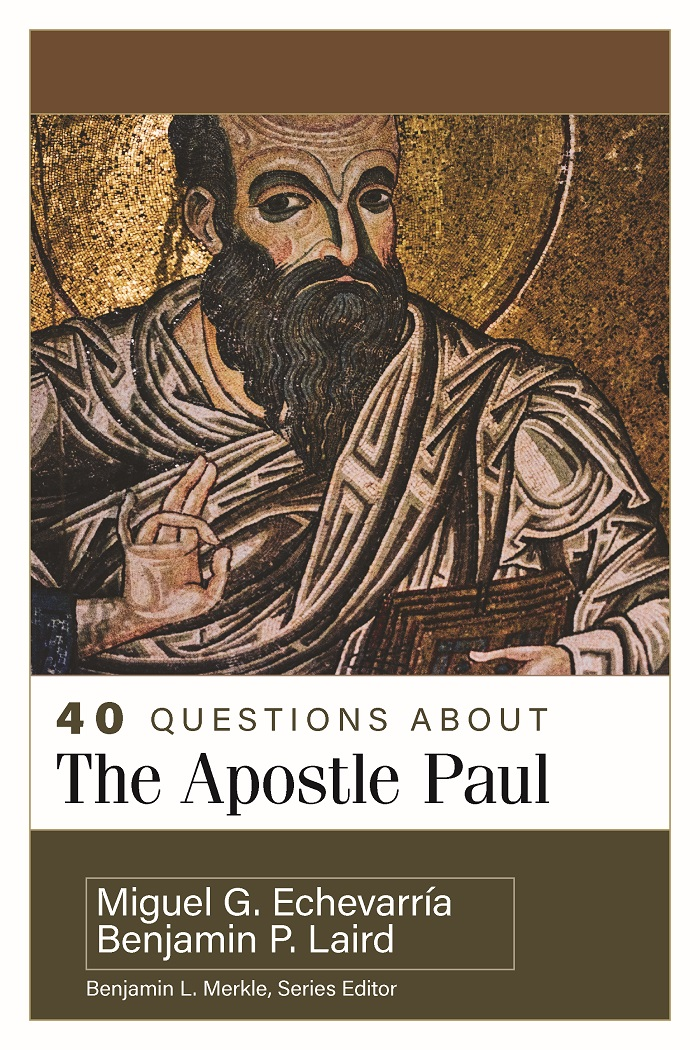
40 Questions About the Apostle Paul


Everything you wanted to know about Paul but was afraid to ask (or maybe not). . . .

Miguel G. Echevarría and Benjamin P. Laird. 40 Questions about the Apostle Paul. 374p., $24.99, Kregel Academic.

Paul of Tarsus was an undeniably forceful presence in the early Christian church, instructing fledgling congregations of believers throughout the Mediterranean in person and by letter and authoring about half of the New Testament in the process. But who was this powerful personality? And how can students most benefit from the extensive studies on Paul available today?

New Testament scholars Miguel Echevarria and Benjamin Laird provide an invaluable foundation for students beginning their investigations into the apostle Paul, Paul’s theology, and Pauline studies, addressing orienting questions such as these:

  • What do we know about Paul’s family?
  • How did Paul’s companions assist in the composition and distribution of his letters?
  • Did Paul think his letters were authoritative Scripture?
  • Is there a center to Paul’s theology?
  • What is Paul’s Christology?
  • What are the strengths and weaknesses of the New Perspective on Paul?
  • Does Paul address slavery and racial division?

Through its question-and-answer format, 40 Questions about the Apostle Paul provides a succinct introduction and entryway to more advanced study of Paul and the Pauline letter corpus. 

Posted in Uncategorized | Tagged , | Leave a comment

Numbers


At the beginning of Numbers, the people of Israel are weeks away from the Promised Land. At the end of Numbers—40 years later—the people of Israel are weeks away from the Promised Land. What happened?

Joel Barker and Steven D. West. Numbers: A Commentary for Biblical Preaching and Teaching. Kerux Commentaries. 480p., $37.99, Kregel Ministry.

These two authors work together to explain the essential message for the original listeners or readers, unpack its timeless truth, and then provide a contemporary restatement and communication of insights for the key biblical concept. Every book is a resource designed and written with the real needs of the pastor and teacher always in sight, providing many ways to creatively express the principal thought in a biblical passage.

Based on the Big Idea preaching model, Kerux enhances the reader’s ability to deliver a message that is biblical, cohesive, and dynamic.

In Numbers, Joel Barker and Steven D. West illuminate the enduring importance of this notoriously difficult text for preachers. God’s commitment to both his people and his promises claims center stage in understanding this Old Testament record of the covenant people. Through the lens of an ancient time and faraway culture, Numbers emphasizes God’s overwhelming holiness and the proper human responses of worship and trust. Barker and West guide expositors in shepherding their congregations through the book of Numbers and its themes of worship; disobedience and grumbling; judgment and restoration; anticipating of promises; and even leadership, all of which relate to God’s people today.

Posted in Uncategorized | Tagged , , | Leave a comment

Persuasive Apologetics


Sharing our faith in a way that’s both authentic and accurate. . . .

Jeffrey M. Robinson. Persuasive Apologetics: The Art of Handling Tough Questions Without Pushing People Away. 160p., $21.99, Kregel Ministry.

We cannot love others well without speaking the truth. Loving our neighbors well includes engaging in robust conversations that destabilize false belief systems. In addressing the mind, will, and emotions of actual, complex people, Christian believers must develop various approaches to meet diverse personalities and multiple connection points.

In Persuasive Apologetics, pastor and professor Jeffrey M. Robinson explores what’s below the surface of intellectual-sounding objections to Christianity. He shows what it means to contend for the truth through real-life examples of communicating with those who hold differing beliefs. Robinson covers foundational and practical issues, such as:

  • the importance of demeanor in being persuasive
  • various apologetic approaches
  • the influence of worldview presuppositions
  • using undercutting defeaters to expose faulty thinking
  • causes of nonbelief
  • the historical Jesus compared with figureheads of competing belief systems
  • the hope that Jesus offers

Persuasive Apologetics will challenge serious seekers to peel back the layers of skeptical arguments and equip committed Christians looking to hone their apologetics skills.

Posted in Uncategorized | Tagged , | Leave a comment

40 Questions About Bible Translation


Why are there so many translations of the Bible—and how can/why we should we trust them?

Mark L. Strauss. 40 Questions About Bible Translation. 368p., $24.99, Kregel Academic.

Nearly all believers read a translation of the original texts of the Bible, yet few understand the complex art and scholarship unique to Bible translation.

The importance of Bible translation in historic and contemporary Christianity cannot be overstated, with millions around the globe reading and studying the Bible in their own language. Notable translation expert Mark Strauss answers a wide range of questions about this the process and reliability of this endeavor so essential to the core Christian faith.

40 Questions About Bible Translation covers topics related to the process and history of Bible translation; Bible versions and international translation efforts; and the multifaceted challenges in translating the Bible, such as:

  • What makes Bible versions different from one another?
  • What should be the goal of translation?
  • When, why, and how were chapters and verses introduced into the Bible?
  • How did the King James Version (KJV) come about?
  • How do international Bible translators go about their work?
  • What is the difference between grammatical and biological gender and how does this affect translation?

Posted in Uncategorized | Tagged , | Leave a comment

Kerux: Acts


An in-depth look into the Acts of the Apostles, for both scholars and pastors. . . .

John D. Harvey and David Gentino. Acts: A Commentary for Biblical Preaching and Teaching. Kerux Commentaries. 576p., $41.99, Kregel Academic.

In Acts, John D. Harvey and David Gentino tease out the multifaceted yet compatible purposes apparent in Acts: showing God the Holy Spirit in action as Jesus’s disciples undertook the commission that he gave them; presenting Jesus as Messiah and the source of salvation for all people groups; addressing objections to and accusations against the Christian movement; validating the Gentile mission; and providing models for public proclamation and apologetical defense. Their preaching commentary explores contrasts and corollaries between the church in Acts and the church today, encouraging believers who have the same commission, same empowering Spirit, and same challenges of opposition to the faith and cultural boundaries as did the early church.

Posted in Uncategorized | Tagged , , | Leave a comment

Pastoral Identity


Reminding pastors why they still keep at it—and giving them practical advice on the “how” in the process . . .

Douglas D. Webster. Pastoral Identity: True Shepherds in the Household of Faith. 192p., $19.99, Kregel Academic.

Experienced pastor and seminary professor Douglas Webster calls pastors to reject “Christendom” approaches to church leadership that require the pastor to exert control over the church’s direction and ministry. Such models differ fundamentally from the New Testament “household of faith” vision of pastoral ministry, which affirms the disciple-making responsibility of the whole community, the priesthood of all believers, and the shared gifts of the Spirit.

Rather than perpetuate pastoral leadership based on individual initiative, institutional power, and personal charisma, Webster defines a New Testament model of the pastor, outlining the major features of pastoring among the household of faith, such as:

  • Viewing the church as an every-member ministry
  • Seeking synergy between pastoral identity and congregational identity
  • Prioritizing a pastor’s daily rhythms of grace in prayer, study, and care for the body
  • Supporting pastor-theologians who shepherd believers in the whole counsel of God

Such pastoral authority and guidance require mutual submission in Christ. Pastors and laypeople alike let go of dominant cultural models of pastoring and embrace the values of Christ’s kingdom.

Posted in Uncategorized | Tagged , , | Leave a comment

Behold and Become


The subtitle says it all. . . .

Jeremy M. Kimble. Behold and Become: Reading Scripture for Transformation. 256p., $24.99, Kregel Academic.

Believers know the Bible is powerful–but how so? And how does God save people and transform lives through Scripture? Author and theology professor Jeremy M. Kimble integrates an evangelical doctrine of Scripture with a robust, coherent practice of engaging with Scripture.

Behold and Become contends that the Bible, which is God’s self-revelation, coupled with the Spirit, works to produce salvation and growth in godliness. Believers will see how sound beliefs about Scripture correspond with practices that allow for God’s transforming work, such as:

  • How the Bible’s inerrancy demands our careful attention to the biblical authors as theologians
  • How the Bible’s efficacy operates within the doctrines of the triune God and the church
  • How the Bible’s authority directs our focus toward who God is and how he acts in the world

We become like what we behold. Rather than passively assume the animating power of the Bible, Behold and Become guides readers to make Scripture’s vitality an overt part of their theology of Scripture and practice of Christian life.

Posted in Uncategorized | Tagged , , | Leave a comment

40 Questions About the Text and Canon of the New Testament


How did the New Testament become the New Testament?

L. Scott Kellum and Charles L. Quarles. 40 Questions About the Text and Canon of the New Testament. 352p., $26.99, Kregel Academic.

The writings that comprise the New Testament are critical for understanding the life, teachings, and impact of Jesus of Nazareth, all of which are central to Christianity. But how were these texts circulated, collected, and given their canonical status? Is the New Testament a trustworthy source for learning about Jesus and the early church?

New Testament scholars L. Scott Kellum and Charles L. Quarles address the most pressing questions regarding the study of New Testament texts, their transmission, and their collection into the canon, such as:

  • What happened to the original manuscripts of the New Testament?
  • With all the variants, can we still speak of inspiration and inerrancy?
  • What are the competing views on canon?
  • Did the apostles recognize contemporaneous books as Scripture?
  • Did the early councils decide the canon?
Posted in Uncategorized | Tagged , , | Leave a comment