The Covers Have Landed!


Those of you who like pictures more than text will enjoy this post. 🙂 Because the new From Disciples to Disciplers covers are here, courtesy of the illustrious Marion Simmons…. Enjoy….

Season 1 coverSeason 2 cover  Season 3 cover

Season 4 cover

Season 5 coverOLYMPUS DIGITAL CAMERAGranted, the covers for Seasons 1-3 won’t be used in the immediate future, but Marion wanted to work through the whole series and thus we’re ready for that if/when the remainder of the series reverts back to me (although Season 1: Growing in Jesus, in particular still seems to be performing reasonably well and was in fact charting on Amazon yet again yesterday).

Probably next week: Some minor but still good news—especially for those of you who like a cheap book…. Stay tuned….

Posted in Uncategorized | Tagged , , , , , , , , | 1 Comment

Once More into the Breach


Happy New Year, y’all. While I continue to await good news from other sectors, there is something I can take into my own hands here—since that’s where they were thrown back into….

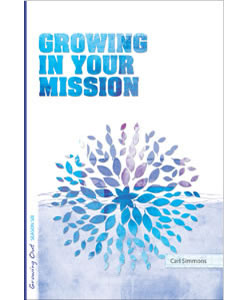
This time last month, Seasons 4-6 of the Growing Out: From Disciples to Disciplers series officially went out of print, and the rights reverted back to me. Thus, I’ve been spending some time editing and reformatting the content so I could make them re-available. You can still find the originals on Amazon for the foreseeable future, of course; but I can actually get paid for these ones, so I wouldn’t at all mind you purchasing these new editions. 🙂 It should have some fancier covers forthcoming (I’ll use the old ones below for now), but you would be buying it for the content, after all.

So first, said purchasing information, then I’ll get on my soapbox about why they deserve to once again see the light of day…

Season 4: Growing Others — book here, Kindle version here
Season 5: Growing in Leadership — book here, Kindle version here
Season 6: Growing in Your Mission — book here, Kindle version here
GO4Let me start here: “Once more into the breach” is more than just a literary way of saying “they’re baa-aack….” The fact is: Growing Others is truly the centerpiece of the entire Disciples to Disciplers series—the objective reason this series had to be written. (I have my personal reasons, too.) Anyone who’s worked through Seasons 1-3 in their own lives—in other words, you’ve developed and deepened your walk with Jesus, learned how to live it out among those people you most care about, and discovered some of how God’s created you and why—now needs to address this question: How do you take what God’s already revealed to you, turn around, “step into the breach” and help someone else walk through those same issues, rather than stamp them with a “saved” sticker and leave them to drown?

I still have yet to see another small-group study on the market that addresses this. (Books, yes, but not a single study to help groups/churches process this together.) And, put simply, this is where the American church has failed miserably. People get plateaued or stuck, and leave, because a critical point has been overlooked – the people coming in the door and/or just coming to Christ? They need you. And guess what? You need them, too—more than you know. So pick up a copy of Growing Others and learn how to stand in the breach for yourself (and others).

GO6For that matter, I don’t see another study out there that explores how to genuinely flesh out a God-given vision (i.e., Season 6: Growing in Your Mission), and not a whole lot of books either. Whether it’s a new ministry, a church plant, or whatever God’s put on your heart to develop, this study will help you process it and “make the dream real.” It’s pretty stinking unique, if I do say so myself. And I just did.
GO5And yes, there are studies on leadership already out there, although they’re more about developing obvious leaders. Growing in Leadership focuses on the rest of us—arguably the majority, in terms of the church—whose spiritual maturity has led to positions of spiritual leadership but who aren’t “natural-born leaders.”

Also: If you’ve ever used these—or just got inspired to do so—spread the word. Tell your buds; start a group in your own church; go put up a review on Amazon (under the new versions now) or elsewhere; and help get the ball re-rolling here.

As always, thanks. This series means a lot to me, and so does your help.

— Carl

Posted in Uncategorized | Tagged , , , , , , , , , | 2 Comments

From the Head to the Heart (but not quite to the hands)


Even though this book comes up short on the how-to’s of spiritual formation, it does a good job of provoking you to get off your butt and actually pursue it. However, you’ll probably want to do that long before you finish the book itself.

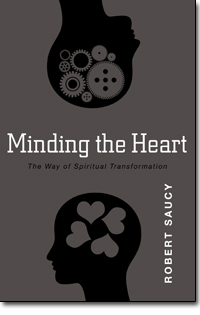
saucyRobert L. Saucy. Minding the Heart: The Way of Spiritual Formation. 344p., $21.99, Kregel Publications.

If you think I sound conflicted here, you’re right. This book’s heart is in the right place, and so are a lot of its words. It genuinely moved me to want to act—and then didn’t give me a lot to actually work with. But let’s start with some of that provoking stuff, because it’s well worth considering:

The picture of continually walking may be unpleasant and tiring to us…. We may have never thought of the Christian life in this way. But in reality, we may be practicing it by relegating our spiritual walk to well-defined religious activities…. The rest of our life—whatever else consumes our time—is not part of the journey. It’s a vacation. It doesn’t count.

Robert Saucy spends a lot of time addressing the problem of our “fat and hard” hearts. A lot of time. An important point he makes throughout, though, is that our minds determine much more of what’s in our hearts than we normally give it credit for. Indeed, “The point is that an emotion is always interpreted [by the mind] before it has any effect upon the person.” And thus, our minds need transforming.

Saucy does provide some ideas on ways to approach this—by meditating on God’s Word (especially via lectio divina) and community (which, I have to admit, is about the time I started mentally checking out, as we were already 200-plus pages in by the time this was even touched upon). But he spends a decidedly small amount of time on this, compared to the amount of time he spends telling us why it’s important. Any reader will be sold on the idea 100 pages before getting any kind of answer to the question, “OK, so how do I do it?” (And realistically, most readers were probably sold before even picking up this book.)

Granted, it’s almost all good content—well-presented and biblically solid. That said, I would’ve lost a bunch of the secondhand examples/illustrations here, for reasons that are by now obvious. For that matter, the dozens of sidebars here add pretty much nothing to the book, aside from length.

In fact, it feels very much like a visit to a wise old seminary professor, to learn the answers to some very specific questions regarding spiritual formation. He regales you with a depth of knowledge on the subject. You know he’s walked it himself. And yet, two hours later, you realize he has yet to answer your question. And that he probably won’t.

And so, you thank him for his time and his heart for Jesus, say “good day,” and move on.

Posted in Uncategorized | Tagged , , , , , | Leave a comment

It’s the End of the World as Paul Knew It


As C. Marvin Pate points out from the get-go, “[The apostle] Paul was a product of three worlds: Greco-Roman, Jewish, and Christian.” This collision of worldviews (and the sub-worldviews within — e.g., Caesar-worship, Stoicism, Platonism, and especially the “Judaizers” so often confronted in both the Acts and epistles), then, heavily informed Paul’s responses and eschatology throughout much of the New Testament.
And as we edge closer to the last days, Pate gives us both a sense of the original context and a lens through which we too can begin to “see darkly” at least some of what Paul saw and often openly confronted.
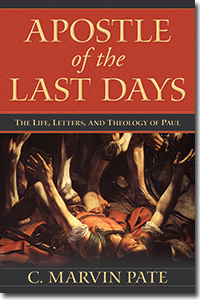
apostle of the last daysC. Marvin Pate. Apostle of the Last Days: The Life, Letters, and Theology of Paul. 320p., $22.99, Kregel Academic.

Between the two bracket-chapters of Paul as “apocalyptic seer” and a summary of Paul’s end-times theology are in-depth analyses of each of Paul’s letters from an eschatological viewpoint—and again, the particular contexts he’s responding to in each of those letters. (Actually, the pastoral letters are treated in a single chapter.)

Quite a bit of time is spent on Paul’s responses to Jewish Merkebah mysticism, which I confess I knew nothing about prior to reading this book (think of it as late OT/early NT-era kabbalah), especially in the chapter on Colossians. The Roman imperial cult (i.e., Caesar as god) gets its fair share of examination here, too, especially in the chapters on Ephesians, Colossians and the pastorals.

It’s probably obvious by now that this is a very scholarly book. It’s not for everyone. Still, for those who can put in the work, Apostle of the Last Days will bring you deeper into Paul’s world—as well as deeper sense of the world to come, where Jesus awaits—and a better sense of how to respond to today’s own collision of worldviews.

Posted in Uncategorized | Tagged , , , , | Leave a comment

The Mystery in the Mess


(Sounds like a Bones episode, don’t it? Anyway…)

Some devotional books are dedicated to helping you feel better about your life each day…. My purpose here is to embrace the mysteries of God and then proclaim by faith that, despite my selfishness and lack of understanding, God is worthy of all praise. If that encourages you, then good. You can thank God for that, too.

Sound like your cup of tea? Then read on….

van dusenJohn Van Dusen. Standing By the Sea: Stretch Out Your Hands, Walk Into the Mystery. A 52-Week Devotional. 188p., $6.92 (paperback), $2.99 (Kindle), CreateSpace.

Although John Van Dusen’s stated intent elsewhere is to get you deeper into the Word of God (and there’s ample sections in each weekly devotional to help you do that), what it’ll accomplish more is to get the already-existing Word of God deeper into you. To realize that in the messiness of life, all our emotions, all our bewilderment, all our failures, there God still is. And that’s a message worth sharing.

You’ll be able to tell pretty quickly that John’s a worship leader; there’s a creativity here (and yes, flakiness — but that’s not a bad thing) that’s hard to miss. In his best moments, John’s style reminds me more than a little bit of Shane Claiborne — winsome, disarmingly informal, insightful, sometimes meditative and/or sensory. Other times, I think, “He really could’ve/should’ve stopped there.” But that too is part of the charm here.

The meditations themselves are each a modest length — two oversized pages, as a rule — and each closes with a few “questions of mystery,” again ranging from the profound to the goofy but all of them intended to get you thinking about God’s place in each part of your life and to help us remember that we’re all in this together. And with that, one more sample to give you the flavor:

The plain truth for all as we walk out our simple faith is this: That nearly invisible Sunday school teacher struggling to write yet another lesson for a class suffers the same ups and downs that Eugene Peterson has. No matter how bright the star, we’re all made of the same stuff. And that stuff is characterized by missteps and tipped halos….

Take heart. Despite personal failure we more often than not reflect the handiwork and artistry of God…. We are beautiful, undone, planned on but free to blossom in the most unlikely places…. Reflect on that.

In short, Standing By the Sea is a very human book. And if you’re a human, too, you’ll enjoy it — and likely get pulled up short a few times by the Spirit in the process.

Posted in Uncategorized | Tagged , , , | Leave a comment

Ambition and Its Discontents


Ambition is a tricky thing. It can be the “divine discontent” that drives us to accomplish great things for God, or it can be… well, we’ve all seen what it can be. And as a result, many of us don’t pursue our ambitions at all, as if they’re inherently evil. But as R.T. Kendall points out over and over throughout this book, it’s not the ambition that’s good or bad, but the source and the goal of that ambition—both of Whom should be the same.

kendallR.T. Kendall. Finding Your Heart’s Desire: Ambition, Motivation & True Success. 192p., $14.99, Chosen Books.

“There is nothing more promising for the Kingdom of God than godly ambition, and yet there is nothing worse and more threatenting to the Church than unsanctified motivation,” Kendall says. Thus we must choose wisely—and before anything else, choose God. As he says a handful of pages later, “I began a journey that has taken me to this day—seeking the honor that comes from God only—with all the ambition I can muster. I am still in pursuit of that glory.” At its best, this book will inspire you to do the same.

My favorite two chapters of the book would be “The Fruit of the Spirit,” which dwells largely on the matter of forgiveness (which makes for a great litmus test of our own ambition: How willing are we to ask not only for God’s forgiveness but God’s blessing on others who’ve hurt us? Are we that willing to want what God wants?); and “Too Much Ambition?” in which R.T. shares some of his own story, especially concerning his relaionship with his father who pushed him into so much ambition both good and bad. The latter chapter closes with seven principles for gauging the condition of our own ambitions, and serves as a good practical measure for us.

In between we gets plenty of examples, both biblical and personal, to remind us of both the potential plusses and minuses of our ambition. And it comes down to this:

We have seen that ambition is not necessarily a bad thing. But it tends to be more bad than good when described in the Bible. When we come to understnad this, we should learn to see ambition as an amber light—use caution: Slow down and be prepared to stop. Ambition can achieve wonderful things; it can accomplish the most evil things.

For those on either end of the spectrum, Finding Your Heart’s Desire will help you to better see ambition through God’s eyes, and to adjust accordingly.

Posted in Uncategorized | Tagged , , , , | Leave a comment

Get Real, Get Right


I think (hope?) that by now most Christians realize that evangelism isn’t about delivering some canned presentation—let alone about smashing nonbelievers to bits with our “unassailable” arguments—but about sharing the hope we have in Christ, the hope He has given us. Still, many of us have problems articulating that hope, or in believing that what Christ has given us is enough for someone else. If you’re one of those people, this book is for you.

get-real-thumbJohn S. Leonard. Get Real: Sharing Your Everyday Faith Every Day. 192p., $17.99, New Growth Press.

(The obligatory disclaimer: I was editor for this book. Well, of course I was. :))

One huge point of the book is that evangelism is a team sport. The opening quarter of the book, “The Gospel We Share,” lays the groundwork for what’s to come. The linchpin for the entire book, in fact, is the discussion of Luke 7 that closes this section, and John Leonard sums it up nicely in this passage:

It’s remarkable that each time Jesus steps down and identifies with sinners and their suffering, there is a corresponding elevation and revelation of who Jesus Christ is. If I were God and wanted to prove it to the world, I might do it by some big flashy event—maybe write my name in the sky. But God chooses to do it by identifying with the suffering and the sinful—identifying with us….

We practice “personal evangelism,” “friendship evangelism,” or “one-on-one evangelism.” We indoctrinate our children at an early age to this individual approach. Every child who has ever attended a Vacation Bible School and sung the chorus, “I Will Make You Fishers of Men,” has been taught that evangelism is something we do by ourselves. 

There is nothing wrong with the words of the chorus; after all, they come straight out of the Bible. It’s the choreography…. [O]ur Lord was not speaking about fishing with a rod when he called the disciples to follow him. He was talking to fishermen who used nets. When you fish with nets, you must fish together.

The latter three-quarters of the book, “A Real Approach to Sharing the Gospel,” delivers on this. Whether it’s through relationship, parties, prayer, listening, or giving nonbelievers a taste and leave them wanting more (rather than plowing them over with EVERYTHING THEY NEED TO KNOW), there’s a entry point somewhere to grab onto.

One interesting concept here is the idea, “evangelize Christians and disciple non-Christians.” It sounds backwards to us, but you’ll get it by the time you’re done reading about it. As believers, we need to hear the Gospel fresh; and nonbelievers need to have it broken down and fleshed out in order to believe it—with relationship every step of the way. Plus, guess what you have once you’ve discipled someone to Christ? That’s right: a disciple, rather than a baby Christian with no foundation and no support system, which we see far too often in the church these days.

Anotehr unique aspect of the book is its approach to ministry to Muslims. The final chapter deals directly with this issue, but as this has been a big part of John’s calling it’s peppered throughout the book as well. And again, it points back to living our faith as we share it. Too often, we do one to the exclusion of the other.

In short, there’s a lot of mental paradigm shifts to enjoy and absorb here. A lot of this may well be stuff you’ve probably grasped on one level—but haven’t yet grasped how to actually apply it. Get Real will help you to cross that bridge as well.

Posted in Uncategorized | Tagged , , , , , , | Leave a comment

Doing the Impossible by God’s Grace


Near the beginning of this book is an anecdote regarding the late evangelist D.L. Moody, which is worth reprinting here:

A newspaper reporter once wrote, “I can see nothing whatever in D.L. Moody to account for his marvelous work.” When Moody read the report, he chuckled, “Why, that is the very secret of the movement. There is nothing in it that can explain it but the power of God.”

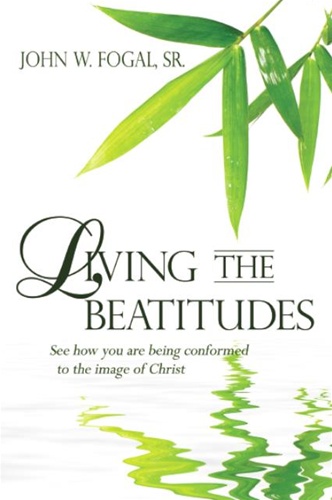
I hope John Fogal won’t mind my saying that this kind of captures how I feel about this book. It’s pretty simply and/or straightforwardly written—in fact, there are several chunks here that scream “repurposed sermon.” Nonetheless, the power of God shines through here, and that’s what makes this worth your time.

beatitudesJohn W. Fogal, Sr. Living the Beatitudes: See How You Are Being Conformed to the Image of Christ. 180p., $12.00, ChurchSmart Resources.

Each of the chapters (except the opening and closing ones) are devoted to the individual Beatitudes, and the seemingly escalating demands put upon us by Jesus through them. The “seeming” part of it is left there to hang, so that we feel the weight of it. It’s not until late in the book that Fogal lets the cat out of the bag: “These chapters have described a glorious way to live, but Christ must live that life in us as He is our life…. In the strictest sense of the word, Christianity is not a religion, it is a life.”

In between, though, there’s plenty to chew on. For example, I liked Fogal’s near-incidental observation that as Americans, we don’t “get” hungering and thirsting for righteousness…. because we don’t “get” hungering and thirsting. It’s a foreign concept to most of us. Only through suffering and/or God’s discipline do we really get any of this, or of our need to submit ourselves to Jesus so that His life might flow through us.

I liked the chapters on mercy and purity of heart in particular. And again, in the former, Fogal reverses our usual way of thinking: “Showing mercy to others is not a condition for receiving mercy from God. It is proof that we have received it.”

In short, this book makes it clear us that we can’t live up to the demands Jesus makes in the Beatitudes. It equally makes clear that Christ can, and did, and does live up to these demands. And that God intends our lives to be in Christ. Do the math.

Posted in Uncategorized | Tagged , , , , , | Leave a comment

And the Word Became the Word


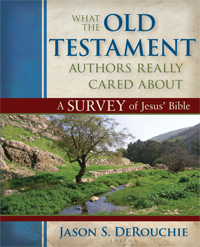
This book expands upon an idea so obvious that we usually miss it: that Jesus was intimately acquainted with the content of the Old Testament. He knew it as a Jew; He knew it as a member of the Godhead who originated it and related it to man; and He knew it as the One who would fulfill every one of its words.

Put another way: Jesus is the content of the Old Testament. Thus, we ignore Jesus’ relationship to the Old Testament at our own risk. But this book goes a long way in removing that risk.

2591 cvr 14.inddJason S. DeRouchie, ed. What the Old Testament Authors Really Cared About: A Survey of Jesus’ Bible. 496p., $45.99 (hardcover), Kregel Academic.

Rather than going in modern canonical order, the essays that make up this book are arranged to the original Old Testament canon: Law (the Pentateuch), Prophets (what you’d expect, plus Joshua/Judges/1-2 Samuel/1-2 Kings, minus Daniel/Lamentations), and Writings (Psalms, Proverbs, etc.).

It’s a textbook, to be sure, but most of the essays here are written in an engaging style that anyone with a decent knowledge of the Old Testament will be able to connect with, even as it helps formal students better connect the Old and New Testaments. It is, in editor Jason deRouchie’s own words, “a manageable survey of Jesus’ Bible.” It’s in depth enough to challenge the scholar, and outlined and illustrated enough for the regular but unscholarly read to track along and make the big connections. Overviews of each biblical book are also provided at the beginning of each chapter.

Throughout the book we get a sense of the unfaithfulness of God’s people, and the unending faithfulness of God—culminating with the arrival of the One who would begin his ministry by reading Isaiah 61 and announcing “Today this Scripture has been fulfilled in your hearing.”

Posted in Uncategorized | Tagged , , | Leave a comment

Keeping Preaching Biblical AND Creative


There’s a lot of materials out there for pastors to “spice up their sermons”—and admittedly those people will be (and should be) attracted to this book. What sets this one apart from many of those books is the desire to keep it solidly biblical—even as it helps pastors find new ways to express age-old truths.

better preachingDaniel Overdorf. One Year to Better Preaching: 52 Exercises to Hone Your Skills. 320p., $17.00, Kregel Ministry.

There’s actually 59 exercises here, but who’s counting? (The seven “bonus exercises” are included in a relatively brief section at the end.)  And the ideas here range from nuts-and-bolts stuff (“it’s the transitions, stupid” [my words]; Spurgeon’s “make a beeline to the cross,” etc.) to the creative (consulting an artist about your upcoming message, encouraging texting of questions during the sermon, etc.).

Although you could do these as weekly exercises, Daniel Overdorf suggests a number of alternatives—once a month, focusing on specific areas, or working through the book with a group of pastors (he suggests four). The latter element—mutual feedback—is encouraged repeatedly throughout the book, and reinforced by the feedback Overdorf has gotten to each of the exercises (and added at the end of each exercise/chapter). Thus, the suggestions here are not only creative but field-tested, which will help readers determine what works best for them and how to tweak it so it works from their own church/congregation.

There’s also a helpful index in the introduction, indicating the kind of focus each exercise has (prayer, Bible interpretation, understanding listeners, , sermon construction, illustration and application, word crafting, “the preaching event,” and/or sermon evaluation).

This book is obviously directed toward pastors (although Sunday-school teachers could benefit from many of the ideas here as well). And as good pastors are also good learners, chances are that if you’re simply a member of the congregation they won’t mind you slipping this into their Christmas stockings this year. It’s a good addition to their preaching toolbox.

Posted in Uncategorized | Tagged , , | 1 Comment