Lay It Down: A Final Introduction


“Greater love has no one than this, that someone lay down his life for his friends. You are my friends if you do what I command you” (John 15:13–14).

We read these words in John 15, and take great comfort in the fact that Jesus laid down his life for us, his friends. But if we truly belong to Jesus, guess what? He’s our friend, too. If we belong to Jesus, then we too are to take up our crosses and follow him (Matthew 16:24). Reread the above passage with that in mind, and follow the implications.

“… And you know the way to where I am going” (John 14:4).

The idea of laying down our lives for Christ’s sake may seem impossible, but it’s not just an idea—it’s our calling. In fact, it’s our lifelong calling, and beyond. It’s not only foundational; it’s eternal. It’s how we first came to Jesus, and it’s how Jesus continues to shape our will in union with His. It is salvation; it is sanctification; and it is the totality of eternal life in Jesus. Our lives have to move from being of Christ or for Christ to being “in Christ” (Romans 8:1, et al.), and to the point where finally our life “is Christ” (Philippians 1:21, et al.).

Therefore, within these pages you’ll find some pretty heavy ideas being… well, laid down. And why not? This is your life we’re talking about, and about laying down every piece of it for the glory of God. There’s nothing more important than that. It’s not easy. In fact, it’s the hardest thing you’ll even have to do—and if you do it right, you’ll get to do it every day for the rest of your life.

In some ways, this is meant to be a very practical book. However, the objective here isn’t doing. Before that, and along with that, each of us is called to “be transformed by the renewing of your mind” (Romans 12:2). We’re called to become the new creations Christ intends each of us to be, and to understand that we are new persons.

The challenge for me, as writer—and for you, as reader—is to avoid compartmentalizing these things into stages, steps, ten easy ways, etc. And yes, this is a book with a beginning, middle, and end; I am using a certain structure and sequence to make all this easier to understand. However, God doesn’t compartmentalize—because he doesn’t change. Repentance and grace go hand in hand. Obedience and freedom go hand in hand. Inner discipline and outward service go hand in hand. Walking in the Spirit and loving our fellow human beings go hand in hand. And we stumble away from God’s will for us when we try to separate these things.

Furthermore: Laying it down is not just about releasing our bad stuff, but about offering up everything “good” we have to God. Jesus, the ultimate good, offered himself up for us. Who are we to do less—and why do we think the ultimate results wouldn’t be as glorious? “Truly, truly, I say to you, whoever believes in me will also do the works that I do; and greater works than these will he do, because I am going to the Father” (John 14:12).

Many equate “laying down” with giving up—with being a quitter, or to just passively let things come at us. In some ways that’s accurate—for example, when God calls us to quit the sins and/or idols in our lives. But as we venture further with Jesus, laying down becomes less about ceasing some activity we’re doing, sinful or otherwise, and more about a different kind of giving up—the active surrendering of everything we do to Christ. It doesn’t mean we stop doing the good things we surrender to him, but it does mean that we give up control of those things to Jesus so that he can direct them, so that his will can be done.

Therefore, we don’t stop working, but we “work… for the Lord” (Colossians 3:23). We’re still parents and children and spouses, but our priority becomes glorifying God in those relationships rather than pleasing ourselves, or even that spouse or parent or child. We still use our gifts and talents, but we do it to serve God fully and not just for ego fulfillment—even, or maybe especially, in the context of “doing God’s work.” We still receive amazing blessings from God, but we learn to immediately place them back in God’s hands, knowing that even the people and things we love most were given to us for his purposes, and that our joy must rest in that rather than in his gifts….

One more thing: As I address these issues I am, in fact, recognizing my own need to clear out much of the undergrowth in my own life. Put another way: If you think reading this is gonna hurt, try writing it. But it’s my prayer that, by doing so, I not only help clear a path for you to begin moving forward more deliberately, but that you’ll gain the courage to clear out some of your own undergrowth—and by doing so, clear the way for and inspire others.

We’re all in this together. So let’s get started. Let’s get ready to Lay It Down.

Posted in Uncategorized | Tagged , | 2 Comments

Free Discipleship!


(Well, the books are free, anyway… the discipleship itself… well, I’ll defer to Dietrich Bonhoeffer on that one….)

Season 1 coverSo it’s done: All six books in the From Disciples to Disciplers series—including the first three, Growing in Jesus, Growing in Character, and Growing in Your Gifts (scroll down for more info on each)—are now available on for free on NoiseTrade. Everything you need to know can be found here. (And hey, go snag yourself the new Josh Garrels album in the Music section of the site while you’re in there anyway—also out today—and thank me later.)

Season 2 coverSo maybe this isn’t the most lucrative alternative for yours truly. But the fact is, because of this option, the latter three books in the series (Growing Others, Growing in Leadership, and Growing in Your Mission), and the latest one Lay It Down, have already been read (or at least downloaded) in 70+ countries since I’ve put them up. That’s pretty cool, when you think about it.

And really, that’s the bigger point; I’d rather have these books in Season 3 coverpeoples’ hands, and hopefully be of some use to someone. That’s why they were created, after all. (That said, tips are appreciated.)

So there you have it. To paraphrase Popeye: I’ve done all I can do, and I can’ts do no more. Now, it’s your turn. Go fetch. 🙂

And with that, we’ll start back into Laying It Down tomorrow….

Posted in Uncategorized | Tagged , , , , , , , , , , , , | Leave a comment

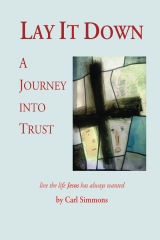
Lay It Down: A Journey into Trust


Moving on, and in more ways than I can count…. That said, hopefully you’ve been reading the last several entries and beginning to think: “This sounds great. I could really use someone to walk me through all this stuff, though. After all, like you said, we’re not supposed to do this alone.”

Boy, have I got a book for you. Certainly not as good as a coach, but a whole lot cheaper and easier to work into your schedule in the meantime.

createspace cover

So, is Lay It Down the graduate course for From Disciples to Disciplers, the speed-metal version of it, a desperate cry for help, or none of the above? Well, yes. 🙂 But seriously: What it really is, when all is said and done, is a reiteration of all the “a-ha”s God’s had me stumble across for a quarter-century-plus, thus fueling my need to write that series in the first place.

More directly: The whole purpose for writing this book is to walk alongside you in this journey into trusting God deeper and deeper. I know I haven’t gotten it all right, and I’m pretty sure you haven’t either. There are still plenty of things I need to lay down—and trust me, God’s working on them, hard. Put another way: I need to go through this book again as much as you might for a first time. The jerk who’s writing this blog once again needs to spend some time with the jerk who wrote this book, to try to remember who he really is in Christ, because it’s not me nearly as often as I’d like it to be. And maybe you feel the same.

Still and again, there are also things that God’s already shown me on this journey that are worth passing along. Even as I re-read them, I think “Who is this guy?” Because again, it’s not me nearly as often as I’d like it to be. And yet, I sense it’s who God’s called me to be, and continues to call me on to be.

In short, I know what all this is worth—because I know how much it’s cost. And at this point, it’s all I have to give. So here you/we go….

For the next year of Wednesdays I’ll be reposting all of this, piece by refined piece. Most of it’s already back in the archives in some form, but let’s give it one more shot in its proper scope and sequence (which can be found as you scroll down here, by the way.)

But you don’t need to wait in order to see it all. You can most certainly buy it here (and/or via Amazon)—or at least check it out for free here—and I’d be honored if you did.

So let’s see where the journey takes all of us from here….

Posted in Uncategorized | Tagged , , , | Leave a comment

Season 6: Growing in Your Mission


OLYMPUS DIGITAL CAMERAAs you keep growing, God may well put things on your heart that you’ll need to be the one to initiate. God’s given you a specific vision for ministry—either inside or outside the church, or maybe even planting a new church—and now you literally need to make the dream real. And this brings us, at last, to Season 6: Growing in Your Mission.

As with Season 5 (Growing in Leadership), there are any number of foibles to try to avoid as you do this. And as with Season 4 (Growing Others), I don’t know a single small-group study that tries to help people process this—and not a whole lot of books in general, for that matter.

But have no fear: We’ll help walk you through the issues that come with a God-given vision. Things like:

  • First: How do you know it really is God, and not just you? Because once things get real, we’re almost certainly going to find ourselves disagreeing with God on some things. And guess what? God’s right. So when that happens, you’ll need to remember which parts of this vision are truly God’s, so you’re able to keep on trusting him when you don’t understand what’s going on (more on that shortly).
  • What holds you back from getting started, and how do you get past that? Fear of the unknown—or for that matter, of re-experiencing something painful—is something we all face. But while the future is unknown to us, it’s not unknown to God. You have this vision because there’s something God wants made known. And the first people he’s going to have to show at least part of that to is us. That should frighten us. But we need to get past our fears and trust that God knows the way he’s taking us.
  • How do you get others on board (and praying—a lot)? And this might start even closer to home: Depending on our situations, we might not be able to expect our spouses, children, or extended families to support or even understand what God’s calling us to. But they can still serve as a reality check. They may not see what God’s doing in our lives, but they see us. No matter how painful or seemingly unfair their concerns might be, there might well be a grain of truth to them—and we need to deal with that grain before things get even more serious.
  • How will you share the vision in a way others can hear and embrace it, and continue to grow as a team? This is a big and often tricky step. By putting ourselves out there, we open ourselves up to people who we pretty much can guarantee won’t catch the vision right away. But as we share what’s really moving us—Who’s really moving us—we also develop new relationships. People get the opportunity to see where they fit into this new thing. Real needs get revealed. And as relationships develop, others begin to get excited about what God wants to do—maybe even to the point where they can let go of whatever fears or established ways of doing things might be holding them back.
  • How will you deal with setbacks as they come? How will you deal with falling flat on your face? How will you deal with waiting? Because once this all gets real, things won’t follow the plans you had in your head. Count on it. Things go wrong, or at least look wrong. Even when we’ve done our best, we might begin to wonder if we’ve disobeyed God somehow, or feel as if we’ve done everything right but failed God anyway. In fact, there might well be a point in time—if not a long stretch of it—where you’ll stop and ask yet again, “God, was that really you?”
    It’s always OK to ask God that question. We need to keep talking with God, especially when we don’t understand. But once God answers “yes,” it’s our job to keep walking, even if we’re not sure where God’s leading us. Even if things aren’t going the way we planned. Even when our feelings fail us and we think we’re not good enough to do what God’s called us to do. God knows better. He called us to this. God’s plan is always better than ours, and we need to trust God so we can discover more about what his plan is.
  • How will you deal with people leaving, even when it’s not personal (although sometimes, it is)? No matter why it happens—and it will—we need to remember a few things: 1) We should always want God’s best for others, no matter how it affects us; at the same time, 2) what others decide doesn’t change what God’s called us to; and thus, 3) we need to allow God to deal with each person’s decision, and remain obedient to what God’s called us to.
  • And finally, how will you keep growing, even as the vision continues to grow and take shape? Because, no matter where you are, you never stop growing. God will always see to that.

But let’s come back to that “vision thing.” Here’s a quiz to get you started. Ask yourself:

• As I’m pursuing this vision, am I sensing God revealing more about the things he truly cares about?
Will this vision, once it’s realized, reveal more about God to others, or just more about me?
Which parts of this vision were clearly not my idea (even if I’m excited about the idea now)?
Have I tried letting go of this idea, only to find God bringing it up again?
Would I still want this to happen even if someone else did it—or even if I did it and someone else got the credit?

Bottom line: We’ll spend a lot of time exploring how to “do” the vision God’s placed before each of us. But it starts with us being people God’s willing to take a chance on, by being available for God to work through us. Anything good God accomplishes through us starts and ends with God, and therefore any glory that comes from it is his, too.

Thus, it isn’t the end of the journey, it’s only the beginning. And thanks for rolling with it so far.

Posted in Uncategorized | Tagged , , , , , , , , , , | Leave a comment

Season 5: Growing in Leadership


Let’s pick up where we left off last week. As you’ve walked through our first four seasons, guess what? You’ve been growing. Others know it. And God is honoring it. He’s matured you to the point where you’re ready to lead—and by now you’ve probably been thrust into a leadership role of some sort whether you wanted it or not.

But that’s OK. In the words of J. Oswald Sanders in his classic book Spiritual Leadership, “Not every Christian is called to major leadership in the church, but every Christian is a leader, for we all influence others.” So you might as well learn to deal with it.

Whether you’re actively leading or not, it’s inevitable that you’re going to run into any number of the standard foibles of leadership once you do—not only getting people on board but getting them engaged, communication, conflict resolution, consensus-building, learning how to adjust your ministry to both God’s calling and to the actual needs in front of you (versus “this is how we’ve always done it”), etc. And all of this, obviously, requires us to keep learning how to stay focused on God instead of “my ministry.”

But first, it starts by recognizing where our authority comes from, and who’s really in charge. Take a look at Hebrews 13:7-8, 17-19, and then think about this:

  • How does knowing that your leaders “watch over your souls, and they are accountable to God” (v. 17) affect the way you see them—or how should it?
  • Who’s a spiritual leader you know who truly loves God—but whom you nonetheless have trouble working with? How can you see God working in him or her, and how can you honor that more openly?
  • How do you still struggle with seeing yourself as a spiritual leader? What would you want God to change about you right now?

Season 5 coverThat’s what Season 5: Growing in Leadership is all about. In addition to all the issues above, you’ll also examine how to equip other emerging leaders for what’s next—because you’ll have already wrestled with those same things.

In addition, you’ll explore when it’s time to release those leaders—not to step away, but to step back, and allow our responsibility to truly become their responsibility. And again, something we always need to keep in mind with God’s work is that: It’s God’s work. Ultimately, we’re entrusting others to follow God’s leading to get the work done. And that means trusting those people to God. We’re asking God to take others where we can’t and/or aren’t meant to go, because it’s no longer our job. We should still be there to support them, but we now also have to trust them, and trust God, in the process.

All of this is easy on paper, and often tough in real life. But Growing in Leadership should make it a little easier. “Enjoy.”

Posted in Uncategorized | Tagged , , , , , , , , , , , | Leave a comment

Season 4: Growing Others


Before I get up on my soapbox and tell you why you need this, let’s recap how far you’ve already come: You’ve developed and deepened your walk with Jesus (Season 1); you’ve learned how to actually live it out among those people you most care about (Season 2); and you’ve begun to discover how God has uniquely built you (Season 3).

Now: How do you take what God’s shown you, and help others walk through the same process?

Season 4 coverWelcome to Season 4: Growing Others.

Call it mentoring, discipling, coaching, or just being a good Christian friend to someone who needs it… after Season 4, you’ll be ready to come alongside anyone who’s ready to have a deeper relationship with Jesus. Just like you in Season 1.

Objectively speaking, I have yet to see another small-group study on the market that addresses this. And again, this is where the American church has failed miserably. Older Christians get plateaued or stuck, and younger Christians are left to flounder and fail—and in both instances, at some point just get up and leave—because a critical point has been overlooked: The people coming in the door and/or just coming to Christ? They need you. And guess what? You need them, too, more than you know. That’s what Growing Others is all about—and why I had to write it. (And why I had to write the whole series, for that matter.)

Think about the people who’ve influenced you the most. Granted, God can use a chance encounter to do something meaningful, but really, the most meaningful encounters most of us will ever have will be with the people we stick it out with over the long haul. Because we experience each other’s highs and lows together, both we and our friends are changed.

Now, put Jesus in the center of those relationships.

When that happens, our relationships take on a character greater than anything we could ever have imagined. And it’s something we’ll want to see happen in every relationship we have. Therefore, in Growing Others we explore how our commitment to Jesus and our commitment to others can come together to become something extraordinary—something that truly glorifies God.

In order to do that, we need to acknowledge what God has already done in our lives—those place where we can say “be imitators of me” (1 Cor. 11:1) and mean it, because we know that we’re not the ones responsible for those changes. It also means learning how to listen—to pay attention to how God’s working in those people we care about—and not only that, but to point it out to them when we see it, because often the last person to see God working in us… is us. We’re here to guide others into what God’s telling them, not steer them into what we think they need.

As we do this, it’s likely that God will stir up something else within us—a desire to grow even more people into the love of Jesus. And that means expanding our circle of influence, maybe even stumble into (and through :)) a leadership role—because if God’s put something on your heart, he wants you to do something about it.

As we step into the mission God’s called us to, we might also be surprised to discover who else God has been calling—but was waiting for us to step out and step up. If we’re willing to make that investment in others, and help them see how they can impact others in the way God’s called them to, there’s no telling how big an impact our little contribution could make. Even if you never see it, that’s OK. God sees it. And so does every person your life has touched, either directly or indirectly.

So in my own small way, I’d like to help address this gaping problem in the church. And in your own small way, I’d like you to help. From there… well, that’s up to you as much as anyone.

In the final two seasons, we’ll explore what it takes to lead others where God wants you and them to go next. Because as you’ve walked through the first four seasons, guess what? You’ve been growing. Others know it. And God is honoring it. So whether you see yourself that way or not, God has matured you to the point where you’re ready to lead. And we’re going to help you get more ready. Stay tuned.

Posted in Uncategorized | Tagged , , , , , , , , , | 2 Comments

Season 3: Growing in Your Gifts


These next couple entries will be a bit—and then a lot, respectively—more subjective than the others for this series. Next week’s Season 4 speech will be understandably more passionate, since after all it was the entire point of creating this series at all. But today, let me begin by couching a non-apology in the form of an apology….

Season 3 coverTo be up front: This study is the most derivative in the entire series (and therefore, of course, the second-best seller in the series by a long shot, selling nearly twice as many copies as #3, Growing in Character, and only a few hundred short of Growing in Jesus). There’s a lot of good materials out there about discovering your spiritual gifts, and I’ve gleaned and retailored mightily to give you the most useful pieces here.

That said, something lacking from a lot of spiritual-gifts studies is this: Most of them focus on “filling slots” in the church. I’ve sincerely tried to push past that. Your ministry might be within the official auspices of church—but it might not be. (Of course, ideally it’s both/and.) But bottom line: The world that needs reaching out to is far bigger—and far more in need—than the church. And we were never meant to hide our light.

Thus, I’ve been very deliberate in maintaining an outward focus with this study, so that you not only can celebrate what God’s given you with your fellow Christians, but be equipped to know how God’s built you to take His word to the rest of the world—as well as hopefully discover who might just be able to help you do that. (Hint: It’s probably the person with the gifts that make you say, “That’s so not me.” You’re not supposed to do it all by yourself, or in only one way. God’s more creative than that, and that’s why He’s created each of you the way He has.)

In the meantime, here’s a test: Come up with a description of who you are and what you’re about. Here’s the catch: You can’t say what you do. No mention of jobs, hobbies, volunteer work—any kind of accomplishment or activity. So good luck. And go!

So, how’d you do? I thought so.

So let’s have a re-do: If you wanted people to know just one thing about you right now, what would it be? Who are you—really?

It’s important—often life-changing—to discover how God’s made each of us, and what He’s made each of us for. But before we go there, we need to spend time realizing who we already are in Jesus. That’s where Growing in Your Gifts begins. As we come to understand who we are in Jesus more and more, His life can flow more easily from us into everything else we do—even when we’re not self-consciously trying to serve Him or others.

Once we’ve established that, then we can begin focusing on discovering the gifts, talents, and passions God’s given us and how He might want to use them to serve others—whether that’s inside or outside your church walls. After this season, you’ll have a better sense of who God’s created you to be, and why.

Next week: We get to the really good stuff….

Posted in Uncategorized | Tagged , , , , , , | 1 Comment

Season 2: Growing in Character


After we’ve been grounded in our relationship with Jesus, we need to learn how to invite Him into our other most important relationships—our family, friends, coworkers of all shapes, sizes, and beliefs—and learn how to keep Jesus at the center of all of them.

The first thing we need to recognize is that God has already placed us where He wants us. The next question, then, is: What do we do where He’s already placed us? How do we let Jesus shine into every other facet of our lives?

This is why I left you in Crete, so that you might put what remained into order, and appoint elders in every town as I directed you—if anyone is above reproach, the husband of one wife, and his children are believers and not open to the charge of debauchery or insubordination. For an overseer, as God’s steward, must be above reproach. He must not be arrogant or quick-tempered or a drunkard or violent or greedy for gain, but hospitable, a lover of good, self-controlled, upright, holy, and disciplined. He must hold firm to the trustworthy word as taught, so that he may be able to give instruction in sound doctrine and also to rebuke those who contradict it (Titus 1:5-9).

OK, truthfully: How many of you just thought: “What does this passage have to do with me? This is about leaders”? Raise your hands (not that I’ll see them).

But now, think about this: Is there anything in this passage that isn’t relevant to every follower of Jesus? You know the answer. And from there, we can dig in:

• Which of the qualities listed in this passage has God already helped you with?
• What qualities in this passage, if any, seem impossible for you to attain?And why?

For sure, some of the qualities in this passage might come easily to us. About others we can honestly say, “God has dealt with me in this area, and I’m doing better.” Still others might be a continuing struggle. But it’s important to come to terms with where we are right now—even if it’s not where we’d like to be—and how God wants to inject his grace into our situations, whatever they are right now.

Here’s the good news: The fact that you’re reading this, desiring to learn more about what God wants, proves that God is already helping you to become the kind of person He wants you to be. And God’s not going to give up on us, even if we sometimes give up on ourselves.

Season 2 coverThis is where Season 2: Growing in Character can come alongside and help. We’ll deal with our most important personal relationships—starting with our families but also our friendships and work relationships. We’ll examine the struggles we all have controlling our tongues, dealing with stress, and in having the right attitudes toward our money and possessions.

We’ll also deal with the cost of obedience to Jesus, and what things—even good things—we might need to surrender to God, so we can receive His better things. (And I won’t lie: That particular session was the toughest in the entire series for me to write.) From there we’ll review the importance of spiritual discipline and/or just plain staying true to God no matter what, so that we can live fully integrated lives—where God is constantly intersecting with our daily lives rather than being pushed to the side or compartmentalized.

Again, it’s that easy and it’s that hard. So come along for the ride.

Posted in Uncategorized | Tagged , , , , , , , , , | 2 Comments

Season 1: Growing in Jesus


The first person you need to disciple is yourself. It’s that easy, and it’s that hard.

And perhaps more to the point, we need to learn to let Jesus disciple us. We follow Him. Therefore, in this opening season—and really, in every season thereafter—we need focus on your relationship with Jesus and how to deepen it

But before we even go there, it starts with our identity in Jesus. How did you find Jesus? Where has He already taken you? And are you looking at your experiences through your own lens or through His? Consider this:

  • What was your life like before you knew Jesus (or, if you were “raised Christian,” before your faith became personal to you)? What were you like?
  • How did God finally get your attention? How did you respond?
  • How has your life been different because you know Jesus? What spiritual landmarks in your life can you point to—where you can confidently say, “I know Jesus was in that”?

Now, read John 15:13-16; Romans 8:14-17; 2 Corinthians 5:17-20; and Ephesians 1:11-14 and 2:4-7. And in light of your previous answers—or more to the point, putting your previous answers in the context of what you’ve just read, consider this:

  • What do these passages say about who you are in Jesus?
  • What encourages you about these verses? What intimidates you? Which ideas you can you just not get your head around? And in all cases, why?

And one more question: How might really understanding and believing what Jesus has done for you change the way you see yourself, God, and others?

Once we know who we are—and who Jesus says we are—it’s that much easier to dig deeper into that, through spiritual disciplines such as prayer, worship, Bible study… and, not least of all, your relationships with other Christians. It’s worth remembering that all of these things can either be acts of worship… or just “self-improvement” (emphasis on “self”). It’s up to us, but we have the Holy Spirit to guide us. We always need to remember that as Christians, we’re always in a spiritual battle, whether we want to acknowledge it or not. Therefore, we need to regularly review the “spiritual weapons” in our stockpile, and consider where we might need an upgrade.

From there, we can fight a much more common and no less important spiritual battle: seeing others as Jesus does. It’s easy to like people who like us, or whom we have things in common with. And let’s face it, it’s hard to like someone who, intentionally or not, has done something to offend us or who seems to put up a block against us. The thing is, Jesus doesn’t just call us to be there for the people we like. We need to remember that God met each of us in our weaknesses and our faults, and that if he can change us he can change anyone. Once we see others the way Jesus sees them, it becomes much easier to share Jesus with them—and to help them to discover the Jesus we already know.

Season 1 coverSound interesting? I hope so, because I’ve just given you a quick overview (and a few sound bites) from Growing in Jesus, Season 1 in the From Disciples to Disciplers series. Visit here (or here for the Kindle version), and enjoy. You won’t be sorry.

Next week, we look at how our relationship with Jesus spills into all our other relationships… or at least should….

Posted in Uncategorized | Tagged , , , , , , , | 4 Comments

Bringing the Gospel to Middle School


Truly gospel-centered curriculum is pretty hard to find to begin with, let alone for middle-schoolers, who are all-too-often overlooked as an audience . Deborah Harrell and Jack Klumpenhower have just made that task, at least, noticeably easier.

whats_upDeborah Harrell and Jack Klumpenhower. What’s Up: Discovering the Gospel, Jesus, and Who You REALLY Are. Student Guide: 192p., $15.99; Teacher Guide: 236p., $19.99. Serge/New Growth Press.

There are fifteen 90-minute lessons here, although the authors also give recommendations on how to break up the content so it goes twenty-six weeks (and 50 minutes a pop). Topics include understanding the gospel story and our relation to it, justification, forgiveness, dealing with our heart idols and unbelief, and developing a lifestyle of repentance.

If that sounds familiar to readers here, it ought to: Much of the material here is a retailoring of Serge’s (formerly World Harvest Mission’s) Gospel Transformation and Sonship materials to middle-schoolers (not entirely unlike how the Gospel Series reinterpreted Gospel Transformation for small groups). So you know off the bat that the content is far more solid than the “entertainment-based” stuff you’ll find in most far too many Sunday Schools today.

That said, I would have liked to see more active-learning ideas in here, to help a wider variety of students connect with the considerable material here. It is still a bit text-heavy and/or writing-based at times, and doesn’t get any more kinesthetic than a drawing activity (which really is a visual-learner thing anyway). It should work in the promised 90-minute timeframe, though. (There are some object lessons here, though, including the quite effective  “report card” idea from co-author Jack Klumpenhower’s book Show Them Jesus. ) And I have to admit, the illustrations here sometimes are more distracting than they are fun/breaking up the text, as they jump styles regularly from very good/age-appropriate to decidedly simplistic/youngish.

Still, bottom line: “It’s the content, stupid.” And the content of What’s Up will give your students the foundation they need to discover, and keep on discovering, who they truly are in Christ, as well as a better understanding of how to live out what they believe. It asks the right questions, and gives middle-schoolers the tools they need to discover those answers for themselves.

Posted in Uncategorized | Tagged , , , , , , , | Leave a comment