Lay Down Your Hurt


I’ve been thinking a lot lately about the following passage: “He (Christ) was numbered with the transgressors” (Mark 15:28, cf. Isaiah 53:12). I believe that in our own way we too are called to be “numbered with the transgressors,” and that it’s a key to moving past our old life and into the life Christ intends for us.

Because… well, let’s start with a simple truth: We are among the transgressors.

This isn’t to dismiss or excuse some of the truly horrific sins that others perpetrate upon us or others; however, for the majority of us, most of our lives aren’t about those kinds of transgressions. They’re about responding to everyday hurts—insults, gossip, other inconsiderate acts—or even “bigger” but not necessarily deeper sins committed against us—deliberate acts where we’re deemed inferior or just not good enough, or slanderous words against our reputation. It’s also about responding to every person we meet and resisting the urge to judge and deem them not good enough, whether it’s for “good” reasons or for nonexistent ones we just came up with on the spot.

Even in more extreme cases, I think this idea of being numbered with the transgressors applies. Every so often, we’re surprised by a news story about an act of extreme forgiveness. Many of us think it can’t possibly be legitimate—that they’re just saying it but that they really still harbor anger or resentment. Or maybe we just resign ourselves to the idea that we’re incapable of that degree of forgiveness in the face of that kind of abuse or injustice. Fortunately, God knows both the good and the bad we’re capable of far better than we do. He will equip us to face those moments.

Jesus lived a perfect life and died for every one of those sins—even the ones committed against us. And he calls us to follow him and “be perfect” (Matthew 5:48), by learning how to die to those sins—and the hurt we’ve suffered from them as well.

When we allow ourselves to “be numbered with the transgressors”—that’s when God can work. I don’t mean sheepishly shrugging, “Yeah, I’m a sinner just like everyone else,” but looking straight at the people around you who carry sins that offend and maybe even repulse you, and admitting “These are my people, too; I really am like them except for Christ, and he chose to be numbered with them.” It means checking our pride and self-righteousness at the door. When we do, we are opened to the opportunity to overlook the sins of others—again, not excusing or denying them, but understanding they’re part of the same mess we’re in—truly forgiving them, and replacing our revulsion with compassion.

Now there is in Jerusalem by the Sheep Gate a pool, in Aramaic called Bethesda, which has five roofed colonnades. In these lay a multitude of invalids—blind, lame, and paralyzed. One man was there who had been an invalid for thirty-eight years. When Jesus saw him lying there and knew that he had already been there a long time, he said to him, “Do you want to be healed?” The sick man answered him, “Sir, I have no one to put me into the pool when the water is stirred up, and while I am going another steps down before me.” Jesus said to him, “Get up, take up your bed, and walk.” And at once the man was healed, and he took up his bed and walked.

Now that day was the Sabbath. So the Jews said to the man who had been healed, “It is the Sabbath, and it is not lawful for you to take up your bed.” But he answered them, “The man who healed me, that man said to me, ‘Take up your bed, and walk.’” They asked him, “Who is the man who said to you, ‘Take up your bed and walk’?” Now the man who had been healed did not know who it was, for Jesus had withdrawn, as there was a crowd in the place. Afterward Jesus found him in the temple and said to him, “See, you are well! Sin no more, that nothing worse may happen to you.” The man went away and told the Jews that it was Jesus who had healed him (John 5:2–15).

You might be wondering, “What’s the connection between this passage and what you were just saying?” But do you notice something in this story? No-one’s terribly motivated for this guy to get well—including the man himself. But Jesus is.

This scenario seems to run counter to the conventional wisdom around us. However, this is how we really are, both in terms of ourselves and those around us. We’d rather read a self-help book and feel healed, than actually be healed. We’d rather stick with the status quo, no matter how much it actually hurts, than encounter the fear of the unknown that comes with truly being healed—or in seeing other “invalids” in our lives healed. We’re a lot more like these nitpicky Pharisees than we’d like to admit.

Jesus asks the invalid at the pool, “What do you want me to do? Do you want me to heal you?” Think about this in terms of your own “internal injuries.” Would you rather identify yourself by your hurt, your blindness—say it: your willfulness in withholding forgiveness—or would you rather get on with your undiscovered future, by growing into your new life and identity in Christ?

The beginning of healing is admitting you’re hurt. That’s true of your internal state, and it’s just as true about all the broken relationships around you. So lay down your hurt. Take Jesus’ yoke. Be numbered with the transgressors. You’ll start to see them differently. And more importantly, you’ll let Jesus bring healing and grace to you—and them.

Lay It Down Today

I’ll keep this simple: Where do you need to be “numbered with the transgressors” today? Is it an act of forgiveness? Is it treating some “weird” or annoying person you avoid with the same dignity you’d want? Does it involve reaching out somehow to the more marginalized of society—not just by being charitable but by being present and available?

You know what you felt as you read today’s entry, so I won’t get in the way of what God wants to do with it. But start making it happen today. Respond to what God’s trying to tell you.

Posted in Uncategorized | Tagged , , , | Leave a comment

Lay Down What’s Done


Last week was about you receiving forgiveness. This week, it’s about you extending it—to others, and ultimately to yourself as well. So yes, this week we’re still more focused on the “negative” pieces of our lives, but the bigger focus is on finding our way past those pieces.

So let’s pick up where we left off. This time, though, rather than dwelling on the things that have caused us deep shame—and for now, the need to forgive others in those areas—let’s go broad instead of deep. Let’s explore the width and breadth of all those “little” things from our past that nonetheless work together to hold us back from believing in God’s best for us.

And let’s start here: The person least immune to all of this is me. As I warned in the introduction to this book, by laying out all these issues before you, I’m also taking a buzzsaw to the undergrowth in my own life.

As I finished the previous devotion (“Lay Down Your Shame”), I was confronted by my own accusations—not by shame, but by all the negative things in my past that I nevertheless allow to define me. To be sure, some of my counter-reactions to those negative things have had some very positive results. You’re reading one of them right now. For that matter, I spent three years writing a six-book bible-study series that was very much a counter-reaction to some decidedly negative circumstances in my life at the time (“I’ll show you what discipleship looks like!”). And as I reflect upon it now, my counter-reaction to my childhood is what gave me the determination that my marriage and the way our children were raised would be different—and they were.

Yet, there’s a part of me—no doubt bigger than I realize even now—that spends an inordinate amount of time identifying myself against those negative things in the past that I’m not. Seeing this in other people’s lives—and I think it’s even truer for those trapped by shame—I observe what I like to call a “spiritual Stockholm Syndrome.” That is, the penchant to identify ourselves with—and perhaps excuse but not truly forgive—those who have hurt us deeply.

I, too, am often just as trapped by it.

Our experiences, to a large degree, have made us who we are. But we are more than our experiences, let alone our negative ones. There’s a life in Christ waiting for us that goes beyond what we would limit ourselves to. “Laying down what’s done” doesn’t mean we forget the things in our past. And it certainly doesn’t mean we stop feeling anything when they come to mind, although hopefully we learn to move on more quickly. It does mean that we no longer allow ourselves to own those things, and that we no longer allow them to own us.

God can use the things of our past to create something far better than the prison those things have often become for us. (That goes for positive things as well; we’ll spend more time there in future weeks.) Very often, as we share how God has changed us in those areas, God brings deliverance and transformation to others—as well as through our vulnerability in confessing our willingness to be changed, as we continue to work through those issues.

For we are his workmanship, created in Christ Jesus for good works, which God prepared beforehand, that we should walk in them (Ephesians 2:10).

Let’s face it: We’re all “pieces of work” in some way. And yet, all of us are also works in progress. By being willing to lay down our baggage, we give God full permission to get on with the work he’s prepared us for since the day we were created. And we might be surprised by how far-reaching that work will become.

Lay It Down Today

1) Take a chunk of time right now to think about how God has transformed one or more areas of your life. Thank God for the changes he’s already brought about through that.

2) Perhaps this devotional has stirred up something you’d really thought/hoped you’d moved on from, but where God needs to do an even deeper work. Spend some time giving that issue up to God. Allow him to transform it into what he wants.

3) Either way, think about this: How could sharing about your past enable someone else to get past theirs? If someone came to mind, make time to share with that person. Remember: If something truly required—or requires, if you and God are dealing with it right now—God’s intervention, it’s already important. That’s enough. So look for an opportunity to let God speak through your life, and let God take it from there.

Posted in Uncategorized | Tagged , , , , | 1 Comment

Lay Down Your Old Life: a small-group session


Have everyone take their shoes off before entering your meeting area. If this is your first time together, ask group members to introduce themselves and share what they’re each hoping to get out of this study. (You can ask this second part even if you’ve been together for years.) Then dive into your discussion time (leaderspeak is in itals):

We all bring a lot to this group, so let’s begin our time together by recognizing that—by sharing a little about where God has already taken each of us. As you came in today, you took off your shoes—because every place we encounter God is holy. We want our time together to reflect that, because we too are gathering before God. Turn to a partner and take about five minutes to discuss this question:

  1. What’s your holy ground—in other words, the places where you know you’ve encountered God? How have you been changed by those encounters?

After five minutes, regain everyone’s attention. Ask for a few volunteers to share their experiences.

What you’ve just shared is one of the most significant things you’ll ever share in this life. We’re preparing for an eternity with Christ, and our encounters with God give us a small taste of what’s to come—and help others see and taste it, too. What’s more, those encounters change us and prepare us for that eternal life. We have a new identity in Christ, right now. This week has been about laying down our old identity so we can put our new one on. Let’s begin exploring that together.

Ask for a volunteer to read Romans 12:1–2.

  1. Practically speaking, what does it mean to be a “living sacrifice”?
  1. How does that transform us so we can know God’s “good and pleasing and perfect” will—and actually do it?

Have someone read the following excerpt, then discuss the question that follows.

[W]hen we talk about laying down your sin, it’s not just, “Hey you, stop doing things God says are wrong.”… It’s also laying down the sin you want to openly express but don’t. It’s laying down the sin that has been expressed upon you, by others—even the sin that hasn’t been expressed but you know is there. It’s saying Jesus died for all of it, and beginning to live in that truth.

  1. Which sins are harder for you to lay down: the ones you commit outwardly, the ones you want to commit outwardly but don’t, the ones committed upon you, or the sins you just know are out there waiting to get you? Why?

Ask someone to read Galatians 2:20–21, then discuss:

  1. What holds us back from living like this is really true?
  1. What things or actions do we tend to substitute for living by faith? How do those things reveal how we’re depending on ourselves instead of Christ?

Thanks for your willingness to share so far today. These are tough questions, especially for a first session, but no-one ever said dying to self would be easy. The fact is, it’s a process. It’s something we have to do each day. As we lay down the “obvious” stuff in our lives, God brings up even deeper things to us—and we’ll need to lay those down, too. Don’t feel bad if the answers come too easily—and don’t feel superior if they haven’t, because your time’s coming. So let’s move forward, by re-opening a “case study” from our last entry.

Have a couple volunteers read Luke 5:1–11 and John 21:4–7. Then discuss:

  1. Which version of Peter do you identify with more right now—one who’s overwhelmed by sin or the one who’s overwhelmed by Jesus despite his sin? Why?

Ask everyone to find a partner, and to put some space between them and the other pairs. If you have an odd number of group members, putting three people together is OK. Allow a minute for group members to partner up and make space, and then continue.

Earlier this week, you reflected on your “life passage,” as well as a few questions including, “What’s the one thing that most needs transforming in my life—that God wants me to lay down right now?” We’re going to take that a step further today. The person(s) you’re sitting with will be your partner(s) throughout this study. Of course, the rest of the group is here for you as well, but the people you’re with right now will be helping you lay down that one thing—or more. You’ll partner up at the end of each session, so use your time well. Also, try to find ways to connect with each other during the week. Then, watch what God does with it.

In your new groups, read the following excerpt from Day 1, and Romans 6:814. Then discuss question 8 together. Make your answers your prayer for one another throughout the week; try to pray for each other today, if you have time. We’ll come back together in ten minutes.

We have not died with Christ because we think we have, or because we agree that we have. We have died with Christ. Our old life is done. We need to truly realize that, and live in that new reality.

The tough part is living this out on a daily basis—or rather, dying it out.

  1. What’s one area of your life Jesus is calling you to “consider… dead” (Romans 6:11)—and leave dead—right now? Share as much as you’re willing.

Bring everyone back together. Then, pray for your group members. Ask God to help each of them to lay down the “one thing” they shared about today, and to be open to what God is trying to do in each of them. Pray also for the new relationships that they’re forming, and for what God wants to do through them.

Posted in Uncategorized | Tagged , , , , | Leave a comment

Lay Down Your Shame


“Go away from me, Lord; I am a sinful man!” (Luke 5:8, NIV).

One of the very first things Peter says to Jesus captures a huge issue for many of us. After a night of fishing and catching nothing, Jesus blesses Peter, James, and John with more fish than they can handle—and all Peter can see is how short he’s fallen of God’s perfection.

Which, in itself, isn’t a bad thing. It’s not unusual for us, either, to react this way when we first encounter Jesus; and we always need to remember the truth in Peter’s words. But Jesus didn’t come just so he could “go away.” Instead, he calls us to lay down a life that’s often consumed by shame at who we are or what we’ve done.

The things we’ve done—and the evils done to us—are done. We can’t undo what happened, but we can undo the hold of those things upon us. We can own our sin without it owning us. Jesus’ response to Peter, James and John confirms this: “Do not be afraid; from now on you will be catching men.” (Luke 5:10). Jesus calls each of us to lay down our shame, and follow him forward instead.

If we continue to base our identity in our past instead of allowing it to die, we will never approach God—or more to the point, we’ll never let him in; God is already approaching us. Instead, we’ll do just about anything to fill the hole that the Spirit should be occupying. We believe we need to be successful, popular, powerful, constantly entertained, or occupied, because what we are and what we have isn’t good enough. That’s where the power of temptation lies: in the idea that who God created us to be, and what he’s created us for, isn’t good enough. That God got it—and us—wrong.

This brings us full-circle to where we began this series. Letting go of this old, false self and embracing who we were truly meant to be in Jesus is what this laying-down process is all about. We’re called to acknowledge our guilt and move on, not to take up permanent residence in our shame and hurt.

In a (hopefully not blasphemous) sense, Jesus has carried and shared in our guilt all the way back to the Garden of Eden. The Fall could have been prevented—but it wasn’t. Like the first Adam, Jesus chose to look on instead of stopping those events from occurring. But let’s not forget another incident, in another garden several thousand years later, which Jesus also could have stopped from happening—but he didn’t. Jesus stopped in Gethsemane, and saw through at Calvary, what began in Eden.

The cross removes our guilt. All of it. However, it leaves responsibility. Jesus says to us, just as he did the woman caught in adultery, “Neither do I condemn you; go, and from now on sin no more” (John 8:11). And, to “take up the cross, and follow me” (Mark 10:21, KJV).

It’s not all work and struggle, though. Let’s circle back to Peter, because God uses him to give us a great “before and after” picture. Three years later, mere days after Jesus’ resurrection and appearance to the disciples—and for that matter, Peter’s repeated denial of Jesus—we see almost the exact same scene as the one in Luke 5, this time in John 21. Peter, James, and John go fishing again; this time they’ve got Thomas, Nathanael and two other disciples with them (and after all the bickering throughout the gospels, it’s nice to see them finally starting to work together). Again, they have another bad night of fishing.

This time Jesus shows up on the shore—close enough to yell, but far enough that they can’t yet tell it’s him. He tells them to cast out their nets, and again, the nets can’t hold all the fish they catch. Peter’s been here before; he realizes it’s Jesus.

But what’s Peter’s reaction this time? He throws himself into the sea and swims as fast as he can toward the shore. He doesn’t wait for the boat to dock—or freak because the guy he’d betrayed only days earlier is maybe a hundred yards away, back from the dead, and knows how to walk on water. This time, Peter’s going as fast as he can to Jesus. Clearly Peter’s still an impetuous kind of guy, and “a sinful man!”, but equally clearly he’s learned something about his relationship to Jesus. Peter, quite literally, is shame-less.

Now it’s our turn. Whatever has happened in our past is an opportunity for Jesus to transform it, and us, if we’ll let him. “Blessed are the poor in spirit” (Matthew 5:3). You are in fact already blessed because you don’t deserve grace, and no matter who you are or where you stand with Jesus at this moment, his grace is offered to you anyway, right now. Therefore, the challenge now becomes to receive and rejoice in that grace. The past is gone; let it stay gone. We’ll look more into that next month.

Lay It Down Today

What issues from your past came to mind as you read today? Get a piece of paper and write them down. Then bury your past—literally.

First, take some time to pray, giving over to God whatever you’ve written down, and asking the Spirit’s help to empower you to keep letting those things go. Then, take your paper and bury it (or tear it up). Thank God for your past—because it’s made you who are today, and in brand-new ways you’re now willing to let him reveal—but let whatever shame that remains in your past die, so your future can live.

Posted in Uncategorized | Tagged , , | Leave a comment

Lay Down Your Sin


No matter where you are in relation to Jesus, “sin” is an ugly word. Just saying the word causes problems, so let’s get on the same page before moving forward. In the days and weeks to come we’ll break this down into much smaller pieces. Today is about defining our terms—and our solution.

People define sin any number of ways, even within Christianity, and tend to subject it to their own ideology rather than the other way around. We like to name particular sins and highlight them—especially if they bear no resemblance to ours. We would much rather confess other people’s sins than confess our own.

We also often like to draw the line at “Well, I thought about it but I didn’t actually do it,” or “Hey, at least I’m not hurting anyone else.” But look at Jesus’s “but I say to you”s in the Sermon on the Mount (Matthew 5:21–48)—or just read the entire sermon in chapters five through seven. It’s pretty clear that Jesus doesn’t draw a line anywhere. All sin is condemned by God.

I would define it this way, then: Sin is the inability to respond to God. In every form. Totally expressed or barely conceived. Period. Any sins we commit are the result of sin we already have within us. I did not become rebellious; I was born rebellious. And that still gives me no excuse.

At the same time, each of us is a victim of the sin around us—not just in vague, general ways but in specific, often lousy, and sometimes truly horrific ways. Sin is both within us and around us, and it’s that “around us” that we pick up on and adopt as our own—or respond to by taking judgment out of God’s hands and into our own; or by reveling in our victim status, because at least it gives us some kind of identity.

That’s why I need Jesus. The gospel is not about tolerance of sin, or condemnation of sin—and it’s certainly not about wiping out my own personal enemies. It’s about victory over sin—starting with me. With you. It’s a victory we have to receive from Jesus, before we can live it out.

So when we talk about laying down your sin, it’s not just, “Hey you: Stop doing things God says are wrong.” That’s part of the package, to be sure, but it’s only a part. It’s also laying down the sin you want to openly express but don’t. It’s laying down the sin that has been expressed upon you, by others—even the sin that hasn’t been expressed but you know is there. It’s saying Jesus died for all of it, and beginning to live in that truth. Otherwise, perhaps we should just stop wasting our time even pretending to follow Jesus.

I have been crucified with Christ. It is no longer I who live, but Christ who lives in me. And the life I now live in the flesh I live by faith in the Son of God, who loved me and gave himself for me. I do not nullify the grace of God, for if righteousness were through the law, then Christ died for no purpose (Galatians 2:20–21).

Because of the hardness of our hearts, we will never totally be immune from the sin around us, or within us. However, we no longer need to be slaves to it, or victims of it. Jesus calls us to a different life. Let’s start living it. Today.

Lay It Down Today

A couple weeks ago, you reflected on your “life passage,” as well as a few questions including, “What’s the one thing that most needs transforming in my life—that God wants me to lay down right now?” Let’s take that further today.

Identify someone you can share openly about your “one thing” with, and commit to getting with him or her on a weekly basis for the duration of this series—and maybe beyond. If you’re working through this with a small group, you’ll get the opportunity to find a partner there—but you can start thinking about whom you want to get with right now. Otherwise, find a friend you can share with, and who cares enough to keep you accountable—someone who won’t let you off the hook but won’t judge you either. If you truly don’t know who to turn to, ask God for guidance, and let him lead you to someone, even if you don’t know that person well yet. May God bless and grow your spiritual friendship as you pursue it together.

Posted in Uncategorized | Tagged , , , , | 2 Comments

Lay Down Your Pride


Now that we know who we are in Christ and have our heads on straight, now we can begin to deal with laying down our sin. We’ll explore this more broadly tomorrow, but today let’s start with one sin in particular, and arguably the most basic: Pride.

Every act of pride is an act of rebellion. We’re not talking about taking pride in your work or being proud of your kids—we’re talking about the kind of pride that says, “This is mine and only mine. I am right. I, and I alone, deserve this.”

Or it might fly the other way: We might be so filled with self-hatred that we say to God, “You can’t help me. You can’t love me. No-one can. I am alone and I will stay that way. Because at least that’s mine.”

Now, most of us don’t actually talk this way—we don’t want to seem proud, after all—but think about your last angry or bitter reaction, whether anyone saw it or not. How does it stack up against our thoughts above? How did you say or think it?

For that matter, think about why we shy away from discussions on religion or politics—or, bully our way right through. Because our way, our beliefs, are threatened. God, however, is not threatened or intimidated. God can take care of himself—and us. But we must lay down our pride and let him.

But be doers of the word, and not hearers only, deceiving yourselves. For if anyone is a hearer of the word and not a doer, he is like a man who looks intently at his natural face in a mirror. For he looks at himself and goes away and at once forgets what he was like (James 1:2224).

Yesterday, we looked at laying down our thought lives—how to be transformed by the renewing of our minds. Probably all of us have experienced an a-ha moment, when God revealed something brand-new to us. Honestly, it’s a pretty… well, head-y feeling when the Spirit helps us see God’s will in a new way, whether it’s through the Word, circumstances, or when you’re just sitting there and this revelation just… hits you.

However, here’s what we often forget in that moment: Insight is just that. It’s insight. At the point we receive it, that’s all it is. It’s a good thing, but it’s a comparatively small thing unless we put it into action. We have an epiphany; we’re inspired by a book or someone’s personal story; we’re moved to tears by a thought—but that’s only a beginning. It’s a seed of something bigger, not the bigger thing itself. What we do with that seed is what matters.

If we do nothing, the moment passes. Nothing changes. That’s one possibility, and we do it often enough. It’s a shame, but it could be worse. For instance….

ghost-mirrorIf we share about this incredible thing God’s shown us and then do nothing with it, we’re like our James 1 “man in the mirror.” We’re actually worse than when we started—because we’ve taken a gift from God and made it about us. We’ve probably primped in that mirror more than a few times; maybe we’ve even flexed our muscles to prove to ourselves what powerful spiritual warriors we are. We’re kidding no-one, especially God.

Yet, because God has allowed us this experience, we’ve allowed ourselves to feel superior about it. If we’re not brought to a place of humility and response, we actually allow something given to us by God to be used by the enemy instead. That thought should stop us in our tracks and ask forgiveness right now.

In fact, if that’s where you’re at, stop right now and deal with it. You can pick this back up in a few minutes; I’ll wait here. Getting right with God is more important….

Doing better? Good. So let’s revisit Romans 12:2. I have to confess, as a guy who readily enjoys being in his head, it’s a pretty easy verse to fall in love with. (That said, I dare suggest that extroverts are in their heads every bit as much as us introverts are—they just want the rest of us in there, too.) Here’s the problem—and the solution: I forget all too easily that Romans 12:2 is preceded by Romans 12:1: “I appeal to you therefore, brothers, by the mercies of God, to present your bodies as a living sacrifice, holy and acceptable to God, which is your spiritual worship” (emphasis mine).

We’ll explore the outward part of sacrifice more over the next couple days, but suffice to say: Nothing kills pride faster than having to sacrifice our outward selves. It’s probably very little coincidence that Romans 12:3 begins, “For by the grace given to me I say to everyone among you not to think of himself more highly than he ought to think….”

What does this sacrifice look like? Again, it starts on the inside. “The sacrifices of God are a broken spirit; a broken and contrite heart, O God, you will not despise (Psalm 51:17). Repentance is not just turning back. More importantly: It is starting over.

If change is only in our heads, it’s short-lived at best. However, when our hearts and spirits change, our bodies—and heads—follow. Our “sacrifice” becomes something we do joyfully instead of grudgingly. When we lay down our pride and become willing to change, our desire to put ourselves above others drops. Through humility, we put ourselves in the same boat as those we used to separate ourselves from—and therefore, we no longer desire to see that boat sink.

Lay It Down Today

Find a mirror, and take at least a couple minutes to look at it—or rather, at you. Don’t fix anything. Don’t primp. And don’t make faces. Just look. At you. Spend enough time looking that you’re no longer comfortable with what you see. Or go the other way: If you already hate looking at yourself, spend enough time that you’re able to see the person God created—the person behind what you see. Either way, take the time to see yourself differently—from God’s perspective.

Then, pray. Ask God to help you not to forget the person you are in his eyes. Ask him to give you the strength to lay down your pride and to live out the word he’s given you. Take some time tonight (or tomorrow night, if it’s already evening) to “reflect” on how God uses you in the next twenty-four hours. May God bless you as you live out his life today.

Posted in Uncategorized | Tagged , , , | Leave a comment

A Leadership Skeleton Worth Putting Flesh On


There’s a lot of concepts and practical ideas packed into this comparatively slender book—so much so that I wish it’d been noticeable thicker so that it all could have been unpacked more. Nonetheless, and especially for those who aren’t big-time readers, Steve Ogne and Ken Priddy have at least set out the stepping-stones for a very clear path to spiritual leadership development.

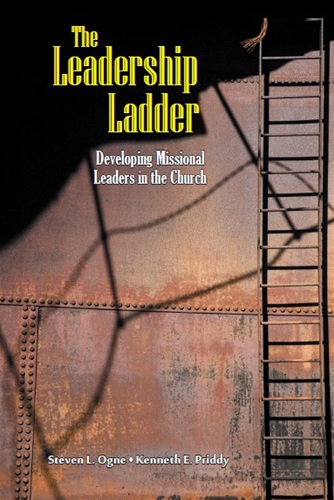
leadership ladderSteven L. Ogne and Kenneth E. Priddy. The Leadership Ladder: Developing Missional Leaders in the Church. 184p., $12.00, ChurchSmart Resources.

Although the specific focus here is on developing missional leaders, the fact is: Every leader in the church should be a missional leader to some degree. All of us are “his workmanship, created in Christ Jesus for good works, which God prepared beforehand, that we should walk in them” (Eph. 2:10). Thus, the authors take us through a very logical path of progression that can apply to any one of us, really, and not just leaders. Chapters start with the two “rails” of the ladder before then moving into the six “rungs,” as follows:

• Building biblical knowledge
• Building biblical character

• Living missionally
• Making disciples
• Mobilizing ministry
• Leading ministry
• Leading leaders 
• Planting churches

Each of these stages could easily have been a book in itself (and this might well be an overview for a much larger training program, although I can’t say for sure). Not everyone needs to get to the “top” of the ladder here, but really, every leader should be at least “halfway” up, and most should be striving to move beyond that.

Thus, each chapter identifies several skills that need to be developed for each rail and rung, and provides practical ideas (and sometimes even sketches of larger workshops) in order to train and develop leaders further. Again, on the one hand, as a reader it feels like it moves a bit too quickly. On the other hand, a prospective leader could grab this, dig into one or more of the many suggestions here, and take months fleshing them out on their own. And that’s not a bad thing (and likely part of the authors’ intent).

One thing that Ogne and Priddy do that I especially appreciate is to cross-reference the stages as they go along, especially in terms of tying the “rails” of the ladder to the “rungs.” By doing so, authors reinforce something we all too often forget: Leadership doesn’t mean that you no longer have the need for spiritual and character formation; in fact, it’s something you need more than ever. And by the same token, it becomes clear here than growth in leadership isn’t so much a progression from one stage to another as it is an expansion of one’s circle of influence. (As such, it kind of betrays the entire ladder motif, but I’m OK with that.)

The authors do include a brief chapter/overview at the end on “Putting the Leadership Ladder to Work,” but by then it’s likely you’ll have starting developing your own ideas. And again, that’s a good thing.

Posted in Uncategorized | Tagged , , , | Leave a comment

Lay Down Your “Head”


There’s a popular adage that’s been the chorus of at least a few good songs, which goes like this: “Everything you know is wrong.” That’s not entirely true, obviously (I think), but there’s still a lot of truth to it.

On the one hand, we put way too much stock in our own opinions and experiences, however true they may or may not be. On the other hand—and sometimes even simultaneously—we allow ourselves to become paralyzed by our lack of knowledge, lack of wisdom, or just plain lack of confidence. And by doing so, we end up acting in a way that betrays what little real knowledge we do have.

So with all this in mind, allow me the grace to put an absolute statement out there anyway: Just about everything you know might be wrong. In fact, most of what we know is some entangled mess of right and wrong. But God is never wrong.

And now, allow me to undercut even that: Because of our own fallenness and self-deception, we often don’t even get our understanding of God’s perfect will totally right.

If all of this sounds confusing, it should.

A big part of the problem—but also, the solution—lies in the connection between our minds and our hearts. There’s a refrain in Jeremiah that captures this well—“the imagination of their own heart” (Jeremiah 9:14, et al., KJV). In fact, Jeremiah often throws in “evil” before “heart,” lest we miss the point.

So often, we believe what we want to believe because we want to believe it, as if our desire by itself—or even more often, our pride—makes it all come out right. I suspect that God is far more offended by our arrogance than by our “going off the deep end,” but both miss the mark badly. Both are about us.

So where do we turn to get it right? Facts? Nope. Facts are good, but facts aren’t always the truth. Surf between news channels reporting on the same story on any given night, and you can readily see how easily different channels bend the facts to fit “the imagination of their own heart.”

Conscience? Better, but not perfect. Our conscience testifies that something’s wrong— that we’re somehow already disconnected from God—even as it potentially points us in the right direction. But though our conscience might alert us correctly, we often do wrong things in response to what it tells us. We take short cuts. We run the other way. We do everything we can to avoid the problem we know is there. More often than not, we’re more concerned with easing our consciences than we are with trying to address the disunity in our souls that our consciences have correctly perceived.

So let’s cut to the point: Our conscience tells us something’s wrong; the Spirit tells us what’s right. To receive what the Spirit’s telling us, we need to lay down our “heads”—our thought lives—before God. We need to humble ourselves enough to let God work, and to allow our convictions—or lack thereof—to be replaced by his.

True story: Romans 12:2 was my life verse even before I came to know Jesus. Here’s the King James version I first read it in more than thirty years ago: “And be not conformed to this world: but be ye transformed by the renewing of your mind, that ye may prove what is that good, and acceptable, and perfect, will of God.” There’s so much packed into that verse, and space doesn’t allow us to fully unpack it here. Maybe my own pre-Christian experience with it will help illustrate, though.

When I first read this passage as an I-believe-in-God-but-I’ll-be-anything-but-a-Christian thirty years ago, I immediately sat down and wrote an essay on the power of saying “no.” There was truth to that response—but it wasn’t the whole truth. I had locked squarely into “And be not conformed to this world,” and was on board with “but be ye transformed by the renewing of your mind,” but “that ye may prove what is that good, and acceptable, and perfect, will of God”? Who cared? I didn’t. Not yet. However, without it the little truth I genuinely knew was as good as a lie.

Our lives are no longer our own. The key to a renewed mind is the willingness to lay down our thoughts in order to learn God’s. As we let go of what’s “ours” and take hold of what we know to be God’s, our minds begin to be purified. The Spirit begins to untangle truth from untruth, the wheat from the weeds. God’s will becomes less of a mystery, even as God himself remains an ever-deepening mystery. Even when we can’t immediately see or understand where God is leading us, he honors the spirit of submission he’s given us—and our resolve to stay in submission—and leads us there anyway.

yes, if you call out for insight
and raise your voice for understanding,
if you seek it like silver
and search for it as for hidden treasures,
then you will understand the fear of the LORD
and find the knowledge of God.
For the LORD gives wisdom;
from his mouth come knowledge and understanding….
Then you will understand righteousness and justice
and equity, every good path;
for wisdom will come into your heart,
and knowledge will be pleasant to your soul (Proverbs 2:3–6, 9–10).

To know yourself better only makes you more like you. To know Jesus more is to become more like Jesus. That’s what God has desired for us since the day of creation. So lay down your head, and be transformed.

Lay It Down Today

What’s your “life passage”—or at least a passage from God’s Word that’s spoken to you recently? Take fifteen minutes now, and let it speak to you some more. Sit quietly before the Lord and simply meditate on this passage. Then close your time in prayer. Here are a few guiding questions to help you process:

  • Why is God bringing this passage to my mind? Why now?
  • What’s the one thing that most needs transforming in my life—that God wants me to lay down right now?
  • How can I invite God deeper into that part of my life and let him work?
Posted in Uncategorized | Tagged , , | Leave a comment

Growing in Jesus Featured on NoiseTrade!


Let me keep this one really Season 1 coversimple: Go here. And then, pass it on to your peeps, so can they enjoy it as well. And course, check out the other selections from yrs truly (and sure, others too :)) while y’r in there, anyway.

Let’s make some Noise in NoiseTrade!

Posted in Uncategorized | Leave a comment

Lay Down Your Old Identity


Our first devotional runs longer than usual, but that’s only fitting. After all, it’s going to take a little time to get to know each other. So let’s start in….

Many Christians today believe—or at least live as if they believed—that Jesus died solely to forgive them; and that because their messes are now cleaned up, they can go on with their lives as if Christ had no further claims upon them. This is, quite simply, not true.

If we’ve truly placed our lives and trust in Jesus, then we are also already under the same death sentence as Jesus. “For the death he died he died to sin, once for all, but the life he lives he lives to God. So you also must consider yourselves dead to sin and alive to God in Christ Jesus” (Romans 6:10–11). We have not died with Christ because we think we have, or because we agree that we have. We—have died—with Christ. Our old life is done. We need to truly realize that, and live in that new reality.

The tough part is living this out on a daily basis—or rather, dying it out. Nonetheless, it’s what Jesus calls us to do: “If anyone would come after me, let him deny himself and take up his cross daily and follow me. For whoever would save his life will lose it, but whoever loses his life for my sake will save it” (Luke 9:23–24).

You will never fully become the person God has created you to be until you’ve fully laid down the things that he has not intended you to be. Only by laying it all down and following Jesus will things begin to come clear.

Notice I said “begin.” This laying-down thing takes a lifetime. God will guide us into the next things that require laying down as we’re ready, but we can start now—with the things we know aren’t God’s. Even when we don’t know exactly what new direction God wants to lead us in, we are already called to obey his Word. That, in itself, should keep us pretty busy. And as we do so, we say to God with our lives, “Speak, LORD, for your servant hears” (1 Samuel 3:9). When we willingly lay down our old selves and serve God as best we know how, we testify—to God, ourselves, and everyone around us—that we are not the same people we used to be. And in the process, we grow closer to God.

As you discover and trust that God has a better life for you, and follow out that trust, it will become more natural—I won’t say “easier”—to lay down the things that aren’t God’s, and to receive those things that are.

There are any number of powerful stories in the Bible that illustrate this exchanging of our old lives for our new ones. Sometimes even the names themselves change—Abram becomes Abraham, Sarai becomes Sarah, Jacob becomes Israel. Today, let’s look at a couple more Old Testament examples, and then jump almost 1,500 years forward, to another changed man with another changed name….

At eighty years of age, Moses was a fugitive from the law, “a stranger in a strange land” (Exodus 2:22, KJV). He had gone from being miraculously rescued and raised in Pharaoh’s household to a rebel who murdered a fellow Egyptian on behalf of a people who immediately rejected him for it. And now, he seemed destined to live out his days in obscurity in Midian. By most peoples’ measure, Moses was an eighty-year-old failure and would die that way.

But God had other plans.

In Exodus 3, God calls out to Moses from the burning bush. He calls him to lead an entire nation out of slavery and into the land he had already promised them. But before he gives this call, he asks Moses to do something: “Do not come near; take your sandals off your feet, for the place on which you are standing is holy ground” (Exodus 3:5). Moses obeyed. He honored God. And because of that, his life—and the lives of millions—was changed forever.

Fast-forward forty years, to the man who completes the task of bringing the Israelites into the Promised Land. Joshua no doubt knew about Moses’ past, but all he’d actually seen was the man that God had transformed Moses into. From that perspective, Joshua knew he was no Moses.

Then again, for the first eighty years of his life, Moses had been no Moses either.

As Joshua approaches Jericho, the last big hurdle to entering the Promised Land, he too has an encounter with God, and a similar response:

Joshua fell on his face to the earth and worshiped and said to him, “What does my lord say to his servant?” And the commander of the LORD’s army said to Joshua, “Take off your sandals from your feet, for the place where you are standing is holy.” And Joshua did so (Joshua 5:14b–15).

The places where we encounter God are holy. For me, that’s not only included both proverbial and literal mountaintops but also gas stations, empty meeting rooms, and my own living room. You have your own experiences. Because we’ve encountered God in these places, they’re special, set-apart places for us. However, it’s not the location itself that’s inherently holy—it’s God’s presence that makes it holy. God is capable of making every place in our lives holy, and he wants to.

Likewise, God calls us to come out of slavery—to our sins, to our selfish desires, even to the good things we have that are nonetheless only a shadow of the better things God wants to give us—and “enter the land” he’s promised us. And he calls us to help others do the same.

Now, let’s fast-forward… to the Last Supper. In the middle of the meal, Jesus does something unusual—he gets up, grabs a towel and a washbasin, and begins washing the disciples’ feet. (It’s safe to assume the sandals have already come off by now, this time around.) Follow what happens next:

Peter said to him, “You shall never wash my feet.” Jesus answered him, “If I do not wash you, you have no share with me.” Simon Peter said to him, “Lord, not my feet only but also my hands and my head!” (John 13:8–9).

Simon—who Jesus renamed Peter—protested, because he knew who he had been, and who in many ways he still was. He knew how unworthy he was of Jesus. But Jesus knew it, too. Furthermore, he knew what would happen later that evening. He knew how badly Peter—and all of the disciples—would fail him. Jesus’ priority wasn’t the disciples’ past, present, and future failings. What mattered most to him, at that moment, was that the disciples take off their sandals and be served—cleansed—by him.

What Jesus says to Peter, and to all of us, is: It doesn’t matter who you’ve been, what you’ve done. It doesn’t matter how big a screw-up you are now—and no doubt will be in the future. What matters is: Will you hand over your life—all of your life, including the screw-ups—to me, so that I can begin this incredible lifelong reclamation project called Your Life in Me?

Jesus came to remove both the eternal separation from God that Satan intended for us, as well as all the temporary separations from God we put in front of ourselves nearly every day. In case the disciples missed the point—and they likely did—an hour or so later Jesus tells them this:

Greater love has no one than this, that someone lay down his life for his friends. You are my friends if you do what I command you. No longer do I call you servants, for the servant does not know what his master is doing; but I have called you friends, for all that I have heard from my Father I have made known to you. You did not choose me, but I chose you and appointed you that you should go and bear fruit and that your fruit should abide, so that whatever you ask the Father in my name, he may give it to you (John 15:13–16).

This is where a changed life really begins. Especially at first we want, and probably need, to make laying down about the “negative” stuff—the things we know we need to give up for Christ’s sake. That’s why we’re spending most of this first week on those things. However, if we focus only on what we need to give up, it’ll probably never happen. We’re overwhelmed by the task. We know we can’t do it. And to be honest, we really don’t want to give some of it up. For all those reasons and more, we need to grab onto what Jesus promises each of us if we’re willing to lay down everything for him. We need to remember who we are, now—Jesus’ friends. Eternal-life-long friends.

We want to justify ourselves before God, to make ourselves worthy. It will never happen. It can never happen. So let go of it. The good news is: Jesus has made us worthy. He has cleansed us. He has laid down his life for us. Jesus has chosen us because he has chosen us. Because of Jesus, that is enough.

Lay It Down Today

Got shoes on? Take them off. (Or wait for a time when you can do this later on.) Reflect on those places where you know God has already met you, and thank him again for those encounters.

Then, pray a prayer of consecration—something like: “Lord, you have created everything and everything was created to be holy, separated unto you. I want to honor you everywhere I put down my feet, starting in this place. Help me to let go of the person I’ve been, so that I might become the person you intend for me to be.”

Then, don’t forget you prayed this. Watch what God does with this prayer in the weeks to come. Write down any additional thoughts or prayers.

Posted in Uncategorized | Tagged , , , | 2 Comments