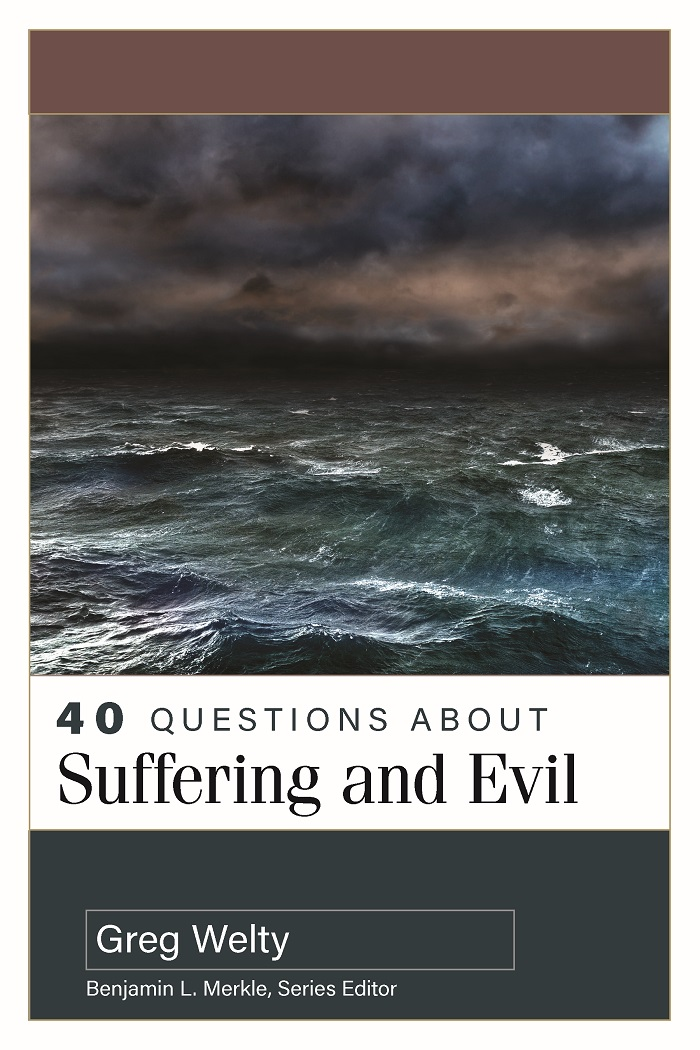
40 Questions About Suffering and Evil


How much of suffering and evil is God, how much is us and how much . . . just is?

Greg Welty. 40 Questions About Suffering and Evil. 40 Questions Series. 368p., $25.99, Kregel Academic.

Both inside and outside the Christian faith, many difficult realities trouble human hearts and minds. By being equipped to answer questions about suffering and evil, Christians can persevere in faith, share their faith, and defend the faith when confronted with these inevitable challenges of living in a fallen world.

In 40 Questions About Suffering and Evil, Greg Welty shows the necessity of exploring our vocabulary around evil and suffering so we can clearly see and express the best questions. Welty explores vital ideas, backgrounds, and issues, answering questions like these:

  • What is the difference between Moral Evil and Natural Evil?
  • What is the Bible’s role in helping us understand suffering and evil?
  • Does God will all suffering and evil?
  • How is the gospel relevant to counseling those who suffer?

Welty provides biblically informed intellectual resources for answering significant questions about suffering and evil, exposing readers to a wide range of influential views articulated by Christians over the past two millennia.

Posted in Uncategorized | Tagged , , , | Leave a comment

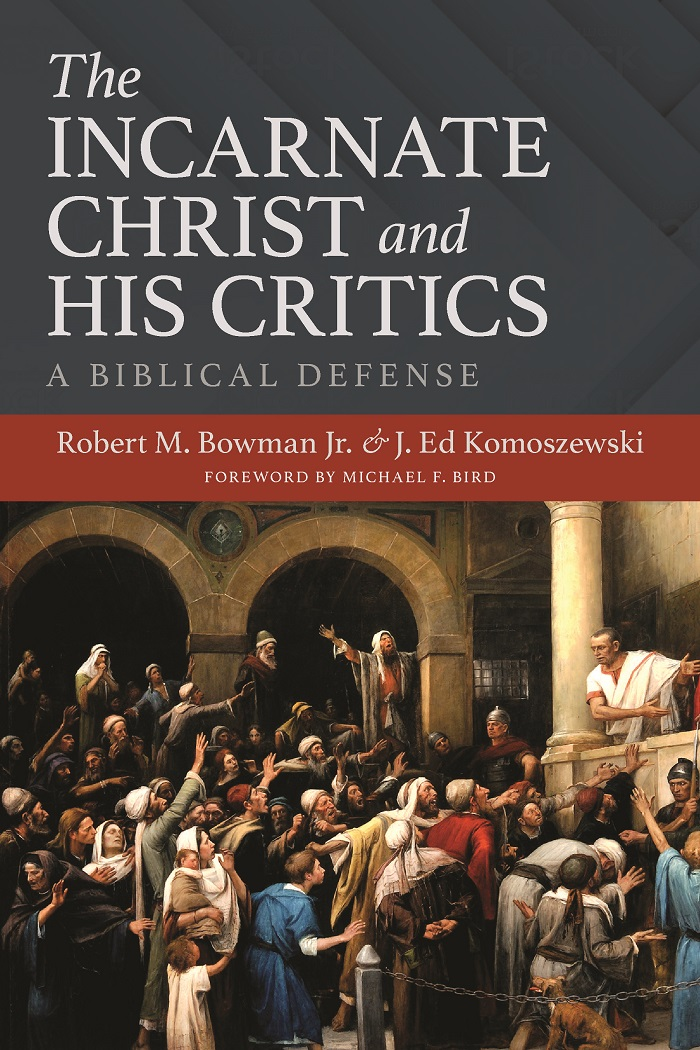
The Incarnate Christ and His Critics


A defense of the deity of Christ. . . .

Robert M. Bowman Jr. and J. Ed Komoszewski. The Incarnate Christ and His Critics: A Biblical Defense. 896p., $57.99, Kregel Academic.

The central theological claim of Christianity, that Jesus is God incarnate, finds eager detractors across a wide spectrum–from scholars who interpret Jesus as a prophet, angel, or guru to adherents of progressive Christianity and non-Christian religions and philosophies. Yet thorough biblical scholarship strongly supports the historic Christian teaching on the deity of Christ.

Authors Robert M. Bowman Jr. and J. Ed Komoszewski follow the approach of their landmark 2007 study on the same topic, Putting Jesus in His Place. They focus on five pillars of New Testament teaching, using the acronym HANDS, and demonstrate what both Jesus and the earliest believers recognized, namely, that Jesus shares in the

  • Honors that are due God
  • Attributes of God
  • Names of God
  • Deeds that God does
  • Seat of God’s eternal throne

The Incarnate Christ and His Critics engages objections to the divine identity of Jesus from Jehovah’s Witnesses, Mormons, progressive Christians, Muslims, Unitarians, and others. Bowman and Komoszewski show how biblical scholarship cannot reasonably ignore the enduring, wide-ranging, and positive case for the deity of Christ.

Posted in Uncategorized | Tagged , | Leave a comment

Ecclesiastes and Song of Songs


Of transitoriness and love. . . .

Jordan W. Jones and Christopher Pascarella. Ecclesiastes and Song of Songs: A Commentary for Biblical Preaching and Teaching. Kerux Commentaties. 360p., $34.99, Kregel Academic.

Kerux Commentaries enable pastors and teachers to understand and effectively present the main message in a biblical text. Each volume uniquely combines the insights of an experienced Bible exegete (trained in interpretation) and a homiletician (trained in preaching). These two authors work together to explain the essential message for the original listeners or readers, unpack its timeless truth, and then provide a contemporary restatement and communication insights for the key biblical concept. Every book is a resource designed and written with the real needs of the pastor and teacher always in view, providing many ways to creatively express the principal thought in a biblical passage.

Authors Jordan W. Jones and Christopher Pascarella demonstrate how Ecclesiastes and Song of Songs fit alongside other Old Testament wisdom literature. Ecclesiastes views echo the familiar biblical teaching on the eternality of God and the future judgment being a source of comfort in the face of stark realities acutely familiar to believers today. Song of Songs elevates the place of love and sexual intimacy in marriage relationships and prefiguring the analogy of the church as a spouse devoted to Jesus. Jones and Pascarella guide teachers and preachers to see how the holy disillusion of Ecclesiastes and the overflowing love in Song of Songs interact with other biblical teachings to present a coherent approach to life and love.

Based on the Big Idea preaching model, Kerux enhances the reader’s ability to deliver a message that is biblical, cohesive, and dynamic.

Posted in Uncategorized | Tagged , , , , , | Leave a comment

Kerux: Leviticus


An in-depth look at arguably the toughest book of the Bible. . . .

Michael A. Harbin and Mark C. Biehl. Leviticus: A Commentary for Biblical Preaching and Teaching. Kerux Commentaries. 456p., $39.99, Kregel Academic.

Kerux Commentaries enable pastors and teachers to understand and effectively present the main message in a biblical text. Each volume uniquely combines the insights of an experienced Bible exegete (trained in interpretation) and a homiletician (trained in preaching). These two authors work together to explain the essential message for the original listeners or readers, unpack its timeless truth, and then provide a contemporary restatement and communication insights for the key biblical concept. Every book is a resource designed and written with the real needs of the pastor and teacher always in view, providing many ways to creatively express the principal thought in a biblical passage.

Leviticus focuses on relationships—a relationship with God through worship and relationships with other people through holiness. Throughout the book, the priests and the Levites receive special responsibilities to help Israel in both these spheres. Authors Michael A. Harbin and Mark C. Biehl show how Leviticus lays out three related practices that would hold these relationships together for the nation of Israel: corporate worship; personal and collective holiness; and righteous living as a covenant community. Harbin and Biehl suggest bridges to our own culture by discussing what the Israelites at Sinai would have understood about the reasons behind what Leviticus prescribes. Just as the Israelites’ complex relationships with family and neighbors formed a foundation for both cultural and personal well-being, the church today is called to pursue wholistic shalom in its own time and place.

Based on the Big Idea preaching model, Kerux enhances the reader’s ability to deliver a message that is biblical, cohesive, and dynamic.

Posted in Uncategorized | Tagged , , | Leave a comment

Pneumaformity


How the Spirit forms us, and continues to form us. . . .

Mark J. Keown. Pneumaformity: Transformation by the Spirit in Paul. 512p., $31.99, Kregel Academic.

According to Paul, it is by the Spirit, through Christ, that God transforms people, communities, and the cosmos.

Prominent recent studies elevate the themes of “Christoformity” and “Cruciformity” in Paul, but few sufficiently account for how a believer is actually transformed into the image of Christ. Pneumaformity fills the gap in Pauline studies by surveying Paul’s letters for teachings on the Spirit’s agency in the life of God’ people. This study aptly demonstrates that the Holy Spirit is the instrument through whom such radical living is possible. This study dives into Paul’s teachings on the following aspects of the Spirit’s agency and more:

  • the Spirit’s participation in conversion
  • the Spirit’s role in forming Christian character
  • the Spirit’s integrating work within the Christian community
  • the Spirit and missional engagement
  • the Spirit’s place in the believer’s final eschatological transformation

Keown shows how Paul infuses his christological language with pneumatological realities, offering readers a fuller understanding of the Spirit’s work in individuals, the church, and the world.

Posted in Uncategorized | Tagged , , | Leave a comment

One Body, One Spirit


A strong and well-reasoned call for churches to not only be disability-accessible, but disability-friendly . . .

Paul Pettit and B. Jason Epps. One Body, One Spirit: Disability and Community in the Church. 224p., $19.99, Kregel Ministry.

According to the CDC, one in four people in the United States lives with a disability, yet many of our churches don’t resemble this reality. Attempts to welcome those with a disability are often implemented by well-meaning but ill-informed people. The results can lead to those with disabilities feeling excluded and isolated from the family of God.

One Body, One Spirit gives eyes to the able-bodied to see the challenges experienced by those with disabilities:

  • Physical barriers to places of worship, classrooms, and small group settings leave people outside the gathered family of God. Emotional barriers, like fear and prejudice, preclude them from using their spiritual gifts.

How can church communities, both on the congregational and individual level, address these issues? Paul Pettit and Jason Epps provide a roadmap by looking at a biblically informed solution. They survey disability in the Old and New Testaments, provide a vision for full integration, outline how to conduct a disability audit, and offer a five-step plan for how to change the culture of your church.

Posted in Uncategorized | Tagged , , , | Leave a comment

1–2 Chronicles


A deep dive into two of the tougher books of the Bible. . . .

Joshua E. Williams and Calvin F. Pearson. 1 & 2 Chronicles: A Commentary for Biblical Preaching and Teaching. Kerux Commentaries. 592p., $41.99, Kregel Academic.

The books of 1 and 2 Chronicles do more than provide an account of historical events involving God’s people; they also point to the future using a picture of the past.

In this commentary, authors Joshua E. Williams and Calvin F. Pearson explore the interrelated themes of divine covenant, the worship of God’s people, the kingdom as God envisions it, and the God-formed community found in this far-ranging and didactic narrative. God’s holiness, faithfulness, and gracious character find concrete expression in the accounts of the Davidic monarchy over many generations. These often-failed national leaders prefigure a better coming Davidic king who will lead the way back to proper worship of God. 1 & 2 Chronicles calls readers to both action and hope.

Posted in Uncategorized | Tagged , , | Leave a comment

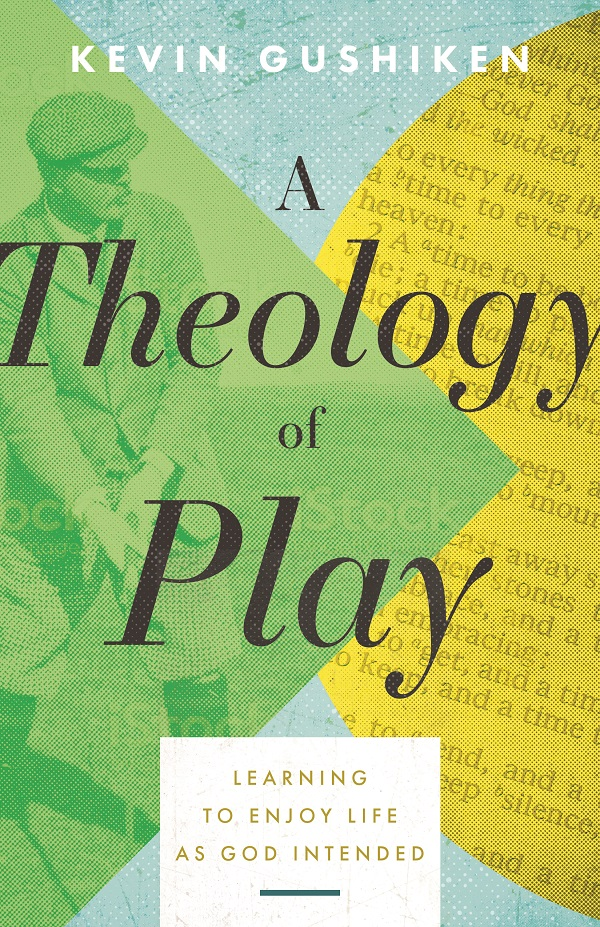
A Theology of Play


Learning to “play” with our beliefs. . . .

Kevin Gushiken. A Theology of Play: Learning to Enjoy Life as God Intended. 176p., $24.99, Kregel Academic.

God has given humans freedom and permission to play–to fully enjoy life’s moments as he intended, with no ulterior motive. The Christian life without play becomes malformed, and believers can miss aspects of the abundant life Jesus came to give.

In A Theology of Play, Kevin Gushiken builds a case for getting serious about play as a vital element of being a Christian. “Play,” he writes, “is not merely an activity but a way of living.” Gushiken explores play from various biblical and theological lenses:

  • How an identity grounded in God’s good creation invites us to play
  • The connection between play and the biblical concept of Sabbath
  • Why past hurts don’t have to keep us from enjoying the present
  • Releasing false guilt and shame to find true freedom to Play
  • How to play in the midst of difficulty and pain

Ultimately, knowing and enjoying God brings freedom and pleasure. A Theology of Play helps Christian believers identify barriers to play in their day-to-day lives and offers faithful guidance in recapturing play within the rhythms of life.

Posted in Uncategorized | Tagged , , | Leave a comment

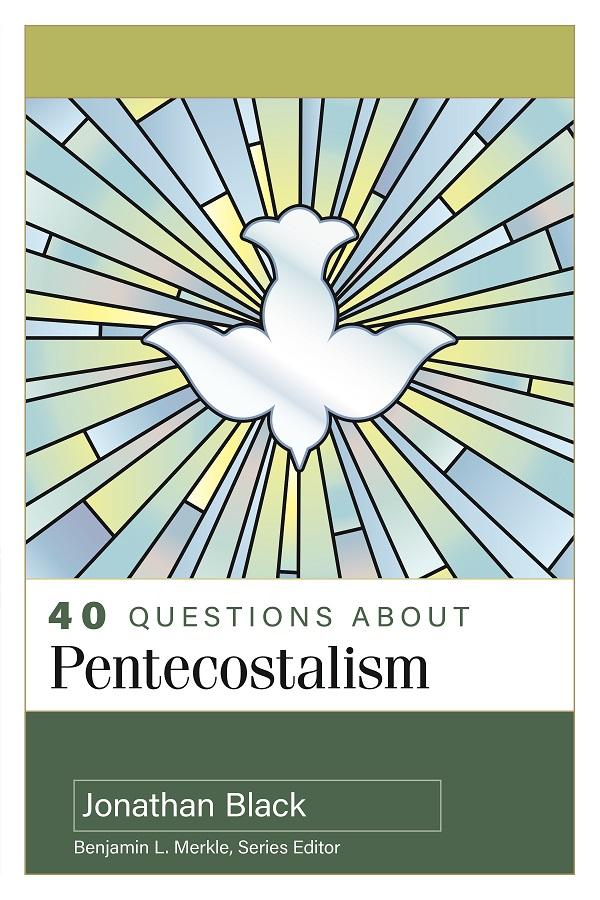
40 Questions About Pentecostalism


A look at the many facets and faces of worldwide Pentecostalism. . . .

Jonathan Black. 40 Questions About Pentecostalism. 33p. $23.99, Kregel Academic.

At just over a century old, the Pentecostal Movement accounts for more than 500 million believers worldwide and continues to grow. Still, confusion abounds over what Pentecostals believe and teach about the Holy Spirit, worship, salvation, healing, and much more.

In 40 Questions About Pentecostalism, Jonathan Black provides an accessible overview of the historical, theological, biblical, and experiential factors that make Pentecostalism a vibrant and worldwide Christian movement. He answers questions such as these:

  • How did Pentecostalism begin?
  • How are Charismatics different from Pentecostals?
  • Do Pentecostals affirm the prosperity gospel?
  • What is the Pentecostal doctrine of the Baptism of the Holy Spirit?
  • What do Pentecostals believe about healing?
  • What ministries has Christ placed in his church according to Pentecostal theology?
  • What is “speaking in tongues”?

As with all the 40 Questions books, the question-and answer format offers readers targeted guidance on the questions that matter most to them, and controversial issues are addressed with robust scholarship and in a spirit of grace.

Posted in Uncategorized | Tagged , , | Leave a comment

Ephesians on F.I.R.E.


A deeper dive into the book of Ephesians. . . .

Ken J. Burge Sr. Paul’s Letter to the Ephesians on F.I.R.E.: Apprehending and Applying God’s Timeless Truths. 230p., $18.99, Morgan James Faith.

Paul’s Letter to the Ephesians on F.I.R.E. is an inductive commentary that goes beyond mere explanation of the text, taking students of the Bible, pastors, and professors on a journey to discover its life changing wisdom for themselves.

Dr. Ken J. Burge, Sr.’s eleventh book in the F.I.R.E series helps readers develop the necessary skill set to become familiar with the Bible passage they are studying, interpret it accurately, relate it to its surrounding contexts, and employ it personally.

F.I.R.E. is the acronym used for the study. This mnemonic (or memory) device stands for familiarity, interpretation, relationship, and employment. The author uses all four of these steps each time the reader travels through a section of Scripture. The twenty-one chapters in Paul’s Letter to the Ephesians on F.I.R.E. explore the book of Ephesians beginning with the riches of the believer as espoused in the first major division (1:1–3:21) and explicates the second major division concerning how the saints are to practice their position (4:1–6:21).

Posted in Uncategorized | Tagged , , | Leave a comment