Lay It Down and Lay It Out (Retreat Session 3)


God has called each of us as individuals, and to respond to him in the unique way he’s called each of us . . . but we’re not in this alone. God wants us to share what he’s done and give him the glory for it—and he wants to accomplish much of that in the context of Christian relationship.

The trick here isn’t to pursue relationships with other Christians, but to pursue Jesus together as Christians. The two things sound similar, but there’s all the difference in the world between them. When Jesus is our focus, suddenly all the little things that often get in the way in our relationships don’t seem so important. When we pursue Jesus together, our relationships naturally become closer and deeper—because Jesus sets the tone. Jesus is never going to steer us the wrong way.

We’re going to use Romans 12 as our roadmap from the individual to the corporate. In some ways this “roadmap” seems all over the map, but as we work through it you’ll hopefully begin to observe the connections between who we individually should be before God, and how Jesus wants us to serve the world together as his body.

Read Romans 12:1–2, repeatedly. Reflect on your time spent on this retreat so far, and then take at least ten minutes to respond to these questions:

  • Based on what’s gone on between you and God so far, how do you believe he’s called you specifically to “present your bod[y] as a living sacrifice”? What do you think your next move actually looks like?
  • When do you find it easier to try harder—to “be conformed to this world”—to get things done, rather than be “a living sacrifice”? What would God’s “good and acceptable and perfect” will look like in those situations? (And if your answer is “I don’t know,” what do you need to change in your thinking to find out?)

Leaders: Have everyone get into their subgroups. Let them know they’ll be working together for the entire session. You’ll be prompting them along the way to transition from section to section, but otherwise the extent of your leadership is getting them started and wrapping things up. Introduce the session, saying something along the lines of our introduction. And then let your groups get to work. Allow fifteen minutes for them to talk through this first section; prompting them when there’s a few minutes left. In this group context, it’s only necessary to read the passage once. Also, encourage your subgroups to stop and pray for one another throughout their time together. Don’t just save it all up for the end of the session; begin inviting God in as you sense your need for him.

Read verses 3–5, again repeatedly. Then take at least fifteen minutes to reflect and write concerning the following questions:

  • Why is it important to remember that we’re part of a body—and only one part? Come up with at least one example to illustrate your answer.
  • Likewise, why is it important to remember that God has given each member a measure of faith?
  • When have you seen a healthy church body (or group) work together? What made it work so well?
  • On the other hand, when have you seen God’s purposes thwarted by his body? Complete this sentence in response to that situation: “If only. . . .”
  • What was your part in that “If only . . .”—or what should it have been?

Leaders: Give subgroups twenty minutes to talk through this section. Again, prompt them when they have a few minutes left.

Before beginning your next reading, take two or three minutes to think of all the commitments you’re responsible for in a given week, and write them down as they come to you.

Now, read and reread verses 6–10. Take at least fifteen minutes to journal on these questions:

  • Where do you fit into this “short list” of spiritual gifts—or wish you did? How else has God gifted you that’s not listed here?
  • Who exhibits some of the gifts that make you say “that’s so not me”? How could working with that person or people benefit both of you, as well as benefit those you’re serving (or would like to serve)?
  • Stay on those people you just thought of. How does showing mutual love and honoring those people help smooth over those places where it’s painfully obvious how different you are? Can you think of an example when that’s happened? Write that down as well
  • What would mutual love and honoring look like, specifically, in your life right now?
  • Look at the “commitments” list you made earlier. How does this passage, and your responses to it, help you keep “your” work for the Lord in perspective?

Leaders: Give subgroups twenty-five minutes to talk through this section. Again, prompt them when they have a few minutes left.

Go on to verses 11–20. Read it, then reread it. Take ten more minutes to reflect and respond:

  • Which of these commands—if any—do you look at and say, “Hey, no problem”? On the other hand, which of these commands just make you cringe? In both cases, why?
  • Reflect once more on your coworkers from the section above. What, specifically, could that person or persons teach you that you lack?

Leaders: Give subgroups thirty minutes to talk through the following section—but even moreso, to pray for one another. Help everyone to key in on the follow-up question below, “Which of these sections resonated most with you as you studied and journaled?” and pray together over each other’s answers. The Spirit is probably doing some serious work in people’s lives right now; take advantage of that. Encourage groups to open their hearts even further to God, and to one another. Encourage them to recognize and honor one another’s gifts as they pray. Again, let everyone know when there’s a few minutes left.

This session has probably brought up a lot of current struggles. The good news is: God wants to help you in those struggles, and so do the people you thought about during this session—more than you know, or likely suspect. Now’s the time to invite God in (and if you’re in a group, others as well).

Which of these sections resonated most with you as you studied and journaled? Spend time talking to God about it. Ask him for wisdom, and for people to walk alongside you, as you pursue God’s “good and acceptable and perfect” will for your life. Also ask that your heart be changed toward others, so that you may “[l]ove one another with brotherly affection” and “[o]utdo one another in showing honor.”

Leaders: Bring everyone back together. Invite people to share prayer requests, and how the Spirit has been moving among your entire group. Then spend at least a little more time praying together, and for what God wants to do in your midst next.
Posted in Uncategorized | Tagged , , , | Leave a comment

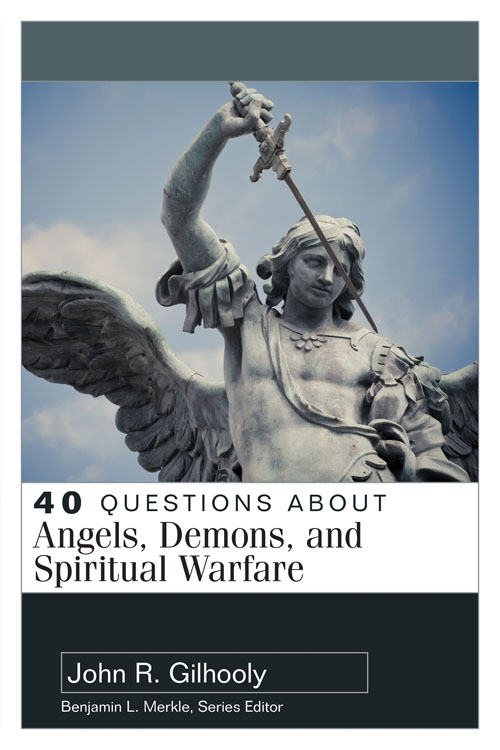
40 Questions about Angels, Demons, and Spiritual Warfare


Everything you wanted to know, but was afraid to ask. . . .

John Gilhooly. 40 Questions about Angels, Demons, and Spiritual Warfare. 256p., $21.99, Kregel Academic.

In 40 Questions About Angels, Demons, and Spiritual Warfare, John Gilhooly provides a biblical and balanced perspective on the many issues surrounding the spiritual realm. Using a question-and-answer format, he explains spiritual warfare, angels and demons, the role of Satan, models and practices for spiritual warfare, and topics related to the occult. Beneficial as a comprehensive overview or as a reference guide to particular subjects, this volume provides concise but thorough answers to many important questions, including:

  • Do believers have guardian angels?Can Christians be demon-possessed?

  • Are there territorial spirits?

  • Why and when did the devil fall from heaven?

  • What is the role of prayer in spiritual warfare?

  • Are there such things as spiritual curses?

Posted in Uncategorized | Tagged , , , | Leave a comment

Lay Down and Listen (Retreat Session 2)


Even if you’re with a group, this session is about you and God spending trail ridgetime together. Just you and God. This might seem scary, or lead to unrealistic expectations, if you’re not used to “wasting time with God.” Don’t let it be. I’ve had profound, life-changing experiences with God during these some of these retreat times. Other times, I didn’t sense God’s presence at all, even when I really desired to hear his answers. Yet other times, it was something in between—I felt God’s presence, if only briefly, but didn’t come back with “the answer from the mountaintop.” But my time with God has always been a time to be refreshed and to regain some perspective. If you go in with any expectations at all, let it be that.

Leaders: Instruct everyone to come back in ninety minutes. Chances are several will come back early; others may not return on time. Again, if God’s talking, don’t circumvent that. Move on together as a group at the ninety-minute mark, and let those who straggle in later share as they’re led. If your meeting location has a lot of property, or is located near a park or natural area, add up to thirty minutes to this “alone time with God” piece. This will give people time to find (and return from) a nice, secluded spot, and will be even more conducive to their hanging out with God just a little bit longer.

Take at least ninety minutes for your “alone time with God.” Find a secluded (or at least private) area; bring your book, your journal, and something to write with. Once you’ve found your spot, spend some time in prayer, asking God to prepare your heart. If some things from Session 1 have bubbled to the surface, spend time talking to God about them as well before moving on. Don’t be surprised if distracting thoughts pop up during your prayer time or “alone time.” If it’s something that has some legitimacy—for example, something you need to remember to do when you get back home—just jot it down in your journal, then forget about it and move on.

Read 1 Kings 18:17–19:18, slowly. Then read through it again, before proceeding.

Note that God not only provides sustenance, but also provides fellowship and support. In the midst of Elijah’s turmoil and depression, God points him toward Elisha, his disciple and successor. In our next session, we’ll focus more on the power of prayer and on those God provides to support us. (If you’re with a group, some of those people might even be waiting for you when you get back.) But for now, think about this:

  • When have you had an Elijah-type experience—where you’ve had a huge success, followed by an emotional/spiritual collapse? When have you wanted to (or did) say, “God, just kill me now?”
  • How did God meet you during that time—or do you still wonder where he was or why he allowed it to happen?


Be brutally honest with this question. It’s not as if God doesn’t know the answers already, but maybe you need to acknowledge the pain you still feel—or properly express the joy of having experienced God’s provision and deliverance. Or both. Talk to God about that time right now before moving on. Spend more time in repentance, if you need to. Cry, scream, shout in praise, or be quiet and calm—respond to God as you need right now. Again, take as much time as you need to “clear the decks.” But also, even now, begin giving God the opportunity to respond.

When you’re done, take at least fifteen minutes to be totally silent before God. You may or may not hear God’s “still small voice” during that time, but give him the chance to speak to your heart, and your mind. If God does bring something to mind, and/or you realize there’s more you want to speak to him about, write it down. But don’t interrupt your time of silence; save your words for later.

Afterward, reflect on these questions. Again, write out your answers, and include details—try to think through the “why behind the why”:

  • When have you found yourself expecting to hear God in the big circumstances—in the windstorms and earthquakes and fires—rather than in the calm that followed? When have you tried to “force” God to speak by creating a windstorm of your own?
  • When have you felt alone and abandoned, as Elijah did? Or that everything you’d truly felt you’d done for God was worth nothing? How did that affect the other parts of your life?
  • What might you have been expecting of God during those times that were more about what you wanted than what God wanted?


Again, when you’re done, take a couple more minutes to be silent. Deal with your feelings, and contrast them with God’s truth. Then, spend some more time talking things through with God before moving on.

When you’re ready, read through John 15—the entire chapter—at least once. Then, reflect on these questions, and respond to the corresponding prompts for prayer:

  • At what point do you usually realize you’ve stopped “remaining”? Why then?
  • Why is staying connected, rather than being connected in stops and starts, so critical to bearing fruit?


Ask forgiveness for the times you’ve turned away from Jesus—again, be specific if there are instances you haven’t already prayed about during your retreat time—and for the strength to “stay remained” in him.

  • How have you felt God pruning you over the last few months? What’s been the fruit of that process so far?


Thank God for the growth he’s produced in your life—and even for the pain that might have occurred in order for that growth to happen.

  • Conversely, how have you felt more connected to Jesus, or to other Christians, over the past few months? How can you strengthen those connections further?


Ask God for wisdom and insight on how to proceed.

  • What’s one way you need to remain in Jesus, in a way that you really haven’t? More specifically: What has God impressed upon you during this alone time, and what do you think he wants you to do about it? Who might he want you to do it with?

Close your alone time in prayer, thanking God for your time together, and asking for his strength and wisdom to live out those things he’s impressed upon you during your time together.

Leaders: Have a debriefing time together as a group to wrap up. Allow thirty to forty-five minutes for this time. It’s likely you’ll be amazed and blessed by what God has already shared with your group members. Start at the time you asked everyone to return, whether they’ve all returned yet or not. Open the floor up; invite people to share how they spent their time with God and what they heard. Chances are 1) they’ll have something to share, and 2) they won’t want to be the first ones to speak. Therefore, be ready to share your own story, to get the wheels rolling; then step back and watch what God does (and already has done).

Close your sharing time in prayer, thanking God for the opportunity to “waste time with him.” Thank him for what he’s revealed to each person in your group already, and ask him to help keep your eyes and ears open to his presence for the remainder of this retreat—and beyond. Then, enjoy your lunch together! Chances are, even more will get shared as you relax and enjoy your meal together.

Posted in Uncategorized | Tagged , | Leave a comment

He Called Himself a Barnstormer


Another one from the fiction-based-on-fact department, this one in the more historical vein. . . .

Charlotte Reynolds. He Called Himself a Barnstormer. 334p., $15.99, Deep River Books.

He Called Himself a Barnstormer is a fictionalized story about a real man, James Scott, who seemed to have the hand of God on his young life. As a direct descendant, author Charlotte J. Reynolds shares the miraculous story of how James was the lone survivor of a deadly shipwreck in 1822. After being marooned on an island for two years, he was finally rescued and eventually made his way to Indiana in the mid-1800s.

Young James Scott couldn’t shake these nagging questions:

Why was I saved?

What is my purpose?

This is the story of the surprising way the Lord answered those questions.

Posted in Uncategorized | Tagged , , | Leave a comment

Lay Down . . . No, Seriously, LAY DOWN (Retreat Session 1)


During this retreat—this interlude—we’re going to, in the famous words of Thomas Merton, “waste time with God.” As we lay down our time and just immerse ourselves in God’s presence, we’ll more deeply realize that no time with God is wasted. In addition, we’ll begin converting into experience an idea we’ll be exploring from here on out: Eternal life starts now. As we learn to give more of our time to God, and encounter his infinitude, we very consciously and deliberately prepare ourselves us for eternity with him.

mountains ypsilonIn each of the following sessions, we’ll not only prepare our hearts but begin using practices we can integrate into our daily lives—and that we’ll get to practice more in the weeks to come. They’re commonly known as spiritual disciplines, but don’t let that phrase intimidate you. We’re going to take some tiny steps during this interlude, and trust God to move us forward from here.

We’re not to approach the disciplines as a way to “manipulate God,” but as we should approach God in every part of our lives—with a sensitive and repentant heart. In a sense, through the disciplines we preach God’s goodness to ourselves, even when we’re unable to feel it. We acknowledge that our hearts grow cold all too easily; but by choosing to focus on God’s presence, we also acknowledge our desire to truly know God better and to allow him to transform our hearts. From that position of weakness, God can make us truly strong. So let’s begin.

**********

In the second session of this retreat, we’ll focus specifically on listening to God and what he has to say to us right now. However, it’s hard to listen when your mind, heart, and spirit are so cluttered with everything but Jesus. This session, therefore, is about clearing the decks and beginning to prepare your heart so you can hear.

Be patient with yourself during this process, but be willing to deal honestly and thoroughly with the things that have come between you and Christ, and to give the Spirit permission to bring up those things.

Leaders: Before getting started, have your group forms smaller subgroups of three or four. Let everyone know that you’ll be working and discussing together in these subgroups often throughout this retreat. Once your subgroups have formed, tell everyone that for this first section, they’ll each need to find a place in their meeting area where they can think and write quietly. They can stay in their seats, if they want—as long as there’s plenty of space between them and others.

Instruct everyone to work through the reading and questions for Luke 10 below, and to plan on coming back together in twenty minutes. (You may even want to put these questions/instructions and the ones for Revelation 2 on a sheet of paper in advance.) It’s also a good idea to give people notice before bringing them back together. After fifteen minutes, quietly say, “You have five minutes left.”

Read Luke 10:38–42. Then read it again. Once more. Write down your immediate impressions.

Then, think about and write down your answers to the following questions, spending at least five minutes on each bullet-point group of questions:

  • If you’re a Martha:
    If you had (or have) a Mary in your life, what would your complaint(s) about her be?
    What do your complaints reveal about your own priorities?
    How do those priorities line up with Jesus’ priorities, especially in light of what you’ve studied these past several weeks?
  • If you’re a Mary:
    How do you react to the Marthas in your life?
    How guilty or anxious do you feel about all the things that aren’t done—or at least about how it’s making the Marthas in your life feel?
    What legitimate points do your Marthas have?
    How does all this distract you from sitting at Jesus’ feet and listening?
  • Why is it so hard to stop and listen to Jesus? What do you think you’re giving up by doing so? Be brutally honest with yourself here.

Leaders: Bring everyone back together and get them into their subgroups. Allow ten to fifteen minutes for subgroups to discuss insights from their reflection time. Afterward, gather everyone’s attention, and ask for a volunteer from each group to share their answers. Then, ask everyone to go back to their “quiet places” and spend thirty minutes working through the reading, questions, and activity for Revelation 2 (the remainder of this session). Again, give everyone a heads-up when your time is nearing a close.

Now, read Revelation 2:1–7. Again, read it a few times and write down your impressions before moving on.

Reflect on and write down your answers to the following questions, again spending at least five minutes on each bullet point:

  • What do you think—or at least hope—Jesus will commend you for? Again, be honest; this is an opportunity to invite Jesus into your struggles—and the things you take even legitimate pride in are part of that struggle.
  • Recall when you first came to know Jesus. What’s different now? How have you forgotten, or at least neglected, your first love?
  • What attitudes or activities have quenched your first love—complacency, opposition, inattention, busyness, something else? Name each of them now. Be specific; add detail as you need to.
  • How do you get back to where you once were “and do the works you did at first”? (Note: If your answer is “I don’t know,” don’t panic; you’re just starting this retreat. Just begin processing. Give the Spirit time to respond to, and shape, the desires of your heart.)

Note also that part of the answer to that final question can be found in your answers to the previous question, and in Revelation 2:5. We’ve considered how far we’ve fallen, and acknowledged our need “do the things [we] did at first.” There’s one word between those two phrases, though, that we’re going to deal with now: Repent.

Review your list of attitudes or activities that have quenched your first love. You’ve named them; now spend time in prayer lifting each of them up to God and repenting of them. “Repent” means to turn around, and by turning around we begin heading in the direction Jesus first pointed us in—and toward the destinations, both on this earth and beyond, he’s intended for us.

When you’re done, spend some more time remembering your first love in Jesus. Remember the joy you experienced in “do[ing] the things you did at first.” Then close your first session in prayer and thanksgiving—both for what Jesus has already done in your life and what he’s going to do as you lay down your life to him.

Leaders: Bring everyone back together after thirty minutes. Invite people to share how God spoke to them during this time, and invite prayer requests. If your group is ten people or less, close in prayer together for one another; if more than ten, have everyone get back in their subgroups to pray for one another and instruct them to stay or leave quietly as they finish.

Posted in Uncategorized | Tagged , , , | Leave a comment

The Circle of Seven


A book for the wounded healers among us. . . . especially those who have been wounded while trying to bring healing. . . .

Rev. Mark William Ennis. The Circle of Seven: When His Servants Are Weak. 160p., $13.99, Deep River Books.
When a traumatized minister has nothing left to give and is on the brink of despair, how can he find the strength to go on? Who is going to minister to his wounded and broken spirit?

Along the path to hope and healing, Reverend William de Plore learns that true ministry is universally challenging, pastoral care is intense, and no one is immune to human limitations. Can restoration be found in a circle of seven ministers?

The Circle of Seven: When His Servants Are Weak is for ministers who have been wounded by the giving of intense pastoral care. It is also for Christians who care for ministers and wish to help and support them. . . . The stories presented here are real. They are not clean and pretty, but they are filled with faithful people in difficult circumstances finding their wounds healed by God’s grace. While specific details have been necessarily fictionalized, the reality of the traumatizing wounding and the restorative healing is entirely factual and based upon actual events.

Posted in Uncategorized | Tagged , , | Leave a comment

Lay Down Your Triggers: a small-group session


For this session, you’ll need….

  • a DVD of the Image result for fried green tomatoes towandamovie Fried Green Tomatoes. (Note: You can still have the discussion without viewing the clip, but it’s a good way to set the mood/get everyone relaxed.) Cue the movie to 1:21:02 (DVD Chapter 27), where Evelyn is cruising into the parking lot.
  • a 6-8’ strip of masking tape. Before your session, place your tape strip across the floor of your meeting area, making sure there’s room both in front and in back of it.

Laying Down Your Day (15 minutes)

Watch your scene from Fried Green Tomatoes; stop the DVD at 1:23:08, where the two young women are left dumbfounded and crying. Then discuss the following questions:

  1. How do you normally react when you’re irritated? How long do you hold onto your reactions afterward?
  2. What’s one circumstance or behavior that truly “sets you off”? How do you react? Why do you think that particular circumstance or behavior sets you off?

Ask someone to read the following excerpt from “Lay Down Your Circumstances“:

Our circumstances reveal who we are and what we really trust. The situations we face each day—especially the bad ones—tend to bring out what we’re made of, whether we want them to or not. We may be shocked by what our circumstances reveal about us, but God isn’t. He wants us to stop being shocked, too, so that we trust him rather than ourselves to get through them.

Then say something like, We all have our triggers—things that upset us, anger us, or make us anxious or fearful. They might be trivial, or they might be so serious that we feel justified in the things we say and do as a result. But all of these triggers indicate places where we need to develop a deeper trust in God and in the work he’s doing in our lives. Let’s look further into that.

Laying Down the Word (30 minutes)

Ask for one or two volunteers to read the following excerpt from “Lay Down Your Boundaries.” Then, discuss the questions that follow.

Often without even realizing, we place limitations on what God wants to do in our lives, who we’ll reach out to, when we’ll make ourselves available, where we’re willing to go for his sake. Once God’s done laughing at our plans, he gently—or sometimes quite abruptly—pushes us past the boundaries we’ve tried to impose upon his infinite intentions for us.

It’s OK to realize how insufficient we are, or for that matter how truly little we love the people around us. God already knows it. But it’s not OK to resist God’s will because of our insufficiency, as if he won’t provide everything we need to perform his will.

  1. In what ways do you feel you’re unqualified to represent Jesus? Explain.


  1. On the other hand, in what ways—or with what kinds of people—do you just not want to represent Jesus? Why?


Have someone read 1 Corinthians 1:26–31. Then discuss:

  1. Think again about your answers to questions 3 and 4. How does this passage address the issues you brought up? How should it affect your responses to those situations?


As a group, take turns reading John 17:1–26. (Review the bullet list in “Lay Down Your Self-Consciousness” also, if it’s helpful.) Then, discuss these questions:

  1. What has Jesus already done for us? What does he expect us to do with what he’s given us, according to his prayer for us here?


  1. Which parts of Jesus’ prayer are easiest for you to receive? Which parts are hard to understand, or maybe even accept? In both cases, why?


Laying Down Your Life (20 minutes)

One of your challenges last week was to find a Christian friend or mentor to whom you can “confess your weakness” and be accountable. You’re still encouraged to find someone, but for the remainder of this study, we’re also going to do that informally within this group. Take a few minutes right now to stand up and find a partner. Try to pair up with someone you don’t know as well, if possible. Stay standing when you’re done.

Allow up to three minutes for group members to pair up. If people are hesitant to find a partner, help facilitate this as leader. Also, if you have an odd number of people, it’s OK to have a third member, but have no more than three people together.

Leader: Read the entire italicized piece that follows:

In your pairs (or triads), read Matthew 18:18–20 and James 5:13–16. Then discuss between yourselves:

  1. What promises do you find in these passages?
  2. Where do you most need to take hold of those promises in your life right now? Put another way: What “triggers” do you most need God’s help in overcoming right now?

When you’re done reading and talking, pray for one another about what you’ve shared. Also, set aside a time each week when you can touch base with one another, whether that’s in person, by phone, e-mail, texting, whatever. Again, from now until this study is finished, these people are your partners in growing together. So let’s get started.

Give pairs fifteen minutes to talk and pray, and then bring your group back together, keeping them standing in their pairs. Guide them to the masking-tape line you set up before your session.

Have one of your pairs step up to the line, then say something like: Think again about what you’ve just shared together over the past fifteen minutes. Then, think of our tape line as those triggers you’ve shared about—the ways you’ve restricted yourself from stepping into what God has for you next. Take a moment to quietly reflect on that together, and how you can help each other get past that boundary you’re each facing right now. Then, when you’re ready, cross over our line together. You don’t have to hold hands or anything—unless you want to.

Give each pair (or triad) time to reflect and cross over; maybe even give them each a round of applause as they start this commitment together.

Close your time together in prayer, saying something like: Lord, we thank you that you bring people and situations into our lives to help us grow. Help us to begin seeing the people we’re paired with in that way. Help us to learn from each other . . . to inspire each other . . . to pull each other up. Help us to be faithful in connecting with each other outside of our time here. We thank you in advance for what you’re going to do with these spiritual friendships you’re creating between us, and we ask your blessing upon us in Jesus’ name. Amen.

Posted in Uncategorized | Tagged , , , , | Leave a comment

I’ll Have It God’s Way


End-of-life decisions are hard, for everyone involved. This book will give you the means to make those decisions more clearly, even if it doesn’t make those decisions any easier. . . .

I'll Have it God's Way CoverHattie Bryant. I’ll Have It God’s Way: Living Fully, Now and into Your Forever. 156p., $19.99, Deep River Books.
Our complex modern healthcare system, fear of death, and lack of planning push us into a default end-of-life approach, instead of one that fits our values and desires. As a result, while 70–80% of people say they want to die peacefully and pain-free at home, surrounded by friends and family, fewer than 30% end up doing so. Christians are included in these statistics. It has become clear that modern medicine cannot give us all we need to live with meaning until the moment God calls us home.

This study equips you with the biblical truth, healthcare facts, and practical steps you need to act on now, while you’re still healthy, to prepare you to live fully all the way to heaven. In I’ll Have It God’s Way, you’ll be guided gently through the necessary steps to take you from a vague idea of what you want to an applicable plan to make it happen.

By the time you complete the study, you will have decided on a medical proxy, created an advance care directive, and even created a video to give to those in your circle of care. Your family, friends, clergy, and physicians will have the information they need to understand and honor your wishes in your final days. You’ll have put all the tools in place to make your intentions a reality, one manageable step at a time.

I’ll Have It God’s Way is designed for small groups to work through together, but it is equally helpful for individuals who wish to go through it themselves or with their families. Videos and discussion questions guide learning and discussion in six sessions, while additional reading and homework assignments provide more opportunities to internalize and personalize each step between sessions. Helpful worksheets, URLs for the online videos, and a template for an advance care directive are included.

Posted in Uncategorized | Tagged , | Leave a comment

Lay Down Your Self-Consciousness (Part 2)


The gospel of Jesus Christ is offensive. It declares that we’re all sinners, separated from God, and in need of a Savior. We can’t just skip to “God so loved the world” and ignore our ongoing need to repent—both inside and outside the church. Jesus is faithful to forgive every one of us who are willing to receive his yoke of obedience to him, and his love expressed for us on the cross.

Still, we must also be faithful to Jesus—and because he sends us into the world to be light to it, our faith is going to offend people. Sure, our humanness will sometimes get in the way of the gospel. But if we’re truly sharing in humility, and out of love for both Jesus and the other person, more often than not any offense we cause will come from getting the message right. Many people don’t want to hear the good news, at least initially—and it’s that initial reaction we’re so afraid of. We get so self-conscious about how badly we might screw up—how badly we’re screwed up—that we don’t share our life in Jesus at all. But as we become more conscious of Christ in our lives, we become less conscious of ourselves.

Paul said in Romans 1:16–17: “I am not ashamed of the gospel, for it is the power of God for salvation to everyone who believes. . . . For in it the righteousness of God is revealed from faith for faith, as it is written, ‘The righteous shall live by faith.’” Live by faith, then. Trust that when God wants you to speak, the power of the gospel will be there. You are weak. And guess what? In God’s eyes, that makes you uniquely qualified to do his work.

In closing this week, let’s briefly examine Jesus’ prayer for us in John 17 (or better yet, go read the whole thing now and come back when you’re done). Look at what Jesus prays, and what he prays for:

  • God has been manifested to us through him (v. 6).
  • We have been given the truth (vv. 7–8, 14).
  • We belong to Jesus, no matter what, and Jesus is glorified by us (vv. 9–10).
  • We will be hated for belonging to Jesus (v. 14).
  • We have been sent into the world, and are not to be removed from it (vv. 15–18).
  • Jesus’ prayer is for all who will believe in him through his word (v. 20).
  • We are to manifest God’s glory, so that the world will know the one who sent us (vv. 22–23).
  • Jesus knows the Father, and because he does, so do we. Not only that, but Jesus will continue to make the Father known to us (vv. 25–26).

All these things are non-negotiable. Jesus has told us everything we need to know at this moment in our lives, and given us everything we need to carry out his will in this moment. Do you believe that?

We know when God has spoken to us, yet we often lack confidence that this Word of God is truly enough for others. Here’s a test: When placed in a situation when it’s time to share what God’s given you, share that word and only that word. Then—and I say this as respectfully as possible—shut up. Allow God’s Word to work, and get out of the way.

God does not expect us to be perfect. He expects us to listen, and obey. That is enough, and it always has been enough. God has always been in the business of making something out of nothing.  So lay down your self-consciousness, give God the opportunity to do what only he can do, and enjoy the front-row seat he’s given you to watch him work.

Lay It Down Today

Actually, you have two assignments today. And yes, both involve opening your mouth:

1) Let’s pick up from an earlier assignment: You’ve begun identifying weaknesses you face, and you may well have resonated with this issue of self-consciousness. Who can you trust to share with about this weakness? He or she doesn’t have to be more spiritually mature than you, but if not, the two of you should at least be at a comparable level of spiritual growth. Seek that person out, and commit to meeting on a weekly basis. Pray specifically for one another’s weaknesses, and invite God to reveal his power in the midst of them.

2) OK, so that assignment’s a little scary. This one’s probably scarier: Who needs to hear about what Jesus has done in your life (and can do in theirs)? Push past your self-consciousness. Meet for coffee or lunch and share your story. Don’t anticipate that person’s reaction; trust God to do His work and to give you his peace as you share. If the other person will allow it, close your time in prayer, asking God to meet this person wherever he or she’s at. Keep yourself open to whatever God wants to do with this relationship.

Posted in Uncategorized | Tagged , , | 1 Comment

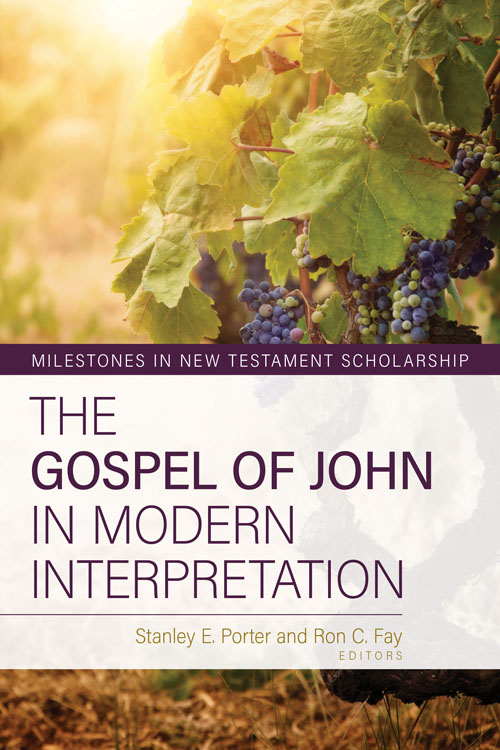
The Gospel of John in Modern Interpretation


So, for your scholars who want to learn more about how other scholars got there . . . in this case, their interpretation of the gospel of John. . . .

The Gospel of John in Modern InterpretationStanley E. Porter and Ron C. Fay. The Gospel of John in Modern Interpretation. Milestones in New Testament Scholarship. $25.99, 256p., Kregel Academic.

The Gospel of John in Modern Interpretation provides a unique look at the lives and work of eight interpreters who have significantly influenced Johannine studies over the last two centuries. The chapters contain short biographical sketches of the scholars that illuminate their personal and academic lives, followed by summaries and evaluations of their major works, and concluding with an analysis of the ongoing relevance of their work in contemporary Johannine scholarship.

Key thinkers surveyed include C. H. Dodd, Rudolph Bultmann, Raymond Brown, Leon Morris, and R. Alan Culpepper. An introduction and conclusion by general editors Stanley Porter and Ron Fay trace the development of Johannine scholarship from F. C. Baur to the present, and examine how these eight scholars’ contributions to Johannine studies have shaped the field. Anyone interested in the recent history of the study of John will find this volume indispensable.


Posted in Uncategorized | Tagged , , | Leave a comment