Galatians and Ephesians Through Old Testament Eyes


Two of Paul’s most instructive letters, presented in the context its original readers would have had. . . .

Gary M. Burge. Galatians and Ephesians Through Old Testament Eyes: A Background and Application Commentary. 320p., $28.99, Kregel Academic.

Through Old Testament Eyes is a new kind of commentary series that illuminates the Old Testament backgrounds, allusions, patterns, and references that saturate the New Testament. These links were second nature to the New Testament authors and their audiences, but today’s readers often cannot see them. Bible teachers, preachers, and students committed to understanding Scripture will gain insight through these rich Old Testament connections, which clarify puzzling passages and explain others in fresh ways.

Galatians and Ephesians are steeped in Old Testament allusions and references. The author of these epistles was trained in rabbinic tradition, raised in Jewish culture, and deeply familiar with the Old Testament. If not properly recognized, the reader is hindered in their understanding of the Scriptures. Galatians and Ephesians Through Old Testament Eyes makes these connections clear, inviting the reader to understand Galatians and Ephesians as the biblical author intended. Author Gary M. Burge offers thorough commentary and real-world application for the scholar and student alike.

Posted in Uncategorized | Tagged , , , , | Leave a comment

Understanding Jeremiah


Degradation and disregard for God to the left, cruelty and power-mongering in religious disguise (and thus even more contemptuous of God) on the right, while the country in the middle was in chaos and on the brink of collapse . . . only 2,600 years earlier. And the weeping, painfully accurate prophet no-one listened to was right in the middle of it. . . .

Duane A. Garrett. Understanding Jeremiah: Its Setting, Composition, and Message. 256p., $24.99, Kregel Academic.

“I have come to appreciate Jeremiah the prophet above any person of the Old Testament . . . because his humanity shines so clearly through his book” (p. 4).

The book of Jeremiah is full of beauty and brokenness, joy and sorrow. These themes are interwoven throughout the book, often without context or introduction, which can leave the present reader without the full picture of what the passage conveys. In Understanding Jeremiah: Its Setting, Composition, and Message, Duane A. Garrett steps back from verse-by-verse commentary to provide a bird’s-eye view of the book, giving rich background information to these prophetic writings. This three-thousand-foot view of Jeremiah gives specific insight into:

  • the politics, governance, and key players in Judah, Israel, and the surrounding nations
  • Jeremiah’s life and its witness to holy living
  • the structure and composition of the book of Jeremiah
  • the broader message of Jeremiah
Posted in Uncategorized | Tagged , , | Leave a comment

Introducing Jesus


Focusing on Jesus through the lenses of each of the four gospels, and not just for a younger audience. . . .

Andreas Köstenberger. Introducing Jesus: The Fourfold Gospel. 232p., $19.99, Kregel Ministry.

Can anyone in our high-tech world truly understand someone who lived two thousand years ago? Can we get through twenty centuries of tradition to the real person who started it all? Andreas Köstenberger shows that the Gospels, the four earliest records about Jesus, do just that. These writings, named Matthew, Mark, Luke, and John, alongside key facts about the ancient world, bring Jesus’s life, his words, and his legacy into focus.

Introducing Jesus gets to the heart of what was—and is—important about Jesus. Köstenberger uses succinct prose, photographs, maps, charts, and more to address these questions:

  • What did each gospel writer intend to convey about Jesus?
  • What historical backgrounds help us understand Jesus better?
  • What aspects of Jesus’s life and teaching do the Gospels emphasize?
  • What does Jesus mean to people living today?

Adapted from Köstenberger’s The Jesus of the Gospels (2020) for a younger readership, Introducing Jesus lends itself well to the typical organization of a high school year or college semester. A corresponding website includes resources for instructors.

Posted in Uncategorized | Tagged , , | Leave a comment

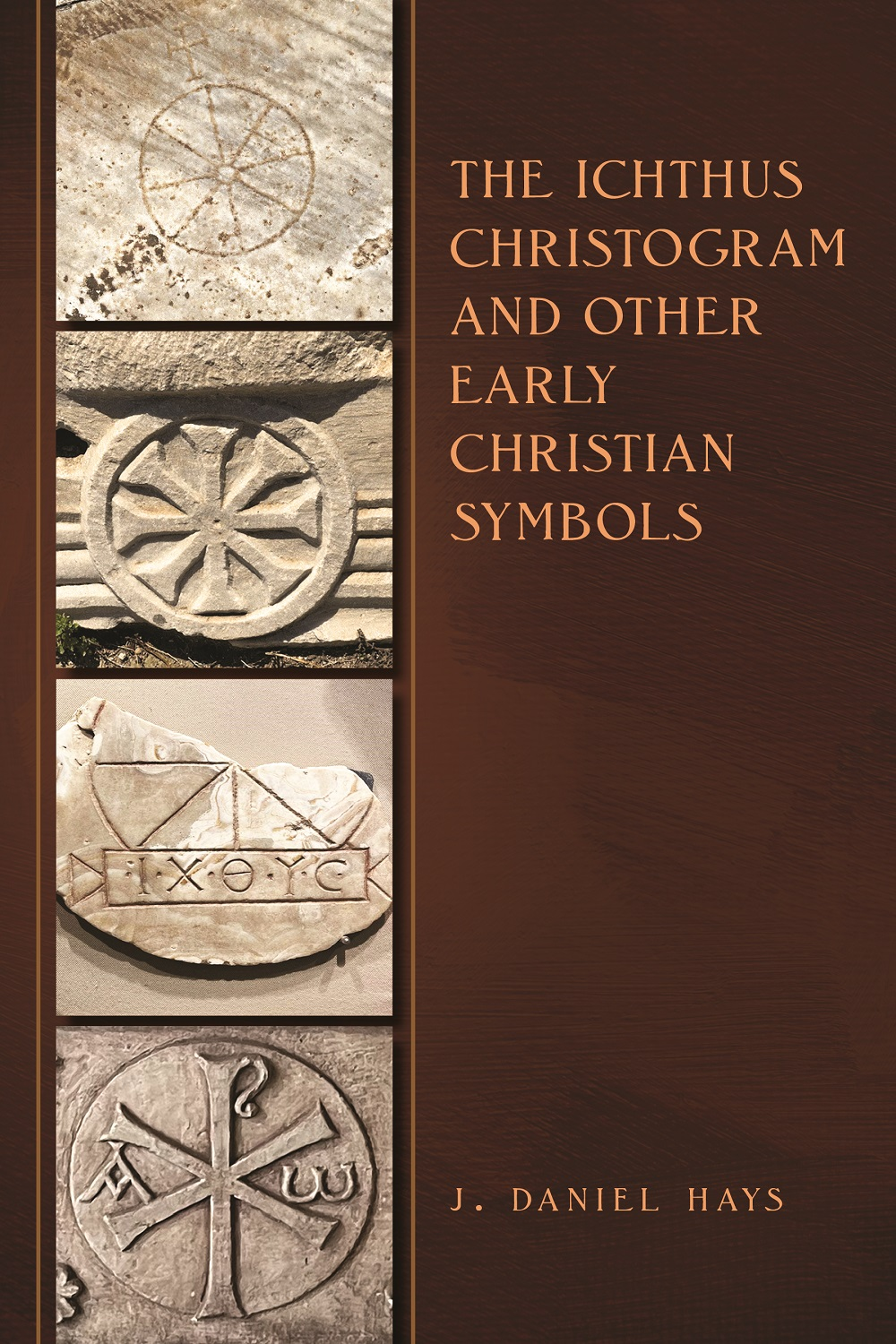
The Ichthus Christogram


An interesting theory on “Christian graffiti,” with ample helpings of early church history thrown in. . . .

J. Daniel Hays. The Ichthus Christogram and Other Early Christian Symbols. 272p., $27.99, Kregel Academic.

Attentive modern-day visitors to the Mediterranean world will notice a symbol depicting an eight-spoked wheel carved into stone walls, floors, and funerary art. This symbol has long been considered the remnant of an ancient game or the work of vandals, but author J. Daniel Hays argues its proliferation was the work of the early church, and it should be included in the greater corpus of Christian art, iconography, and symbolism.

In The Ichthus Christogram and Other Early Christian Symbols, Dr. Hays examines the early church’s visual symbolic world and its history following the acts of the apostles–from the Great Persecution to the Christianization of the pagan world. Along the way, he takes the reader to key cities of ancient Turkey, Greece, and Israel to explore the political, architectural, and religious backgrounds of local churches and how such contexts informed their use of the eight-spoked Ichthus Christogram to teach orthodoxy and combat heresies, to remind illiterate believers of the basic tenets of the faith, and to declare victory over demonic forces. This is a must-read for students of church history and ancient Christian art.

Posted in Uncategorized | Tagged , , , | Leave a comment

40 Questions About Atonement


So what exactly did Jesus accomplish on the cross, and how should we be changed because of it?

Channing L. Crisler. 40 Questions About Atonement. 40 Questions Series. 288p., $23.99, Kregel Academic.

Atonement sits at the very heart of Christian doctrine, describing believers’ status as “being one again” with God through Jesus Christ. It is the culmination of God’s work of reconciliation, simultaneously defining believers’ relationship with God while also describing how that relationship is restored. Because of this, how one understands atonement has a profound impact on how one views and understands God, salvation, and human nature.

New Testament scholar Channing L. Crisler offers a robust foundation for understanding the divine mystery of atonement, drawing on biblical and historical witnesses to answer pertinent questions, such as:

  • Why is atonement necessary?
  • What are the different theories of atonement?
  • How is atonement understood by the various Christian traditions and world religions?
  • What implications does one’s understanding of atonement have on the present?

Through its question-and-answer format, 40 Questions About the Atonement provides an expansive introduction to the doctrine of atonement, inviting the reader to wade into this divine mystery with curiosity and awe.

Posted in Uncategorized | Tagged , , | Leave a comment

Stressed to Splessed


A story of the long road through grief, to healing . . .

Susan C. Troth. Stressed to Splessed: A Faith-Based Journey to Find Healing, Hope, and New Horizons. 164p., $16.99, Bright Ink Press.

Are you in the beginning stages of grief, the messy middle, or at the end of a long painful season of being overwhelmed and stressed? Susan Troth been there and will lead you to the other side. Open these pages, take a breath, and embark on a beautiful transformation from being held down and stressed, to living victoriously and “splessed.”

In this book Susan walks you through a process of:

  • A sacred place where healing is possible.
  • An invitation where hope is restored.
  • A path forward where you discover new horizons.

For every woman who has found herself overwhelmed by the pressures of life, for every heart weighed down by grief, this book is your path forward.

Posted in Uncategorized | Tagged , , , | Leave a comment

40 Questions About Suffering and Evil


How much of suffering and evil is God, how much is us and how much . . . just is?

Greg Welty. 40 Questions About Suffering and Evil. 40 Questions Series. 368p., $25.99, Kregel Academic.

Both inside and outside the Christian faith, many difficult realities trouble human hearts and minds. By being equipped to answer questions about suffering and evil, Christians can persevere in faith, share their faith, and defend the faith when confronted with these inevitable challenges of living in a fallen world.

In 40 Questions About Suffering and Evil, Greg Welty shows the necessity of exploring our vocabulary around evil and suffering so we can clearly see and express the best questions. Welty explores vital ideas, backgrounds, and issues, answering questions like these:

  • What is the difference between Moral Evil and Natural Evil?
  • What is the Bible’s role in helping us understand suffering and evil?
  • Does God will all suffering and evil?
  • How is the gospel relevant to counseling those who suffer?

Welty provides biblically informed intellectual resources for answering significant questions about suffering and evil, exposing readers to a wide range of influential views articulated by Christians over the past two millennia.

Posted in Uncategorized | Tagged , , , | Leave a comment

The Incarnate Christ and His Critics


A defense of the deity of Christ. . . .

Robert M. Bowman Jr. and J. Ed Komoszewski. The Incarnate Christ and His Critics: A Biblical Defense. 896p., $57.99, Kregel Academic.

The central theological claim of Christianity, that Jesus is God incarnate, finds eager detractors across a wide spectrum–from scholars who interpret Jesus as a prophet, angel, or guru to adherents of progressive Christianity and non-Christian religions and philosophies. Yet thorough biblical scholarship strongly supports the historic Christian teaching on the deity of Christ.

Authors Robert M. Bowman Jr. and J. Ed Komoszewski follow the approach of their landmark 2007 study on the same topic, Putting Jesus in His Place. They focus on five pillars of New Testament teaching, using the acronym HANDS, and demonstrate what both Jesus and the earliest believers recognized, namely, that Jesus shares in the

  • Honors that are due God
  • Attributes of God
  • Names of God
  • Deeds that God does
  • Seat of God’s eternal throne

The Incarnate Christ and His Critics engages objections to the divine identity of Jesus from Jehovah’s Witnesses, Mormons, progressive Christians, Muslims, Unitarians, and others. Bowman and Komoszewski show how biblical scholarship cannot reasonably ignore the enduring, wide-ranging, and positive case for the deity of Christ.

Posted in Uncategorized | Tagged , | Leave a comment

Ecclesiastes and Song of Songs


Of transitoriness and love. . . .

Jordan W. Jones and Christopher Pascarella. Ecclesiastes and Song of Songs: A Commentary for Biblical Preaching and Teaching. Kerux Commentaties. 360p., $34.99, Kregel Academic.

Kerux Commentaries enable pastors and teachers to understand and effectively present the main message in a biblical text. Each volume uniquely combines the insights of an experienced Bible exegete (trained in interpretation) and a homiletician (trained in preaching). These two authors work together to explain the essential message for the original listeners or readers, unpack its timeless truth, and then provide a contemporary restatement and communication insights for the key biblical concept. Every book is a resource designed and written with the real needs of the pastor and teacher always in view, providing many ways to creatively express the principal thought in a biblical passage.

Authors Jordan W. Jones and Christopher Pascarella demonstrate how Ecclesiastes and Song of Songs fit alongside other Old Testament wisdom literature. Ecclesiastes views echo the familiar biblical teaching on the eternality of God and the future judgment being a source of comfort in the face of stark realities acutely familiar to believers today. Song of Songs elevates the place of love and sexual intimacy in marriage relationships and prefiguring the analogy of the church as a spouse devoted to Jesus. Jones and Pascarella guide teachers and preachers to see how the holy disillusion of Ecclesiastes and the overflowing love in Song of Songs interact with other biblical teachings to present a coherent approach to life and love.

Based on the Big Idea preaching model, Kerux enhances the reader’s ability to deliver a message that is biblical, cohesive, and dynamic.

Posted in Uncategorized | Tagged , , , , , | Leave a comment

Kerux: Leviticus


An in-depth look at arguably the toughest book of the Bible. . . .

Michael A. Harbin and Mark C. Biehl. Leviticus: A Commentary for Biblical Preaching and Teaching. Kerux Commentaries. 456p., $39.99, Kregel Academic.

Kerux Commentaries enable pastors and teachers to understand and effectively present the main message in a biblical text. Each volume uniquely combines the insights of an experienced Bible exegete (trained in interpretation) and a homiletician (trained in preaching). These two authors work together to explain the essential message for the original listeners or readers, unpack its timeless truth, and then provide a contemporary restatement and communication insights for the key biblical concept. Every book is a resource designed and written with the real needs of the pastor and teacher always in view, providing many ways to creatively express the principal thought in a biblical passage.

Leviticus focuses on relationships—a relationship with God through worship and relationships with other people through holiness. Throughout the book, the priests and the Levites receive special responsibilities to help Israel in both these spheres. Authors Michael A. Harbin and Mark C. Biehl show how Leviticus lays out three related practices that would hold these relationships together for the nation of Israel: corporate worship; personal and collective holiness; and righteous living as a covenant community. Harbin and Biehl suggest bridges to our own culture by discussing what the Israelites at Sinai would have understood about the reasons behind what Leviticus prescribes. Just as the Israelites’ complex relationships with family and neighbors formed a foundation for both cultural and personal well-being, the church today is called to pursue wholistic shalom in its own time and place.

Based on the Big Idea preaching model, Kerux enhances the reader’s ability to deliver a message that is biblical, cohesive, and dynamic.

Posted in Uncategorized | Tagged , , | Leave a comment