Who Do You Love?


“Frequently in our attempt to achieve Pentecost we bypass Calvary.…Here is the spiritual principle: die, and then bear fruit.” — Watchman Nee, The Messenger of the Cross

Let’s kick off this week by taking one more look at what Jesus has already done in our lives — because the more we realize what Jesus has done, the more we realize how much He still wants to do. And let’s get scriptural as we do it:

“Not that I have already attained this — that is, I have not already been perfected — but I strive to lay hold of that for which Christ Jesus also laid hold of me.  Brothers and sisters, I do not consider myself to have attained this. Instead I am single-minded: Forgetting the things that are behind and reaching out for the things that are ahead, with this goal in mind,   I strive toward the prize of the upward call of God in Christ Jesus. Therefore let those of us who are ‘perfect’ embrace this point of view. If you think otherwise, God will reveal to you the error of your ways. 

“Nevertheless, let us live up to the standard   that we have already attained. Be imitators of me,   brothers and sisters, and watch carefully those who are living this way, just as you have us as an example.” — Philippians 3:12-17 (NET)

What’s one area of your life in which you could honestly encourage others to “be imitators of me”? (No false humility here—take time to be thankful for what Jesus has already done in your life.) How does dwelling on your past affect your ability to “strive toward the prize of the upward call of God in Christ Jesus”?

In this passage , Paul describes a race that we were meant to run for a lifetime. The good news is not only that God is calling us to reach the prize, but also that we have Jesus to coach us the entire way. With Jesus’ help, we can reach the goal he’s set before us.

Let’s jump back one chapter in Philippians, and read chapter 2, verses 5-8 (NLT). I want to present the passage a little differently today, so you can listen for the connections between what Jesus has done and how God wants us to respond. As you read this, take time to think and reflect. Time for you to connect with God. Ready? Let’s do this:

“You must have the same attitude that Christ Jesus had…[who] did not think of equality with God as something to cling to.” In what ways do you still insist on doing things your own way instead of God’s way?

“You must have the same attitude that Christ Jesus had…[who] gave up his divine privileges.” How have you allowed yourself to feel superior to others, simply because you’re a Christian?

“You must have the same attitude that Christ Jesus had…[who] took the humble position of a slave.” 
Who in particular have you refused to serve, whether you’ve openly rebelled against them or quietly avoided them? Picture that person.

When was the last time you claimed glory for yourself rather than giving it to God?

“You must have the same attitude that Christ Jesus had…[who] humbled himself in obedience to God.” What areas of your life have you not yet really submitted to God? What would it look like if you did?

“You must have the same attitude that Christ Jesus had…[who] died a criminal’s death on a cross.”  When do you still insist on defending your reputation, rather than trusting God and allowing Him to defend you?

So what did God show you during this time of listening? Ask God to elaborate on it. Then share it with someone else. Listen to that person’s story. By bringing our “stuff” out into the light, we give Jesus an opportunity to change us eternally. We also give others permission to keep us accountable and to support us as we continue to pursue God together. So make it happen. Today.

Posted in Uncategorized | Tagged , , , | Leave a comment

Third Time’s the Charm


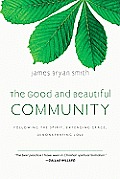
James Bryan Smith. The Good and Beautiful Community: Following the Spirit, Extending Grace, Demonstrating Love. Hardcover, 240p., $22.00. IVP.

I have to confess: For all the buzz and provenance surrounding them (Richard Foster and Dallas Willard, the latter more or less commissioning this “curriculum for Christlikeness”), the first two installments of James Bryan Smith’s Apprentice Series (The Good and Beautiful God and The Good and Beautiful Life) didn’t do a whole lot for me. Even truer confession: I didn’t even bother finishing the second book. They said all the right things, sure — and given all the other resources out there that focus on statements and movements more than on Jesus, that’s saying something — but in the end, both left me cold.

But when the third and final installment, The Good and Beautiful Community, landed on my desk, I had to give it one more shot — if only because this is a site dedicated to building community. And you know what? It’s easily the best of the three.

I think the reason this volume hits me so differently can be found in the introduction. As opposed to the first two books, where Smith writes as more or less an “expert” on spiritual formation and character-building, he openly confesses: “You are not reading the words of an expert in human relations. You are reading the journal of a novice who is sharing his struggles and insights… Fortunately, I have a lot of great people around me who are teaching me about this important area.”

And Smith lets those great people do the talking, or at least talks about what they’re taught him over the years — from his rediscovery of Jesus in a college group that was the antithesis of the cold, quiet church he grew up in; to the student who taught him about forgiveness in the face of sexual abuse by a family member; to the South African pastor who gave up the “fast track” to start a small church that focused on commitment and accountability.

And sometimes even bad examples make good teachers — such as Smith’s experience at a denominational conference where leaders literally turned their backs to him and showed him the door shortly thereafter, over a rather fine theological point (to introduce a chapter on putting Jesus first).

In each of the book’s eight sections, Smith also does a good job of breaking down “false” and “true” narratives — in other words, taking our “religious” misconceptions and replacing them with the actual biblical teachings on such matters as service, reconciliation, accountability and stewardship. There’s also a helpful closing “soul training” piece at the end of each section to help individuals address and practice those areas in their lives.

Now, notice I just used the word “individuals.” That’d probably be the one objective kvetch I can make about this book — yes, people are strongly encouraged to work through this book in community, but it’ve been that much stronger if some of the application ideas had actually  been built for the group, rather than just providing opportunity for group members to debrief individual experiences. True, most people are going to do the challenges — and arguably read the book itself — on their own, but opportunities to work together as a group should’ve been on the table, especially for this volume.

For similar reasons, I’d’ve loved it if the small-group sessions had been placed at the end of each section, rather than lumped together at the end of the book. It would have reinforced the “community” approach to this book so much more. But the important thing is that they’re there at all.

Bottom line is: There’s depth here that you just don’t find in a lot of small-group materials these days. James Bryan Smith saved his best for last in the Apprenticeship Series, so give it a shot (and maybe even another chance).

This review originally appeared in smallgroupministry.com.

Posted in Uncategorized | Tagged , , , | 1 Comment

What Wou… DID Jesus Do?


Theology is a tricky thing. At the genuine heart of it is the intent is to make deeper sense of who God is, and to articulate it in such a way that everyone gets it and everyone’s on the same page. The results, of course, are often quite different. Say the word “theology” and all sorts of responses might come back—”dry,” “divisive,” “putting God in a box,” “irrelevant.” . . .

And yet A.W. Tozer nailed it when he said, “What comes into our minds when we think about God is the most important thing about us.” So we’d better get our heads on straight. And when done properly, that’s what theology is all about.

Still, throw such words out there as justification, atonement and sanctification,  and you’ll draw a blank stare from the vast majority of Christians these days. They’re good words—heck, they’re biblical words—but the meanings have been lost. And yet, every true believer of Christ has experienced their meanings— and the power behind them—while being totally oblivious to that fact.

So let’s start rebuilding the bridge between theology and experience, so that we can add meaning to both.

This time last week, you were challenged to reflect on your testimony — because you’ve got one of those, too, whether you’ve thought about it or not. What was your life like before Jesus? How have you encountered Jesus in your life since? Why is your life different because of that?

Here’s the thing: What we already know Jesus has done in our lives is amazing enough. But what’s even more amazing is what God says Jesus has done for us.

Here’s just a few passages worth reflecting on:  John 15:13-16;  Romans 8:14-17; 2 Corinthians 5:17-20; Ephesians 1:11-14 and Ephesians 2:4-7. Take a few minutes to reflect on them right now. I’ll wait here for you. . . .

Done? Good.

Now: What encouraged you about these verses? What intimidated you? Which ideas do you just not get?

And here’s the big question: How might really understanding and believing what Jesus has done for you change the way you see yourself? the way you see others?

So do something about it. Here are just a couple ideas:

• Spend another hour meditating on this week’s Scripture passages. As you encounter thoughts “too marvelous for words,” stop right there and ask for God’s help—God does know all things, and wants to teach you. When you’ve finished, thank Jesus for all he’s done, and ask Him to help you know his love more and more.

• Set aside a specific time each day to talk to God. Tell God what’s on your heart, and ask God to help you know what’s on His heart. Who does God want you to reach out to? How does He want to stretch your faith? Don’t limit your prayers to what you think you need. Ask God to show you what he can (and wants to) do in your life. The answers will probably surprise you.

Good luck on the journey. And don’t be scared of that Bible or the big words in it—God gave it (and them) to us for a reason.

Posted in Uncategorized | Tagged , , , , , | Leave a comment

So, You Want to Grow a Christian…


Since this weekly entry—really, this entire blog—is about helping other Christians grow, let’s start this week by reflecting on our own journeys so far. Think about a time where you experienced a huge “growth spurt” in your life. If you can’t think of a spiritual example off the bat, use an example from your professional life or another personal example.

Got an example in your heads? Good. Now, think about this:

• When did you first realize that you’d somehow taken a giant leap forward? What was different?
• Who helped you most in taking that leap? What did he or she (or they) do to keep you moving forward?

You just reflected about an important time in your life, and the people who helped and maybe even inspired you. It probably felt good just to think about those people again. But as good as those people made us feel, it’s even more rewarding to be that person—to know that God has truly used us to help someone else.

Any work we do that has eternal value involves other people—whether it’s by serving them, praying for them, being a good parent, or simply being a good friend. Everything we do can potentially have an eternal impact on others. Think about it: How others have loved you—or failed to—is part of the reason you are who you are today.

Dallas Willard, in The Divine Conspiracy, put it this way: “Nondiscipleship is the elephant in the church…. The fundamental negative reality among Christian believers now is their failure to be constantly learning how to live their lives in The Kingdom Among Us. And it is an accepted reality.”

When we think of discipling others, it’s also easy to get caught up in thinking, “I can’t do this” for whatever reason—“I need to learn more first”; “I need to accomplish more first”; “I need to have more credibility with that person before I open my mouth.” And these might well be things you need to work on. But very often, we use these issue as or unnecessary roadblocks  to ourselves. Most of the time, it’s only fear of the unknown that holds us back. We make it about what we think we can do, rather than about what Jesus commands us to do, and what he promises to do as we step out in faith.

Therefore, the first and maybe the biggest step to becoming an effective discipler to simply to show up—and make the most of the situation God’s called you into. God’s brought you through a lot already, hasn’t he? More than anything, that’s what God wants to show others through you. Not your perfect answers or your unbelievable heart, but what God’s done—and therefore, what He can do for that other person, too.

Who do you know who seems ready to take the next step spiritually—whether he or she’s already growing, a brand-new Christian, or a not-yet Christian? If you could help that person understand just one thing right now, what would it be? And if you’ve already shared that one thing with him or her, what do you think that person needs to really “get” it? If you haven’t shared it yet, what’s held you back?

Now consider this: How could spending more time with that person help you grow closer to Jesus?

Some people might hear the words “accountability” or “discipleship” and say, “I’m in. When do we get started?” It’s more likely that many will be intimidated by that kind of talk. So don’t bash people over the head with this. Invite them out to lunch or a cup of coffee for starters. Talk about their lives and the things that are most on their minds and hearts right now. Then ask whether he or she might want to make a regular time out of it. Most people will accept if they know you’re serious and don’t feel overwhelmed by the commitment. A weekly time together is best, but if schedules only allow for bi-weekly or monthly, that’s OK. Start there and see where things go.

You can even say something like, “I’ve been reading this blog about discipleship, and I’d like to try out some of the things I’m learning on a real person. You’re a real person—would you mind helping me work through this?” Once they’re done laughing, they’ll probably say yes.

The important thing is to make it happen. Begin to share what Jesus has done in your life. Help people see that a changed life is possible. Starting with yours.

Posted in Uncategorized | Tagged , , , , | Leave a comment

Obedience: a rough fragment for Good Friday


I am becoming increasingly convinced, as I get older,  that God does not demand our obedience simply because it honors Him. That is, of course, a true and healthy reason to do it. And I wouldn’t even put up an argument against someone who argues that it’s the primary reason.

Still, as I come to experience and better understand God’s love for us, I’d suggest that God demands our obedience because He wants us to become the people we were truly created to be. Because only God sees the final picture, He is therefore the only one capable of making that happen. Therefore, without our obedience — our submission to God’s vision of us, which incredibly is way more than we could ever think of ourselves — the end result is a tragedy that only God can comprehend and experience the full depths of. The suffering we see and experience is but a rough fragment of that.

By extension, I think that’s why Jesus became so angry with the Pharisees. They saw a broken law as an excuse to claim superiority. Jesus saw it as a sin so profound that only He could die to remove it.

P.S. It’s been a crazy but good week — the result being that this example isn’t as developed as I’d like to be. Still, hope you gain something from it. I did at the time I first wrote it (a couple weeks ago, actually).

Posted in Uncategorized | Tagged , , , | 2 Comments

I Get by… Other Voices, Part 1


This first entry of Other Voices (explained here) is simple:

Take a look to your lower right. Scroll down a little. See all those people? They represent friends and influences, of all kinds.

We’ve got men’s ministries, women’s ministries, small-group ministries, spiritual-formation people, worship leaders, Reformed writers, Baptist writers,  Alliance peeps, people working with the poorest of the poor, others ministering to other margins of society (including the GLBT community). We even have a lapsed-Christian music writer who nonetheless still loves him some music from “the Christian ghetto,” among lots of other good stuff.

In short, if you put all these people into a room you’d probably have some pretty interesting discussions. Some of those discussions might not even be friendly . But guess what? What we have, here in this virtual room, would nonetheless fit into the definition of the Body of Christ. And we’ve got lots of different parts here.

So, as we remember the time our Saviour’s physical body was broken then resurrected, we could do a lot of worse than to spend some time reconciling Christ’s Body online as well.

So have fun poking around. Be affirmed. Be challenged. And of course, be here tomorrow. 🙂

Posted in Uncategorized | Tagged , | Leave a comment

How Did We Get Here, and Where Are We Going?


Every Christian has a testimony, a faith story — an account of how he or she first encountered Jesus, how that encounter changed everything, and how each new encounter with Jesus keeps changing everything.

So take some time to reflect on that. Read Acts 26:1-29, and then think through the following questions:

• How would you describe Paul before he met Jesus?
• How was Paul changed by his encounter with Jesus?
• How did Paul’s transformation affect others?

Not everyone’s story is as dramatic as Paul’s, but all the elements of a good faith story are here. So let’s use Paul’s model to better understand how our own relationships with Jesus have shaped and changed our  lives:

• What was your life like before you knew Jesus? (Or, if you were raised to be a Christian, before your faith became personal to you?) What were you like?
• How did God finally get your attention? How did you respond?
• How has your life been different because you know Jesus? What spiritual landmarks in your life can you point to—where you can confidently say, “I know Jesus was in that”?

Voila! You now have a testimony! You may not have realized it before, but just by answering those three questions you’ve created a faith story more real than any canned presentation. So look for opportunities to share it — not to check it off your list, not because you feel guilty, but because someone in your life needs to hear it. And because God gave you this story — your story — so you could share it.

Jesus has revealed himself to each of us and wants to use us to share his love with others. We can share it verbally…we can model Jesus’ love in practical ways…we can be so overwhelmed by Jesus that we simply radiate His joy…but it’s a critical part of our own faith to allow what Jesus has done in our lives to be visible to others.

So, two more questions to think about — and then do something about:

• What parts of your faith do you allow to show, and what pieces do you keep hidden? Why?
• What could you do to give others a more complete picture of what Jesus has done in your life?

Posted in Uncategorized | Tagged , , , , , | Leave a comment

Let’s Begin


Just what the world needs — another blogging, tweeting, Facebooking, socially networking self-promoter. And believe me, just reading that sentence would be enough to paralyze anyone with a degree of common sense.

So why am I here writing to you anyway?

One word: Discipleship.

And by definition, discipleship requires that none of us stay quiet, but to lay ourselves out there as God moves us, so that God can change all of us. Thus, it also requires that I approach this with enough humility that my words might actually have some value.

So let’s do this.

Here’s how I see the framework of this site and its entries working as of right now (Palm Sunday 2011):

Monday: D2D Today — D2D stands for “From Disciples to Disciplers.” There’s a small-group series with that subtitle you ought to check out. So, I’ll start each week with a general entry about the importance of not only being a disciple but of being a discipler. To be very blunt, this is where I feel the American church has failed miserably. It’s why my series, Growing Out: From Disciples to Disciplers, had to be written. And that brings us to….

Wednesday: Growing Out — This day’s entry is meant to serve as a challenge to you. It might be an experience or movie clip  you can try with your small group, or an opportunity to dig into your Bibles, or a challenge to stop learning and start doing. Where’s God trying to grow you out right now? It’s my hope to give you something significant to chew on — then do on.

Thursday: Other Voices — This day belongs to you, whoever “you” happen to be that week. I want to use this day for reviews, highlights of other blogs, etc. We’re all in this together, so let’s take advantage of that. Let’s become a Discipleship Nation instead of a Discipleship Archipelago. Enough said.

Friday: Lay It Down — These entries will feature pieces from the early drafts of a work in progress with the working title… you guessed it… Lay It Down. Jesus told us in John 15:13-14, “No one has greater love than this — that one lays down his life for his friends. You are my friends  if you do what I command you.” That’s really the heart of discipleship. But it often comes in pieces. How do we lay down our past — our old life, sins, compulsions, shame? How do we lay down our present — our burdens, weaknesses, strengths, possessions, reputation? And how do we lay down our future — our fears, goals, expectations, even the good things God’s already given us?

We’re going to have to learn a lot together, I think. So help me out:

• Send me your stories of transformation.
• Send me your books.
• Send me your feedback.
• Send me your questions.
• Send me your prayers.

I look forward to seeing where this journey takes all of us.

— Carl Simmons

P.S. In case you’re wondering, the photo that graces this page and header comes from a stained-glass piece by the late artist/sculptor Frederick Franck, at his private-but-still-open-to-the-public sculpture garden Pacem in Terris in Warwick, New York. It’s from his Stations of the Cross series, and depicts Simon of Cyrene carrying the cross for Jesus. Now that’s a discipleship image.

Posted in Uncategorized | Tagged , | 1 Comment