Let’s Welcome Another New Voice….


Well, new to here, anyway. Larry Shallenberger is a pastor out of Erie, Pennsylvania who’s written for me and other publishers over the years. I’ve been enjoying his blog—the astutely named larryshallenberger.com—a lot over the last few months, and think you should, too.

His latest entry, on spiritual gifts and curriculum, gave me a lot to think about (and hopefully I wasn’t one of the guilty parties cited—I don’t think I was :), although I like Ephesians 2:10, too). You’ll find other engaging, thoughtful posts there as well. And the guy likes listening to Miles Davis, Derek Webb and Sufjan Stevens when he writes. What more could you ask?

So dive in, enjoy, and let’s get ready to lay it down tomorrow.

Posted in Uncategorized | Tagged , , | Leave a comment

Following Jesus to Work


Think of the last sports competition you watched where there was a questionable call, or the last story you read involving some kind of cheating scandal. How did watching or reading about it make you feel—especially if it involved your team?

Today we’re going to explore another venue where the competition is pretty heavy and not always fair—our workplaces. What are some unwritten rules you face at your job? How do you work within—or around—those rules?

You may or may not have a good job, but there are always plenty of opportunities to let our jobs take precedence over our walks with Jesus. Even if your workplace is your home, you know this can be true. So let’s consider what it means to follow Jesus to work, and what that might mean for each of us.

Track down each of these passages, all of which have something to say about work. Then think through the questions  afterward.

• Genesis 3:17-19
• Ecclesiastes 5:18-20
• Luke 12:15-21
• 1 Thessalonians 4:11-12
• James 4:13-16

• Which of these perspectives—all of which are biblical—best describes your attitude toward work? Why?
• How would you reconcile these different perspectives?

Last Wednesday, we considered our attitudes toward money and the attitudes God wants us to have. Since work is where we earn that money, let’s explore that idea a little further:

• How do our attitudes toward money affect how we feel about our jobs? What other factors affect our attitudes toward our jobs?

Whatever you do, work at it with all your heart, as working for the Lord, not for human masters, since you know that you will receive an inheritance from the Lord as a reward. It is the Lord Christ you are serving (Colossians 3:23-24).

• How would “working for the Lord rather than for people” address the issues you face at work?
• Which problems, if any, wouldn’t it solve? What do you think God would want you to do in those situations?
• What changes would you make so “working for the Lord rather than for people” is something you really do?

Let’s get one more perspective on work, courtesy of Dallas Willard: “If we truly see [Jesus] as the premier thinker of the human race—and who else would be that?—then we are also in a position to honor him as the most knowledgeable person in our field…and to ask his cooperation and assistance with everything we have to do” (The Great Omission).

What would be different if you believed Jesus was smart enough to teach you what you needed to know at work? What keeps you from believing that—or living as if you believe it? And for that matter, what’s one question you face at work you’d like Jesus to answer?

Thank Jesus that he really does know everything—including the answer to every challenge we face at work, whether it’s moral, emotional, or intellectual. Ask Jesus to reveal just the right answer for each person in your group. Ask him to show all of you how best to model his love and wisdom in your workplaces. And may the Spirit meet and guide you in your workplace, no matter where that is.

Posted in Uncategorized | Tagged , , , | Leave a comment

I Object!


How do you usually respond when someone throws criticism your way? Let it bounce off you? Send it someone else’s way? Duck and avoid it? Catch it and hang onto it? Slam it back at the person who threw it at you? Does your reaction change when criticism’s coming at you from more than one direction?

However you responded to that barrage of questions—which might have felt like criticism—how well does your approach usually work for you?

Last Monday, we explored how leadership involves change. And as we discovered, change can be tough, and not just for us. Whenever we try to introduce change, we’re almost certainly going to hit resistance. Even if we’ve done a good job of showing why change is a good thing, there will probably be some people who will be less than enthused about it. Some might have legitimate concerns that they still need to work though—they simply haven’t caught the vision yet. Some are gun-shy, because they’ve been burned before. Others will quietly (or not so quietly) drag their feet, hoping that you’ll change your mind. And still others might be openly critical, antagonistic, or even hostile.

Guess what? You’re still the leader. You still need to deal with it. And you need to deal with it in a way that honors God—and honors those people putting up the resistance. And you might have to do it even if they’re not honoring God, or you, with their attitudes and actions. “The primary tool in the devil’s box is the wedge,” as Greg Ogden says in his study Discipleship Essentials. So let’s talk through this one and see how God wants to equip us to grow in this area.

First, let’s start by putting ourselves in the shoes of those who might disagree with us. Because we’ve all been in their places at one time or another. When have you been in the role of outsider or critic? What finally “got you on board” (or would have, if you can’t think of a positive example)?

When you’re done chewing on that, take a look at this classic “case study” of conflict resolution from the Bible. As you read, take note of all the players in this conflict, and think about each person or group’s side of things:

Certain people came down from Judea to Antioch and were teaching the believers: “Unless you are circumcised, according to the custom taught by Moses, you cannot be saved.” This brought Paul and Barnabas into sharp dispute and debate with them. So Paul and Barnabas were appointed, along with some other believers, to go up to Jerusalem to see the apostles and elders about this question. The church sent them on their way, and as they traveled through Phoenicia and Samaria, they told how the Gentiles had been converted. This news made all the believers very glad. When they came to Jerusalem, they were welcomed by the church and the apostles and elders, to whom they reported everything God had done through them.

Then some of the believers who belonged to the party of the Pharisees stood up and said, “The Gentiles must be circumcised and required to keep the law of Moses.”

The apostles and elders met to consider this question. After much discussion, Peter got up and addressed them: “Brothers, you know that some time ago God made a choice among you that the Gentiles might hear from my lips the message of the gospel and believe. God, who knows the heart, showed that he accepted them by giving the Holy Spirit to them, just as he did to us. He did not discriminate between us and them, for he purified their hearts by faith. Now then, why do you try to test God by putting on the necks of Gentiles a yoke that neither we nor our ancestors have been able to bear? No! We believe it is through the grace of our Lord Jesus that we are saved, just as they are.”

The whole assembly became silent as they listened to Barnabas and Paul telling about the signs and wonders God had done among the Gentiles through them. When they finished, James spoke up. “Brothers,” he said, “listen to me. Simon has described to us how God first intervened to choose a people for his name from the Gentiles. The words of the prophets are in agreement with this, as it is written:

“‘After this I will return
   and rebuild David’s fallen tent.
Its ruins I will rebuild,
   and I will restore it,
that the rest of mankind may seek the Lord,
   even all the Gentiles who bear my name,
says the Lord, who does these things’—
 things known from long ago.

 “It is my judgment, therefore, that we should not make it difficult for the Gentiles who are turning to God” (Acts 15:1-19, NIV).

• What kinds of reactions do we see in this passage? What motivated each of the players here?
• What steps were taken to resolve the conflict? What helped everyone come to a decision and move forward?
• It might be easy to simply point to the Pharisee Christians as “the bad guys.” But what’s a situation where you’d raise the red flag and say, “That’s wrong and I’m not going along with it”? What, if anything, could get you to change your mind about it?

A few more quotes to consider:

“Differences between us are exactly what make us beautiful and necessary; together we are more than we were apart… Church can be something bigger precisely because it’s the bringing together of so many people with so many reflections of the image of God.”—Brian Sanders, Life After God: God’s Call to Disillusioned Christians

“We must love them both, those whose opinions we share and those who opinions we reject. For both have labored in the search for truth and both have helped us in the finding of it.”—Thomas Aquinas

“Those who honestly agree with you keep you sane. Those who honestly disagree with you… keep you honest.”—Carl Simmons

So, with that: Think of someone you regularly have trouble seeing eye-to-eye with. What’s one positive thing you could say to that person right now?

Better yet: What’s one thing that person brings to the table that you don’t? Say it out loud. Yes, right now.

Now, how can you create the opportunity to share what you just said with that person?

Besides issues being disagreed about, what else keeps us from finding common ground with others? How can we show love and respect to those people, even if we totally disagree with them?

Therefore, as God’s chosen people, holy and dearly loved, clothe yourselves with compassion, kindness, humility, gentleness and patience. Bear with each other and forgive one another if any of you has a grievance against someone. Forgive as the Lord forgave you (Colossians 3:12-13, NIV).

Some people simply need more understanding and attention. Others may never become your good friends, but you can still learn to work together. Other people go beyond what we’ve discussed today—for whatever reason, they’re hardened against you or what you’re trying to accomplish. No matter what the situation, it’s God’s to handle. So pray for God’s wisdom and grace to overwhelm both you and those you’re struggling with. And if it is a relentless situation where the other person is immovable and/or disrespectful, ask God for His strength in dealing with it. Ask God what He’s trying to teach you through this situation, and ask His help in keeping your eyes on that rather than on what’s going on right now.

Posted in Uncategorized | Tagged , , , , , | Leave a comment

a piece of Lay Down Your Weakness


As I’ve been working on these Friday pieces, I’ve really come to appreciate Peter more. As brilliant as that “man out of time” Paul was… as loving and engrossed with Jesus as John was… as assertive as James was… for that matter, even as morosely skeptical as my boy Thomas was… I think I’m beginning to understand why Jesus chose Simon to become Peter, “the rock on whom I will build my church.” It’s because he was the most human of the disciples. And humanity was what Jesus came to redeem.

For all the evidence you need of this, look at Peter’s “story arc.” We already looked at one huge paradigm shift during what we could call “The Tale of Two Fishing Trips”—Peter’s  transformation from someone who encountered the Son of God and could only see his sin to someone who encountered the risen Jesus and swam after Him as hard as he could. In between are incredible highs and lows, including the near-simultaneous events of Peter first grasping that Jesus was the Messiah, being informed that he would be the rock upon whom Jesus whom build His church, then being rebuked “Get behind me, Satan!” (Matthew 16:13-23). You almost imagine Peter protesting, “Gee, all I was trying to do was protect you, Jesus.”

Peter didn’t yet understand that he was totally incapable of protecting Jesus. And he certainly didn’t grasp it either when he tried to protect Jesus again during His arrest in the garden. Jesus once more rebukes him: “Put your sword away! Shall I not drink the cup the Father has given me?” (John 18:11). Peter didn’t yet realize that his strength, like Jesus’, came from obeying his Father’s will.

Even after Jesus came back from the dead, Peter was still subject to relapses of fear and bravado, as is evident when in Galatians 2:11-21 Paul has to rebuke him for skulking away from the Gentiles that Jesus had already declared clean to Peter (Acts 10:9-47).

But eventually, Peter learns to stop forcing it, and trust that God will do what He intends to do when He intends to do it. He become “the Rock,” because he receives who The Rock really is. We see evidence of that in his final letter: “But do not forget this one thing, dear friends: With the Lord a day is like a thousand years, and a thousand years are like a day. The Lord is not slow in keeping his promise, as some understand slowness. Instead he is patient with you, not wanting anyone to perish, but everyone to come to repentance.” (2 Peter 3:8-9).

We are lifetime projects. The sooner we realize it, the better. So let’s lay down our weakness, lay down our own tools that don’t work anyway, and allow Jesus to be the one who builds us up.

Posted in Uncategorized | Tagged , | Leave a comment

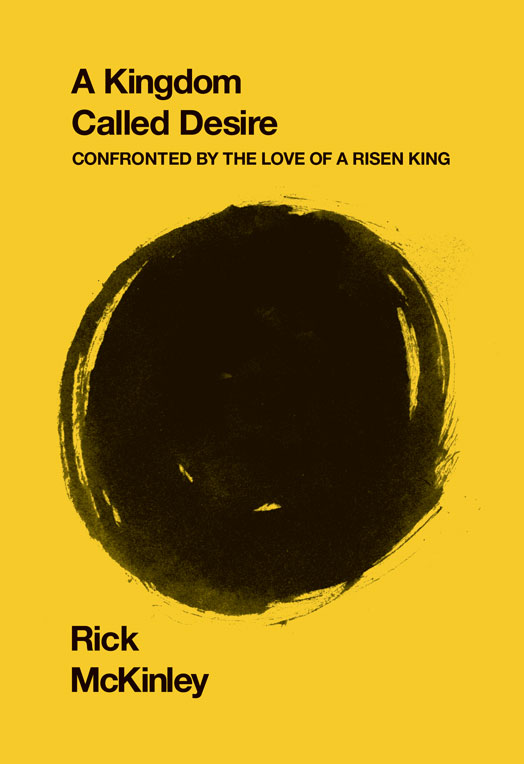
A Kingdom WORTH Desiring…


Last week I reviewed a book wherein the thinking was right, but the feeling was missing. This week (courtesy of my younger daughter, who attends this pastor’s church in Portland and thus snagged me a free copy of this), we arguably swing too far in the other direction. But in the end—because we not only get a vision of the kingdom but an opportunity to catch it—this one works decidedly better.

Rick McKinley. A Kingdom Named Desire: Confronted by the Love of a Risen King. Softcover, 176p., $14.99. Zondervan.

Rick is pastor of Imago Dei, a church that walks the talk, reaching out to the homeless and victims of sex trafficking, among many other marginalized segments in the Portland area. On the few occasions I’ve visited Imago and/or heard Rick preach elsewhere I’ve never failed to come away impressed by his style that’s very conversational yet thoroughly biblical, or with the church itself for that matter.

With A Kingdom Named Desire, Rick almost veers too far to the former (in comparison, noticeably farther than with his first book This Beautiful Mess)—and if you’re not into the occasional expletive in your Christian ministry book you’ll have issues here—but ultimately he gets it right. Because the kingdom of God is ultimately a heart (or “desire”) issue, and if we don’t address that issue we probably won’t truly address too much else God desires for us or His world either.

The first third-to-half of the book is really Rick talking, as if he was sitting across from you or I. It’s engaging, but you’re kind of waiting for him to get to the point. He does, especially nailing it in the late chapter called “The Security That Gives Birth to Hope” (go read it for yourself). However, he sets it up sometime earlier in the chapter called “The King of Life,” where he broaches the seeming insanity of following someone who walked the earth 2,000 years ago, let alone trying to explain that to someone else:

Here is what I would tell you: that is what faith feels like. You are betting your life on Jesus. You are putting everything you have on Jesus being life, Jesus overcoming death, Jesus bringing a kingdom that puts the world back together. We have to come to this place if faith is going to move us into this kingdom called desire. The revolution that is happening is coming through those who are foolish and ridiculous and dumb enough to have the courage to sell everything they can’t hold onto, to gain a life they can never lose. What seems foolish in this world makes total sense in the kingdom.

Furthermore, Rick asserts, it’s knowing who we are in Jesus that makes our “are-ness” visible to the rest of the world. One more quote in the final chapter “Kingdom Vocation” captures this: “The church’s vocation is not to sit on the sidelines of culture and evaluate it, nor is it to try to create an alternate culture that is a cleaned-up version of the dominant culture. Instead we are sent to create a different world. One that displays Jesus as the world’s King…. This is what you were made for: to live into the love of the King and display his kingdom through the church in whatever forms that takes.”

Rick calls us to give our lives to Jesus, to let Jesus be our life, and to let that new life be visible to the world. And its early talkiness notwithstanding, that’s a message worth sharing.

Posted in Uncategorized | Tagged , , , | Leave a comment

For the Love of Money


What’s one snack or other food you regularly craved as a kid? For me it was Buitoni Instant Pizza. (Sorry, this was the only image I could find — on a Facebook fan site, no less.) Well, any pizza. And any given bag of Doritos (before they ruined them with all those ridiculous “flavors”).

And, of course, if you know me, you know that Taylor Ham remains the bomb.

You’ve got your own your own comfort food that you enjoy. Maybe too much, even. Or maybe it was something you ate so constantly that you finally got sick of it.

Regardless, let’s apply this idea to what’s often a much bigger craving—our finances and possessions. For example, think about a significant purchase you made on an impulse or because you felt pressured to—and then wished you hadn’t. What took place between the time you bought it and when you regretted buying it?

Now, think of a time you didn’t have the money for what you wanted but were able to get by without it. What did God teach you during that time?

One more question: How easy or difficult is it for you to talk openly about money or your possessions? Why do you think that is?

I’m going to ask you to take your Bible reading offline today (or rather, just open a new tab and look). These passages come from a variety of angles, so as you read, also think about how these passages relate to one another. Here we go:

• Psalm 24:1
• Psalm 37:16-19, 25-26
• Proverbs 30:7-9
• Ecclesiastes 5:10-20
• Matthew 6:19-34
• Philippians 4:6-14
• 1 Timothy 6:5-10, 17-19
• James 4:13-17

What phrases or ideas jumped out to you? Taken together, what do these passages tell you about the things God gives us?

Here’s another question: Practically speaking, in what ways do you find yourself relying on money or “stuff” instead of on God? Be specific. How is your relationship with God affected by it?

Ronald Walborn and Frank Chan, in their booklet Stewardship and the Kingdom of God, hit the nail on the head when they said this about our attitudes toward our finances: “The crisis we face is not primarily a struggle of stewardship. It is a crisis of discipleship. Certainly, stewardship flows out of this broader category of discipleship, but the central issue is the totality of what it means to be a follower of Jesus in the twenty-first century.” John Calvin said it even more simply: “Stewardship is everything we do after we say, ‘I believe.’ ”

So let’s think about how consider being happier with what God has already given us. In his book Celebration of Discipline, Richard Foster provides a bunch of ideas on how to adopt an attitude of simplicity. And it’s not just about the money. Here’s a paraphrased version of it; check it out:

1. Buy things for their usefulness rather than their status.
2. Reject anything that’s producing an addiction in you.
3. Develop a habit of giving things away (especially if they fall into categories 1 and 2).
4. Refuse to be propagandized by “the latest conveniences.”
5. Learn to enjoy things without owning them.
6. Develop a deeper appreciation for creation.
7. View “buy now, pay later” schemes with healthy skepticism.
8. Obey Jesus’ instructions about plain, honest speech.
9. Reject anything that contributes to the oppression of others.
10. Shun anything that distracts you from seeking first the kingdom of God.*

Which of these principles are speaking to you the loudest right now? What would you add to this list?  How might practicing these things help you to better enjoy what God has given you?  What would it look like for you to put these principles into practice? And what (or who) could help you to start making that a reality?

If you’ve got your wallets or purse available, I’d like you to reach in and take a dollar or other bill out of it. Now, think about the dollar bill you’re holding. It’s really just a piece of paper, isn’t it? And yet this world—and we, too, quite often—attaches so much value to it and the things it can purchase, that it overshadows everything else in our lives. Think about how our possessions affect the way others see us. Now think about how we let our possessions affect the way we see ourselves. Now think about how we let possessions affect the way we see God.

Ask God to help break you of your dependence on material things. Think again about how you’ve become dependent on stuff and how the dollar bill you hold represents that. Ask God’s forgiveness for how we’ve let the things He’s given us—or the things we want—come between us and Him. Ask Him to help you make the changes you need to make, to receive every good thing He wants us to have.

Also remember that change doesn’t usually happen overnight and that we may still have to pay for some of the decisions we’ve made in the past. But also remember that as we’re faithful, God is even more faithful to us. Ask God to remind you daily that He’ll carry us past those mistakes and closer to Him and all the truly good things He has in store for us.

* adapted from Celebration of Discipline: The Path to Spiritual Growth by Richard J. Foster. Copyright © 1978 by Richard J. Foster. Reprinted by permission of HarperCollins Publishers.

Posted in Uncategorized | Tagged , , , , , | Leave a comment

Leading the Change


Last Monday, we looked at the importance of communicating well, even when it’s difficult or uncomfortable. Today, we come to the place where we need to communicate. When God calls us to take the lead, it means we’re leading people somewhere. And to go somewhere, you have to leave somewhere. It’s our job to help those we lead get from here to there—and when we’re done, get ready to lead them to the next place.

Helping people let go of where they’re at and embrace what’s up ahead is a huge part of leadership. And if we’re leading, the first people who need to let go and look forward are us. Jesus knew a little about letting go of the old to embrace the new, so let’s listen to Him:

“No one sews a patch of unshrunk cloth on an old garment, for the patch will pull away from the garment, making the tear worse. Neither do people pour new wine into old wineskins. If they do, the skins will burst; the wine will run out and the wineskins will be ruined. No, they pour new wine into new wineskins, and both are preserved” (Matthew 9:16-17, NIV).

• Think about a situation you’re involved in right now that you know needs changing—that needs a “new wineskin.” What might it look like in that situation?
• For that matter, think about a earlier time when you made changes in your life—even if it was scary or painful. Looking back now, would you go back to the way things were? Why or why not?

Ever seen the movie Hoosiers? Aw, c’mon, everyone has, even if you hate basketball. But just in case: The Hickory Huskers (enrollment 64) are hours away from playing the South Bend Central Mighty Bears (enrollment 2,800) for the Indiana state high-school basketball championship. Only hours before the game, Coach Dale of the Huskers does something unusual with his team. You can watch here.

• Why did Coach Dale have his team measure the foul line and the basket?
• Think about again about your situation that needs changing. What things do you need to keep in perspective as you start to make those changes?

Let’s add yet another couple perspectives, including a passage I never get tired of:

This is what the LORD says—
   he who made a way through the sea,
   a path through the mighty waters,
who drew out the chariots and horses,
   the army and reinforcements together,
and they lay there, never to rise again,
   extinguished, snuffed out like a wick:
“Forget the former things;
   do not dwell on the past.
See, I am doing a new thing!
   Now it springs up; do you not perceive it?
I am making a way in the wilderness
   and streams in the wasteland.
The wild animals honor me,
   the jackals and the owls,
because I provide water in the wilderness
   and streams in the wasteland,
to give drink to my people, my chosen,
the people I formed for myself
   that they may proclaim my praise (Isaiah 43:16-21, NIV).

Therefore, I urge you, brothers and sisters, in view of God’s mercy, to offer your bodies as a living sacrifice, holy and pleasing to God—this is your true and proper worship. Do not conform to the pattern of this world, but be transformed by the renewing of your mind. Then you will be able to test and approve what God’s will is—his good, pleasing and perfect will (Romans 12:1-2, NIV).

• Why does God tell Israel to forget about when He delivered them from Egypt (Isaiah 43:18)—even though God’s goodness is worth remembering?
• Likewise, why do you need to be a living sacrifice before you can properly “test and approve what God’s will is” (Romans 12:2)?
• Think once more about your situation that needs changing. What’s keeping that change from happening?
• What could you potentially gain from those changes? Dream a little.
• Think about your last answer. How can you communicate what you just thought to those you’re leading?

Pray for those areas of change you’ve thought about today. Pray for God’s wisdom and courage—not only for yourself but for those you’re leading. Ask the Spirit to give you the right words to share that vision of change, and to prepare everyone else’s hearts to receive it and to work together to make it real. And may God bless and guide you as you lead the charge change.

Posted in Uncategorized | Tagged , , , , , | 1 Comment

Lay Down Your Dreams: rough fragments about rough fragments


I am becoming increasingly convinced, as I get older, that God does not demand our obedience simply because it honors Him. That is, of course, a true and healthy reason to do it. And I wouldn’t even put up an argument against someone who argues that it’s the primary reason.

Still, as I come to experience and better understand God’s love for us, I’d suggest that God demands our obedience because He desires us to become the people we were truly created to be. Because only God sees the final picture, He is therefore the only one capable of making it happen. Therefore, without our obedience — our submission to God’s vision of us, which is far bigger than any vision we could come up with — the end result is a tragedy that only God can comprehend and experience the full depths of. The suffering we see and experience is but a rough fragment of that.

By extension, I think that’s why Jesus became so angry with the Pharisees. They saw a broken law as an excuse to claim superiority. Jesus saw it as a sin so profound that only He could die to remove it.

**********

Joy and longing are not always related to one another. The joy produced by longing also delivers the promise of fulfilment, while longing without joy usually evolves into depression, decadence or both, depending on your moral inclination. It is the joy, not the longing, that should be desired.

Posted in Uncategorized | Tagged , , | Leave a comment

Show, Don’t Tell… maybe next time…


Having read and enjoyed Leadership Journal editor Skye Jethani’s first book The Divine Commodity, I had high hopes for his new one. Specifically, as that first book had been long on well-placed criticisms and short on answers—and to be fair, a cry for imagination in the church that was a breath of fresh air—my hope was that those answers might start emerging. And I guess in a sense, they do. But in the end, I feel like I read two really strong chapters’ worth of material padded out into 200 pages.

Skye Jethani. with: reimagining the way you relate to God. Softcover, 212p., $15.99. Thomas Nelson.

The central premise—what you’ll want to pick this up for if you choose to do so—is that we tend to try to approach, or rather manipulate, God’s will for us in one of four ways:

Life From God—seeking God’s blessing and gifts rather than God Himself (example: the “prosperity gospel”)
Life Over God—abandoning God’s leading for human strategies and formulas (megachurches, certain publishers we’ll get to below)
Life Under God—the reasoning that says “If I’m/we’re obedient, God will bless me/us.” (i.e., the God Is an American crowd)
Life For God—those seeking “purpose” in their lives by serving God, and thus who also tend to be perpetually frustrated by those who don’t (Admittedly, this was the chapter where I felt most convicted, and hoped this was where the book would go to another level.)

Instead, Skye correctly proposes, our focus should be Life With God. So what does that look like, and how do we get there? Let’s just say he answers the first half of that question better than the second. Even though half the book is dedicated to this premise, there’s far more illustration (including literal ones) than instruction, and for me at least, little in the way of inspiration.

The sense of invective is here again—this time Radical, Joyce Meyer, and for the second time in two books, my former employer, are among those singled out as examples of what’s wrong with the church today. But unlike with The Divine Commodity, the shots don’t seem fresh or even necessarily helpful. Again, they feel more like padding than anything else.

And the “with” half of the book is especially guilty of this—secondhand anecdote after quote after retelling. Not that some of it isn’t useful, but ultimately as a result the message doesn’t feel very “lived in.” Sharing from his own experience of walking with God—the highs, the lows, the “have I turned the relationship into a law, and how do I get back to just being with God?” experiences—would’ve been so much more useful.

The appendices, for further individual and/or group study, are also curious. The first gives a quick overview of traditional practices such as lectio divina and Ignatian exercises; the second provides a handful of discussion questions for each chapter. Neither section is much in itself. But if groups were to do both—work through the spiritual practices, then debrief their times with God with the group, THEN do the maybe-half-hour of discussion about the chapters—you’d actually be on to something significant. But as this isn’t suggested anywhere, I’m pretty sure it’s an accidental epiphany on my part rather than the result of any intent on the part of publisher or author.

So bottom line: Yeah, I’m disappointed. Skye can certainly write, he certainly cares about deeper life in Christ, and I find it hard to believe he doesn’t live it out personally. But I’m still waiting for the book that expresses—and thus transmits—that life. Maybe next time.

Posted in Uncategorized | Tagged , , , | Leave a comment

Address Your Stress


When have you felt like you’ve had more things thrown at you than you could handle? How do you normally respond when that happens?

Not all stress is bad. But when it costs us life with God, we have a problem. In his book Hearing God, Dallas Willard puts it this way: “The visible world daily bludgeons us with its things and events. They pinch and pull and hammer away at our bodies. Few people arise in the morning as hungry for God as they are for cornflakes or toast and eggs.”

Last Wednesday we looked at one particular reaction to stress: anger and negative talk. But there are plenty of other poor ways to respond to stress. We’re going to touch on some of them today, as well as consider what we really need to do to have the kind of perspective God desires us to have.

But first, I’d like you to try an experiment. Grab a small pile of books—c’mon, I already know you’re a reader—and hold them straight out in front of you for as long as you can.

When you’re done, think about this:

• When you’re overwhelmed in real life, what do you normally do—unload everything on one person, “share the wealth” with as many people as possible, or try to grin and bear it? Explain.
• When is it OK to share your struggles with others, and when is it not OK? Think of specific examples of each, if you can.

If you’ve worked on simplifying your life in the past, you’ve probably encountered Richard Swenson’s groundbreaking (at the time) book Margin. Even if not, his words still ring true a quarter-century later: “People do not operate on the principle of overloading. Instead they operate on the basis of ‘one more thing won’t hurt.’ Yet this is only true if it is true. Once we are maximally loaded down, adding one more thing will hurt. The pain of overload is real pain.”

• Think about a time you’ve experienced the truth of this quote. What part did you play in that overloading? What parts were out of your control?
• When is it appropriate to take on extra burdens? When isn’t it?
• What are some unhealthy ways that people try to deal with their stresses and burdens when they become too much?
• When have you been guilty of one of these “escapes”?

So let’s see what Jesus had to say about it, and break it down some: “Come to me, all you who are weary and burdened, and I will give you rest. Take my yoke upon you and learn from me, for I am gentle and humble in heart, and you will find rest for your souls. For my yoke is easy and my burden is light” (Matthew 11:28-30, NIV).

• Let’s be honest: In what ways does taking Jesus’ yoke and letting Him teach you just sound like one more thing you can’t deal with right now?
• What would you say to someone who gave you that excuse?
• How can we learn of Jesus, instead of just facts about Him? What clues does Jesus give us in this passage, and what would those things look like in your life?
• How would doing these things help us deal with burdens we’re facing?

Let’s reflect once more on this passage.  “All of you who are weary and carry heavy burdens.” Apply that phrase to yourself. It might mean: All of you who are tired. All of you who are stressed out. All of you who are burned out. All of you who feel you don’t have it in you anymore. All of you who are tired of living this way. All of you who are tired of living—period. “Come to me,” Jesus says,” and I will give you rest.”

Take one more minute to reflect quietly on what this promise of Jesus means to you, and where you are in relation to that promise right now. If we really can find our rest in Jesus, what’s holding you back from trusting Him and finding that rest right now? What can you do about it? More to the point, what burden do you need to give to Jesus?

As we choose to serve Jesus and take his yoke upon us, Jesus takes our burdens and gives us His burdens in return. It’s not just submission—it’s a trade. It’s us saying, “Jesus, I don’t want this kind of life anymore; You died to take it away, so take it.”

As we allow Jesus to change our lives more and more into his life, the burden He places upon us is far lighter than the ones we laid at His feet.

Jesus, You know our struggles better than we do—and You know the answers to those struggles better than we do, too. We ask You to reveal the areas of our lives we haven’t given to You. Help us let go of them and commit them to You, and, as we do, help us find our rest in You. Amen.

Posted in Uncategorized | Tagged , , , | Leave a comment