Listen Up


Need a preschool-through-middle school curriculum? Well, in that case. . . .

listen upMarty Machowski. Listen Up: Jesus’s Parables for Sunday School. Includes DVD of curriculum text + music CD, $159.99, New Growth Press.

Everyone, including children, loves a good story, and who better to tell those stories than Jesus? This curriculum and music album, based on Jesus’s parables, helps children to understand the gospel and the kingdom of God through Bible reading, discussion questions, object lessons, puppet skits, fun activities, and songs for families from the Listen Up music CD. . . .
This twelve-week curriculum includes three learning levels—preschool–kindergarten (ages 4–6), elementary (ages 6–11), and middle school (ages 11–14)—and includes object lessons, crafts, and drama skits for each age group. . . .

  • Another transformational, gospel-centered resource from best-selling author Marty Machowski for children ages 4–11.
  • Each week children will learn simple stories each containing a surprising truth that illuminates the gospel and the kingdom of God.
  • Fun activities, object lessons, discussion questions, and songs teach the gospel through the parables in memorable ways.
  • The companion family devotional, Listen Up: Ten-Minute Family Devotions on the Parables, reinforces the stories at home.
Posted in Uncategorized | Tagged , , | Leave a comment

Lay Down Your Pride (Part 2)


Doing better? Good. So let’s revisit Romans 12:2. I have to confess, as a guy who readily enjoys being in his head, it’s a pretty easy verse to fall in love with. (That said, I dare suggest that extroverts are in their heads every bit as much as us introverts are—they just want the rest of us in there, too.) Here’s the problem—and the solution: I forget all too easily that Romans 12:2 is preceded by Romans 12:1: “I appeal to you therefore, brothers, by the mercies of God, to present your bodies as a living sacrifice, holy and acceptable to God, which is your spiritual worship” (emphasis mine).

We’ll explore the outward part of sacrifice more in the weeks to come, but suffice to say, nothing kills pride faster than having to sacrifice our outward selves. It’s probably very little coincidence that Romans 12:3 begins, “For by the grace given to me I say to everyone among you not to think of himself more highly than he ought to think. . . .”

What does this sacrifice look like? Again, it starts on the inside. “The sacrifices of God are a broken spirit; a broken and contrite heart, O God, you will not despise (Psalm 51:17). Repentance is not just turning back. More importantly, it is starting over.

If change is only in our heads, it’s short-lived at best. However, when our hearts and spirits change, our bodies—and heads—follow. Our “sacrifice” becomes something we do joyfully instead of grudgingly. When we lay down our pride and become willing to change, our desire to put ourselves above others drops. Through humility, we put ourselves in the same boat as those we used to separate ourselves from—and because of that, we no longer desire to see that boat sink.

Lay It Down Today

Find a mirror, and take at least a couple minutes to look at it—or rather, at you. Don’t fix anything. Don’t primp. And don’t make faces. Just look. At you. Spend enough time looking that you’re no longer comfortable with what you see. Or go the other way: If you already hate looking at yourself, spend enough time that you’re able to see the person God created—the person behind what you see. Either way, take the time to see yourself differently—from God’s perspective.

Then, pray. Ask God to help you not to forget the person you are in his eyes. Ask him to give you the strength to lay down your pride and to live out the word he’s given you. Take some time tonight (or tomorrow night, if it’s already evening) to “reflect” on how God uses you in the next twenty-four hours. May God bless you as you live out his life today.

Posted in Uncategorized | Tagged , , | Leave a comment

The Biggest Win


Figured I’d better get this one posted now, while the NFL playoffs are still ongoing and (some of) the heroes of our book are still on another miracle run. . . .  Fans of Paul David Tripp will also no doubt enjoy this, as he’d featured these players prominently in a event last spring.

In any case, sports fans of all types should find this book inspirational, as it’s about a group of players who truly take their faith seriously, and played through their share of adversity to reach the highest level of success in their sport: the first-ever Philadelphia Eagles Super Bowl win. And yet, it’s clear that their success on the field has not been their “biggest win”. . . .

biggest winJoshua Cooley. The Biggest Win: Pro Football Players Tackle Faith. 192p., $15.99, New Growth Press.

The Biggest Win gives athletes and sports fans of all ages a unique, insider’s look into the lives and faith of six Christian NFL players from the 2017 Philadelphia Eagles Super Bowl team—Carson Wentz, Nick Foles, Zach Ertz, Trey Burton, Jordan Hicks, and Chris Maragos. Through the ups and downs of their experiences, author Joshua Cooley shows how these high-profile athletes remain committed to God’s Word, genuine Christian discipleship, and sharing their faith. Using their voices and stories, The Biggest Win gives sports-minded readers hope and direction for living out their faith while competing. . . .

The Biggest Win combines biblical truths with practical direction on issues that every Christian faces—including dealing with adversity, competition, change, success, failure, and how to thrive by faith in a pressurized world. Encouraging male and female athletes in any sport, The Biggest Win guides them in finding their ultimate identity in Christ, not their athletic achievements, and assures them that their greatest prize is eternal life.

Posted in Uncategorized | Tagged , , , | Leave a comment

Lay Down Your Pride (Part 1)


Now that we know who we are in Christ and have our heads on straight, now we can begin to deal with the process of laying down our sin. We’ll explore this more broadly in the weeks to come, but today let’s start with one sin in particular, and arguably the most basic: Pride.

Every act of pride is an act of rebellion. We’re not talking about taking pride in your work or being proud of your kids—we’re talking about the kind of pride that says, “This is mine and only mine. I am right. I, and I alone, deserve this.”

Or it might fly the other way: We might be so filled with self-hatred that we say to God, “You can’t help me. You can’t love me. No-one can. I am alone and I will stay that way. Because at least that’s mine.”

Now, most of us don’t actually talk this way—we don’t want to seem proud, after all—but think about your last angry or bitter reaction, whether anyone saw it or not. How does it stack up against our thoughts above? How did you say or think it?

For that matter, think about why we shy away from discussions on religion or politics—or, bully our way right through. Because our way, our beliefs, are threatened. God, however, is not threatened or intimidated. God can take care of himself—and us. But we must lay down our pride and let him.

But be doers of the word, and not hearers only, deceiving yourselves. For if anyone is a hearer of the word and not a doer, he is like a man who looks intently at his natural face in a mirror. For he looks at himself and goes away and at once forgets what he was like (James 1:22–24).

ghost-mirrorOver the previous couple weeks, we looked at laying down our thought lives—how to be transformed by the renewing of our minds. Probably all of us have experienced an a-ha moment, when God revealed something brand new to us. Honestly, it’s a pretty . . . well, head-y feeling when the Spirit helps us see God’s will in a new way, whether it’s through the Word, circumstances, or when you’re just sitting there and this revelation suddenly . . . hits you.

However, here’s what we often forget in that moment: Insight is just that. It’s insight. At the point we receive it, that’s all it is. It’s a good thing, but it’s a comparatively small thing unless we put it into action. We have an epiphany; we’re inspired by a book or someone’s personal story; we’re moved to tears by a thought—but that’s only a beginning. It’s a seed of something bigger, not the bigger thing itself. What we do with that seed is what matters.

If we do nothing, the moment passes. Nothing changes. That’s one possibility, and we do it often enough. It’s a shame, but it could be worse. For instance….

If we share about this incredible thing God’s shown us and then do nothing with it, we’re like our James 1 “man in the mirror.” We’re actually worse than when we started—because we’ve taken a gift from God and made it about us. We’ve probably primped in that mirror more than a few times; maybe we’ve even flexed our muscles to prove to ourselves what powerful spiritual warriors we are. We’re kidding no one, especially God.

Yet, because God has allowed us this experience, we’ve allowed ourselves to feel superior about it. If we’re not brought to a place of humility and response, we actually allow something given to us by God to be used by the enemy instead. That thought should stop us in our tracks and ask forgiveness right now.

In fact, if that’s where you’re at, stop right now and deal with it. We’ll pick this back up next week; I’ll be here. Getting right with God is more important. . . .

Posted in Uncategorized | Tagged , , | 3 Comments

Middle Knowledge: Human Freedom in Divine Sovereignty


Calvinist? Arminian? If you can roll with the headiness, you might just enjoy this book espousing a position that’s, as one friend once described his own position (and as I’ve pretty much described mine since — and we originally came from opposite poles of the argument), “Calminian”:

Middle KnowledgeJohn D. Laing. Middle Knowledge: Human Freedom in Divine Sovereignty. 368p., $27.99, Kregel Academic.

Most Christians believe God is in control, but they are unsure of how to reconcile that control with their struggles with sin, the command to evangelize, and the immense suffering in the world and their own lives.

Laing offers an introduction to the doctrine of providence based on the theory of middle knowledge, first articulated in the sixteenth century. This view describes how creatures have true free will and God has perfect knowledge of what each creature could and would do in any circumstance. Middle knowledge helps answer the most perplexing theological questions: predestination and salvation, the existence of evil, divine and human authorship of Scripture, and science and the Christian faith. Laing provides extensive biblical support as well as practical applications for this theology.

Posted in Uncategorized | Tagged , , , | Leave a comment

Lay Down Your “Head” (Part 2)


True story: Romans 12:2 was my life verse even before I came to know Jesus. Here’s the King James version I first read it in more than thirty years ago: “And be not conformed to this world: but be ye transformed by the renewing of your mind, that ye may prove what is that good, and acceptable, and perfect, will of God.” There’s so much packed into that verse, and space doesn’t allow us to fully unpack it here. Maybe my own pre-Christian experience with it will help illustrate, though.

When I first read this passage as an I-believe-in-God-but-I’ll-be-anything-but-a-Christian, I immediately sat down and wrote an essay on the power of saying “no.” There was truth to that response—but it wasn’t the whole truth. I had locked squarely into “And be not conformed to this world,” and was on board with “but be ye transformed by the renewing of your mind,” but “that ye may prove what is that good, and acceptable, and perfect, will of God”? Who cared? I didn’t. Not yet. However, without it the little truth I genuinely knew was as good as a lie.

Our lives are no longer our own. The key to a renewed mind is the willingness to lay down our thoughts in order to learn God’s. As we let go of what’s “ours” and take hold of what we know to be God’s, our minds begin to be purified. The Spirit begins to untangle truth from untruth, the wheat from the weeds. God’s will becomes less of a mystery, even as God himself remains an ever-deepening mystery. Even when we can’t immediately see or understand where God is leading us, he honors the spirit of submission he’s given us—and our resolve to stay in submission—and leads us there anyway.

yes, if you call out for insight
and raise your voice for understanding,
if you seek it like silver
and search for it as for hidden treasures,
then you will understand the fear of the LORD
and find the knowledge of God.
For the LORD gives wisdom;
from his mouth come knowledge and understanding….

Then you will understand righteousness and justice
and equity, every good path;
for wisdom will come into your heart,
and knowledge will be pleasant to your soul (Proverbs 2:3–6, 9–10).

To know yourself better only makes you more like you. To know Jesus more is to become more like Jesus. That’s what God has desired for us since the day of creation. So lay down your head, and be transformed.

Lay It Down Today

What’s your “life passage”—or at least a passage from God’s Word that’s spoken to you recently? Take fifteen minutes now, and let it speak to you some more. Sit quietly before the Lord and simply meditate on your passage, then close your time in prayer. Here are a few guiding questions to help you process:

  • Why is God bringing this passage to my mind? Why now?
  • What’s the one thing that most needs transforming in my life—that God wants me to lay down right now?
  • How can I invite God deeper into that part of my life and let him work?
Posted in Uncategorized | Tagged , , | Leave a comment

Reformation Worship


For those who like their liturgy old-school and yet reformed in nature, this book has it in spades—from Luther to Calvin to Zwingli to Knox to The Book of Common Prayer, with any number of stops in between….

Reformation WorshipJonathan Gibson and Mark Earngey, Eds. Reformation Worship: Liturgies from the Past for the Present. 736p., $69.99, New Growth Press.

Christians learn to worship from the generations of God’s people who have worshipped before them.

We sing psalms, because thousands of years ago, God’s people sang them. Five hundred years ago, the leaders of the Reformation transformed Christian worship by encouraging the active participation and understanding of the individual worshiper. . . .

The structure of the liturgies, language, and rhythm continue to communicate the gospel in word and sacrament today. They provide a deep sense of God’s call to worship and an appreciation for the Reformers as, first and foremost, men who wanted to help God’s people worship.

This book will also be of great interest to theological scholars and students who wish to understand early Reformation leaders. A useful tool for individuals, Reformation Worship can be used as a powerful devotional to guide daily prayer and reflection.

By providing a connection to Reformation worship, Gibson and Earngey hope their work will inspire readers to experience what John Calvin described as the purpose of all church worship: “To what end is the preaching of the Word, the sacraments, the holy congregations themselves, and indeed the whole external government of the church, except that we may be united to God?”

Posted in Uncategorized | Tagged , , , | Leave a comment

Lay Down Your “Head” (Part 1)


There’s a popular adage that’s been the chorus of at least a few good songs, which goes like this: “Everything you know is wrong.” That’s not entirely true, obviously (I think), but there’s still a lot of truth to it.

On the one hand, we put way too much stock in our own opinions and experiences, however true they may or may not be. On the other hand—and sometimes even simultaneously—we allow ourselves to become paralyzed by our lack of knowledge, lack of wisdom, or just plain lack of confidence. By doing so, we end up acting in a way that betrays what little real knowledge we do have.

So with all this in mind, allow me the grace to put an absolute statement out there anyway: Just about everything you know might be wrong. In fact, most of what we know is some entangled mess of right and wrong. But God is never wrong.

And now, allow me to undercut even that: Because of our own fallenness and self-deception, we often don’t even get our understanding of God’s perfect will totally right.

If all of this sounds confusing, it should.

A big part of the problem—but also, the solution—lies in the connection between our minds and our hearts. There’s a refrain in Jeremiah that captures this well—“the imagination of their own heart” (Jeremiah 9:14, et al., KJV). In fact, Jeremiah often throws in “evil” before “heart,” lest we miss the point.

So often, we believe what we want to believe because we want to believe it, as if our desire by itself—or even more often, our pride—makes it all come out right. I suspect that God is far more offended by our arrogance than by our “going off the deep end,” but both miss the mark badly. Both are about us.

So where do we turn to get it right? Facts? Nope. Facts are good, but facts aren’t always the truth. Surf between news channels reporting on the same story on any given night, and you can readily see how easily different networks bend the facts to fit “the imagination of their own heart.”

Conscience? Better, but not perfect. Our conscience testifies that something’s wrong— that we’re somehow already disconnected from God—even as it potentially points us in the right direction. But though our conscience might alert us correctly, we often do wrong things in response to what it tells us. We take shortcuts. We run the other way. We do everything we can to avoid the problem we know is there. More often than not, we’re more concerned with easing our consciences than we are with trying to address the disunity in our souls that our consciences have correctly perceived.

So let’s cut to the point: Our conscience tells us something’s wrong; the Spirit tells us what’s right. To receive what the Spirit’s telling us, we need to lay down our “heads”—our thought lives—before God. We need to humble ourselves enough to let God work, and to allow our convictions—or lack thereof—to be replaced by his.

Posted in Uncategorized | Leave a comment

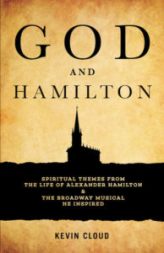
God and Hamilton


I have to admit, I’m not particularly a Hamilton fan—but working on Kevin Cloud’s book convinced me otherwise. In this in-depth examination of the musical, there’s more spiritual themes in here than you can shake a stick at. Especially: redemption.

GOD_HAMILTONKevin Cloud. God and Hamilton: Spiritual Themes from the Life of Alexander Hamilton & the Broadway Musical He Inspired. 240p., $14.99, Deep River Books.

[I]f you watch it without understanding the spiritual themes of Alexander Hamilton’s life, you only get half the story. Discover how Hamilton is a modern-day parable that will:

  • Lead you into a deeper experience of God’s grace
  • Help you battle guilt and shame
  • Challenge you to forgive
  • Inspire your faith
  • Engage you in the struggle for human equality

God and Hamilton impressively weaves together insights from the musical itself, the lives of Alexander and Eliza Hamilton, and the story of Scripture into a tapestry that challenges people of faith to reexamine their lives.

Posted in Uncategorized | Leave a comment

Lay Down Your Old Identity (Part 2)


Now, let’s fast-forward . . . to the Last Supper. In the middle of the meal, Jesus does something unusual—he gets up, grabs a towel and a washbasin, and begins washing the disciples’ feet. (It’s safe to assume the sandals have already come off, this time around.) Follow what happens next:

Peter said to him, “You shall never wash my feet.” Jesus answered him, “If I do not wash you, you have no share with me.” Simon Peter said to him, “Lord, not my feet only but also my hands and my head!” (John 13:8–9).

Simon—who Jesus renamed Peter—protested, because he knew who he had been, and in many ways still was. He knew how unworthy he was of Jesus. Jesus knew it, too. Furthermore, Jesus knew what would happen later that evening. He knew how badly Peter—and all of the disciples—would fail him. Jesus’ priority wasn’t the disciples’ past, present, and future failings. What mattered most to him, at that moment, was that the disciples take off their sandals and be served—cleansed—by him.

What Jesus says to Peter, and to all of us, is: It doesn’t matter who you’ve been, what you’ve done. It doesn’t matter how big a screw-up you are now—and no doubt will be in the future. What matters is: Will you hand over your life—all of your life, including the screw-ups—to me, so that I can begin this incredible lifelong reclamation project called Your Life in Me?

Jesus not only came to remove the eternal separation from God that Satan intended for us, but also all the temporary separations from God we put in front of ourselves every day. In case the disciples missed the point—and they likely did—an hour or so later Jesus tells them this:

Greater love has no one than this, that someone lay down his life for his friends. You are my friends if you do what I command you. No longer do I call you servants, for the servant does not know what his master is doing; but I have called you friends, for all that I have heard from my Father I have made known to you. You did not choose me, but I chose you and appointed you that you should go and bear fruit and that your fruit should abide, so that whatever you ask the Father in my name, he may give it to you (John 15:13–16).

This is where a changed life really begins. Especially at first we want, and arguably need, to make laying down about the “negative” stuff—the things we know we need to give up for Christ’s sake. That’s why we’re spending most of this first week on those things. However, if we focus only on what we need to give up, it’ll probably never happen. We’re overwhelmed by the task. We know we can’t do it. And to be honest, we really don’t want to give some of it up.

For all those reasons and more, we need to grab onto what Jesus promises to each of us when we’re willing to lay down everything for him. We need to remember who we are, now—Jesus’ friends. Eternal-life-long friends.

We want to justify ourselves before God, to make ourselves worthy. It will never happen. It can never happen. So let go of it. The good news is: Jesus has made us worthy. He has cleansed us. He has laid down his life for us. Jesus has chosen us because he has chosen us. Because of Jesus, that is enough.

Lay It Down Today

Got shoes on? Take them off. (Or wait for a time when you can do this later on.) Reflect on those places where you know God has already met you, and thank him again for those encounters.

Then, pray a prayer of consecration—something like: “Lord, you have created everything and everything was created to be holy, separated unto you. I want to honor you everywhere I put down my feet, starting in this place. Help me to let go of the person I’ve been, so that I might become the person you want me to be.”

Then, don’t forget you prayed this. Watch what God does with this prayer in the weeks to come. Write down any additional thoughts or prayers.

Posted in Uncategorized | Leave a comment